DESCRIPTION
“Los Auroros” of Garbayuela constitute a manifestation of popular religiosity and intangible cultural heritage linked to the singing of Marian verses and the praying of the rosary during the early hours of the morning. This tradition, maintained from generation to generation through oral transmission, represents one of the most singular cultural expressions of the comarca of La Siberia.
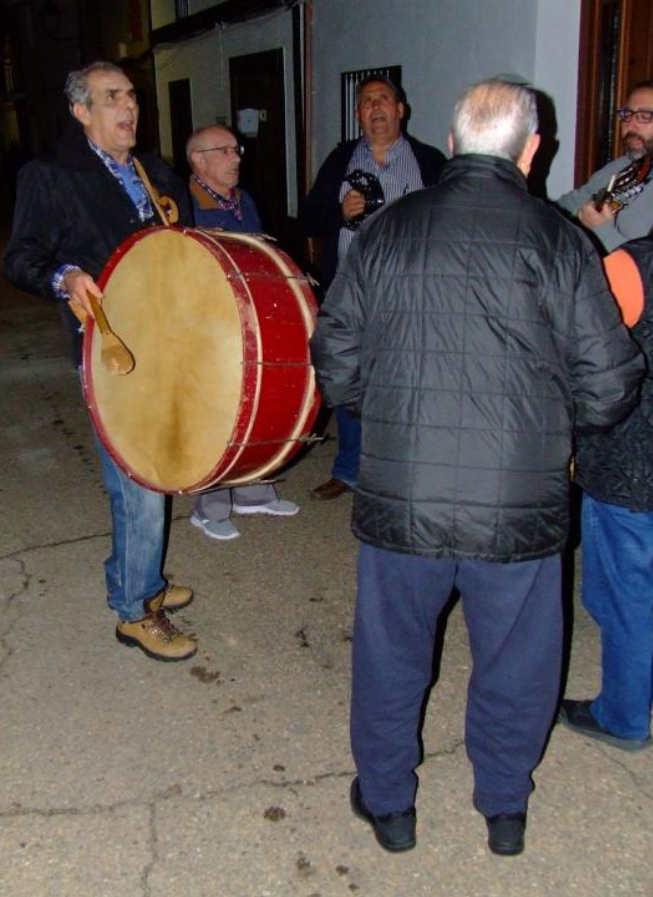
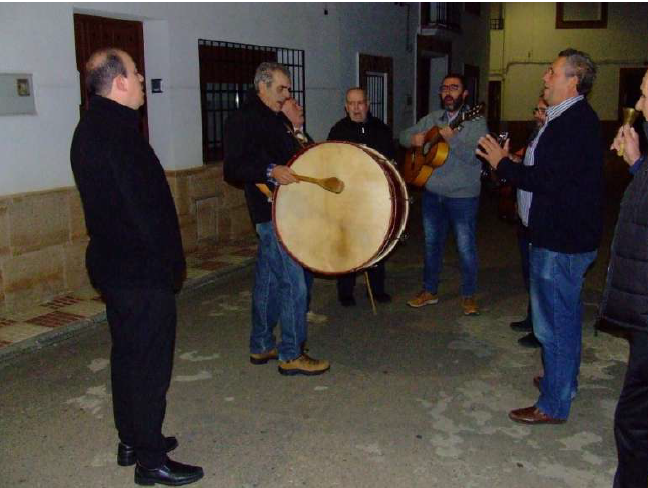
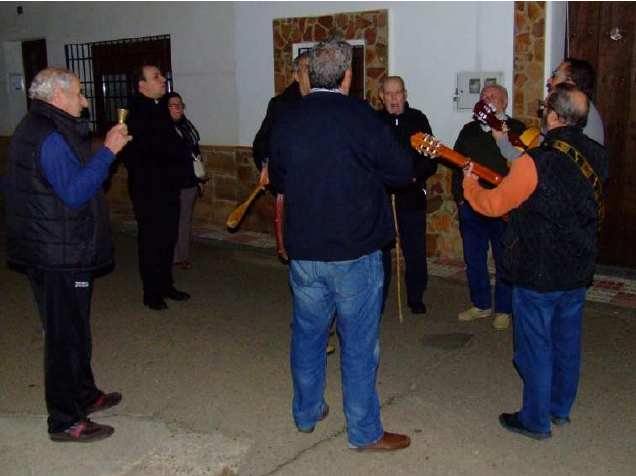
The celebration takes place mainly on certain dates of the liturgical calendar and brings together members of the Hermandad de Nuestra Señora del Rosario de la Aurora, who walk through the streets of the town singing verses accompanied by traditional instruments.
The Junta de Extremadura declared “Los Auroros” of Garbayuela a Bien de Interés Cultural with the status of Intangible Cultural Heritage through a decree dated 13 October 2021.
HISTORY
The origins of “Los Auroros” are difficult to determine with precision, although local tradition places their antecedents in the 17th century. The continuity of this practice has been maintained mainly thanks to oral transmission and the commitment of different generations of inhabitants of Garbayuela.
One of the principal experts and defenders of this tradition is Luis A. Agenjo Rivas, active member of the Hermandad de Nuestra Señora del Rosario de la Aurora and scholar of local traditions. According to his testimony, the Aurora and the Danza de San Blas have formed part of the historical identity of Garbayuela since ancient times.
The preserved written documentation regarding this tradition is scarce. One of the earliest known documents is the Regulation of 10 August 1939, which establishes the operating rules of the brotherhood, the obligations of its members and the organisation of the processions.
Subsequently, new regulations were drafted in 1956 and 1975, maintaining the traditional structure of active and passive members, while adapting certain organisational aspects and calendars in order to favour the continuity of the ritual.
In 1993 new modifications were introduced into the procession calendar and, over time, the brotherhood incorporated contemporary organisational mechanisms, such as the use of printed calendars or communication groups through mobile applications.
HISTORICAL AND ARTISTIC DESCRIPTION
The celebration of “Los Auroros” is structured around a specific liturgy carried out before dawn. Participants gather in the sacristy of the parish church, where the elements used during the ritual are preserved.
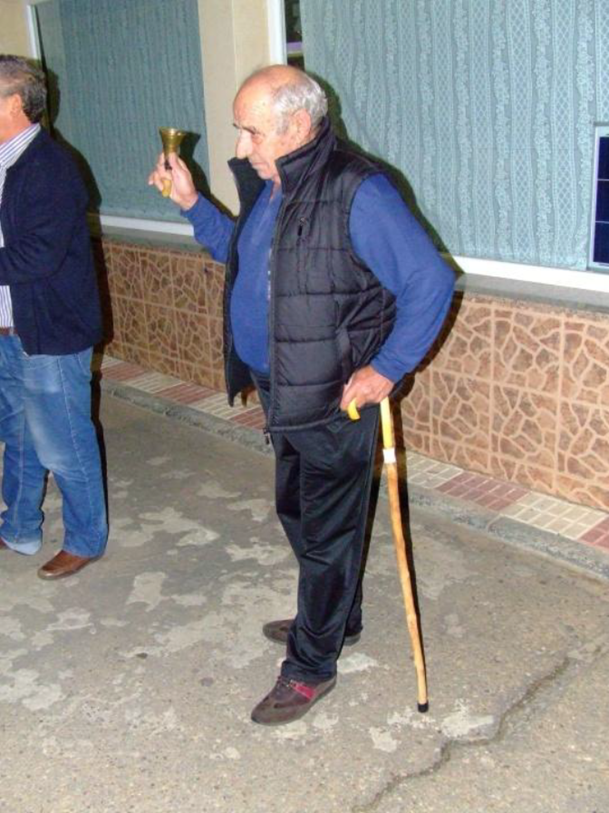
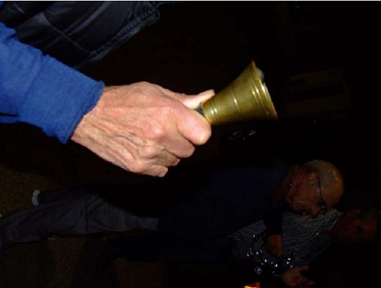
Among these elements are tambourines, drums, guitars, lutes and, especially, the handbell, considered essential for marking the rhythm and coordinating the chants. The main star lantern, various lanterns and the banner of the Cofradía bearing the image of the Virgen del Rosario are also preserved.
The mayordomo or elder brother constitutes the principal organisational figure of the brotherhood. His position is renewed annually coinciding with the feast of the Virgen del Rosario. Alongside him serve the custodian or treasurer and the caller, the latter role having practically disappeared today.
The brotherhood distinguishes between active and passive members. Active members participate directly in the chants and nocturnal routes, while passive members contribute financially to the maintenance of the brotherhood and receive the singing of the verses outside their homes.
The routes take place through the streets of the municipality in groups accompanied by musical instruments. The verses, transmitted orally through generations, feature simple lyrics and Marian themes, fundamentally intended as an invitation to pray the rosary.
The traditional processions take place between the end of September and 8 December, as well as between the feast of La Candelaria and Ascension Day. Special processions are also held during Corpus Christi and All Souls’ Day, when “El Reloj del Purgatorio” is performed.
RELEVANT FIGURES RELATED TO THE POI
Luis A. Agenjo Rivas constitutes one of the principal figures linked to the preservation, study and defence of “Los Auroros” of Garbayuela. As an active member of the Hermandad de Nuestra Señora del Rosario de la Aurora, he has contributed to documenting the tradition and transmitting its cultural and religious significance.
The figure of the mayordomo also possesses special relevance within the traditional organisation of the brotherhood, being responsible for coordinating the processions, safeguarding the rules and maintaining the continuity of the ritual.
MOVABLE HERITAGE
Handbell used during the routes, tambourines, drums, guitars, lutes, lanterns, processional star and banner of the Cofradía de Nuestra Señora del Rosario de la Aurora.
The distinctive medals of the members and the images of the Virgin placed in the homes of the brotherhood members also form part of the associated heritage.
INTANGIBLE HERITAGE
“Los Auroros” constitute a manifestation of popular religiosity, oral tradition and social cohesion deeply linked to the cultural identity of Garbayuela. The tradition combines singing, prayer, music and collective ritual, maintaining practices transmitted intergenerationally for centuries. The ritual also represents an element of identity affirmation in the face of depopulation processes and the loss of rural traditions in numerous municipalities of Extremadura. The continuity of the celebration is sustained by the involvement of the inhabitants and by the progressive adaptation of certain organisational rules to guarantee its permanence. Its declaration as a Bien de Interés Cultural in the category of Intangible Cultural Heritage officially recognises the historical, ethnographic, musical and social value of this singular tradition of the comarca of La Siberia.
INTANGIBLE HERITAGE
Los Auroros represent one of the most significant expressions of the cultural identity of Garbayuela. Beyond their religious dimension, they constitute a space for community gathering in which social bonds and collective memory are reinforced.
Their continuity, despite the difficulties derived from depopulation and changes in ways of life, reflects the community’s effort to preserve a legacy transmitted through generations.
This ritual is thus configured as a fundamental element in the construction of a shared identity, where past and present intertwine through cultural practice.