DESCRIPTION
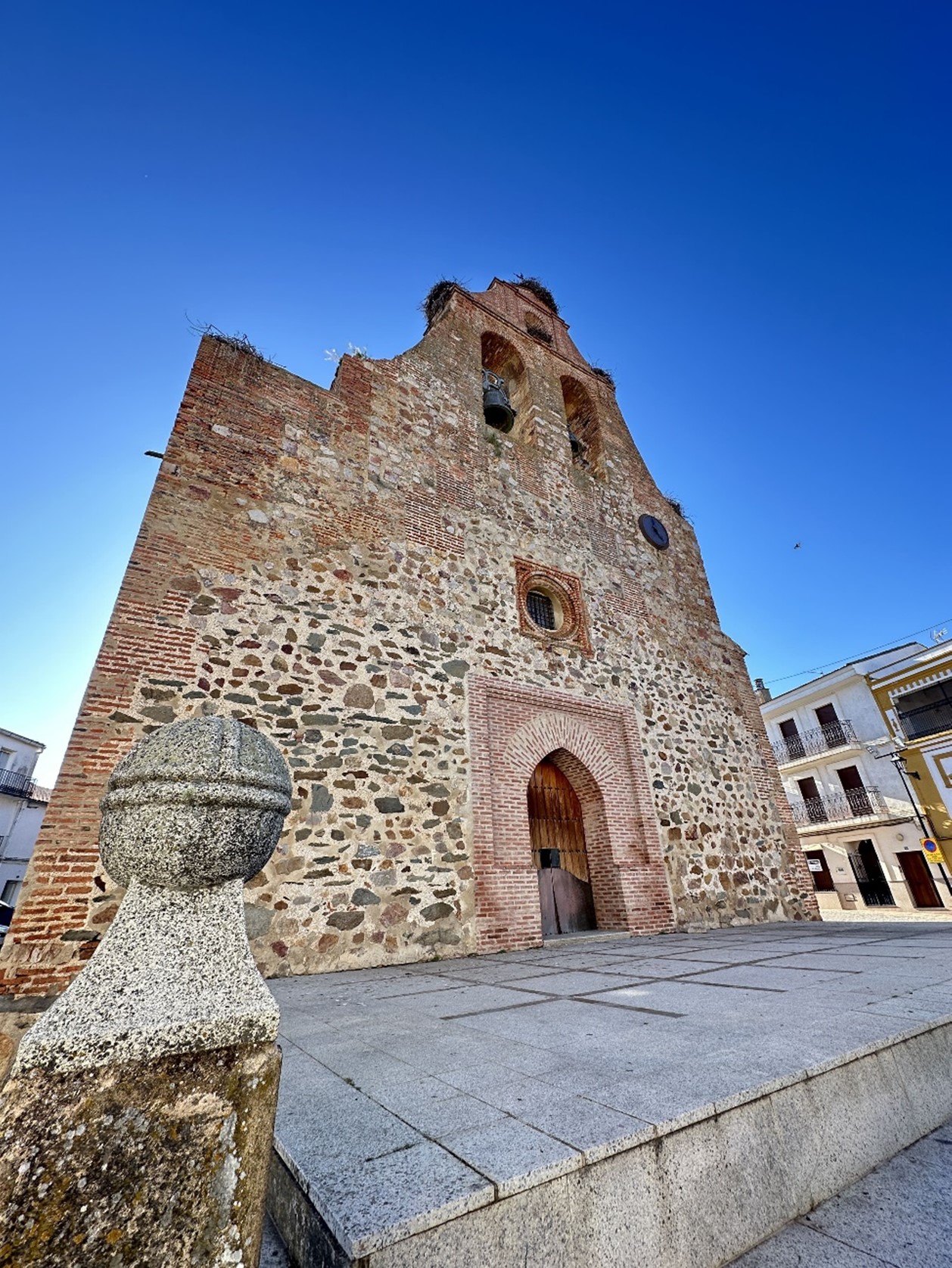
The Parish Church of Nuestra Señora de la Antigua is the main religious building of Siruela and one of the municipality’s most important heritage elements. Located in the urban centre, it presides over the town’s central space and forms one of the most recognisable architectural profiles of the historic quarter.
It is a temple of great volume and notable historical value, built through a complex superposition of construction phases reflecting the architectural evolution of the town over the centuries. Its structure combines Romanesque, Gothic and Mudéjar elements, making it one of the most singular examples of historical religious architecture in the comarca of La Siberia.
HISTORY
The construction of the temple possibly dates back to the mid-13th century, with some studies and local references placing it around the year 1250, in a context of territorial reorganisation following the Christian Reconquest. Traditional information preserved in the municipal heritage signage indicates that the church may originally have had a Latin cross plan, although its current configuration results from successive enlargements and historical transformations.
The building’s constructional evolution reveals different architectural stages. Over time, lateral chapels, new liturgical spaces and structural reforms were incorporated, partially modifying its original appearance and integrating Romanesque, Gothic, Mudéjar and even Neoclassical influences.
Some researchers also point to the possibility that part of the complex reused earlier defensive structures or adopted construction solutions of a military nature, a hypothesis reinforced by the building’s robustness and the presence of the exterior tower.
HISTORICAL-ARTISTIC DESCRIPTION
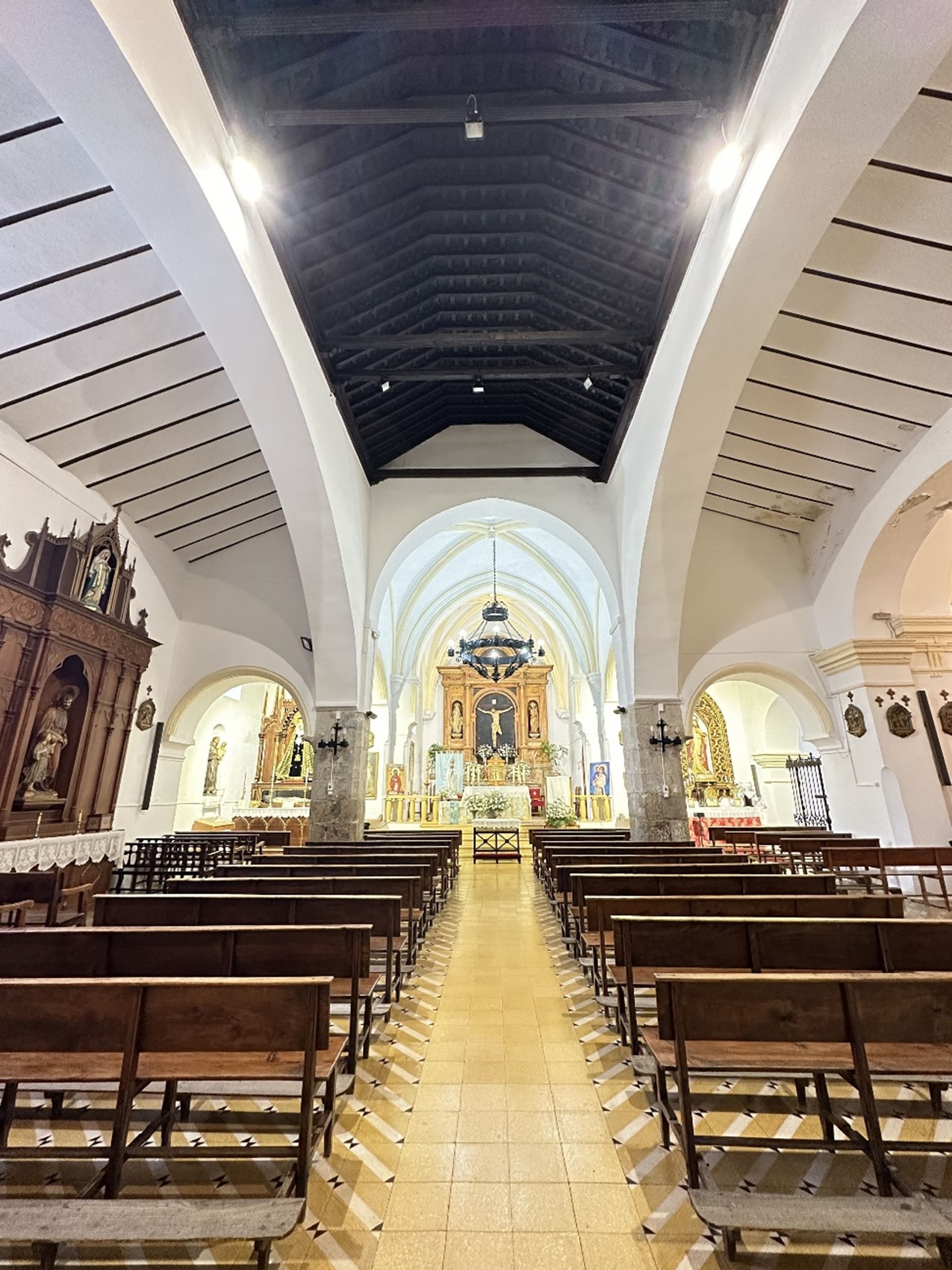
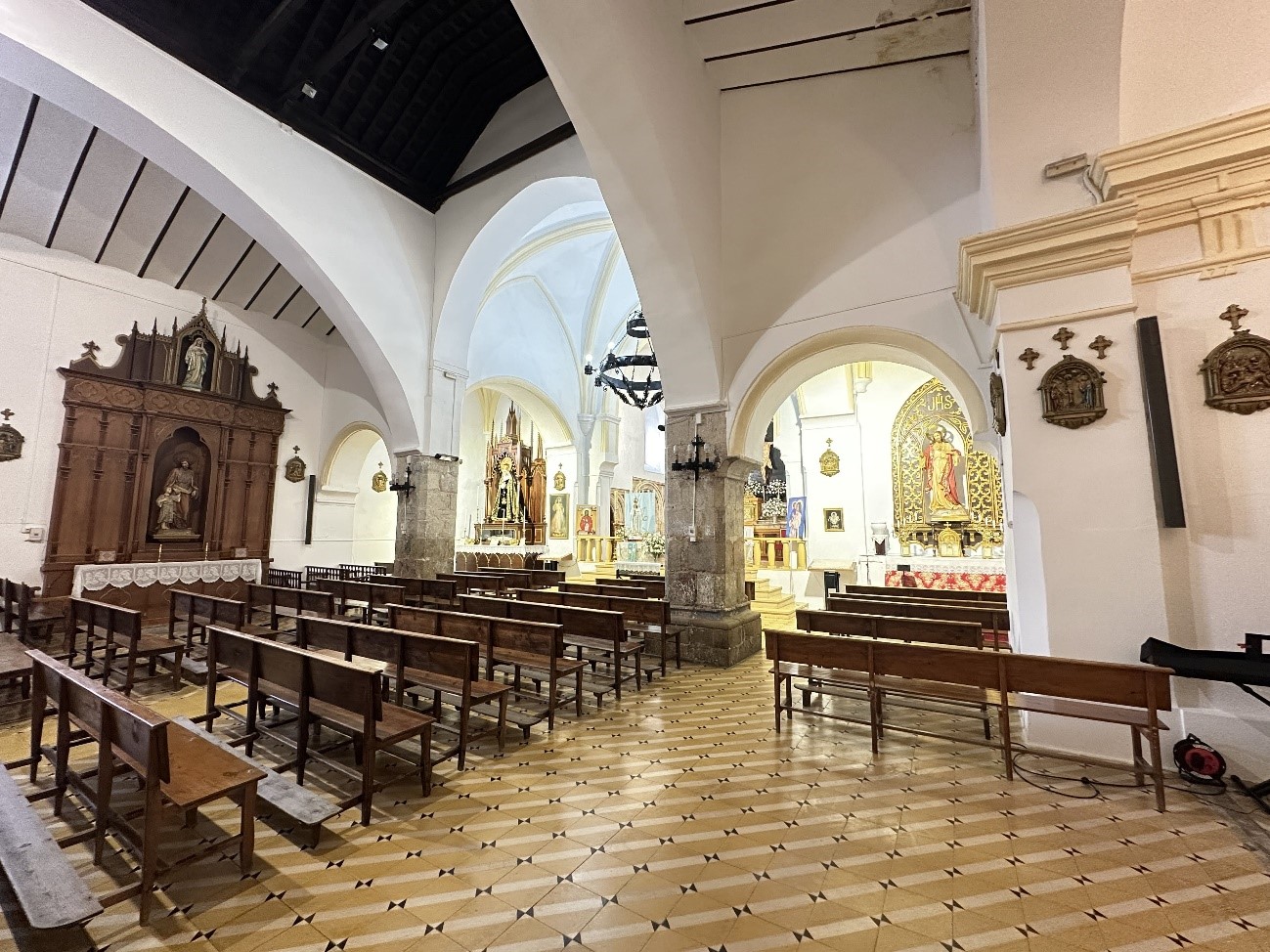
The church currently has a rectangular floor plan, with three naves separated by thick columns and attached lateral chapels. According to the historical signage preserved outside the temple, the original configuration may have corresponded to a Latin cross plan.
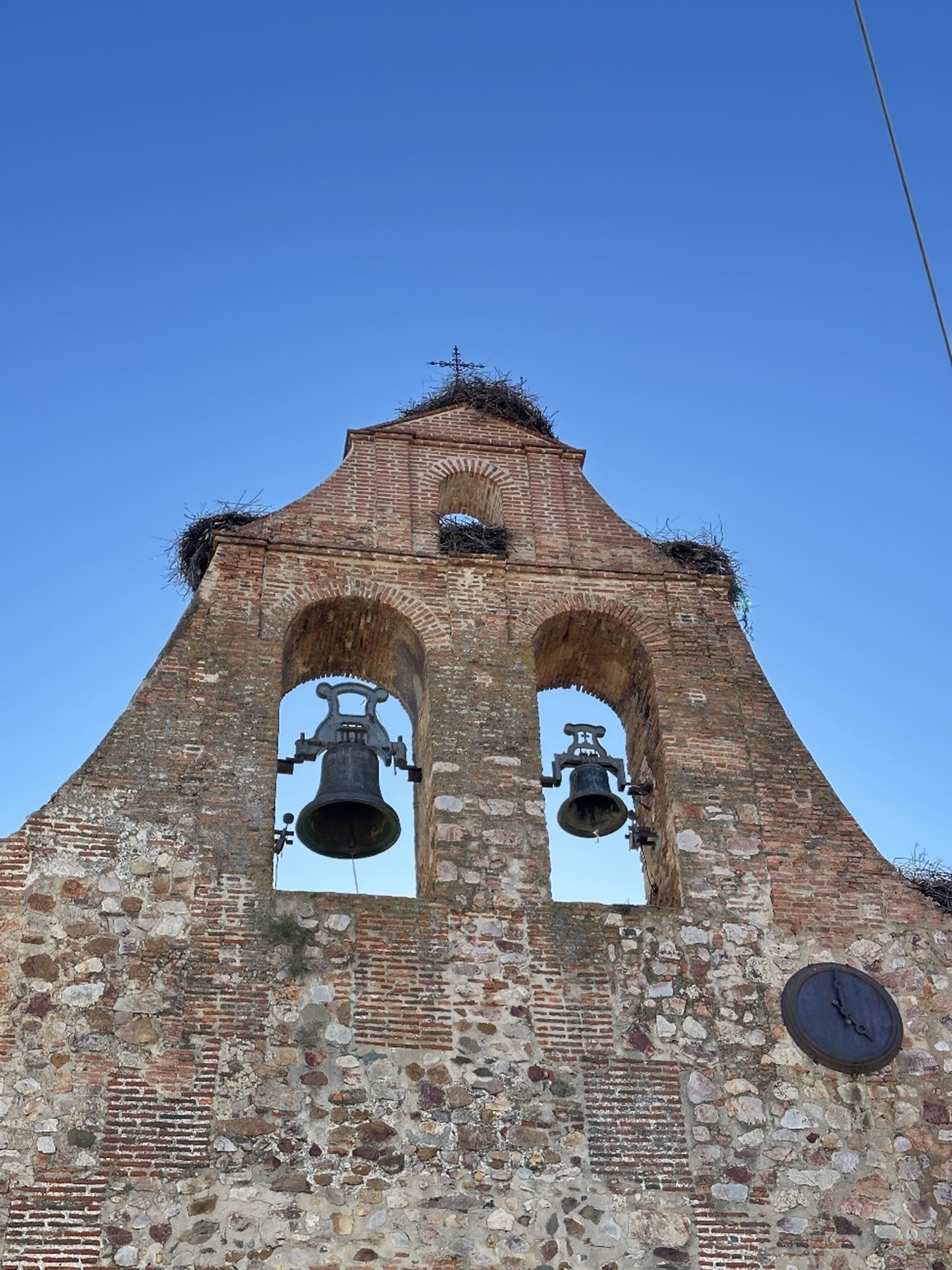
The structure combines masonry and brick, stylistically responding to a transitional model between Romanesque and Gothic, although with the predominance of the latter. The complex also preserves important Mudéjar influences, visible in both structural and decorative elements. The municipal heritage signage itself highlights the presence of Mudéjar architectural remains integrated into the building.
Inside, the wooden coffered ceiling of the central nave particularly stands out, of remarkable decorative interest and crafted with star-shaped geometric compositions. The ribbed vaults of the transept, with stone ribs, are also noteworthy, as are the different lateral chapels incorporated at various historical moments.
One of the chapels presents a Neoclassical style and is covered by an octagonal dome, while other rooms correspond to later construction phases. The coexistence of these elements makes the building an architectural synthesis of great historical and artistic interest.
On the exterior, the tower stands out, possibly crenellated originally, a circumstance that has led to the interpretation of the temple as a building with certain defensive functions or influences from medieval military architecture.
RELEVANT FIGURES RELATED TO THE POI
The church has historically been linked to the religious and social life of Siruela, acting as the municipality’s main spiritual centre. Its activity has been connected to different generations of parish priests, brotherhoods and faithful worshippers who have kept the temple’s liturgical use alive up to the present day.
In recent decades, local devotion to the Sagrado Corazón de Jesús has stood out in particular, deeply rooted among the population and directly linked to parish activity.
MOVABLE HERITAGE
The temple preserves various liturgical and artistic elements linked to different historical stages. Although part of its heritage may have been affected by the passage of time and different historical episodes, it retains pieces of interest associated with its worship spaces and interior architecture.
Of particular relevance are the Mudéjar coffered ceiling, the ribbed vaults and certain decorative elements integrated into the lateral chapels.
INTANGIBLE HERITAGE
The Iglesia Parroquial de Nuestra Señora de la Antigua constitutes the main centre of religious life in Siruela and the setting for the municipality’s principal liturgical celebrations and traditional festivities.
The temple maintains an important spiritual and social role within the local community, serving as a meeting point for religious celebrations, festive events and devotional manifestations deeply rooted among the population. Among them stands out the consecration of the locality to the Sagrado Corazón de Jesús, one of the most representative contemporary religious expressions of Siruela.