DESCRIPTION
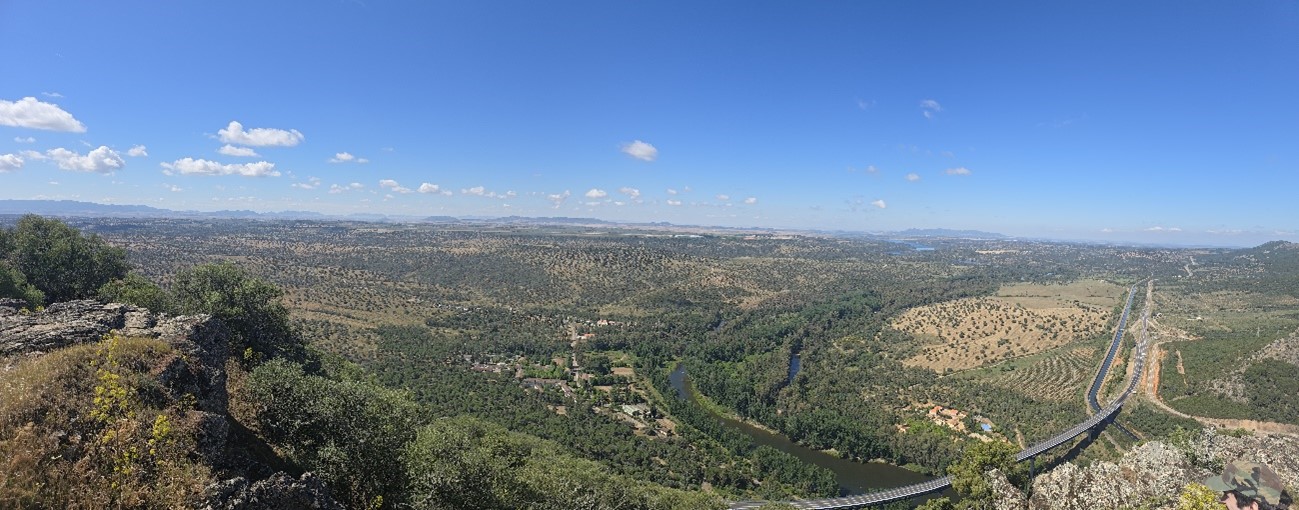
In the heart of La Siberia extremeña, dominating one of the most spectacular landscapes of the Guadiana valley, stand the ruins of the ancient Castillo de la Peña, known in the Andalusi period as Sajra Abi Hassān, meaning “the Rock of Abi Hassān”. Located within the municipal district of Talarrubias, in the province of Badajoz, this enclave is one of the great historical and scenic treasures of the region.
As soon as one contemplates the landscape, the origin of its name becomes clear, since the fortress seems to emerge directly from the enormous quartzite ridge on which it was built. In Arabic, sajra means “rock” or “crag”, and rarely has a name described a place so accurately.
HISTORY
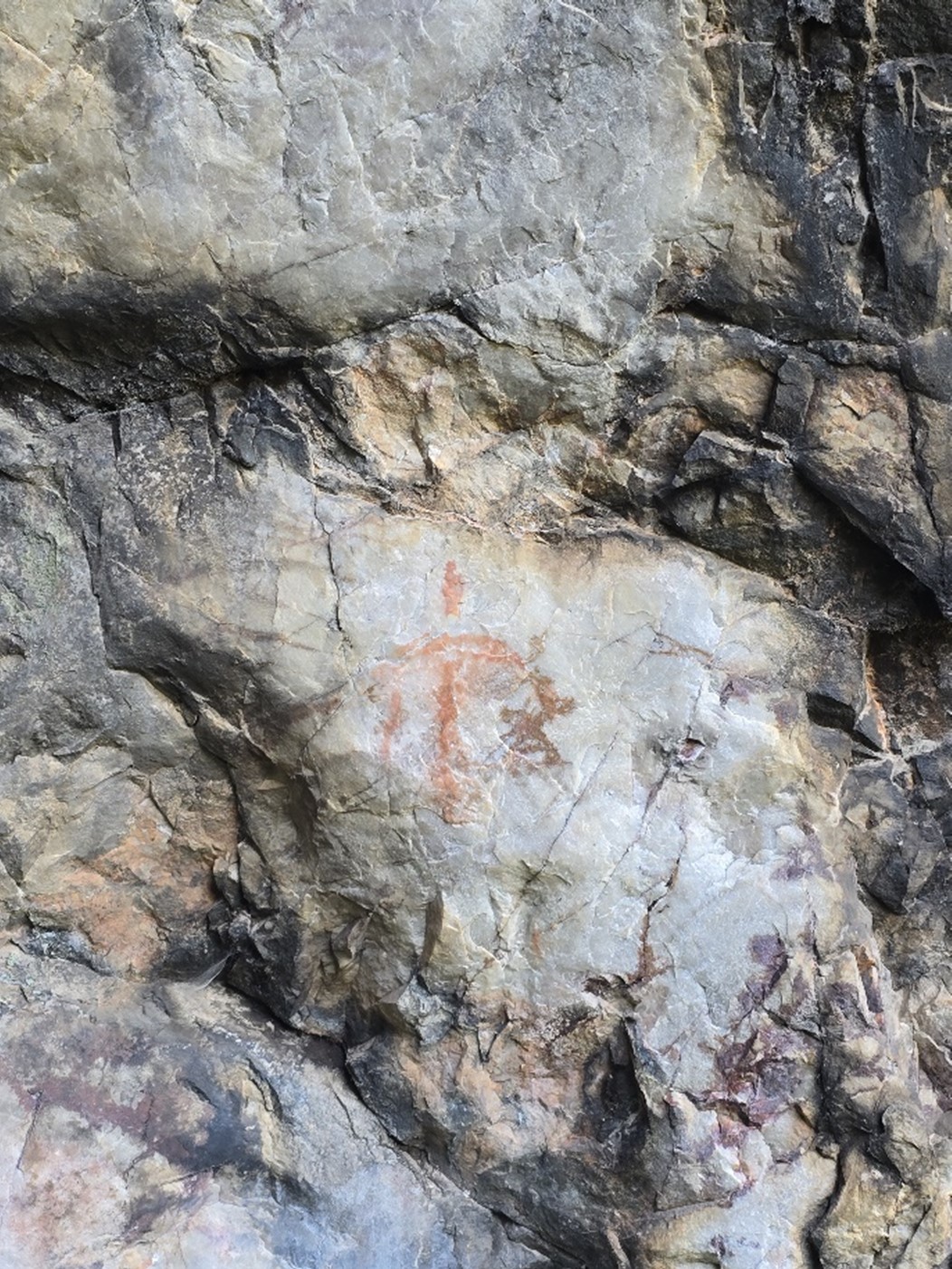
Overlooking the mountain pass formed by the river opening through the range, this fortified site has, since time immemorial, controlled the passage of people and livestock between the northern and southern parts of the region. This is evidenced by the remains that can still be seen beside the rocky outcrop, among structures and vestiges dating from the Paleolithic period to the Modern Age.
Probably built between the 10th and 11th centuries, during the period of instability of the taifa kingdoms, the castle had a fundamental strategic mission: to control the natural crossing of the Guadiana River and protect the eastern frontier of the ancient kūra of Mérida, as attested by the Andalusi geographer Ubaid al-Bakri.
HISTORICAL AND ARTISTIC DESCRIPTION
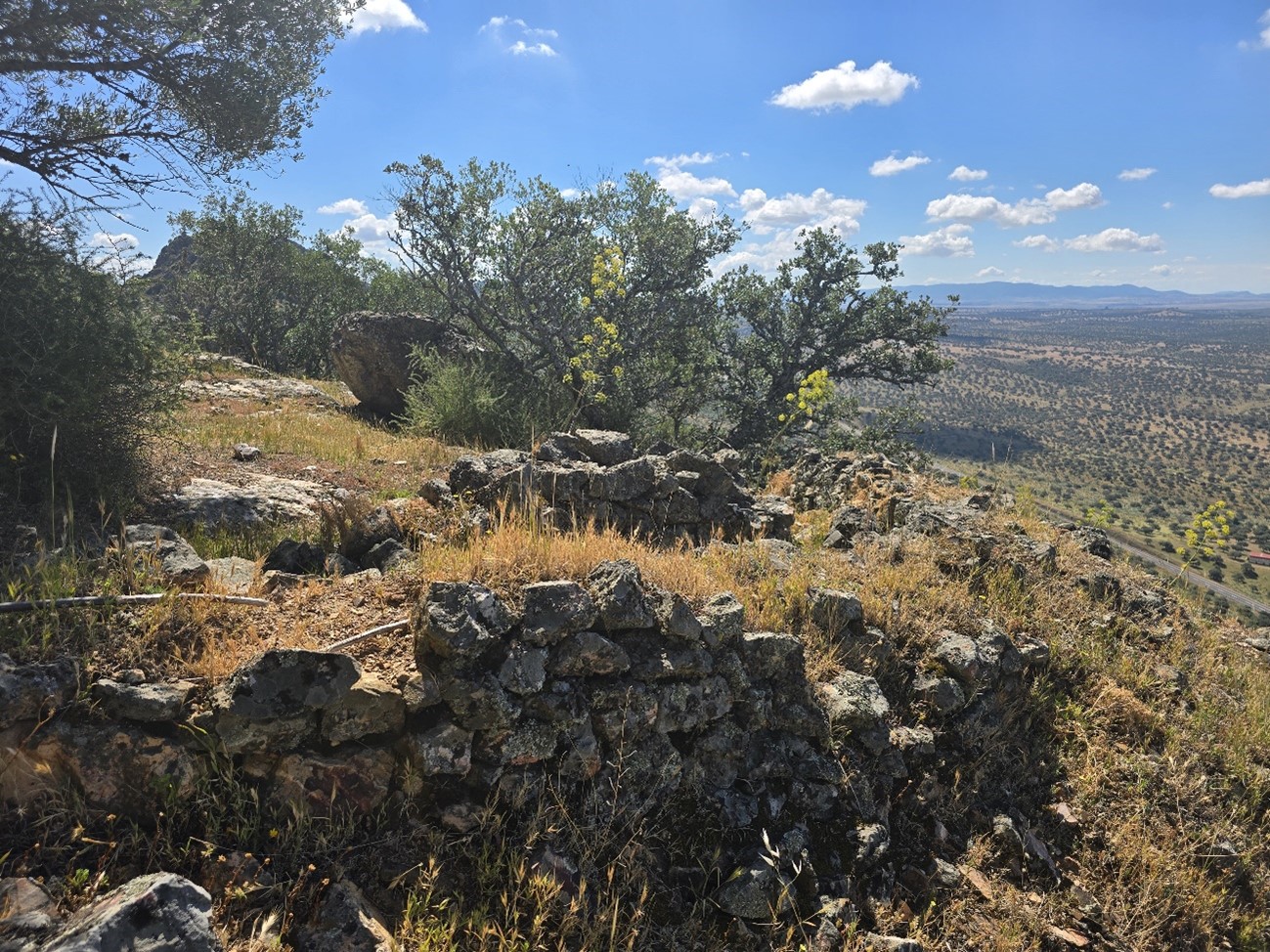
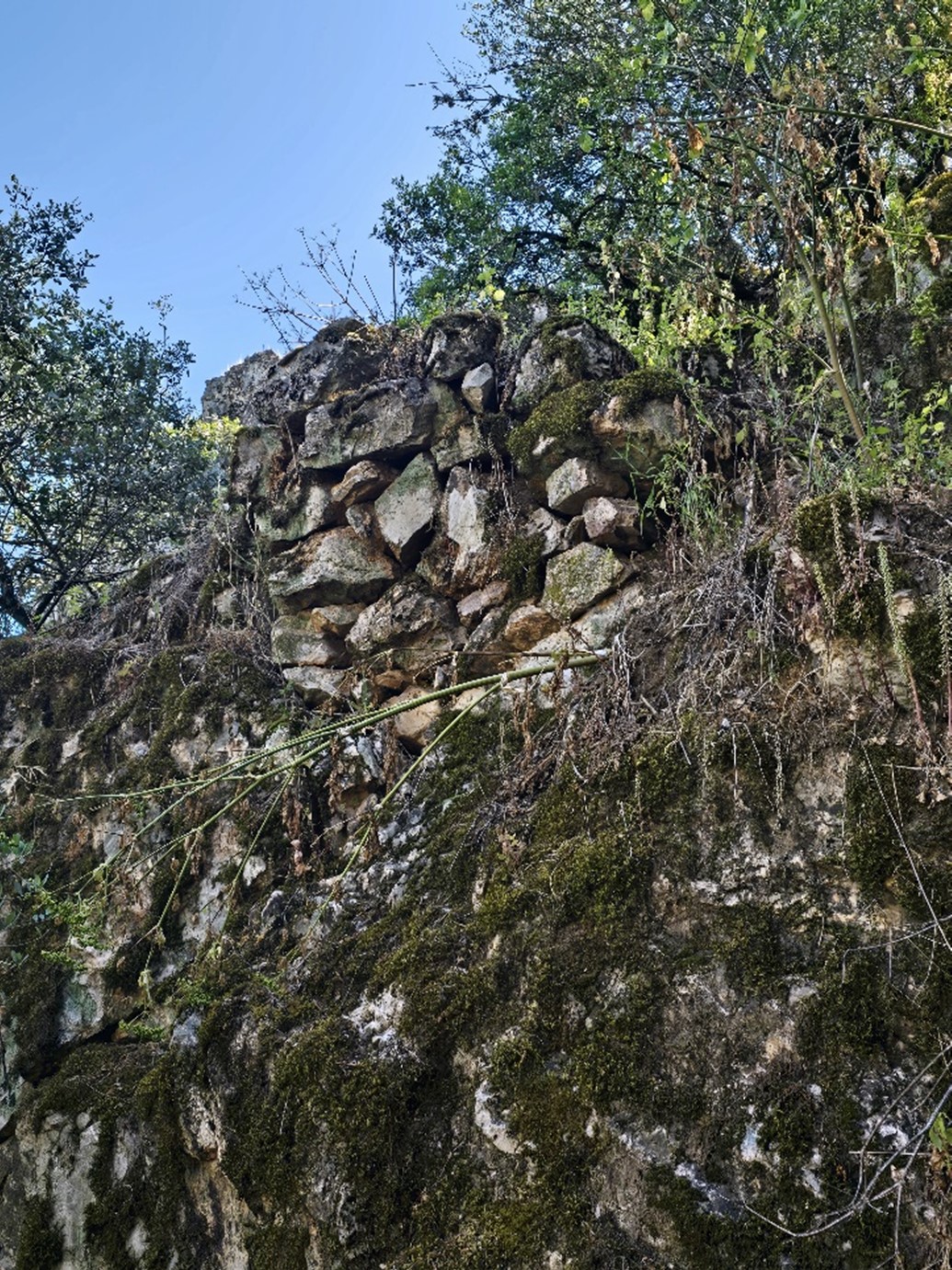
Although the castle is in a ruined state, it still preserves elements that allow one to imagine the scale of the original fortress.
During the visit, remains of walls adapted to the natural rock can be distinguished along the ridge, as well as traces of ancient watchtowers at both ends of the enclosure, masonry defensive structures and a small cistern carved into the rock.
At one of the obligatory crossing points of the Guadiana River, near the site where the García de Sola Dam now stands—also known as Puerto Peña—and atop the steep rock overlooking the deep gorge, it appears that the Moorish castle once raised its walls. According to Terrón, this fortress was mentioned in the 11th century by Ubaid al-Bakri within the “Kura” of Mérida under the name “Sajra Abi Hassam,” meaning Fortress of the Rock of Abi Hassam, whose location has been confirmed by other authors in different periods.
After the Reconquest of these lands, the name—already castilianized—appears in various documents and papal bulls, such as the boundary agreement drawn up in 1241 by Ferdinand III between the Military Orders of Santiago and Alcántara, which in one section states:
“A castello quod vocatur Peña” (“To the castle called Peña”). Another document records the transfer of the territories of Puebla to the Order of Alcántara, dated 1245, in which it reads: “Inter castellum de Penna et Castellum de Alcocer” (“Between the Castle of Peña and the Castle of Alcocer”). By the 16th century, Fernando Colón provides information about it, stating: “… halfway along the road they pass through a pass called the Pass of the Rocks, which resemble mountain ranges, and at the top of this pass they say there is a castle from Moorish times.”
There can be no doubt that these high crags, from which the steep mountain pass is dominated, were the ideal place for the settlement of the small castle or watchtower that was probably abandoned after the Reconquista. Little by little it crumbled until its remains became lost amid the lush beauty that fills this beautiful and rugged landscape.
(Text by Professor Juan Moreno Aragoneses, taken from his handwritten compilation on “Castillos de Badajoz”).
NOTABLE FIGURES RELATED TO THE POI
The enclave appears cited by various authors and historical documents over the centuries. Among them stands out the Andalusi geographer Ubaid al-Bakri, who in the 11th century mentioned the fortress within the kūra of Mérida under the name “Sajra Abi Hassān”.
Fernando III of Castile is also indirectly linked to the enclave through the boundary agreements and documents issued after the Reconquista, especially those related to the Military Orders of Santiago and Alcántara during the 13th century.
MOVABLE HERITAGE
No movable elements directly associated with the castle are preserved. The archaeological materials documented in the surroundings belong to different historical and prehistoric periods related to the continuous occupation of the natural Guadiana crossing.
INTANGIBLE HERITAGE
Castillo de la Peña forms part of the historical memory and popular imagination linked to the Puerto Peña area, one of the most emblematic natural enclaves of La Siberia extremeña.
The fortress is traditionally associated with popular stories about frontier castles, Muslim watchtowers and ancient strategic routes used for centuries for communication between the northern and southern territories of Extremadura.
Likewise, the enclave maintains significant symbolic and scenic value within the region, integrated into a territory where nature, history and tradition remain closely intertwined.