DESCRIPTION
In the urban centre of Sancti-Spíritus, various traditional elements historically linked to the daily organisation of the population are preserved, among which a traditional well and the rollo-humilladero stand out. Both form part of the characteristic urban landscape of the locality and constitute representative examples of popular architecture and the historical evolution of the municipality.
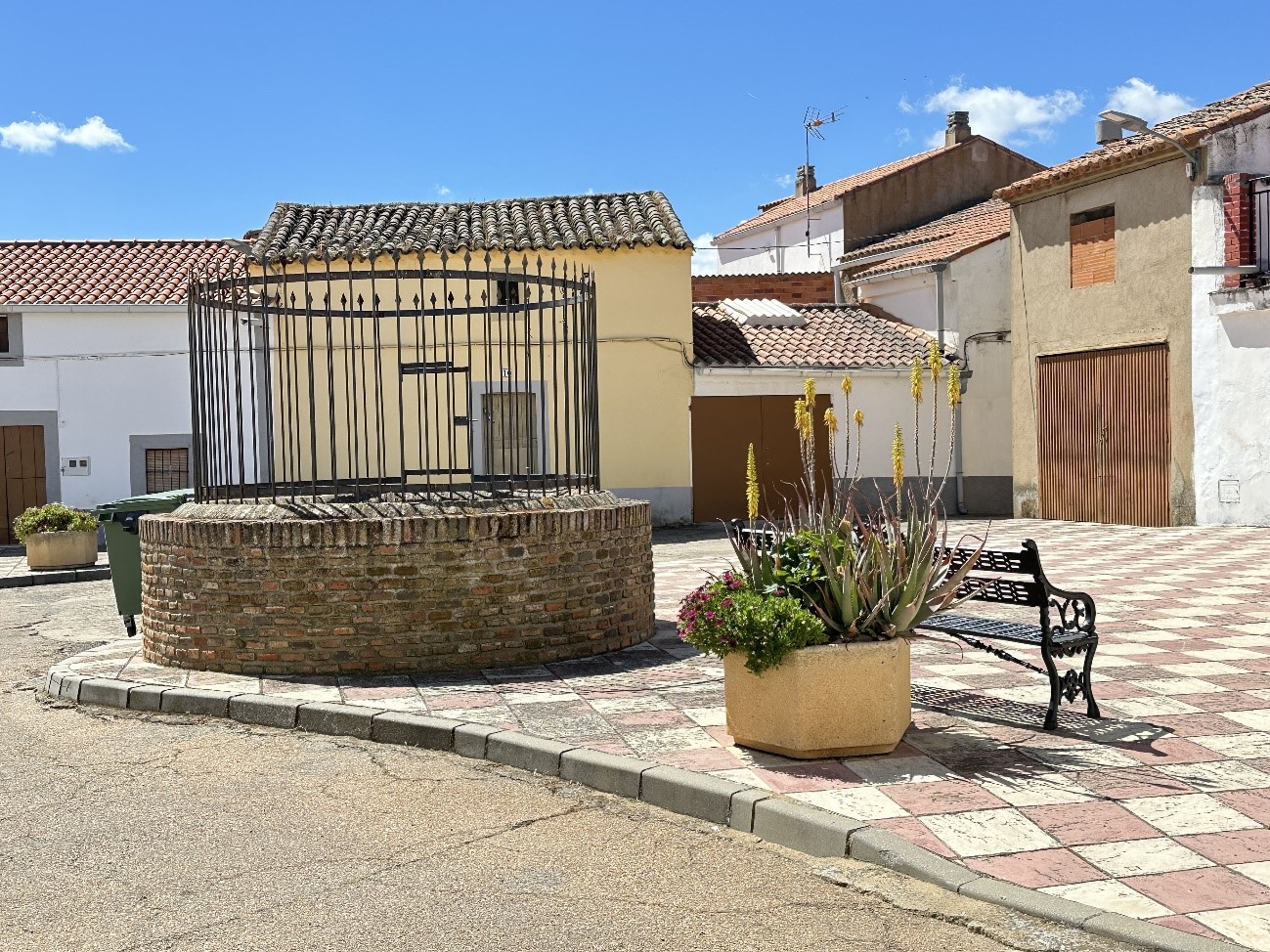
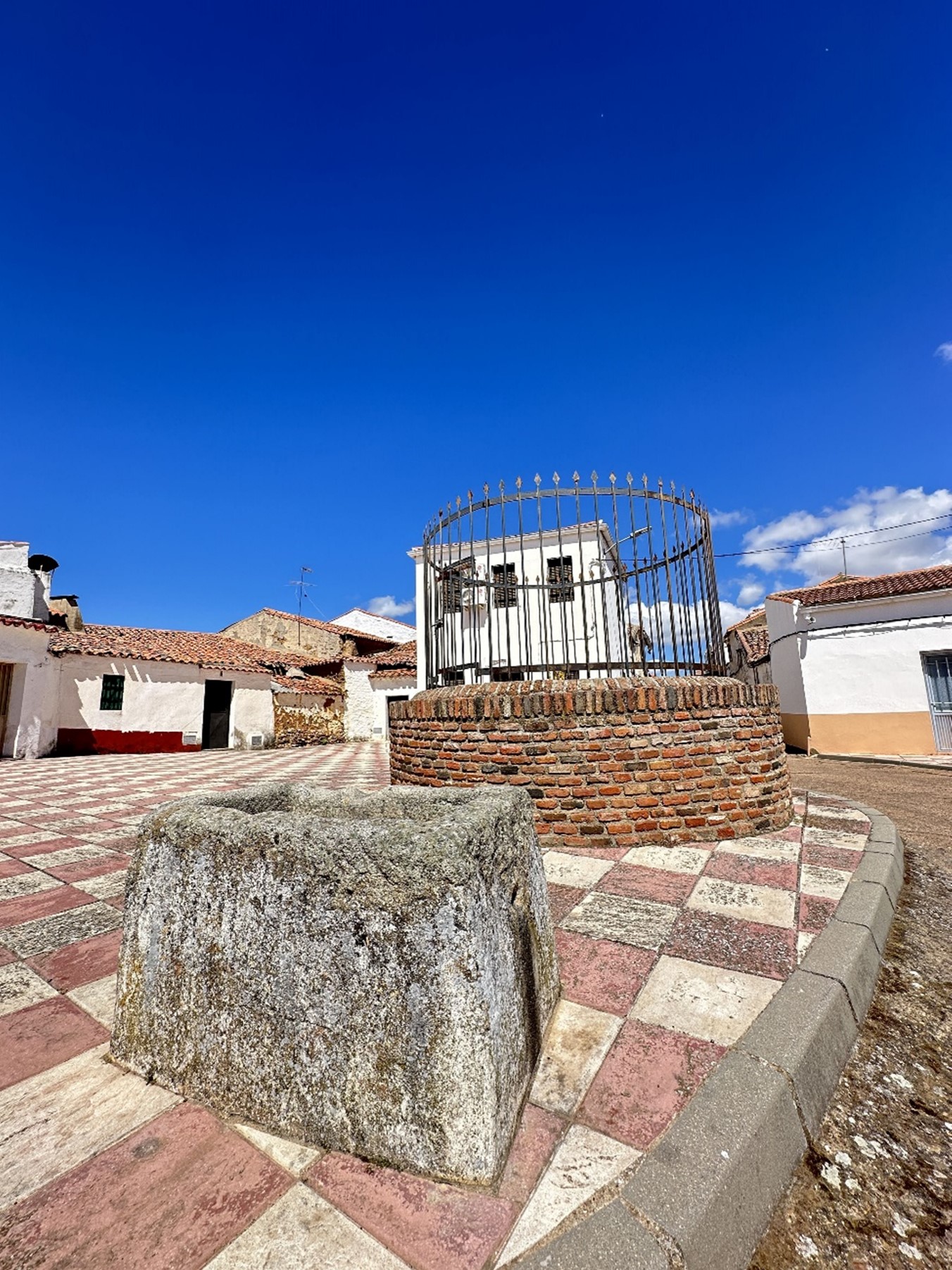
Traditional wells played an essential role for centuries in supplying water to the population, especially before the implementation of modern supply networks. Some of them are located in central areas of the urban centre, integrated among whitewashed houses and low-rise constructions typical of the traditional architecture of the comarca of La Siberia.
Alongside these elements stands the rollo-humilladero, a symbolic structure integrated into the urban environment and closely linked to the historical identity of Sancti-Spíritus. Its presence adds significant heritage value to the ensemble and contributes to understanding the municipality as an enclave that emerged and became consolidated during the Late Middle Ages and the Early Modern Age.
HISTORY
Urban wells correspond to traditional water collection systems predating the implementation of modern supply infrastructures. Their use was linked for generations to the domestic needs of the population and also to small-scale livestock and agricultural activities. These spaces were also common meeting points and places of social interaction in the daily life of the municipality.
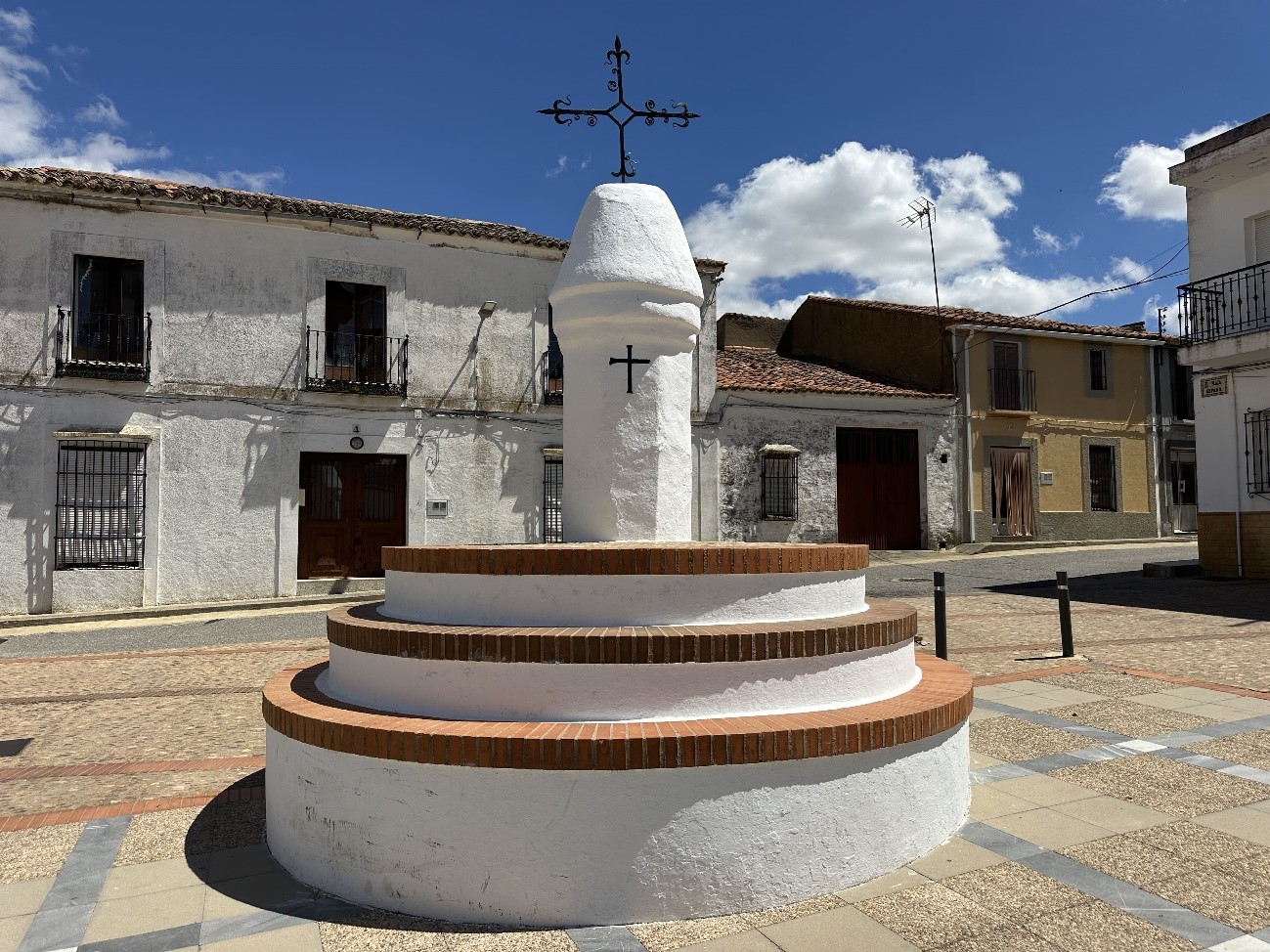
The traditional rollo of Sancti-Spíritus is integrated into the historic space of the urban centre and constitutes one of the locality’s most representative symbolic elements. Its presence is linked to the municipality’s historical consolidation during the Late Middle Ages and the Early Modern Age. It is another highly representative feature of this municipality. It is located in Plaza de España and is a work of popular style. Its use is fundamentally decorative and commemorative as a landmark.
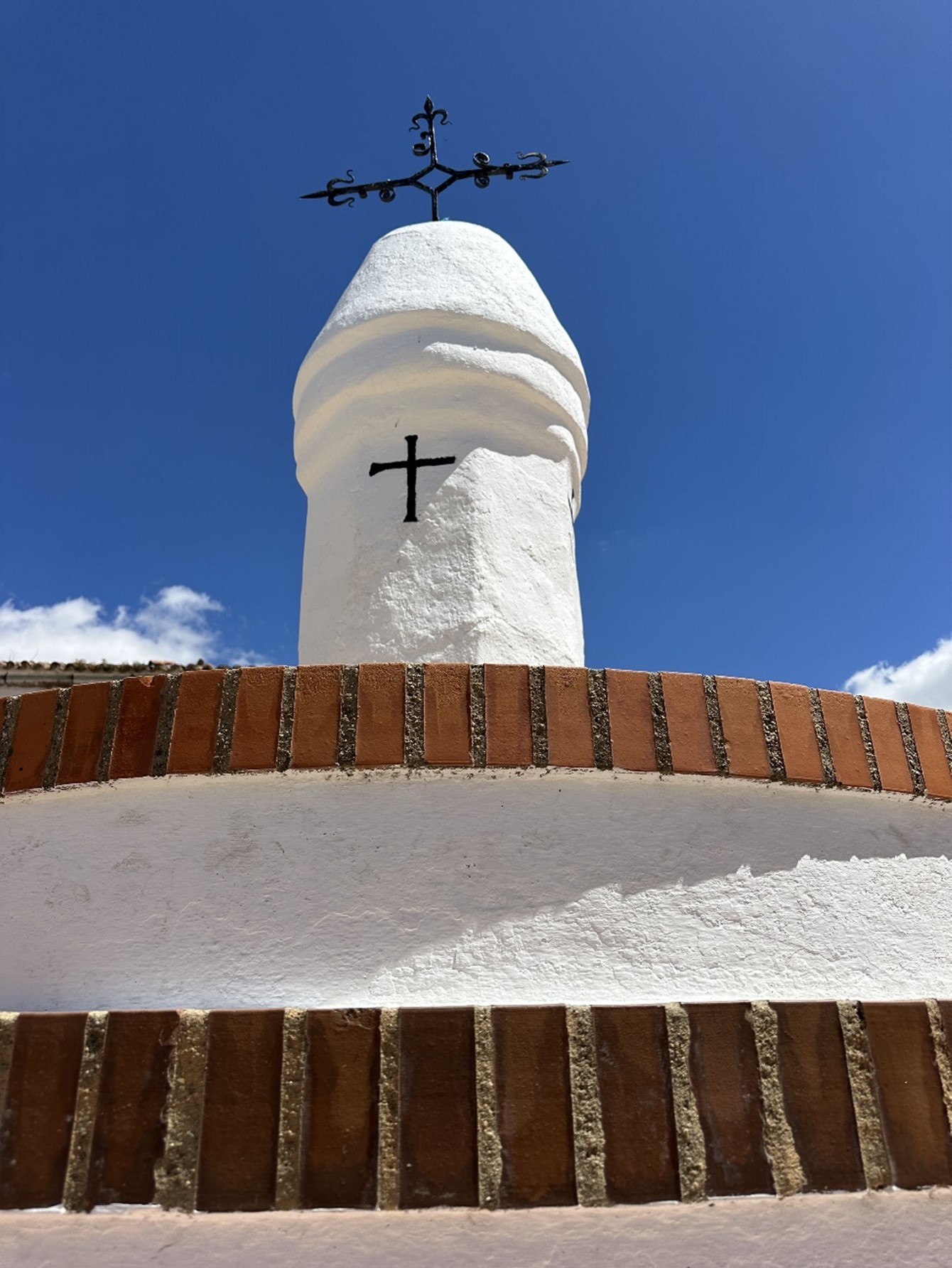
It consists of a masonry column on a triple brick stepped base. It is built using rendered, plastered and whitewashed brick. It is composed of three steps with superimposed circular platforms. Above them rises a shaft widened at the upper section and crowned with an iron cross. Four crosses stand out on the column, recalling the former status of Sancti-Spíritus as a villa.
According to local tradition, the origin of the name Sancti-Spíritus is related to the appearance of a dove on an olive tree, interpreted as a representation of the Holy Spirit. This event is said to have motivated the construction of a small oratory that gave rise to the later parish church and the permanent settlement. The locality already appears documented in 16th-century sources, and its population is linked to inhabitants from Puebla de Alcocer and Esparragosa de Lares during the processes of occupation and territorial reorganisation following the Reconquest.
Preserved historical references also indicate that the territory was initially linked to the Order of the Temple and later to the Order of Alcántara, eventually becoming integrated into the Viscounty of Puebla de Alcocer. Since 1834, Sancti-Spíritus has belonged to the judicial district of Puebla de Alcocer.
HISTORICAL-ARTISTIC DESCRIPTION
The traditional well corresponds to a functional and simple construction, built with traditional materials and fully integrated into the urban environment. It lacks notable ornamentation, although it possesses significant ethnographic value as a representation of former water supply methods and the daily organisation of the population.
The rollo-humilladero also presents a sober composition, formed by a vertical structure resting on a stepped base and topped with a metal cross. Its typology corresponds to traditional models found in various rural settlements of Extremadura and preserves important symbolic and identity value.
The ensemble formed by the well and the rollo constitutes a heritage space of interest within the urban centre of Sancti-Spíritus, allowing interpretation of aspects related to daily life, popular religiosity and the historical evolution of the municipality.
STATE OF CONSERVATION
Both the traditional well and the rollo-humilladero are preserved in acceptable condition and continue to be integrated into the locality’s urban landscape. Their permanence helps preserve representative elements of the popular and ethnographic heritage of Sancti-Spíritus.
INTANGIBLE HERITAGE
Traditional wells form part of the collective memory of Sancti-Spíritus and evoke ways of life in which water constituted an essential resource for the daily organisation of the population. Their use was linked to domestic habits, daily tasks and spaces of neighbourly coexistence.
The rollo-humilladero also maintains important symbolic value within the municipality’s historical identity, acting as a heritage reference and a representative element of the historical development of Sancti-Spíritus and its connection to the former Viscounty of Puebla de Alcocer.