DESCRIPTION
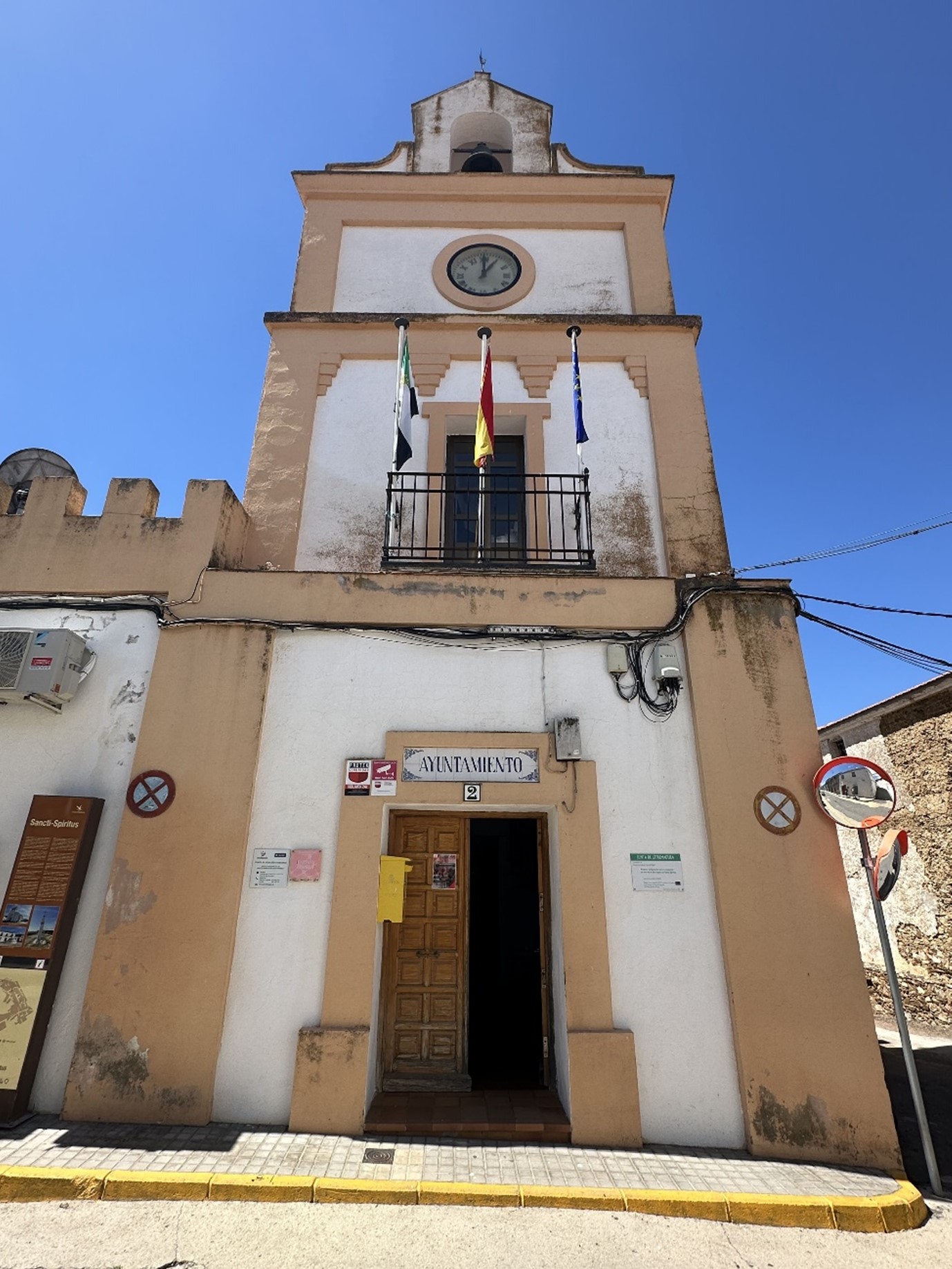
The Town Hall of the Sancti-Spíritus forms part of the group of representative buildings within the urban centre and is integrated into the traditional landscape of the locality, characterised by whitewashed low-rise constructions and popular architecture.
Its presence contributes to structuring the administrative and social life of the municipality, within a townscape where the Iglesia Parroquial del Espíritu Santo, the Rollo or Picota and several manor houses with Baroque façades also stand out.
HISTORY
The Town Hall of the Sancti-Spíritus forms part of the municipality’s historical evolution as an administrative and local government centre. The locality originated in the processes of occupation and territorial reorganisation following the Reconquest, initially linked to inhabitants from Puebla de Alcocer and Esparragosa de Lares. Various historical references place the enclave within the sphere of influence of the Order of the Temple and later the Order of Alcántara, eventually becoming integrated into the Viscounty and Lordship of Puebla de Alcocer. Since 1834, it became part of the judicial district of Puebla de Alcocer—now disappeared—but it never belonged to the Viscounty of Puebla de Alcocer, as it belonged to the Order of Alcántara.
According to local tradition, the place name Sancti-Spíritus is related to the appearance of a dove on an olive tree, interpreted as a symbol of the Holy Spirit. This event is said to have motivated the construction of a small oratory that eventually gave rise to the permanent settlement and the later parish church. The name already appears documented in 16th-century sources. The town hall building has historically fulfilled administrative, representative and public service functions for the population. As occurred in many small rural municipalities, some municipal rooms had complementary uses related to the locality’s judicial and governmental organisation. Since 1834, Sancti-Spíritus has been integrated into the judicial district of Puebla de Alcocer.
HISTORICAL-ARTISTIC DESCRIPTION
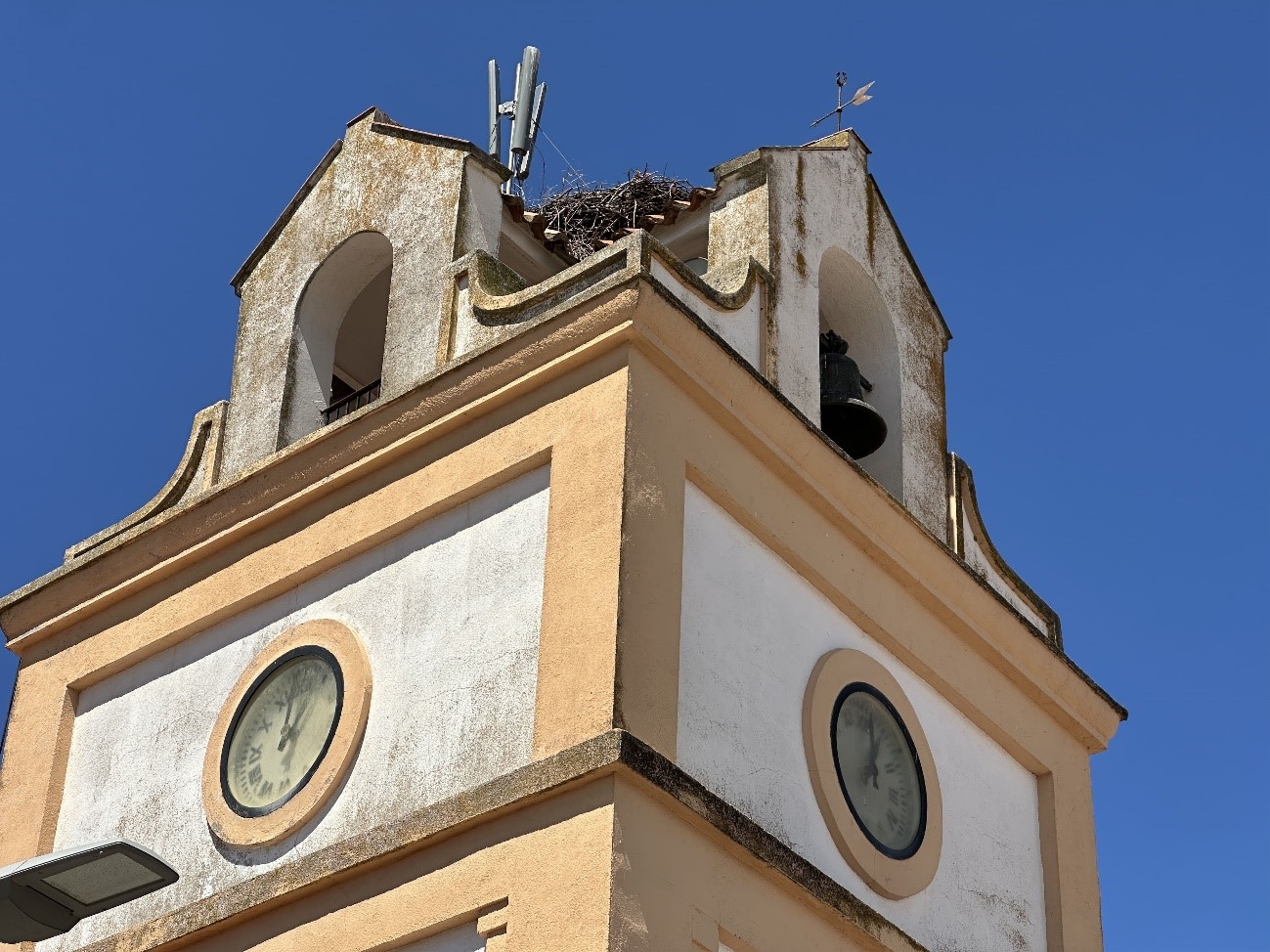
The Ayuntamiento building follows a functional and simple architecture, adapted to the administrative needs of a small rural settlement. It is a two-storey construction with sober lines and little ornamentation, fully integrated into the municipality’s traditional urban environment.
The building also features an upper rooftop terrace currently accessed via a spiral staircase installed in recent times. Its structure follows popular construction models characteristic of the comarca, using traditional materials and practical architectural solutions rather than monumental ones.
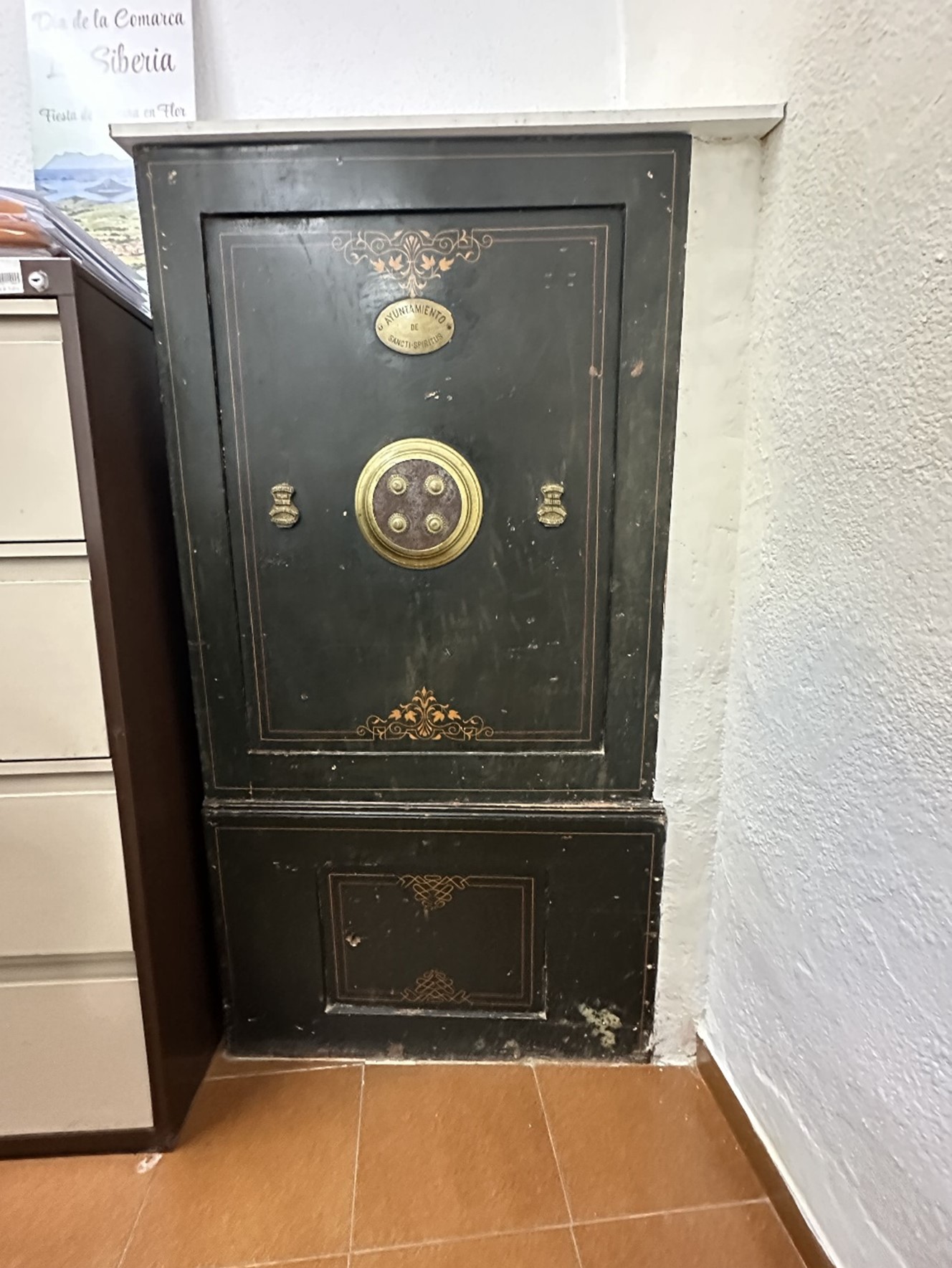
On the ground floor, historical rooms of ethnographic and administrative interest are preserved. One of them was formerly used as the municipal jail, a common function in many rural town halls for centuries. In another room stands a large antique safe which, according to local tradition, has never been opened, constituting one of the most singular and curious elements associated with the town hall building.
MOVABLE HERITAGE
The heritage value of the property lies mainly in its historical role within the institutional and social life of Sancti-Spíritus and in the preservation of elements linked to the municipality’s traditional administration.
INTANGIBLE HERITAGE
The Ayuntamiento constitutes the locality’s main institutional space and forms part of the daily life of Sancti-Spíritus as the headquarters of municipal management and the setting for public activity.
Its presence in the centre of the municipality reinforces its role as a civic reference point within a settlement whose urban layout retains a strong traditional character.