DESCRIPTION
In the valley traditionally known as Valle de Consolación, surrounded by cork oaks and pasturelands and deeply linked to the religious and emotional identity of Herrera del Duque, stands the Hermitage of Nuestra Señora de Consolación, one of the most important Marian sanctuaries in the La Siberia region.
For centuries, the hermitage has been the town’s main devotional center and a place deeply rooted in the collective memory of the people of Herrera. The ensemble formed by the church, the valley, the annex buildings, and the natural surroundings constitutes one of the municipality’s most distinctive cultural and spiritual landscapes.
Tradition, pilgrimages, religious festivities, and the annual transfer of the Virgin make this site a place of enormous heritage, religious, and identity-related importance. The sanctuary’s historical brochure itself defines Consolación as “the heart of Herrera,” an expression that perfectly summarizes the symbolic role this place plays in local life.
It continues today to be one of the main centers of pilgrimage and religious celebration in the area, especially during the ceremonies and festivities held in honor of the Virgen de Consolación.
HISTORY
The history of the Hermitage of the Virgen de Consolación dates back at least to the late 15th century, although popular tradition places the origin of the devotion much earlier.
According to local tradition, the image of the Virgin appeared in a cork oak, a legend closely linked to the pastureland landscape surrounding the sanctuary. This tradition also explains some of the symbols historically associated with the image.
Preserved documentation confirms that on February 8, 1498, during a pastoral visit, the Bishop of Berito was already auditing the steward of the hermitage, clear proof that the sanctuary and devotion were fully established by the end of the 15th century.
In 1503, the general visitor Don Antonio Contreras expressly ordered that “the image and altar shall neither be removed nor relocated from the new chapel where it now stands,” already reflecting the importance of the site and Marian veneration.
Throughout its history, the hermitage received different names, being successively referred to as Nuestra Señora de la Merced and the chapel of Santa Catalina, until the dedication to Nuestra Señora de Consolación was definitively established.
In a visitation record from 1545, the name Consolación already appears documented, and records related to the sanctuary’s funds, offerings and administration began to be kept. During this same period, the image was transferred to the parish church in rogation processions to pray for rain, demonstrating the profound connection between the Virgin and the daily life of the town.
Around 1630, the hermitage was enlarged and more solemn festivities in honour of the Virgin began to be celebrated. Later, during the 18th century, the sanctuary underwent a profound architectural transformation that shaped much of the monumental appearance it still preserves today. According to historical documentation, during this period a larger church was built, featuring a camarín, Baroque altarpiece, dome, pulpit, sacristy, hospices and quarters for pilgrims and caretakers of the sanctuary.
During the Peninsular War, in 1811, French soldiers stole various liturgical and ornamental objects from the sanctuary, including the Virgin’s throne, a chalice, cruets and other silver elements, as well as the image’s dress. The surroundings of the Hermitage of Virgen de Consolación also became linked to several episodes of the Peninsular War. Local tradition recalls how Spanish guerrilla fighters ambushed French troops at the top of the Consolación mountain pass, taking advantage of the rugged terrain and the commanding views offered by this natural route over the access roads to Herrera del Duque. These events contributed to reinforcing the symbolic and strategic importance that this site has historically held for the people of Herrera del Duque.
In the 19th century, the disentailment process caused a significant loss of properties and economic resources linked to the hermitage, leading to a period of decline and deterioration. Recovery began slowly during the first third of the 20th century. During the Spanish Civil War, the image was protected by several local residents of different political ideologies, who hid it to prevent its destruction. After the conflict ended, it was once again publicly displayed for worship.
In 1941, the vaults and roof structure were restored. In 1954, coinciding with the Marian Holy Year, Consolación became definitively established as a pilgrimage centre for Herrera del Duque and numerous towns throughout the region.
In 1955, new interior and exterior restoration works were undertaken, while from 1959 onwards the annual transfer of the image to the parish church was established for the celebration of the novena prior to the feast day of 8 September, a tradition that remains alive today.
One of the most important moments in the contemporary history of the sanctuary took place on 7 September 1980, when the Cardinal of Toledo, Marcelo González Martín, canonically crowned the Virgen de Consolación before thousands of faithful from Herrera del Duque and numerous towns throughout the region.
HISTORICAL-ARTISTIC DESCRIPTION
The present hermitage is the result of successive enlargements and reforms carried out between the 16th and 18th centuries, with Baroque, Renaissance and Neoclassical elements predominating.
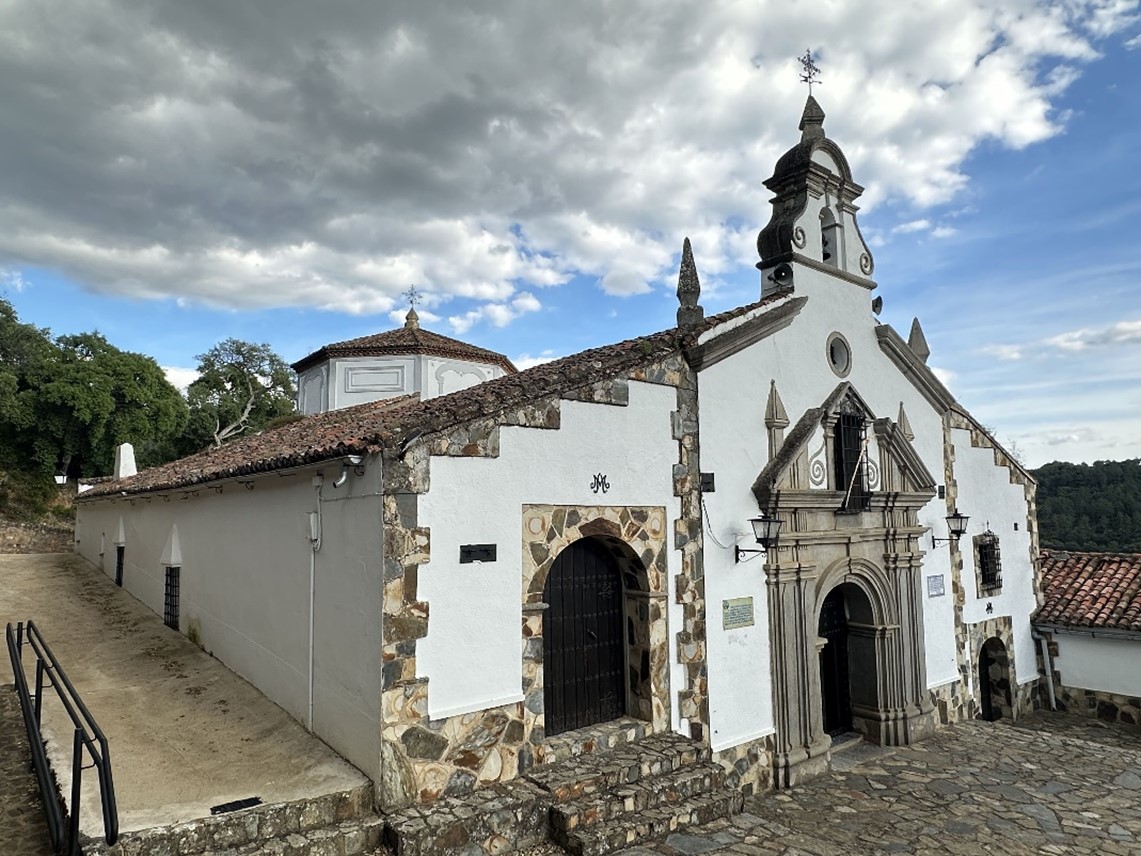
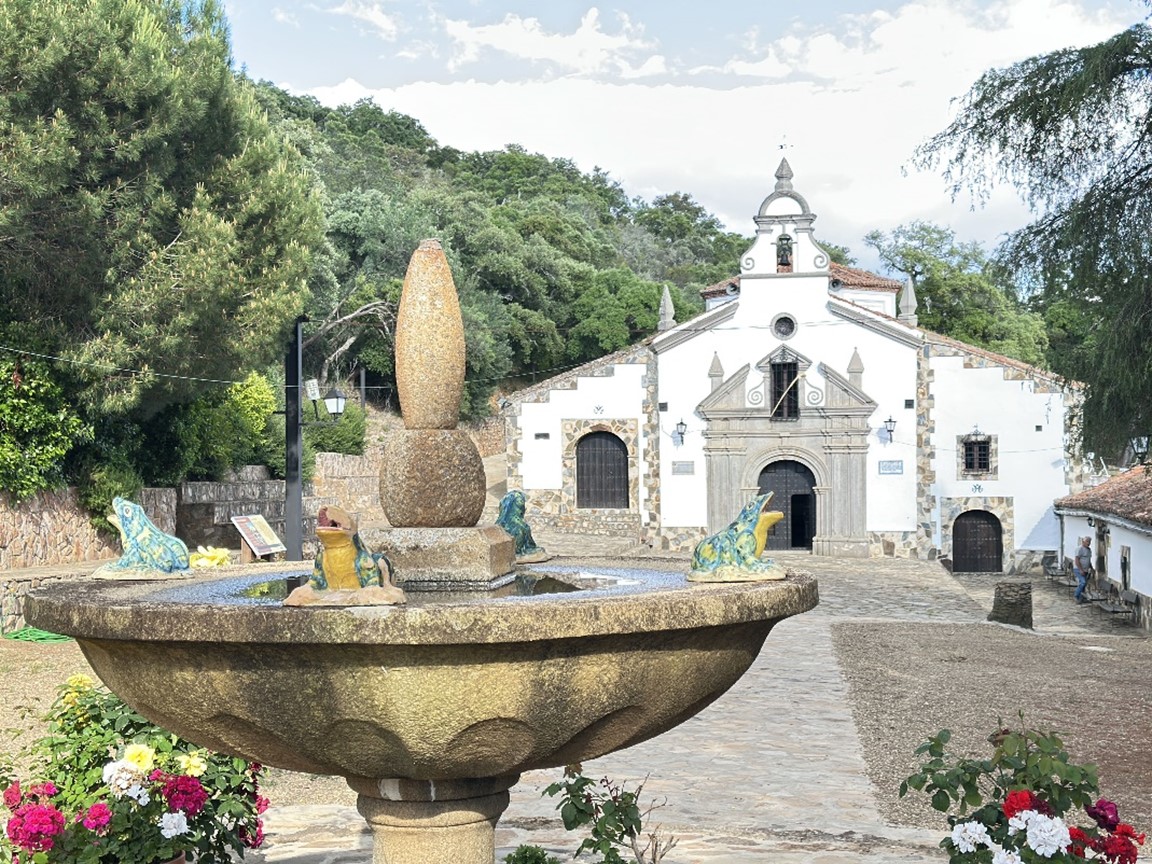
The complex stands on a large esplanade surrounded by vegetation and dehesa landscape. The main façade presents a sober composition crowned by a bell gable, while the principal entrance leads into a single-nave church containing important decorative and liturgical elements.
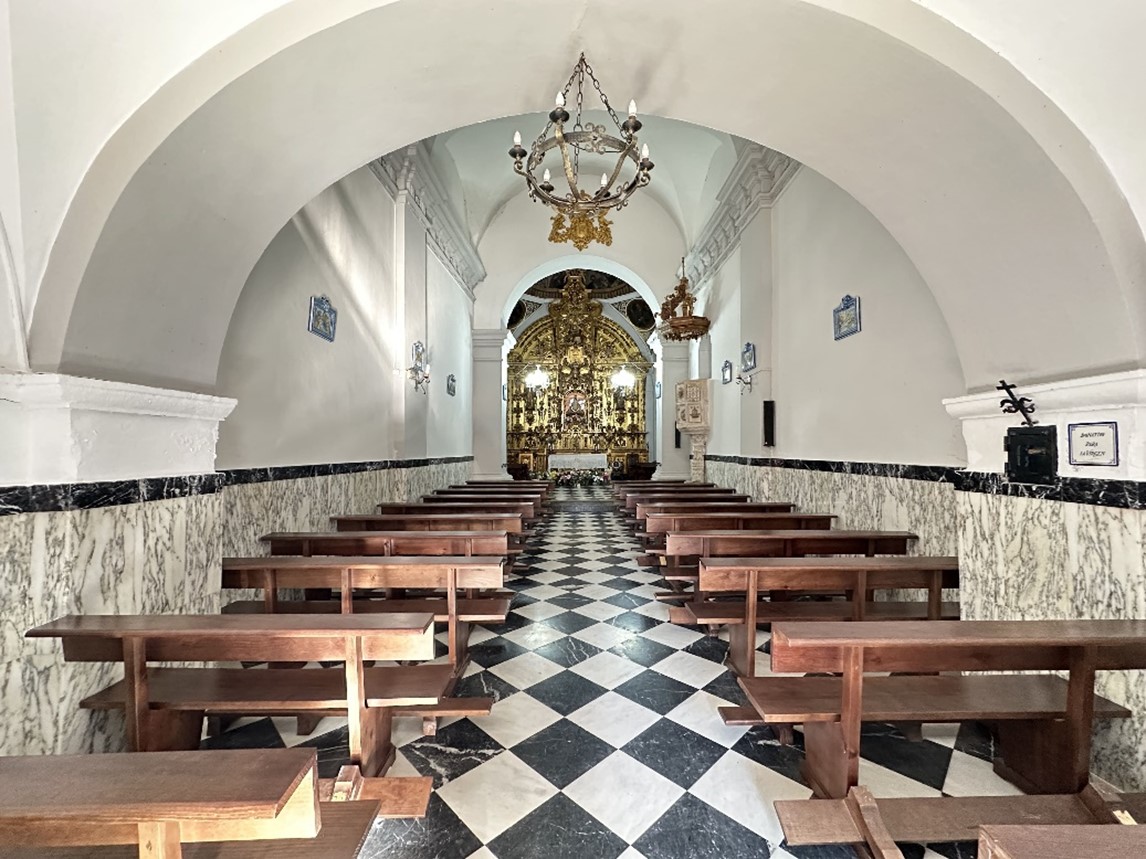
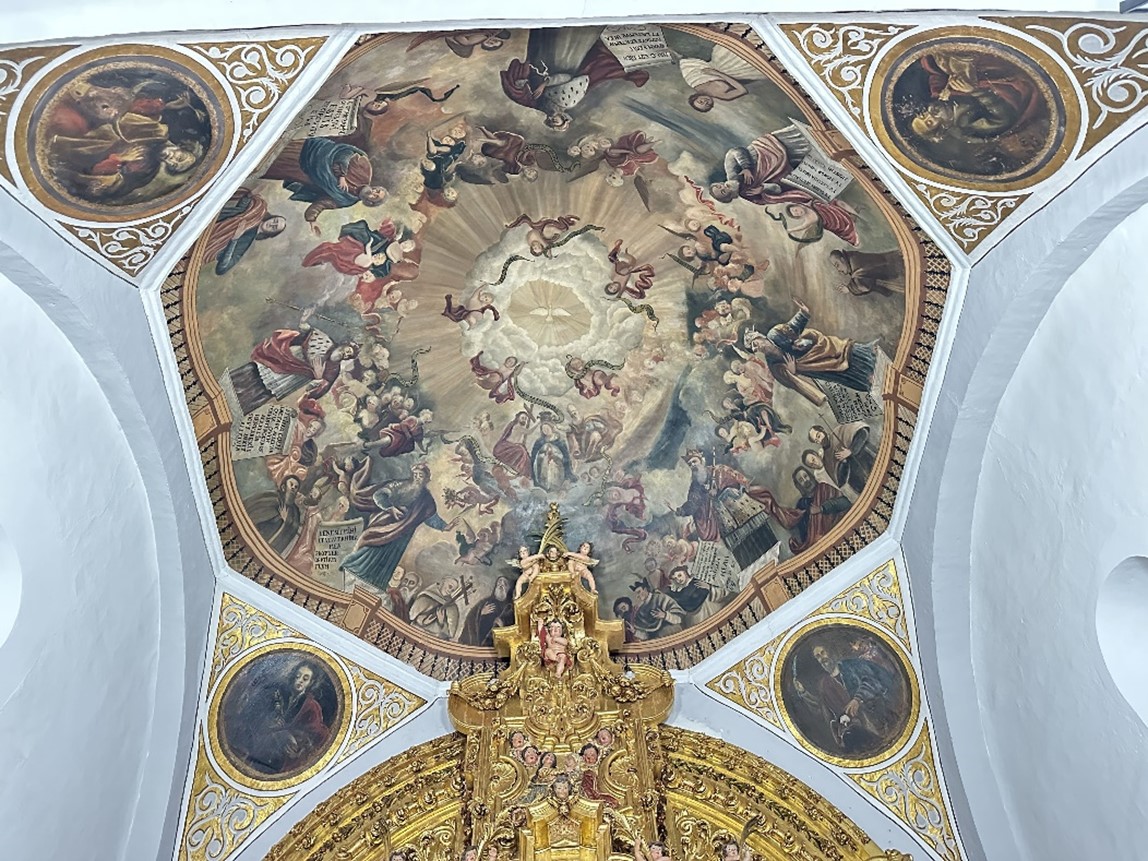
The interior houses one of the most outstanding religious artistic ensembles in Herrera del Duque. The main nave preserves a pulpit, Baroque altarpiece, painted hemispherical dome and several adjoining spaces such as the sacristy and camarín.
The main altarpiece constitutes the principal artistic feature of the sanctuary. It is a Baroque work with Renaissance influences, organised into three vertical sections and decorated with Solomonic columns and abundant period gilding. The structure displays an extraordinary ornamental development and contains images of Saint Joseph, Saint Joachim and Nuestra Señora de Consolación in the central niche.
Historical documentation indicates that its installation may have taken place around 1728, following an agreement with the Brotherhood of the Holy Guardian Angel authorised by the Archbishopric of Toledo.
Particularly noteworthy is also the Virgin’s camarín, built in 1637 behind the altarpiece. It features a dome, lantern, altar and antique Talavera tiles. It also preserves gravestones and parchments related to the act of the Virgin’s coronation.
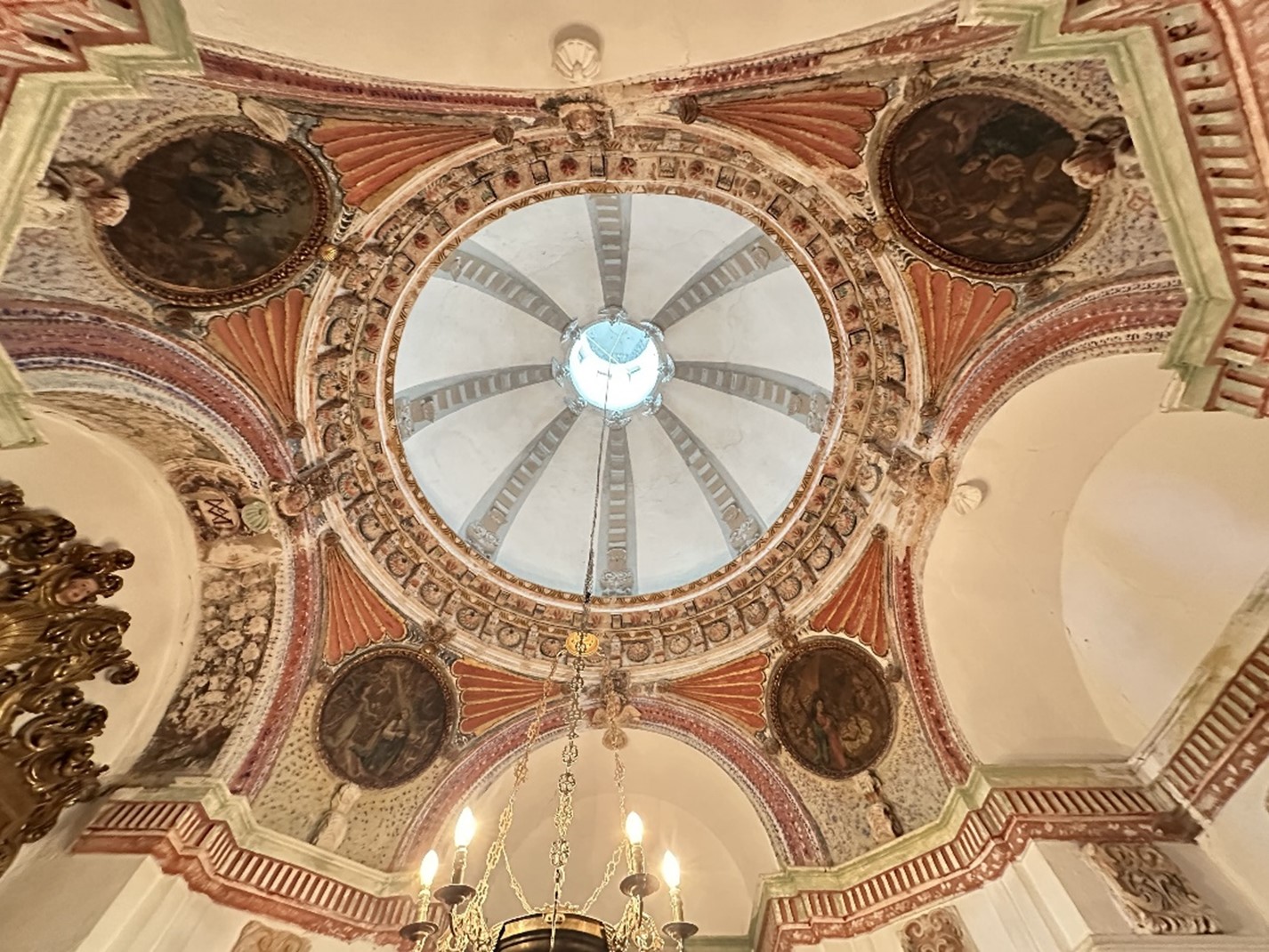
The niches are decorated with images and allegorical ceramic panels, while the pendentives display scenes related to the Flight into Egypt, the Annunciation, the Nativity and the Presentation.
The chapel is crowned by a dome resting on pendentives decorated with the Evangelists and preserves restored paintings whose central motif represents the Coronation of the Virgin.
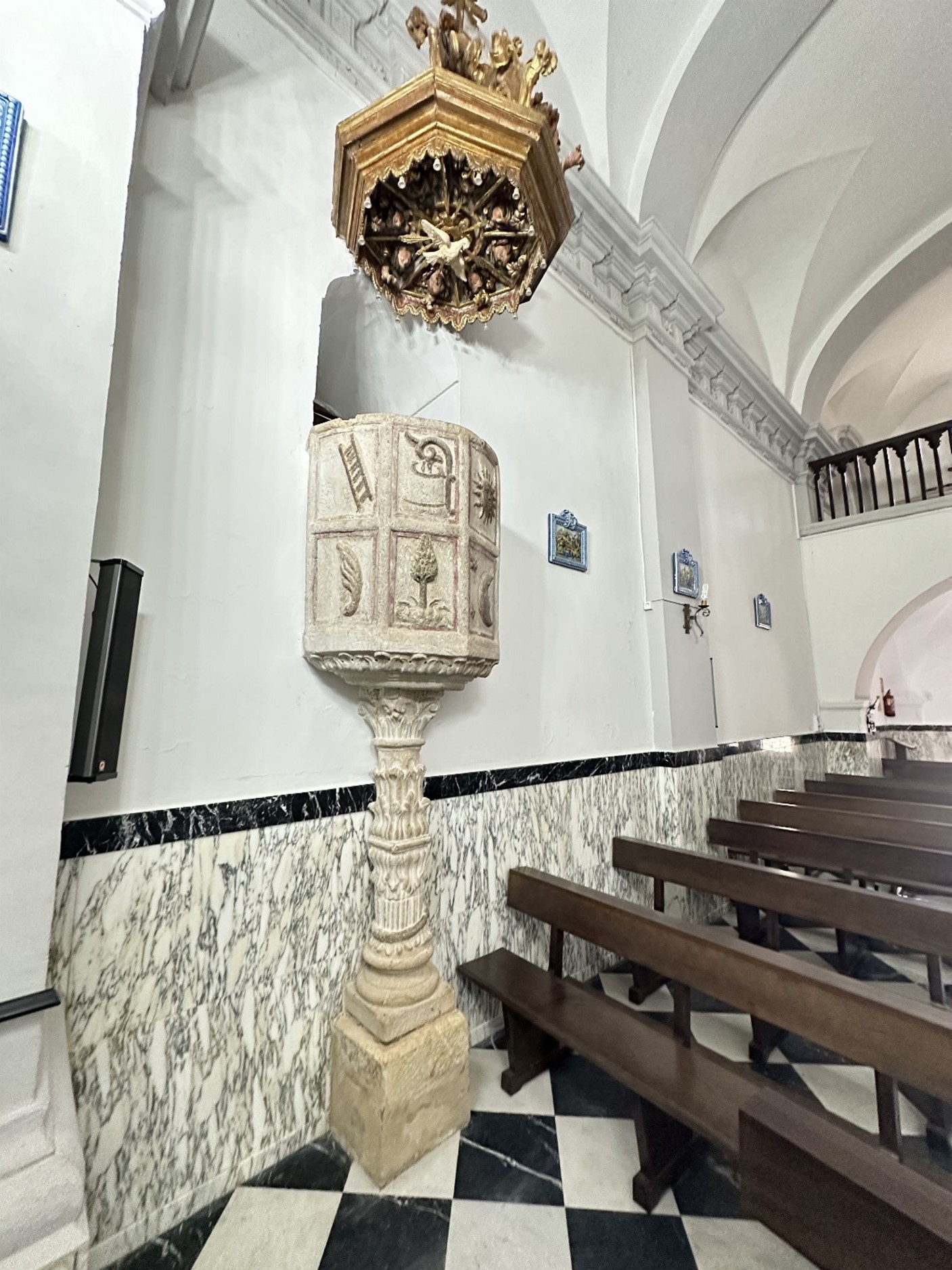
The pulpit, made of limestone, constitutes another of the sanctuary’s singular features. It displays rectangular panels decorated with religious and Marian symbols such as castles, palms, moons, suns with stars, trees and crowns. The column incorporates serpentine motifs and a Corinthian capital.
THE IMAGE OF NUESTRA SEÑORA DE CONSOLACIÓN
The sculpture of the Virgen de Consolación constitutes the principal devotional and artistic element of the sanctuary.
Tradition associates its appearance with a cork oak and with the acorn that she holds in her hand while presenting the Child Jesus.
The image is a small 16th-century Gothic wooden sculpture, later dressed, of extraordinary expressive sweetness and remarkable sculptural quality. She carries the Child on her left arm and rests upon a crescent moon supported by angels added during later periods.
The crown used for the canonical coronation of 1980 was made of silver gilt and funded by the inhabitants of Herrera del Duque.
MOVABLE HERITAGE
The sanctuary preserves important movable heritage assets linked to worship and Marian devotion.
Among the most noteworthy are:
• The main Baroque altarpiece.
• The Gothic image of Nuestra Señora de Consolación.
• The limestone pulpit decorated with religious symbolism.
• Antique Talavera ceramics and mosaics.
• Parchments and documents related to the canonical coronation.
• Liturgical ornaments and devotional objects associated with the Virgin.
• Mural paintings and decorative elements of the dome and pendentives.
The memory of significant historical events has also been reflected in ceramic panels installed at different points throughout the sanctuary.
INTANGIBLE HERITAGE
The Hermitage of Consolación constitutes one of the great centres of popular religiosity in La Siberia.
Devotion to the Virgin has shaped much of the collective identity of Herrera del Duque and numerous surrounding towns for centuries. Pilgrimages, novenas, rosaries of dawn, religious processions and ceremonial transfers of the image continue to gather thousands of faithful every year.
Particularly important is the annual transfer of the image to the parish church during the final days of August for the celebration of the novena preceding the patron saint festivities.
The canonical coronation of 1980 represented one of the most important religious events in the contemporary history of the municipality and definitively consolidated the regional character of the devotion.
Today, the valley of Consolación continues to be a place of spiritual gathering, popular coexistence and collective memory deeply rooted among the inhabitants of Herrera del Duque.