DESCRIPTION
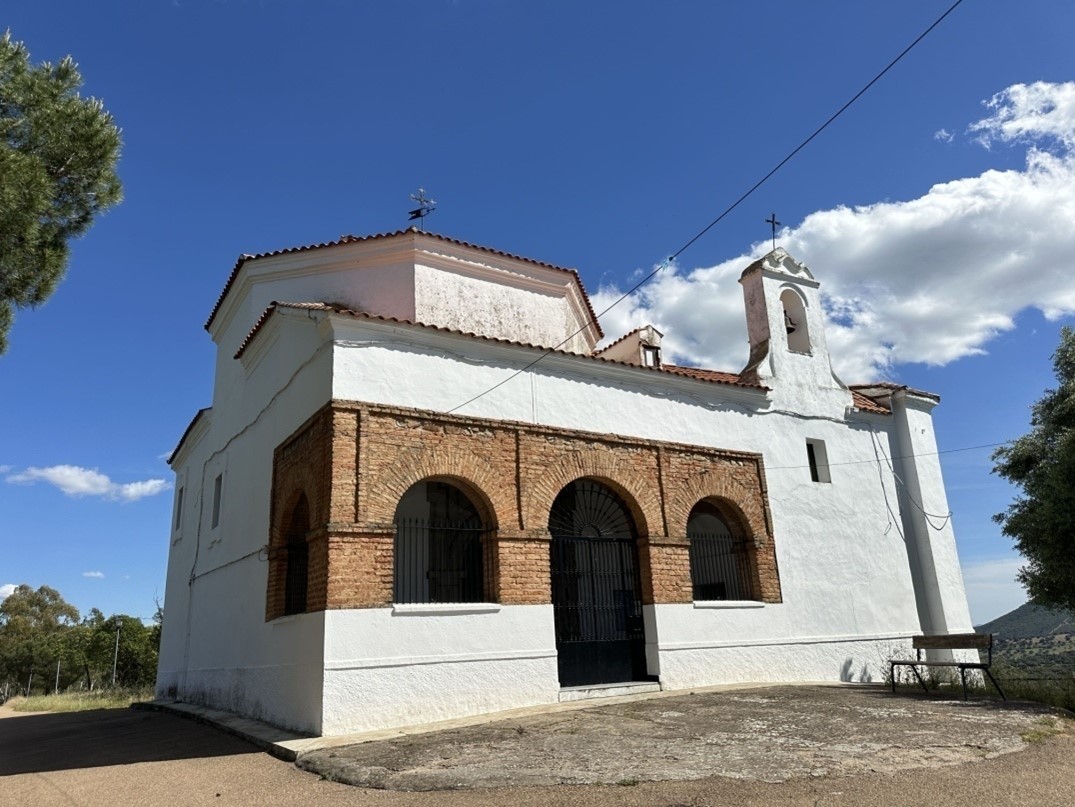
The hermitage of Nuestra Señora de la Soledad del Fuego, popularly known as the Virgen del Fuego, stands on the outskirts of the urban centre of Baterno, constituting the town’s main devotional landmark.
HISTORY
The hermitage stands on the outskirts of Baterno and was built in the 18th century. Formerly dedicated to the Virgen de la Soledad, its origin dates back to an event that took place on Saint Bernard’s Day, on 20 August 1672, in Madrid.
On that date, a fire broke out in a bakery located in the Plaza Mayor of the Spanish capital. A man from Baterno was trapped in one of the upper rooms of his house, unable to escape the blaze, and entrusted himself to the Holy Image of the Virgen de la Soledad while embracing it. The man threw himself from above and landed unharmed, managing to escape the flames.
The man left the Holy Image at the site of the fire until a woman managed to remove it when the canvas had been burned, except for the face, chest, hands and three strips of the same canvas. Since then, miraculous properties have been attributed to the Virgen.
HISTORICAL AND ARTISTIC DESCRIPTION
The temple is located on the outskirts of the urban centre, on a small promontory that offers a serene view of the surroundings.
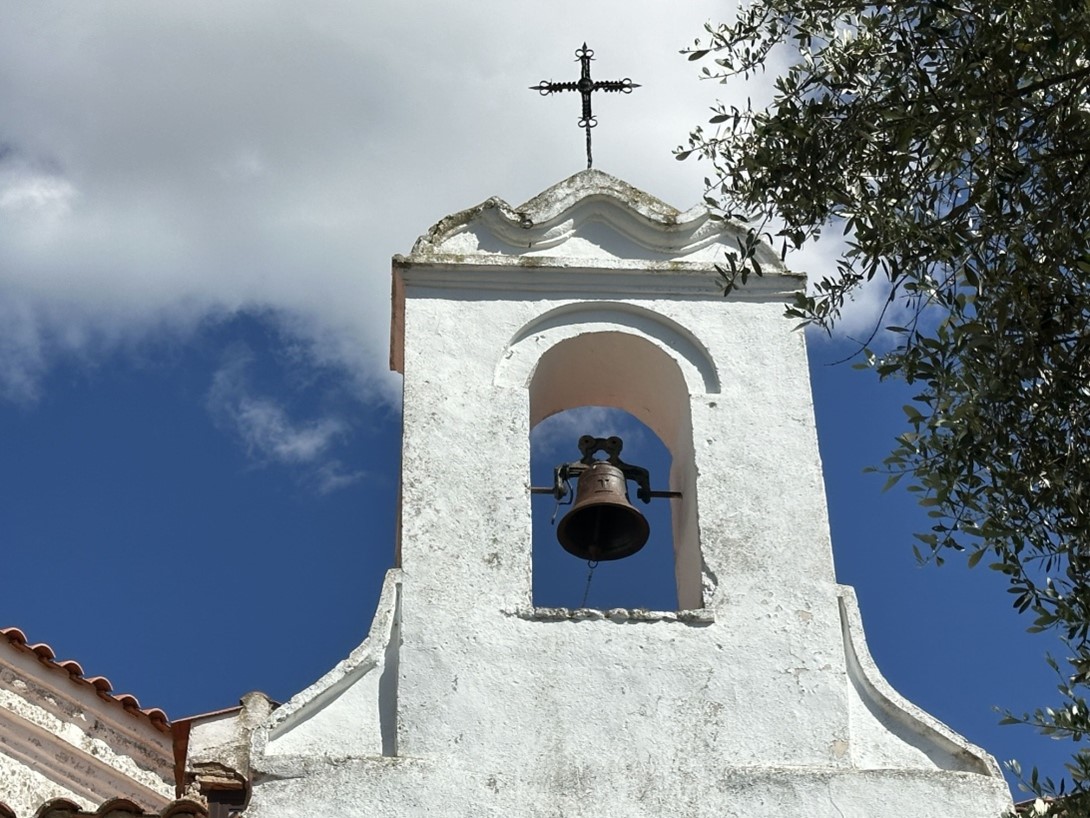
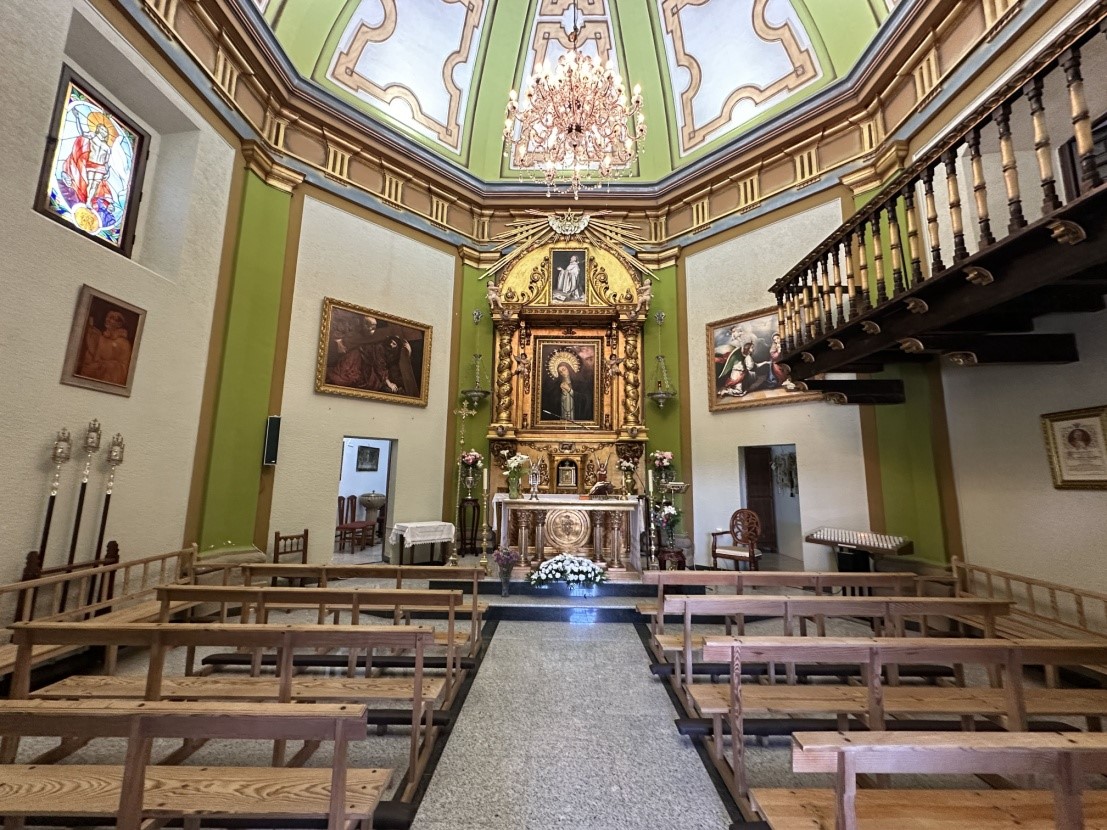
Its architecture is a clear example of traditional Extremaduran construction. The hermitage is a modest whitewashed building with a single nave and a characteristic bell gable that breaks the horizontality of the landscape.
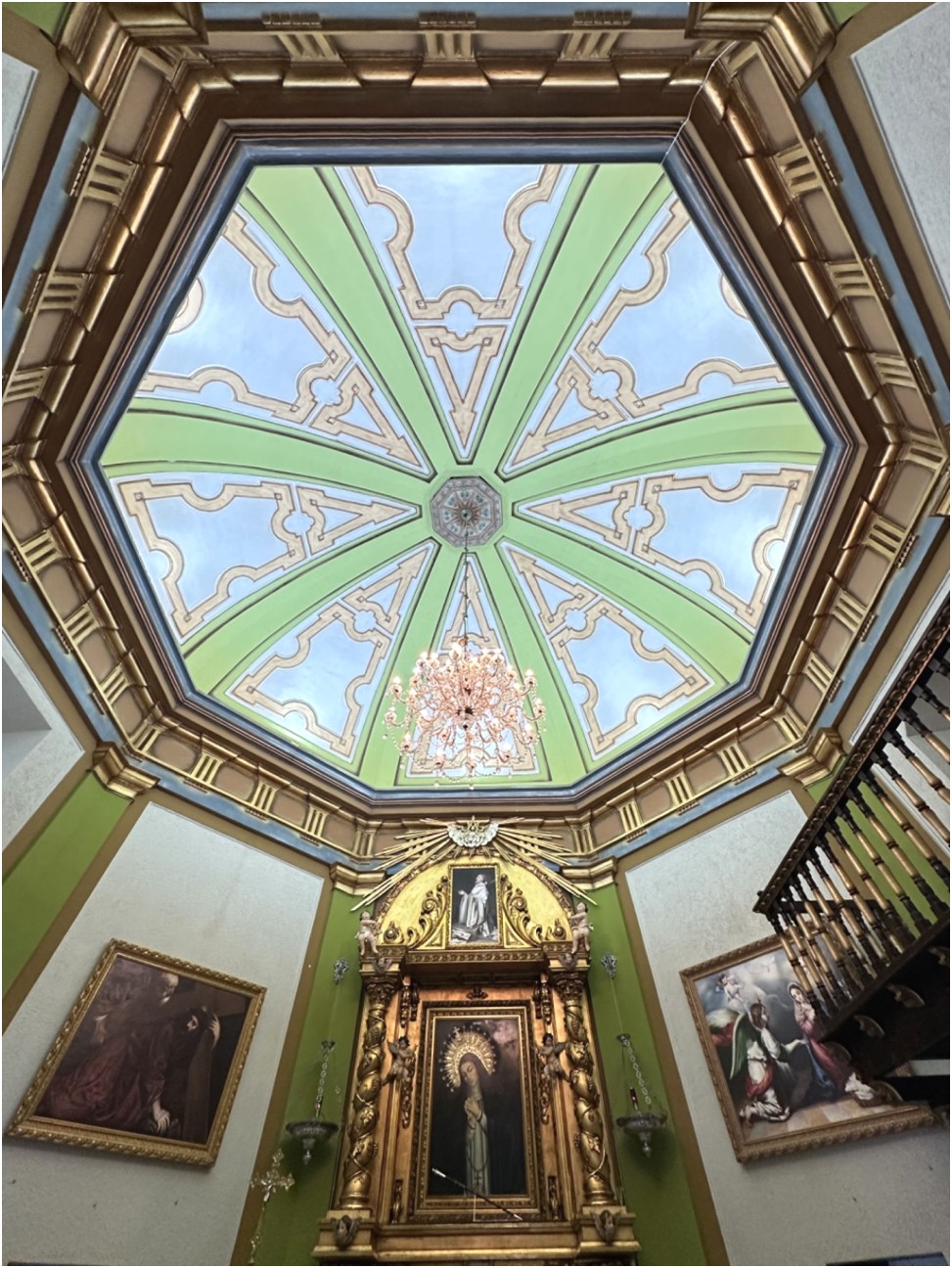
It stands on an octagonal floor plan attributed to Templar influence in an isolated area amid a rugged landscape, next to Cerro del Morro.
RELEVANT FIGURES RELATED TO THE POI
In 1695, Fray Joseph de San Juan considered it a miracle of God that the fire had not affected essential parts of the Holy Image and worked to ensure that it would be venerated by believers. The image was taken to the Royal Convent of San Gil in Madrid and washed in a pond with a scouring pad and ashes, and there the servant of God E. Joseph de Canalejas gave it the name Nuestra Señora del Fuego. Aware of its miraculous virtues, he went to the cell of a religious man who had been given up for dead and, after entrusting himself to the Virgen and praying a Hail Mary, the friar was found out of danger that very night and his illness disappeared.
On 20 August, the town of Baterno in the province of Badajoz celebrates the feast in honour of Nuestra Señora del Fuego, a depiction of the Virgen on canvas that was canonically crowned by Archbishop Marcelo González Martín.
MOVABLE HERITAGE
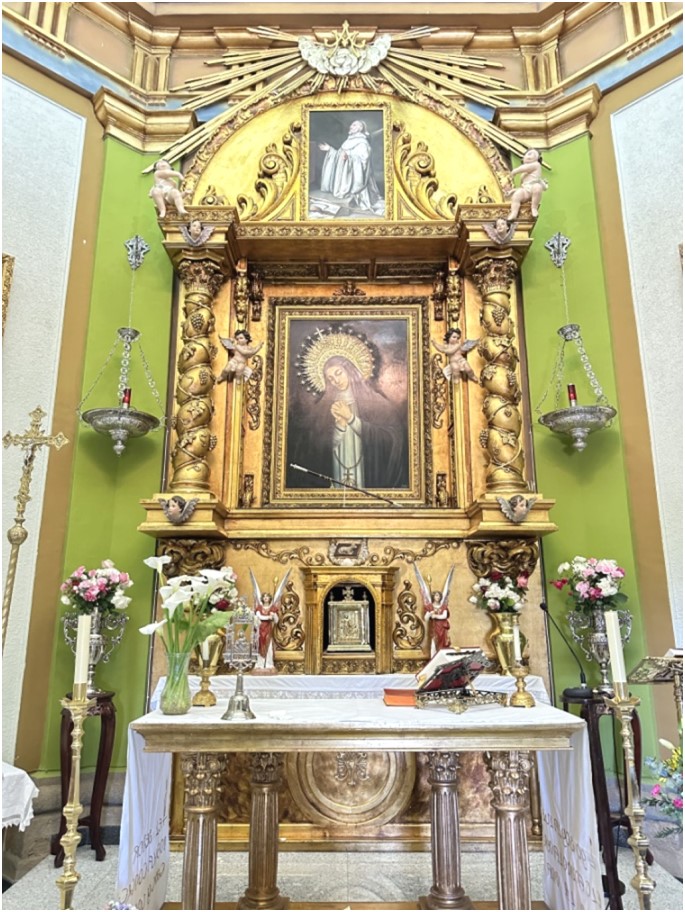
Painting on canvas of the Virgen del Fuego, corresponding to the original image linked to the event that took place in Madrid in 1672. According to documented tradition, the canvas was partially affected by the fire, while the face, chest, hands and several sections remained intact, which has been interpreted as a miraculous event.
INTANGIBLE HERITAGE
Devotion to Nuestra Señora del Fuego constitutes the main element of intangible heritage associated with the hermitage. This veneration originated in the fire that occurred in Madrid in 1672, from which miraculous properties have been attributed to the image, consolidating its worship among the inhabitants of Baterno. Likewise, on 20 August the town celebrates the festivity in honour of the Virgen del Fuego, commemorating the founding event of its devotion.