DESCRIPTION
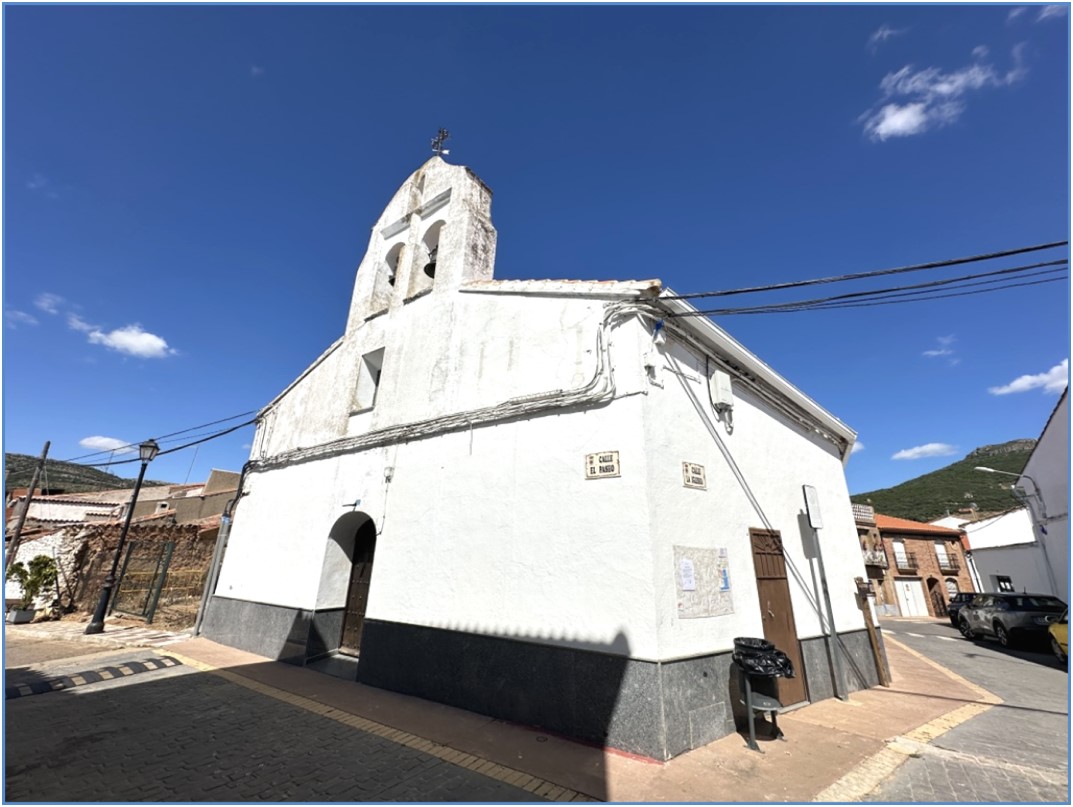
The Parish Church of San Andrés Apóstol stands as the main architectural and spiritual landmark of the municipality of Baterno, constituting an essential meeting point for the religious and social life of the town. Located in the urban center, its discreet yet significant presence reflects the sober and traditional character of the rural churches of the Siberia Extremeña. This modestly scaled building responds to the needs of a small community, offering a functional space dedicated to worship and the celebration of the main liturgical acts. Its integration into the urban environment, alongside traditional popular architecture dwellings, reinforces its role as a structuring element of the municipality’s daily life.
HISTORY
The municipality of Baterno was founded in the 16th century as a village belonging to the municipality of Capilla, from which it separated in the 18th century. The Parish Church of San Andrés Apóstol, considered the municipality’s main architectural and
spiritual landmark, was built in 1517, although it has undergone subsequent renovations to ensure its preservation. The church was remodeled in 1977. In 2026, the Diputación de Badajoz and the Archdiocese of Toledo commissioned a new restoration of the church.
Baterno borders the province of Ciudad Real, in the region of Castilla-La Mancha, and due to its location in such a remote enclave far from major cities, it remained isolated for centuries. Because of its geographical location, it has historically been more closely linked to what is now Castilla-La Mancha than to Extremadura. These ties remain to this day and, in fact, Baterno belongs ecclesiastically to Toledo. Within its architectural heritage, this modest church stands out, displaying from an architectural perspective the typical features of rural Extremaduran churches from the 16th and 17th centuries.
The festivities of Baterno are closely linked to religious tradition, the most important being the fiestas of the Virgen del Fuego in August and the feast of San Andrés in September.
HISTORICAL AND ARTISTIC DESCRIPTION
The Parish Church of San Andrés Apóstol is a construction based primarily on the use of masonry and stone, materials that give it a robust appearance and remarkable durability.
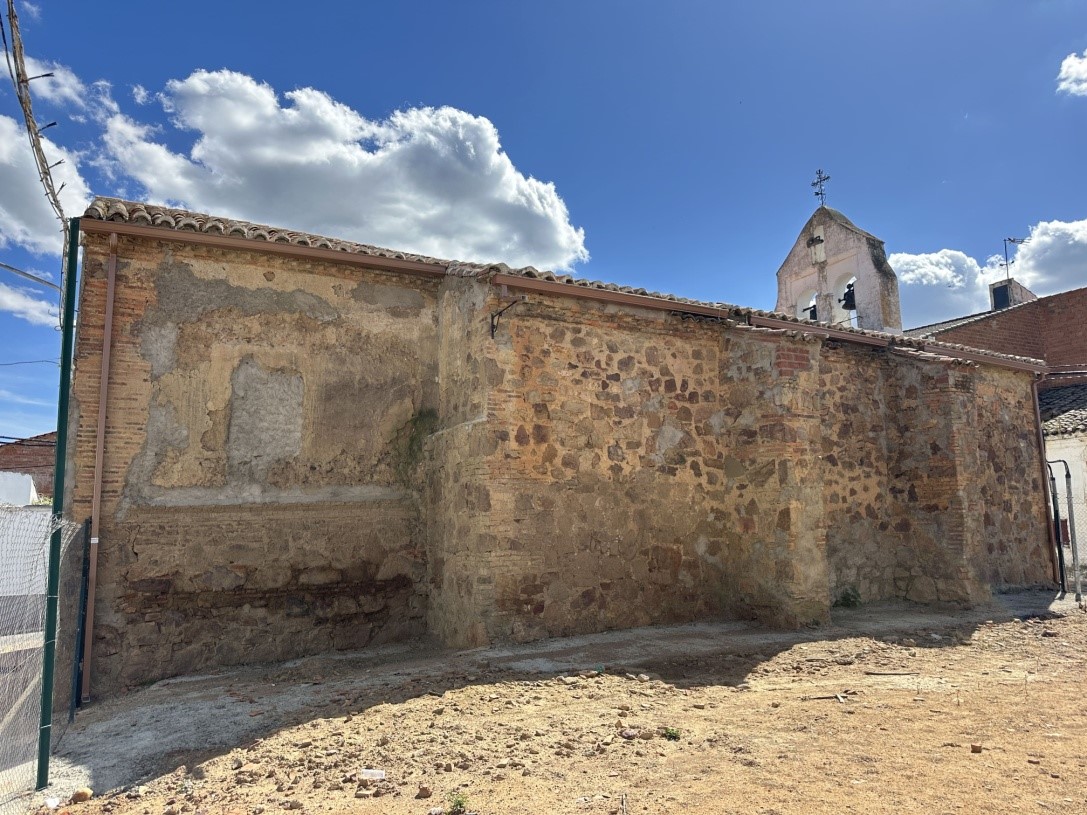
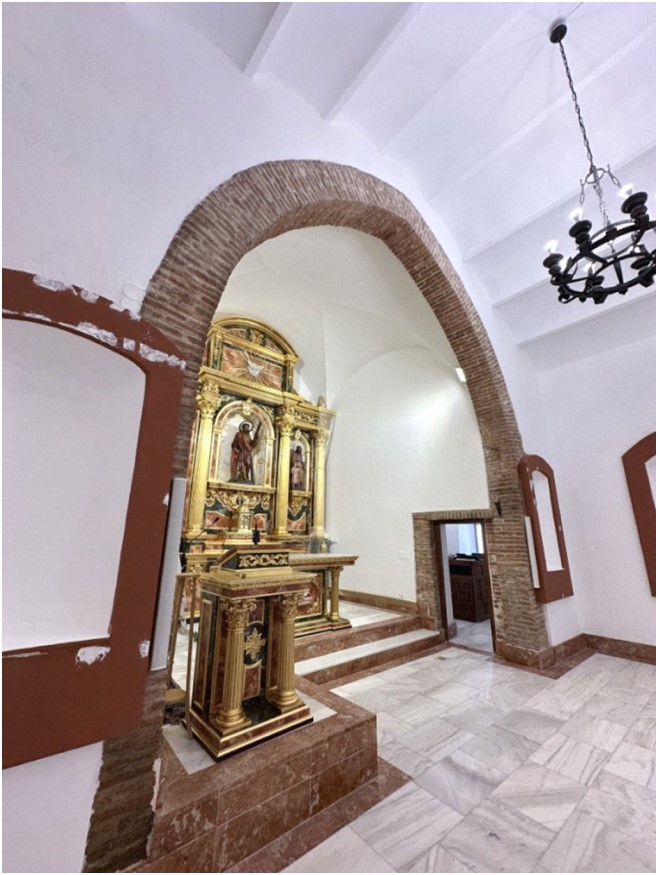
The church has a single nave floor plan, which provides distinctive acoustics and direct visibility toward the main altar from any point within the building. It is a small and modestly built structure, whitewashed, and during the most recent renovation one of
the side walls was left exposed in stone. A small bell gable indicates its religious character, and this exterior element rises above the church and supports the bells that, even today, mark the rhythm of daily life and announce the most important festivities
of the liturgical calendar.
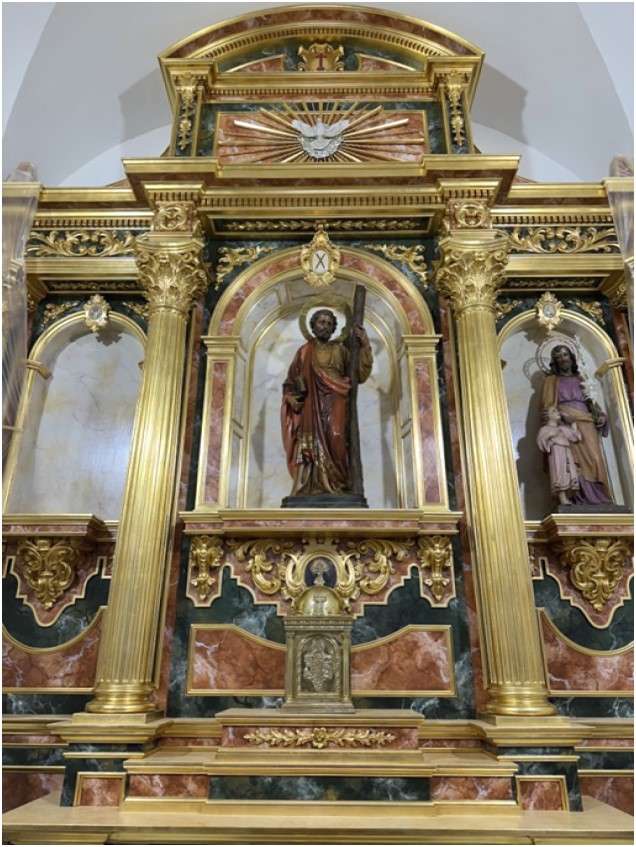
The interior of the church stands out for its simplicity. The main altarpiece, although lacking the opulence of the great basilicas, fulfills its catechetical function through images that inspire devotion. Natural light, discreetly entering through strategically
placed openings, highlights the texture of the walls and creates an atmosphere of solemnity. The sobriety of the interior helps focus attention on what is essential: the altar and the tabernacle.
The exterior walls provide interesting details about local construction techniques. The solidity of the buttresses and the arrangement of the ashlar masonry at the corners reveal the skill of the master builders who worked in the area.
The Parish Church of San Andrés Apóstol in Baterno represents an essential stop for those traveling through the Siberia Extremeña with a genuine interest in ecclesiastical heritage.
RELEVANT FIGURES RELATED TO THE POI
San Andrés Apóstol was the first to receive the call of Jesus. The New Testament states that Andrés was the brother of Peter and that both were sons of Jonah. His words are expressed with great joy in the Gospel of John, when he runs to meet his
brother Simon to share his excitement at having been called, “the first,” by Jesus. A fisherman from Betsaida in Galilee and a disciple of John the Baptist, Andrés recognized in the son of Joseph the carpenter “the Lamb of God.” The evangelist records the hour of that encounter which, by the Jordan River, marked his existence forever: “it was almost four in the afternoon.” He immediately left his nets and followed him.
MOVABLE HERITAGE
The movable heritage of the Parish Church of San Andrés Apóstol is characterized by its simplicity and functionality, in keeping with the austere nature of the church. Among the most notable elements is the main altarpiece, which houses devotional
images linked to Christian tradition and to the worship of the church’s patron saint. Likewise, the liturgical ensemble is completed with items used in parish worship, such as chalices, vestments, and ceremonial objects, which, although not remarkable for their material richness, possess notable symbolic and religious value for the local community. These elements contribute to keeping religious practice alive in the municipality, reinforcing the continuity of traditions and the cultural identity of Baterno.
INTANGIBLE HERITAGE
The Parish Church of San Andrés Apóstol is closely linked to the municipality’s intangible heritage, serving as the main setting for the religious celebrations that mark the local festive calendar. Among these, the feast of San Andrés, patron saint of the
church, stands out, together with other liturgical and popular celebrations that gather local residents around the church.
Likewise, the church plays a fundamental role in the transmission of values, traditions,and customs, acting as a space of social cohesion in a locality historically marked by its geographical isolation.
Religious practices, community gatherings, and acts linked to faith shape an intangible legacy that remains alive generation after generation, consolidating the church as one of the fundamental pillars of Baterno’s cultural identity.