DESCRIPTION
The remains popularly known as Paredones de la Cava correspond to the remains of the former Castillo de Almagra, a medieval fortification located west of the urban centre of Siruela, in the area known as Huerta de la Seca, within the comarca of La Siberia. The site stands on an isolated hill with broad visual control over the territory, a common feature in medieval defensive constructions.
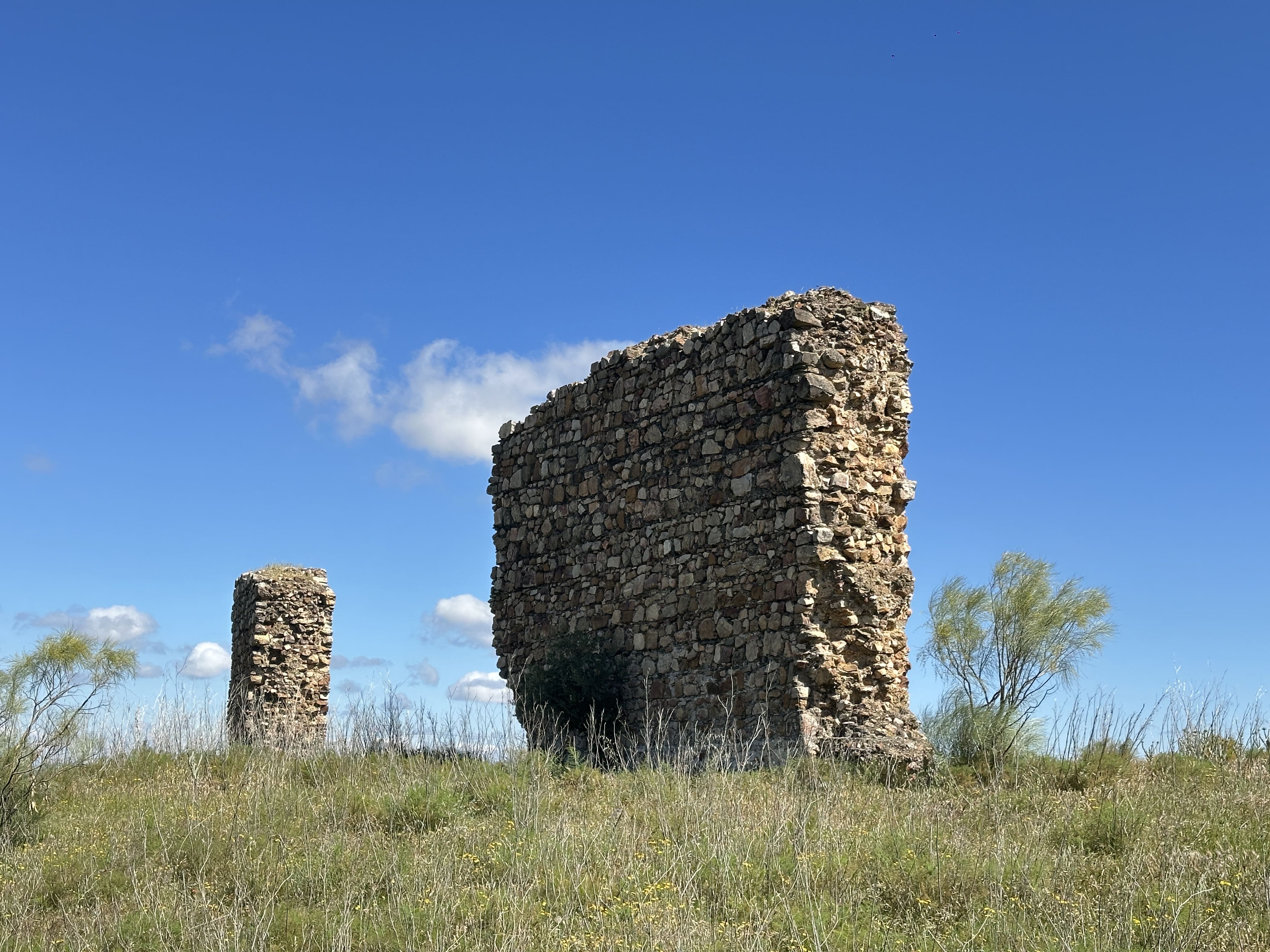
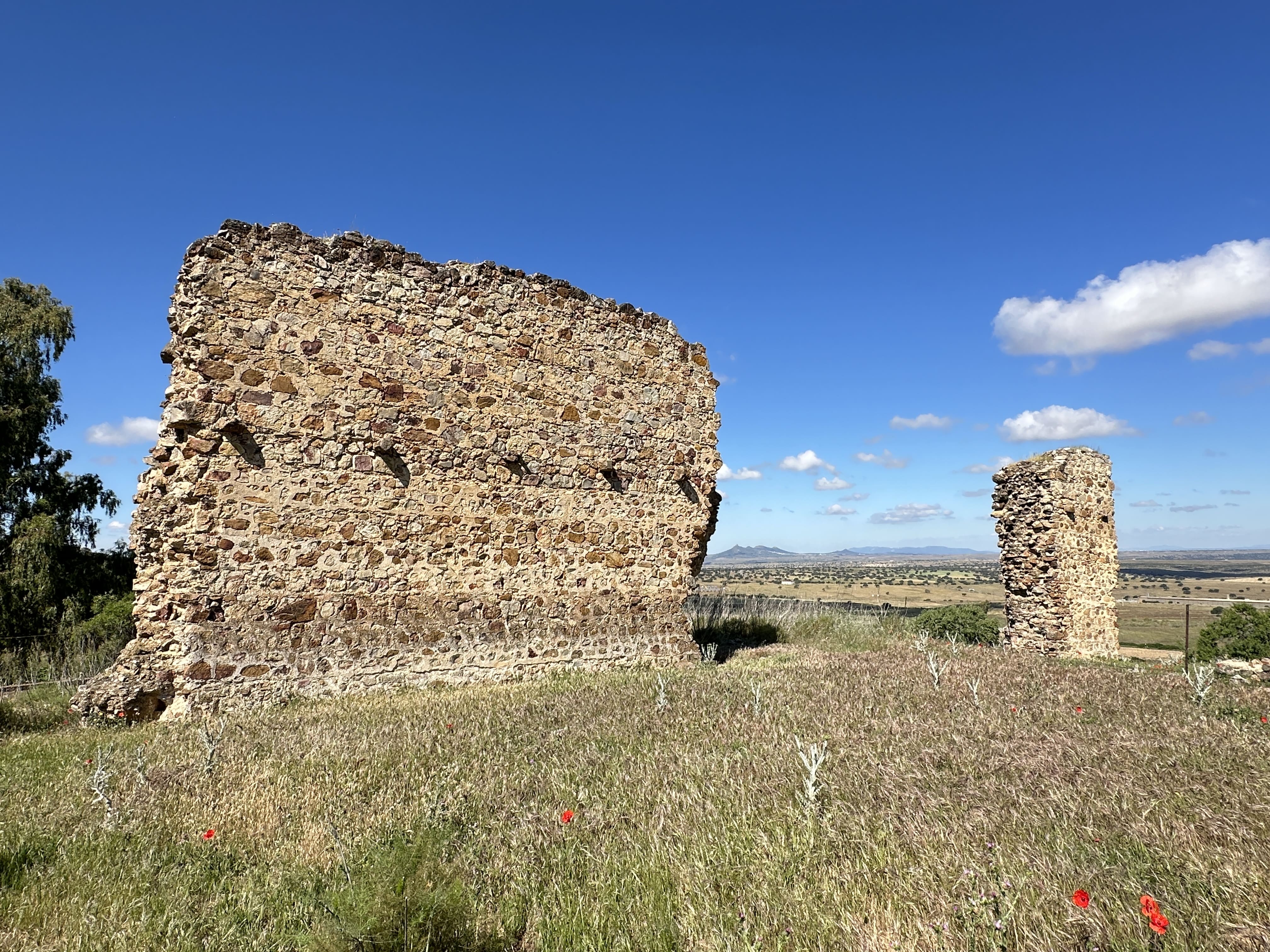
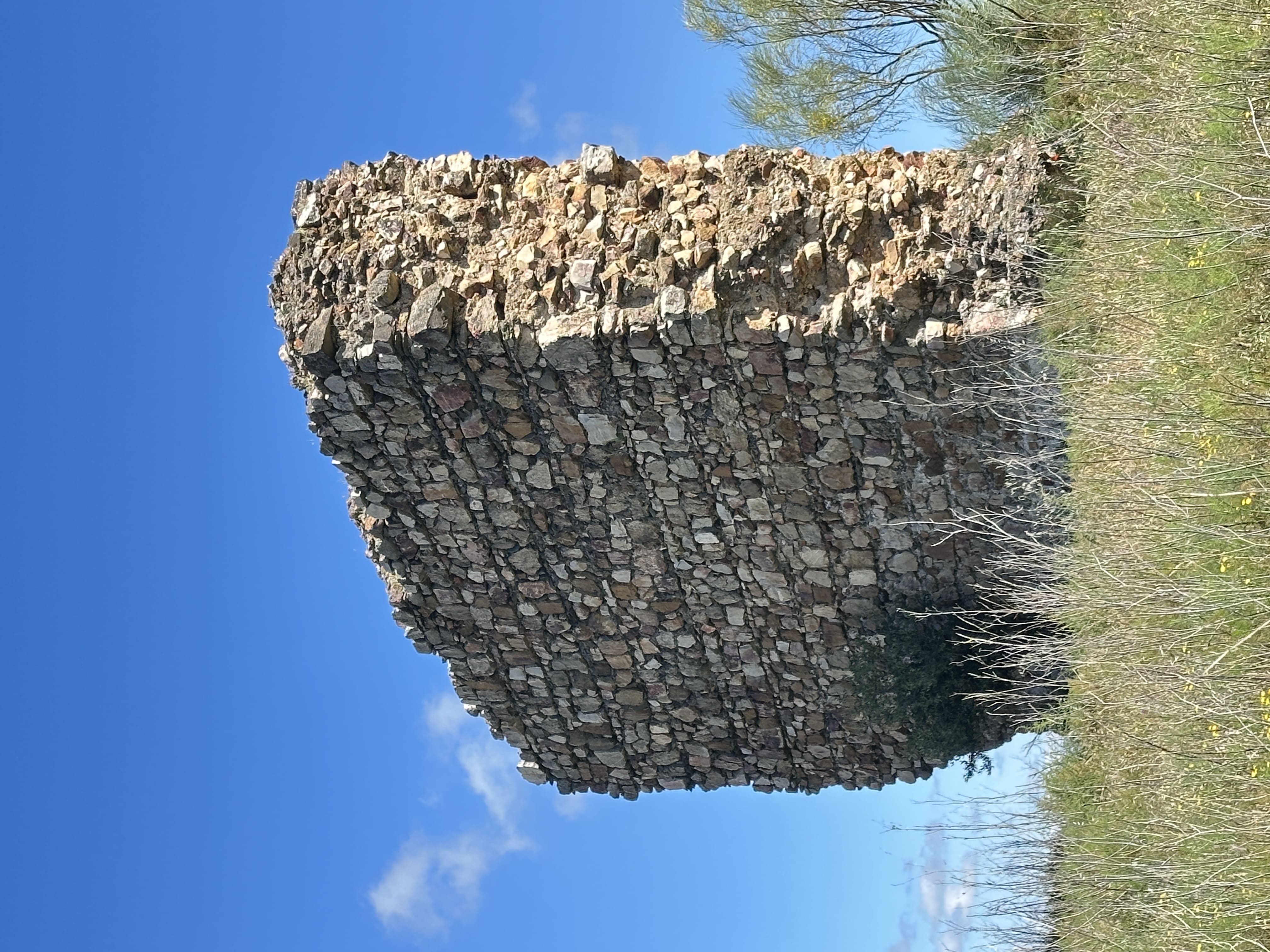
Today, only a few vestiges of the original fortress remain, including several stretches of thick masonry walls visible among the vegetation and the terrain. Remains linked to the defensive hydraulic system are also documented, including a pond or reservoir associated with the castle’s former cistern.
HISTORY
The castle was built by the Order of the Temple during the 13th century, as part of the process of territorial organisation and control carried out after the Christian consolidation of this northeastern area of the present-day province of Badajoz.
The fortress later came under the authority of the council of Toledo. According to preserved historical documentation, the castle was ordered to be demolished in 1359 because it had become a refuge for robbers and bandits, a circumstance that would explain its advanced state of ruin since medieval times.
Popular tradition has preserved the memory of the place under the name “La Cava”, the term by which these remains are still known among the local population.
HISTORICAL-ARTISTIC DESCRIPTION
The Castillo de Almagra corresponded to the typology of a Christian medieval military castle. Its construction system was based mainly on masonry, using irregular stone bonded with mortar, a common technique in Templar fortresses of frontier or territorial control character.
The enclosure would have had a rectangular layout and a simple structure. Today, remains survive of two thick isolated masonry walls, together with vestiges related to water storage, an essential element for the survival of the fortress in the event of a siege.
Although the visible remains are scarce, the site maintains archaeological and historical interest due to its connection with the Templar presence in the comarca and its relationship with the medieval defensive network of the territory of La Siberia.
SURROUNDINGS AND LANDSCAPE
The castle’s location allows wide visibility over the mountainous surroundings and the lands around the municipality of Siruela. The choice of this elevated hill responded to strategic and defensive criteria, favouring the control of roads and historic access routes.
The landscape in which the remains are integrated combines rocky outcrops, Mediterranean vegetation and traditional agricultural and livestock-use areas, characteristic of the natural environment of La Siberia in Extremadura.
STATE OF CONSERVATION
The complex is in a state of consolidated ruin. The preserved remains correspond mainly to isolated wall structures and hydraulic elements associated with the former castle.
Despite their deterioration, the “Paredones de la Cava” continue to be one of the most representative medieval testimonies of the historical heritage of Siruela.
INTANGIBLE HERITAGE
The place remains linked to the popular memory of Siruela through the traditional name “La Cava” and the historical references associated with the former Templar castle. The existence of legends and stories linked to bandits and medieval refuges has helped keep historical interest in this enclave alive over time.