DESCRIPTION
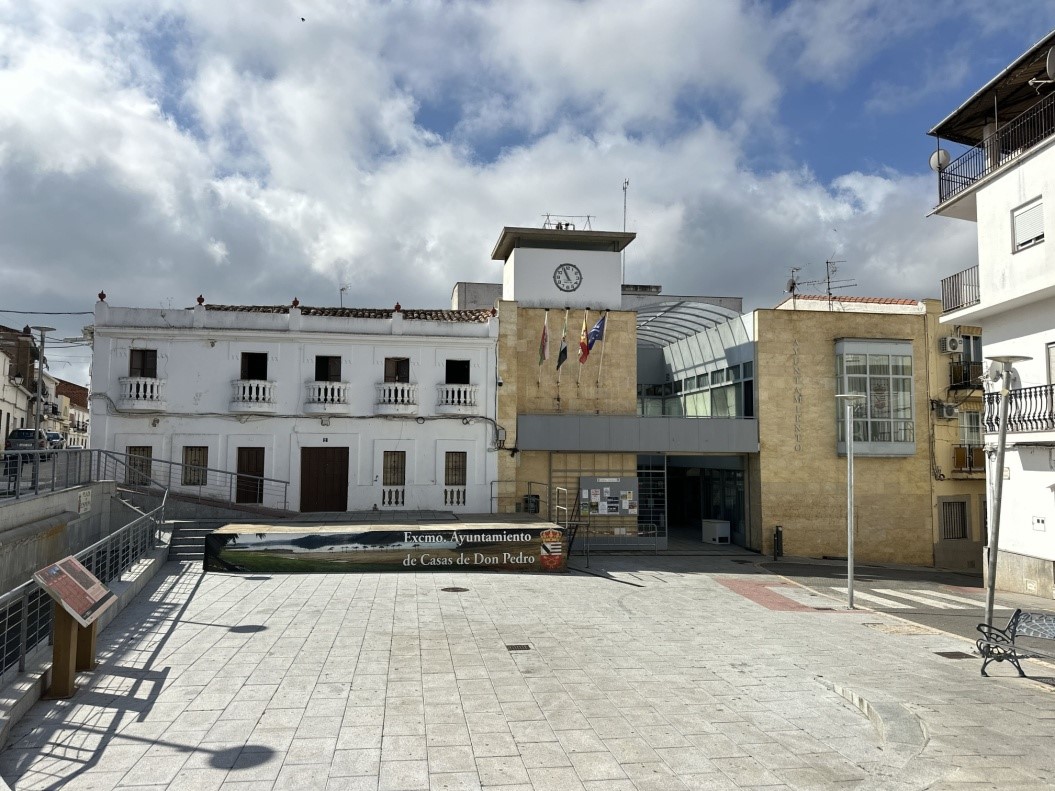
Central urban space of Casas de Don Pedro, configured as the municipality’s main square and the organising axis of the town’s social, administrative and cultural life.
HISTORY
The Plaza de España has historically been configured as one of the two major structuring centres of the urban area of Casas de Don Pedro, together with the nearby Plaza del Sagrado Corazón, where the Parish Church is located. This duality reflects a traditional organisation of space in which the administrative and religious spheres are differentiated, both essential to community life.
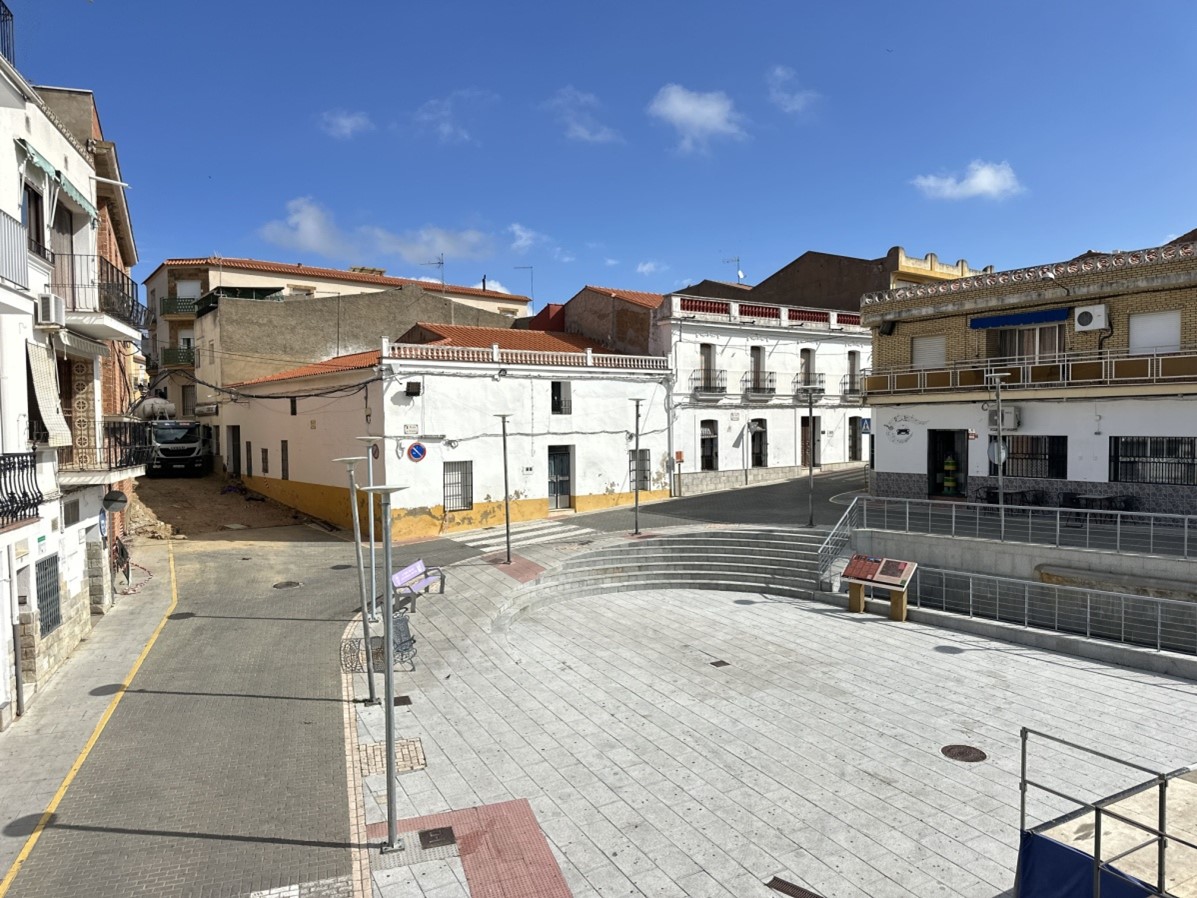
In December 2025, renovation works on the square began, together with the urban redevelopment of Zamora, Fuente Nueva and La Cruz streets. This intervention included the replacement of the drinking water supply network, the renovation of the sewage system and the replacement of the paving, adapting it to current accessibility regulations. Various items of urban furniture were also installed and shaded areas were created to improve comfort and the appearance of these streets.
The development of the square has been linked to the evolution of the municipality since its consolidation on the hillside, following the abandonment of earlier settlements. In this context, the square became a meeting point and a place representing civil authority, housing the Town Hall building and structuring the growth of the surrounding urban fabric. Over time, this space has hosted everyday activity, festive celebrations and public events, maintaining its role as the nerve centre of local life. Its continued functional use to the present day reinforces its value as a key element of the municipality’s urban identity.
HISTORICAL AND ARTISTIC DESCRIPTION
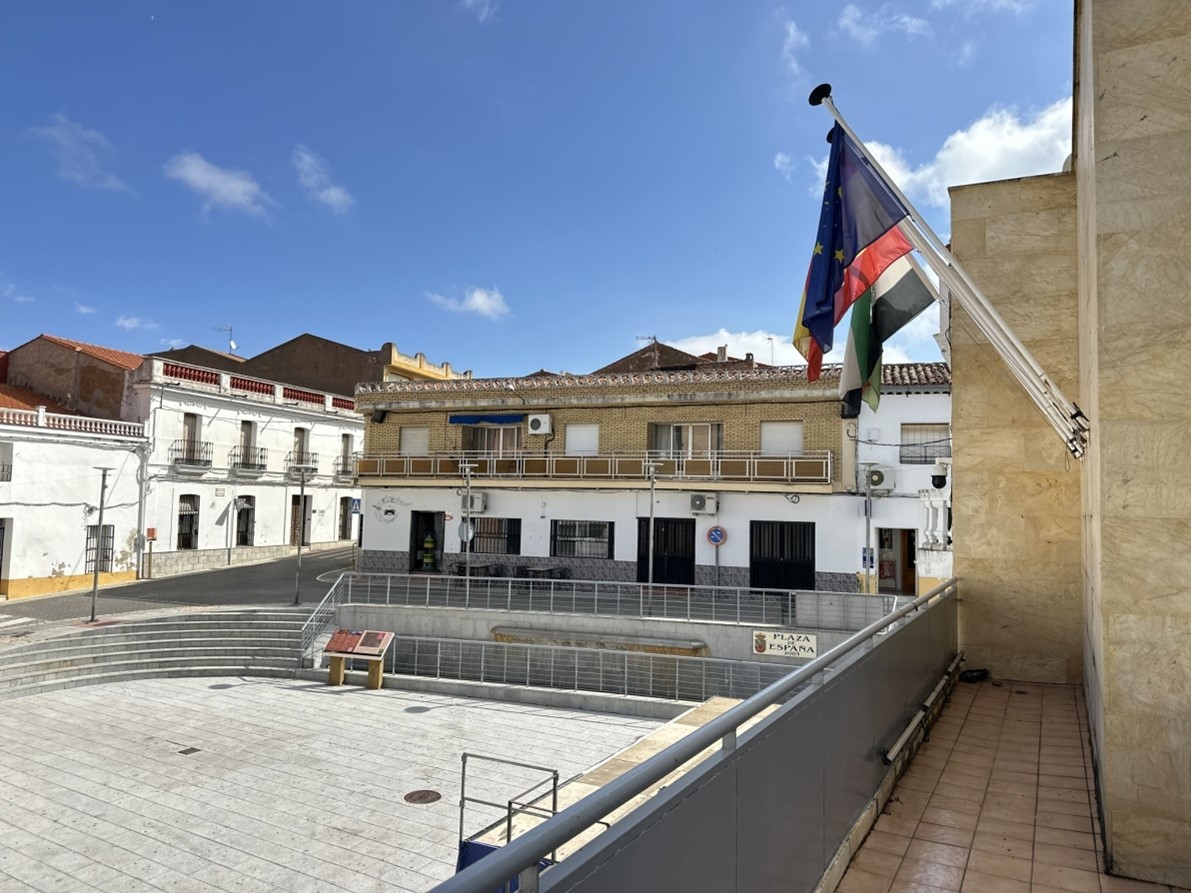
The square presents a configuration adapted to the terrain’s topography, characteristic of settlements established on hillsides, which gives it a singular character compared to more regular squares. Its surroundings are defined by buildings of popular architecture, among which traditional-type houses stand out, some featuring elements typical of manor houses such as wrought-iron grilles and coats of arms.
One of the most representative elements of the ensemble is the Town Hall building, which reinforces the institutional function of the space and establishes a dialogue with the traditional architecture of its surroundings. The urban fabric surrounding the square reflects the characteristics of the popular architecture of the La Siberia region, with a predominance of traditional materials and construction techniques adapted to the local environment. In this regard, Plaza de España not only serves as the town’s central public space but also as a synthesis of its urban landscape, in direct relationship with other nearby heritage elements.
RELEVANT FIGURES RELATED TO THE POI
The square is symbolically linked to the figure of Pedro I de Castilla, known as Pedro I “El Cruel”, to whom tradition attributes the origin of the municipality’s name from the expression “casas veo”. However, this relationship belongs to the legendary sphere, since the origin of the name Casas de Don Pedro predates Pedro I; this forms part of the local historical imagination and contributes to the cultural identity of the population.
Likewise, the space is linked to the institutional history of the municipality and to the different local corporations that have exercised their functions from the Town Hall building, becoming the principal setting of public life.
MOVABLE HERITAGE
Urban elements associated with the public use of the square, as well as urban furniture and elements linked to institutional and social activity.
INTANGIBLE HERITAGE
The Plaza de España constitutes the community’s main meeting space, the setting for festive celebrations, public events and social activities, playing a fundamental role in everyday life and in the collective identity of Casas de Don Pedro.