DESCRIPTION
Among the most representative civil buildings in the historic centre of Herrera del Duque are several manor houses linked to the former rural nobility of the town. Built between the 17th and 18th centuries, these buildings reflect the economic and social importance achieved by certain families connected with agricultural landownership, seigneurial administration and the historic institutions of the region.
Within this group, the House of the Chacones stands out in particular, a property that still preserves architectural and symbolic elements related to the noble and seigneurial past of Herrera del Duque.
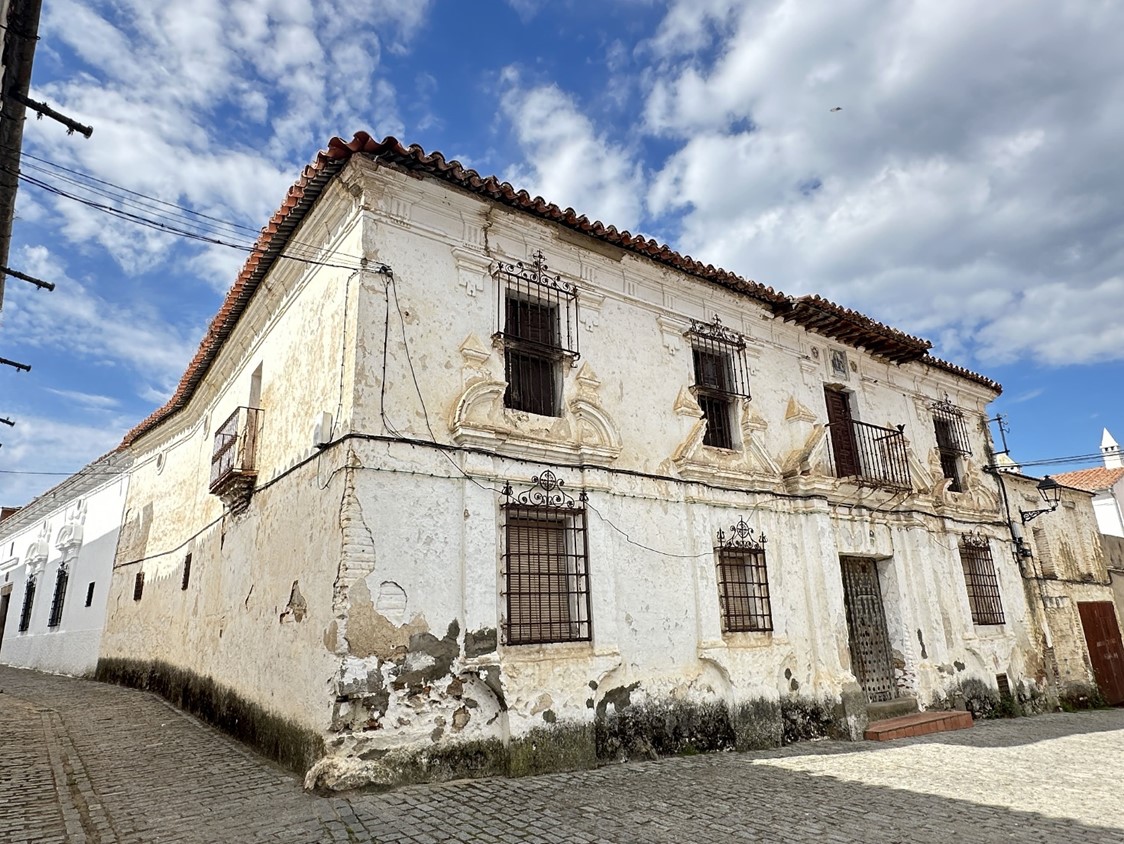
Located on Calle San Juan, the House of the Chacones is one of the most distinctive historic buildings in the town. This manor house reflects the prestige historically attained by certain local families and the importance of Herrera del Duque as an administrative and territorial centre during the Early Modern Period.
HISTORY
The great manor houses of Herrera del Duque began to develop especially during the 16th and 17th centuries, coinciding with a period of economic consolidation and the growth of families linked to landownership, revenue administration and the seigneurial environment of the Sotomayor family.
Certain historical attributions should be treated with caution, as some derive mainly from local traditions and indirect historical references.
The present building known as the House of the Chacones dates from the first half of the 17th century, a period when Herrera del Duque experienced significant development linked to large rural estates and the seigneurial power of the area.
For centuries these houses served not only as family residences but also as centres for agricultural and livestock management. The presence of former stables and ancillary buildings preserved in parts of the property clearly reflects this dual residential and productive function.
HISTORICAL AND ARTISTIC DESCRIPTION
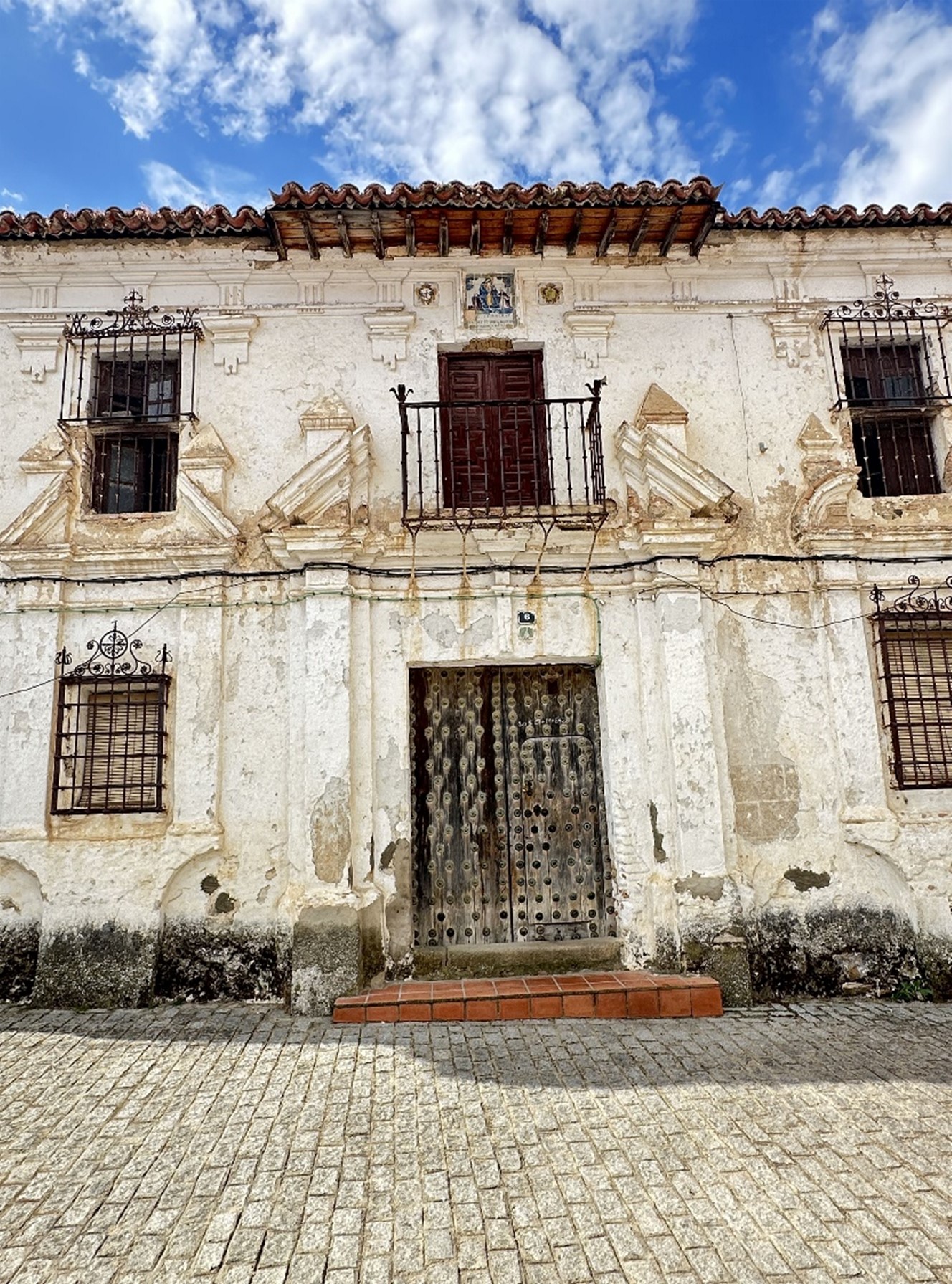
The House of the Chacones is one of the finest examples of traditional manor-house architecture preserved in Herrera del Duque. The building follows the model of Extremaduran noble residences developed during the 17th century, with a functional layout adapted both to family life and agricultural activities.
Its decorated façades and robust construction stand out externally, reflecting the economic and social status of its former owners.
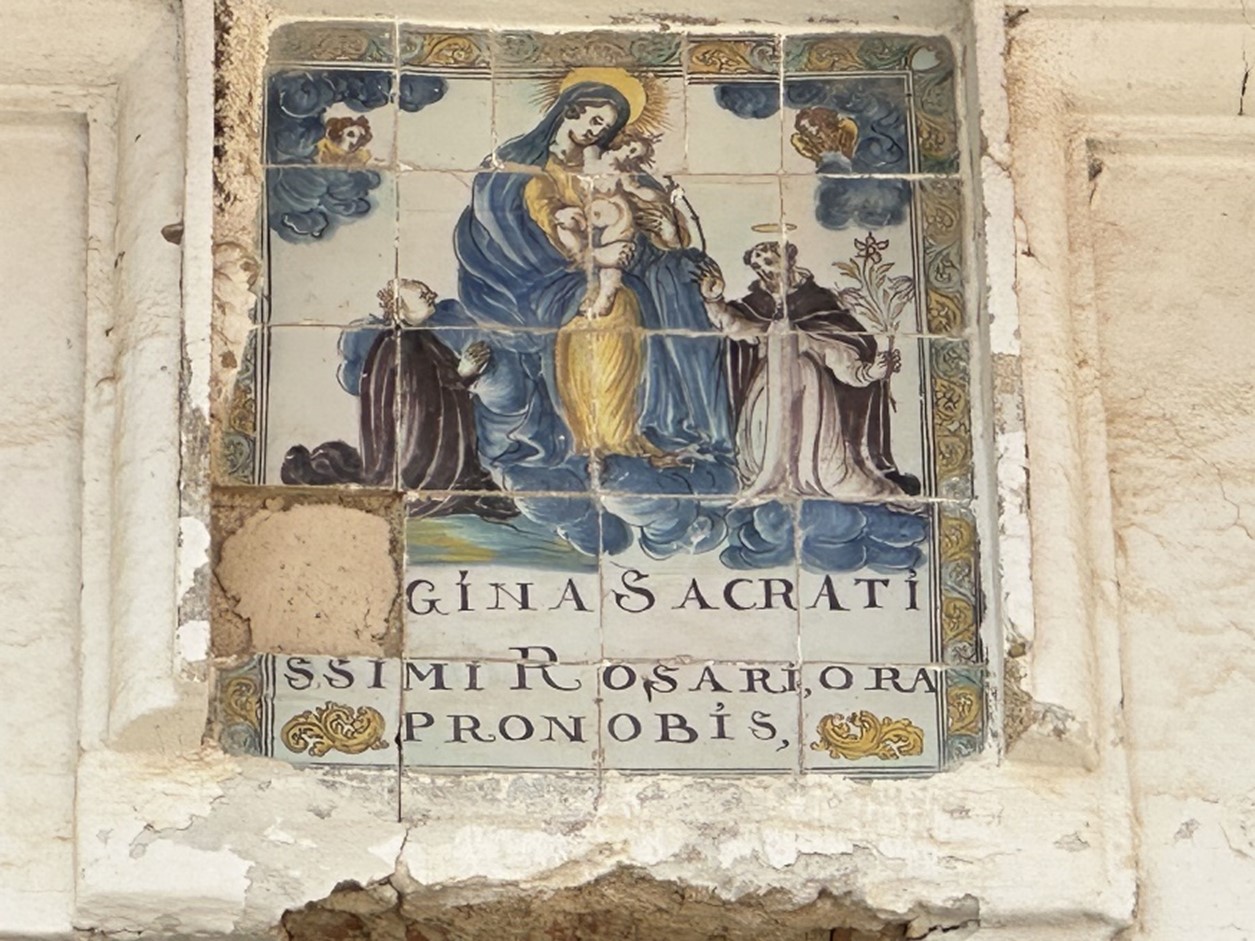
The property preserves various architectural and decorative features of historical interest. Inside, mosaics with different motifs and inscriptions have been documented, an unusual feature in this type of rural construction that adds considerable heritage value to the building.
Remains of former stables and ancillary rooms also survive, linked to the daily use of the residence and the economic activities carried out by its owners.
The internal layout follows traditional models of Extremaduran manor houses, organised around spacious residential areas and service quarters. The building is one of the most representative testimonies of the seigneurial and agricultural past of Herrera del Duque.
NOTABLE FIGURES ASSOCIATED WITH THE POI
It is popularly known as Casa del Conco because a man known as “El Conco” once lived there and his descendants still reside in the property. However, its historical name has always been Casa de los Chacones, which was also the surname of this individual. Because the house’s iron grilles display the emblem of the Order of Alcántara, it is sometimes mistakenly associated with the Encomienda de Alcántara, which was actually located in Herrera de Alcántara, in the province of Cáceres.
MOVABLE HERITAGE
Among the most significant heritage elements preserved are the interior mosaics decorated with different motifs and inscriptions, together with architectural remains associated with former ancillary rooms and stables.
These elements provide valuable testimony to the daily life and economic standing achieved by certain noble families of Herrera del Duque.
INTANGIBLE HERITAGE
The historic manor houses form part of the social and historical memory of Herrera del Duque and reflect the town’s seigneurial and agricultural past.
The Casa de los Chacones remains deeply rooted in the collective memory of the town, where it continues to be recognised as a symbol of former prestige and of the historical importance attained by certain local families and lineages.