DESCRIPTION
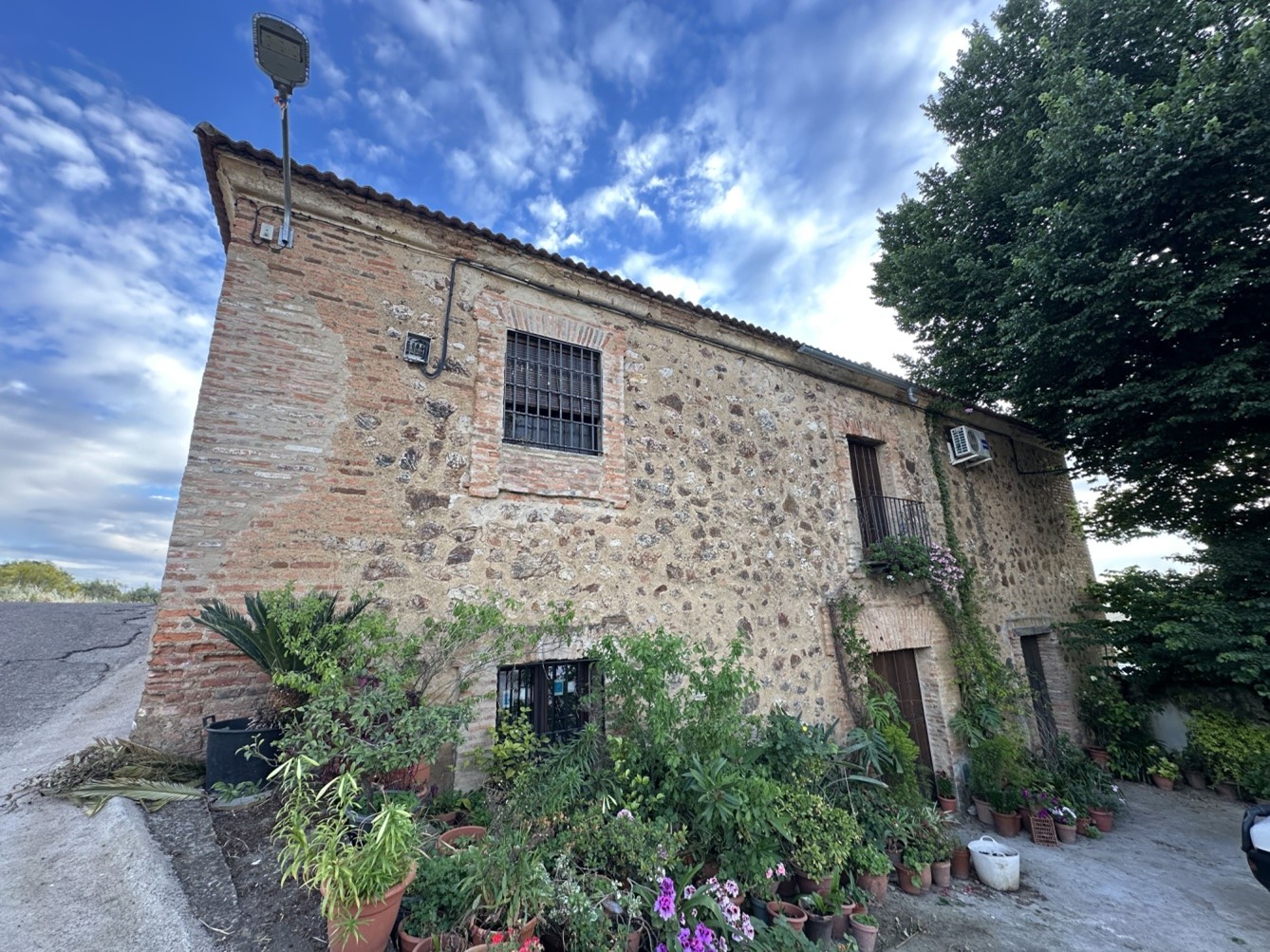
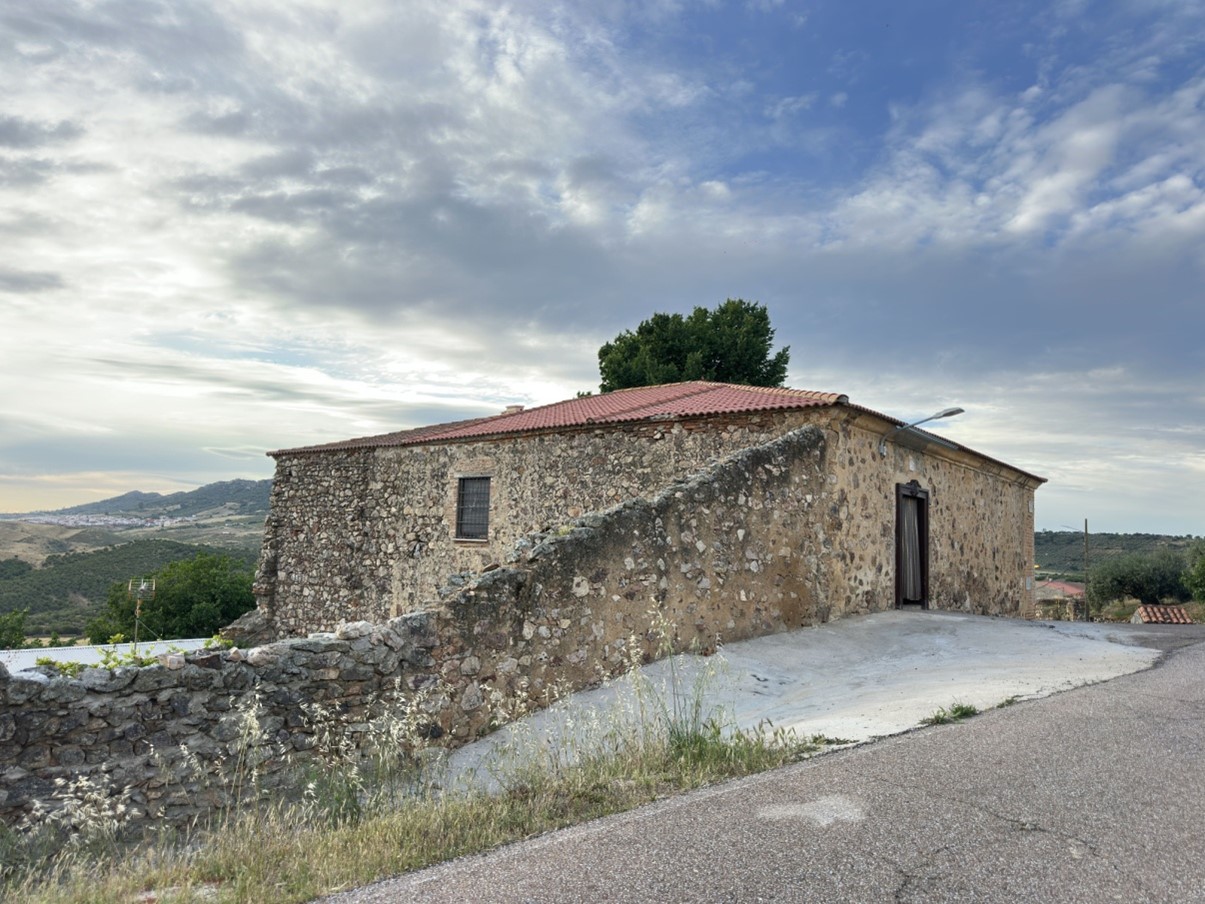
Civil building of great historical value located in the hamlet of Galizuela, belonging to Esparragosa de Lares, which constitutes one of the main testimonies to the presence and territorial organisation of the Order of Alcántara in the La Siberia region.
HISTORY
The Casa Palacio de la Encomienda of Galizuela is directly linked to the administrative structure of the Order of Alcántara, which organised this territory through encomiendas, units of economic, military and jurisdictional management.
The first references to the current building date back to the late 16th century, when the construction of certain premises was documented, although they soon presented serious structural deficiencies. These shortcomings are explained by the absence of the commanders, many of whom were linked to the Court or military service, leaving the management of the works in the hands of administrators without effective supervision.
By the end of the 16th century, inspections by the Order already recorded the ruinous condition of the property. It was not until the beginning of the 17th century that its reconstruction was definitively promoted, under the direction of the architect Francisco de Potes, a highly significant figure trained in the circle of Juan de Herrera and linked to important engineering and architectural works in Extremadura and throughout the Hispanic Monarchy. The works, begun around 1619 and completed in subsequent decades, resulted in a functional and austere building in accordance with the architectural criteria of the Order.
During the 18th century, significant extensions were carried out, incorporating new premises linked to agro-livestock exploitation, such as shearing rooms, ovens and product processing spaces. Following the disentailment process of the 19th century, the property passed into private hands, beginning a process of progressive deterioration that affected part of its structures, especially the service areas.
HISTORICAL AND ARTISTIC DESCRIPTION
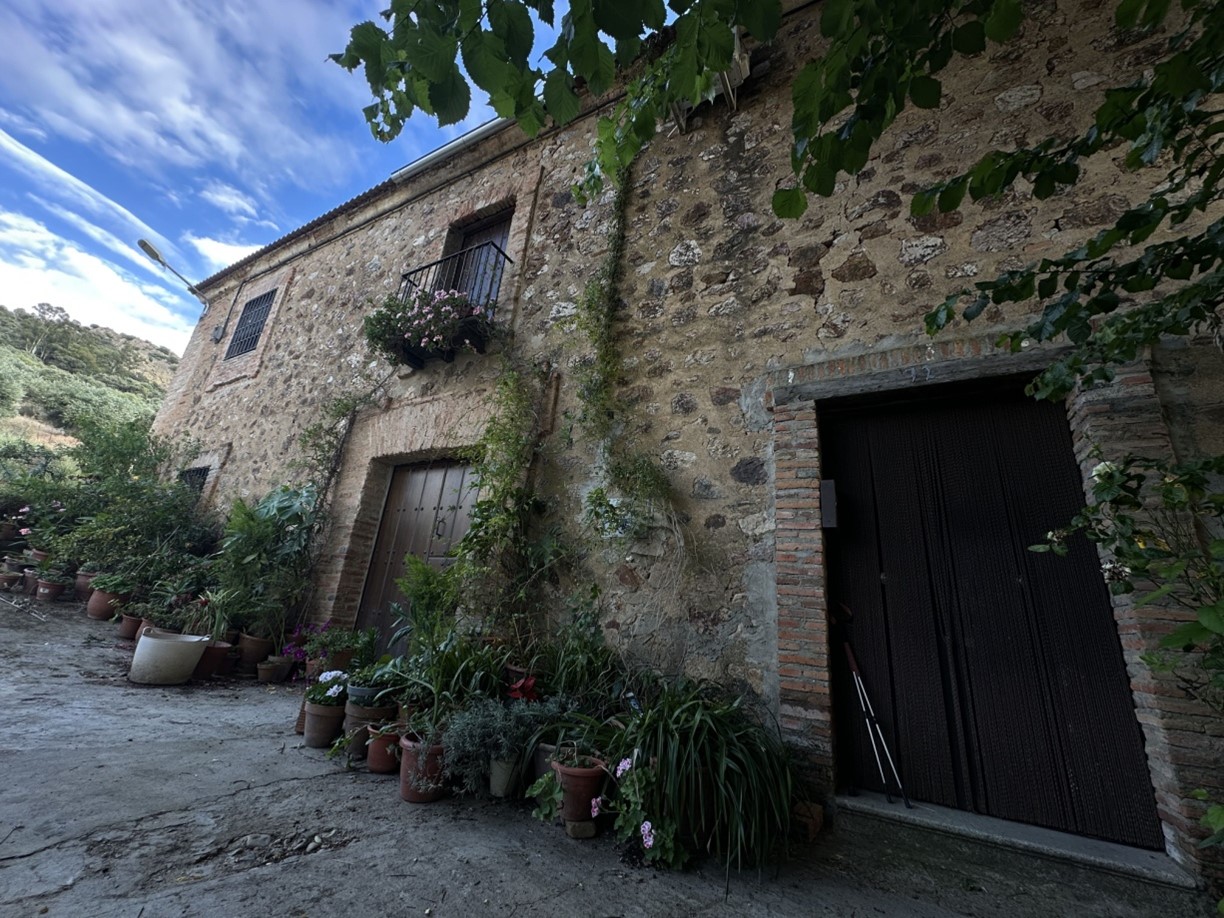
The building follows an architecture of sober and functional character, far removed from ornamentation, in line with the construction principles of the Order of Alcántara and the influence of the Herrerian style.
It is organised around a two-storey scheme, with an interior layout based on a wide cobbled central corridor, along whose sides the different rooms are distributed. This typology, closer to farmhouses than urban palaces, reveals its dual residential and productive function.
The main façade, facing north, presents a simple composition, with lintelled openings made of brick and without superfluous decorative elements. Access is through an entrance hall connected to the interior corridor by a semicircular arch, creating a spatial transition characteristic of traditional architecture. Inside, some spaces preserve brick pavements arranged in a herringbone pattern, as well as original structural elements that allow recognition of the building’s original organisation.
The 18th-century extensions incorporated new premises at the rear for agricultural and livestock uses, creating a more complex ensemble that included corrals, enclosures, cultivation areas and auxiliary spaces, in keeping with the economic function of the encomienda.
Despite the deterioration of some areas, the property maintains its volume and part of its original structure, allowing its architectural values and relevance within the region’s historical heritage to be clearly identified. It should be noted that the property, already restored, is used as a private residence and interior access is not permitted.
RELEVANT FIGURES RELATED TO THE POI
The building is closely linked to the architect Francisco de Potes, author of the design of the property, trained in the circle of Juan de Herrera and participant in important engineering and architectural works, including interventions on significant bridges and projects related to the Palace of Carlos V in the Alhambra.
Likewise, its history is linked to various commanders of the Order of Alcántara, among them Diego de Sarmiento Sotomayor, belonging to a distinguished noble family, which reinforces the institutional character of the site.
MOVABLE HERITAGE
Original construction elements, such as brick pavements, interior structures and remains associated with the building’s residential and productive functions.
INTANGIBLE HERITAGE
The Casa Palacio de la Encomienda represents the memory of the traditional territorial and economic organisation of the region, linked to agro-livestock activity and the encomienda system, which profoundly shaped the historical identity of Esparragosa de Lares and its surroundings.