DESCRIPTION
The former Franciscan Convent of La Purísima Concepción constitutes one of the most important historical and religious ensembles in the locality and one of the convent buildings of greatest heritage significance in the La Siberia region of Extremadura.
Located in an elevated area of the town centre, the complex still preserves a powerful monumental presence that reflects the spiritual, economic and social importance it attained over the centuries. Despite the transformations undergone since the disentailment process and the various subsequent uses, the convent retains much of its main architectural structure, especially the church, remains of the cloister and several monastic dependencies.
The building essentially follows Renaissance architectural models developed between the late 16th and early 17th centuries, although it incorporates traditional Extremaduran construction solutions and later reforms. The complex is closely linked to the history of the Sotomayor family and to the historical development of Herrera del Duque during the Modern Age.
HISTORY
The foundation of the convent dates back to the year 1517 and is associated with Fray Alonso de Sotomayor, son of Gutierre III de Sotomayor and Teresa Enríquez. Various historical sources indicate that Fray Alonso was educated by his uncle Fray Juan de la Puebla and carried out significant religious and founding activity. Initially, the convent was not located on its current site. Historical documents indicate that it was founded in the former hermitage of Nuestra Señora de la Merced, situated approximately a quarter of a league — just over one kilometre — from the place where the building stands today.
According to local tradition and various historical references, that former hermitage may previously have occupied the site of a Jewish synagogue. Some authors and local testimonies support this theory, while other researchers consider that there is no conclusive documentation allowing it to be affirmed with complete certainty. Over time, the deterioration of the first convent and the desire to bring the religious community closer to the urban centre led to the definitive relocation of the complex. The various sources agree in identifying the year 1603 as the date of establishment at its current location.
Some studies directly attribute this new foundation or reconstruction to the Sotomayor family, while other authors consider that it was an enlargement and reorganisation of the convent that had already existed since the beginning of the 16th century.
During the 17th and 18th centuries, the convent experienced an important period of religious and economic splendour. The Franciscan community came to possess a church, cloister, upper and lower infirmaries, residential quarters, an orchard and various auxiliary spaces linked to monastic life. In 1753, the convent housed 56 priests, 12 choir monks, 10 lay brothers and 6 donated members, a figure that reflects the importance attained by the complex before the exclaustration. The suppression of the convent came in 1835 with the disentailment processes. Subsequently, the building belonged to the Gallego Bañuelos family during part of the 20th century.
During the 19th century, the convent came to house as many as eighty friars, a figure that reflects the importance attained by the complex before the exclaustration. The suppression of the convent came in 1835 with the disentailment processes. After this period, the property passed through different owners and uses. Some sources indicate that the houses of Osuna and Béjar owned the complex before it passed into the hands of the Counts of Villapadierna. Subsequently, the building belonged to the Gallego Bavuelos family during part of the 20th century.
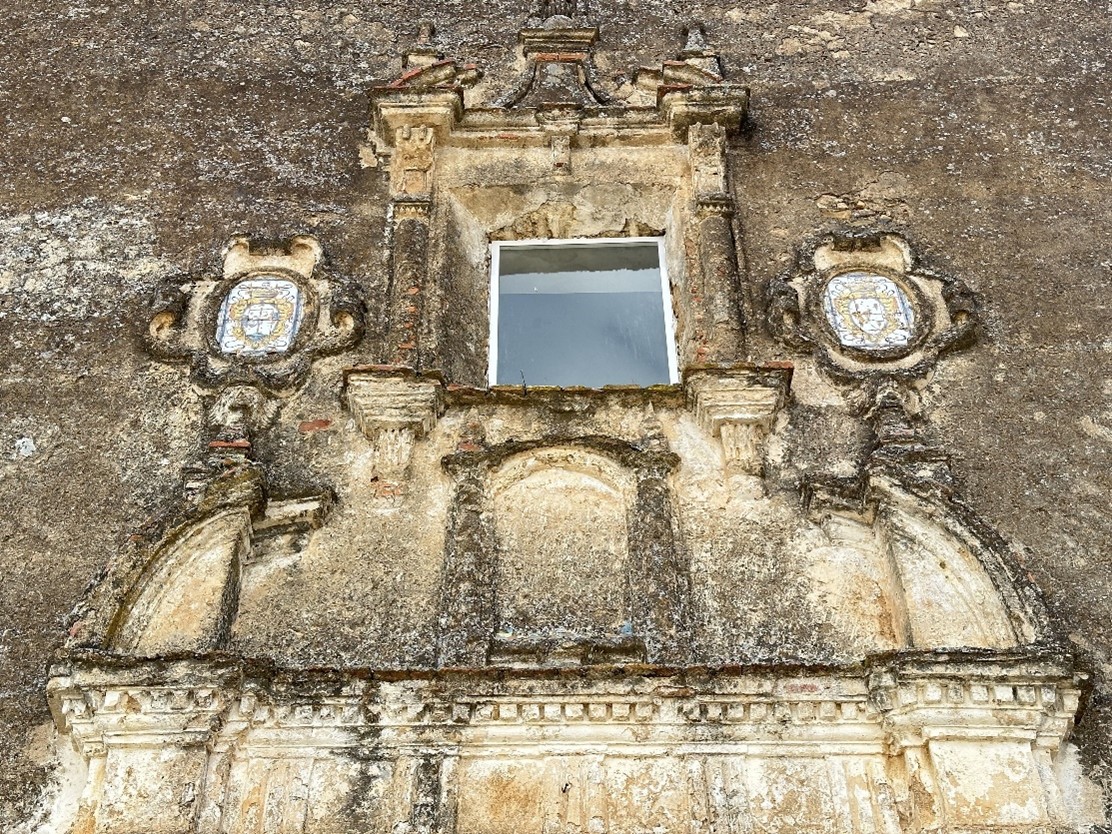
During the 19th century, the Counts of Villapadierna once again adapted an area intended for religious worship. Even today, the coats of arms associated with this lineage remain visible inside the church.
Over the decades, the former convent underwent a progressive structural deterioration, worsened by abandonment and lack of maintenance. Finally, the Town Council of Herrera del Duque acquired the building in 2009 with the aim of preventing its definitive ruin and promoting its heritage restoration. From that moment onwards, different consolidation and restoration works began. In 2020, important roof conservation works were carried out and, later, in 2022, the Regional Government of Extremadura launched new restoration and adaptation works for the complex with an investment exceeding 650,000 euros.
Initially, the possibility was considered of converting the restored building into a hospedería or tourist accommodation linked to the rural and heritage development of the region. However, in December 2024, the completion of the works aimed at transforming the former convent into the Interpretation and Tourist Reception Centre of the La Siberia Biosphere Reserve was officially announced. Through this new function, the historic building begins a new stage linked to the promotion of the region’s heritage, tourism and environmental values.
HISTORICAL-ARTISTIC DESCRIPTION
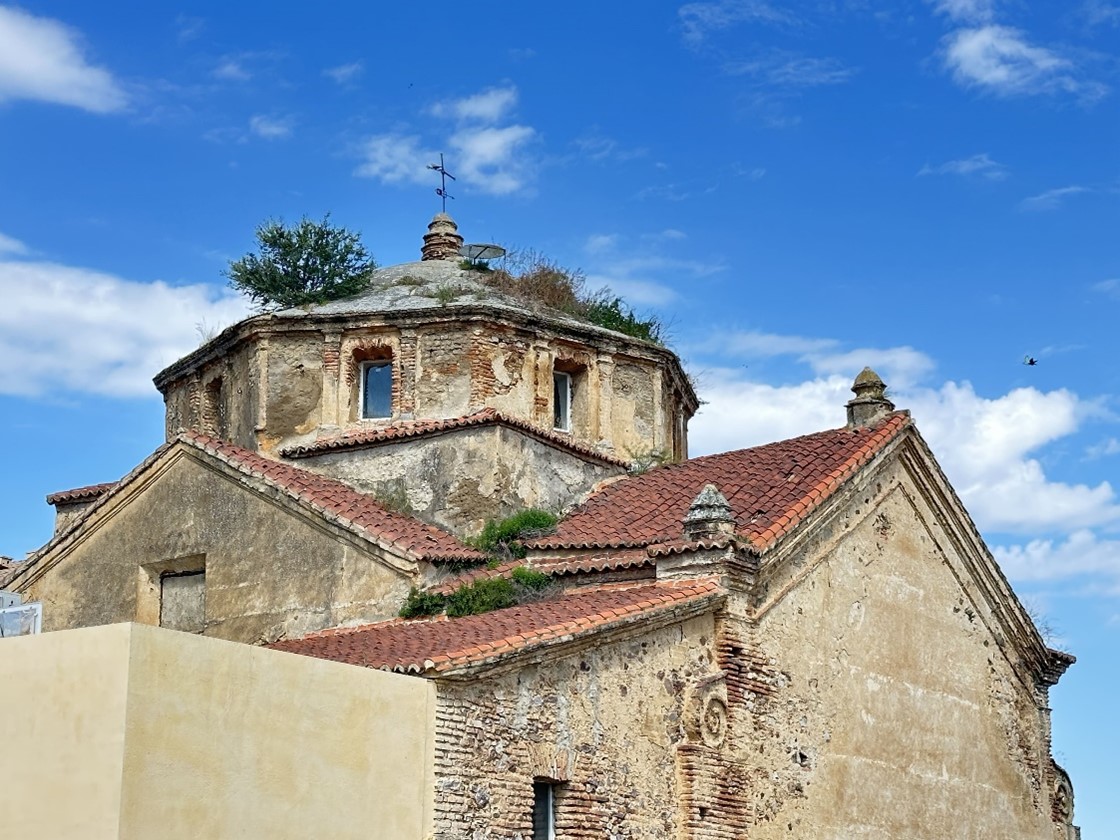
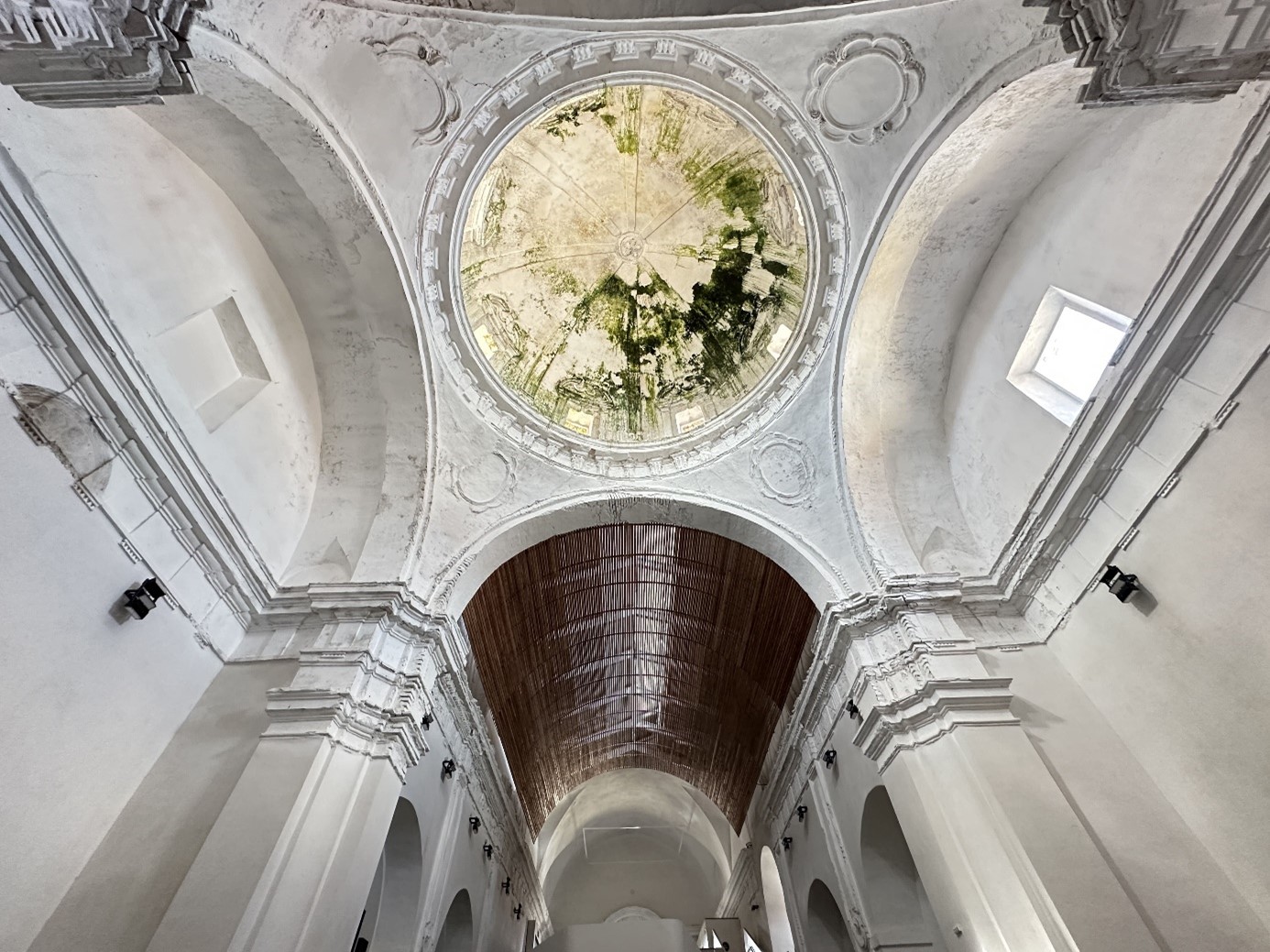
The convent complex follows an architecture of clear Renaissance inspiration, originally organised around the church, cloister, monastic quarters and orchard. The church constitutes the principal and best-preserved element of the complex. It features a Latin cross floor plan and a single nave divided into three sections. The transept is crowned by a dome illuminated by four windows, while the pendentives preserve medallions that are currently deteriorated and stripped of their former paintings.
Various authors, including José Ramón Mélida in 1924, defined the building as a work of “classical design”, an assessment that continues to be valid for much of the architectural configuration of the church.
The main nave measures approximately thirty metres in length and ten metres in width. At the foot of the church there was a large elevated choir supported by a barrel vault and illuminated by a large window opened onto the main façade. Along the sides of the church were several Baroque altars installed within wall niches. Historical sources agree in indicating that the main altar and the altarpiece currently preserved are not the originals and display smaller proportions in comparison with the monumentality of the building.
The sacristy, with a rectangular floor plan and covered by a barrel vault, stands out for the quality of its construction and for the careful treatment of its walls and roofing.
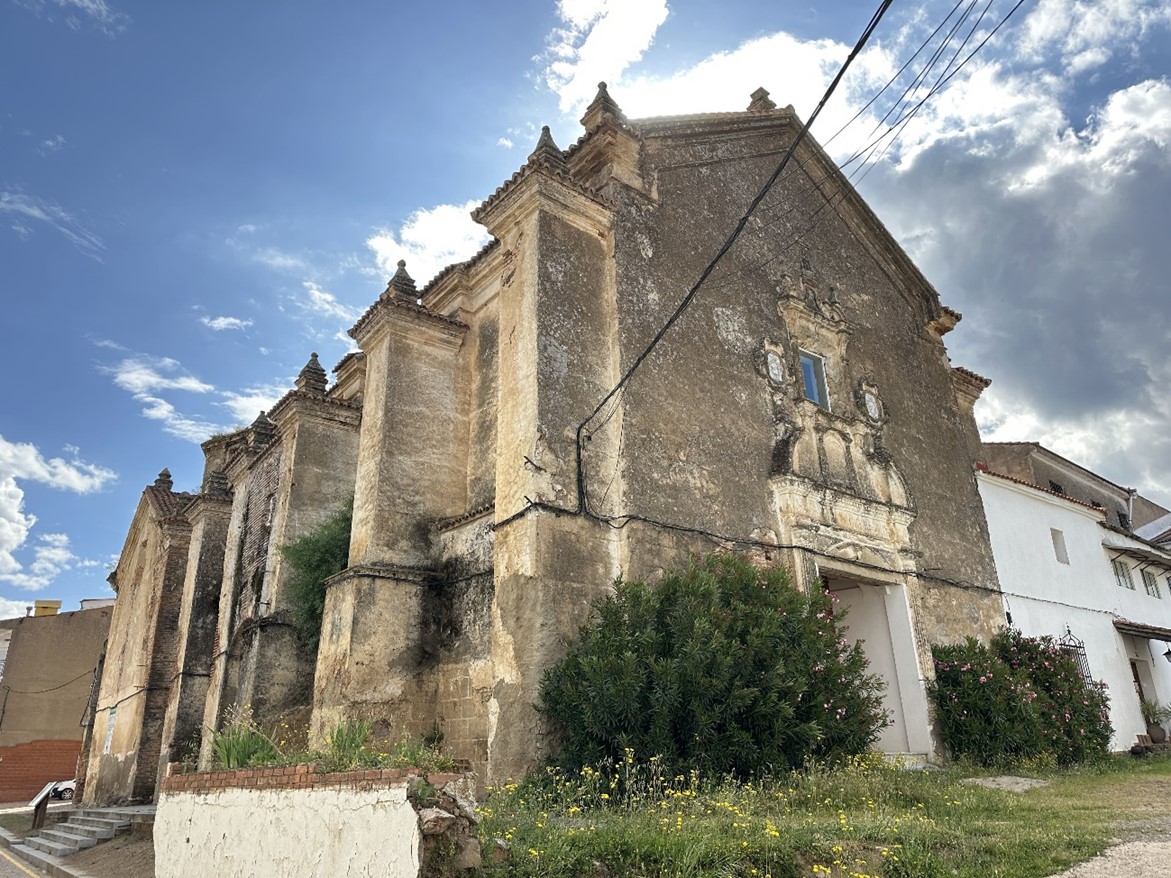
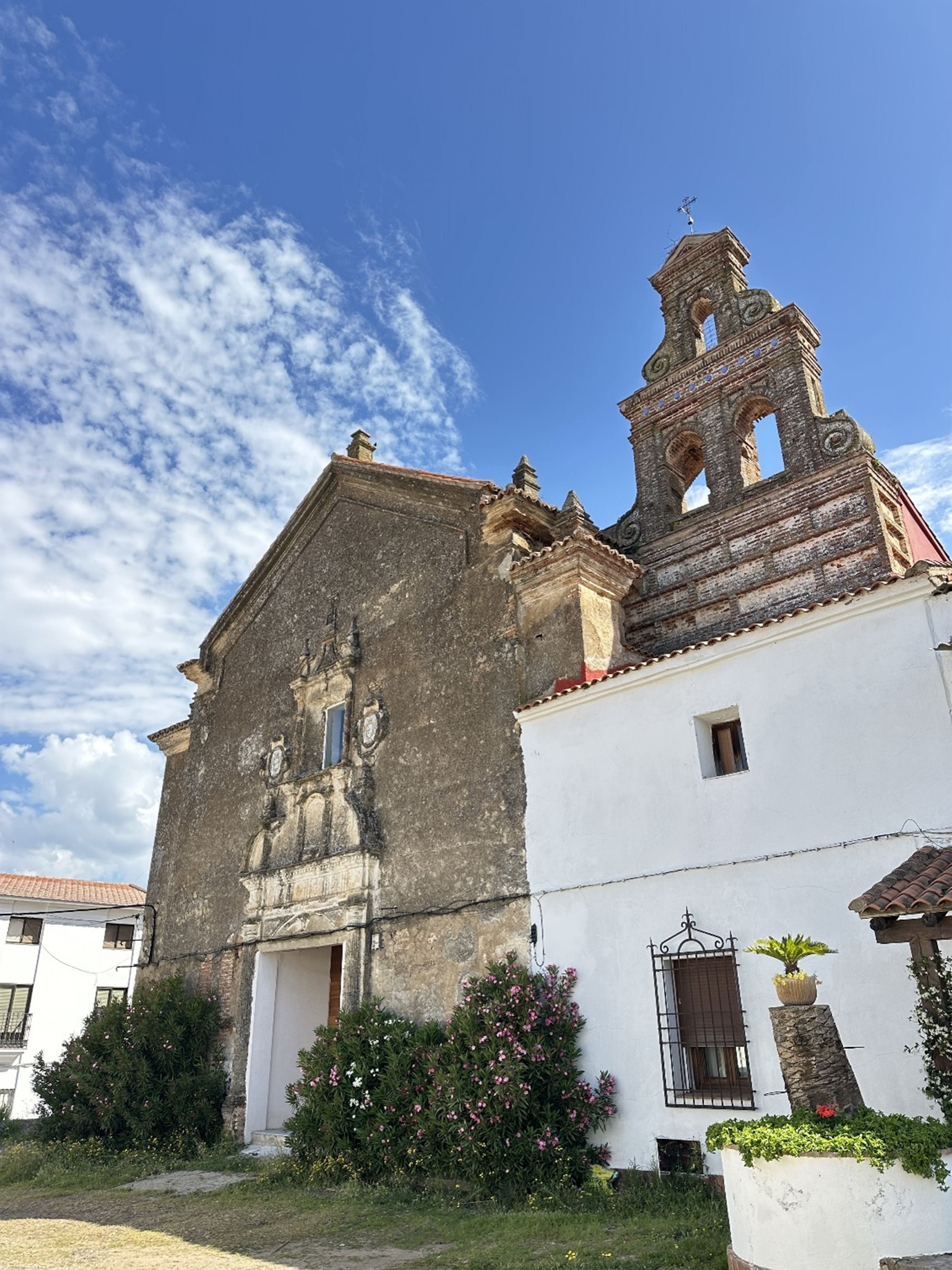
The main façade constitutes one of the most outstanding elements of the complex. It is organised following classical schemes through a doorway, pediment and upper window, accompanied by heraldic ceramic tiles.
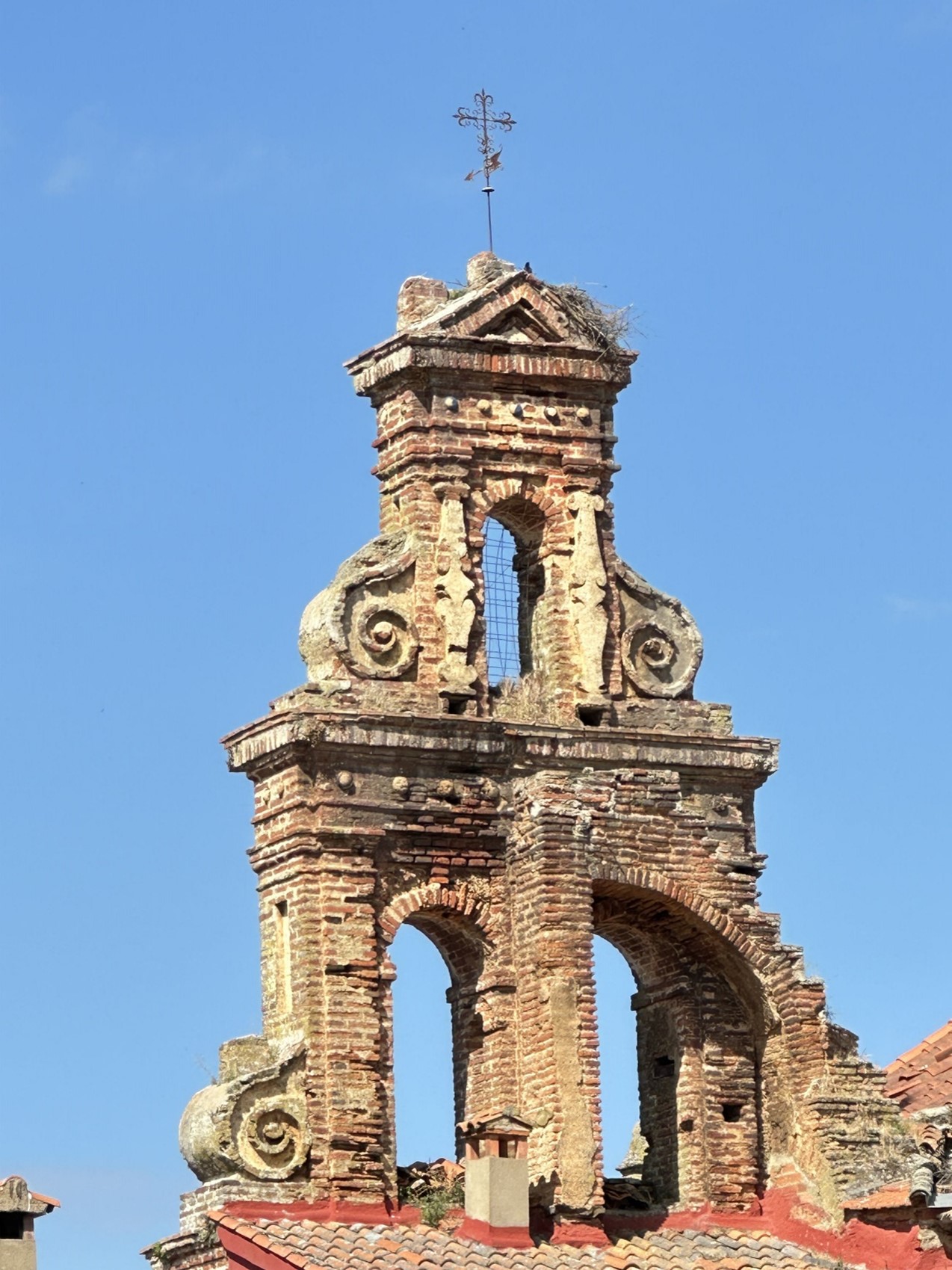
Particularly remarkable is the bell gable tower, built entirely in brick. Extremely slender and highly original in design, it features decorative volutes and three openings intended for bells. Its silhouette constitutes one of the most recognisable elements of the convent.
Also noteworthy on the exterior are the robust buttresses reinforcing the church walls, as well as the cornices crowned with pinnacles and certain decorative elements still visible throughout the complex.
The cloister was located to the south of the church and was formed by semicircular arches, partially preserved today. At its centre there was once a fountain that disappeared during renovation works carried out in the 1960s.
The former upper and lower infirmaries occupied the areas closest to the convent orchard. This orchard, with fertile land and abundant water, historically played an essential role in supplying the Franciscan community.
The preserved remains still allow visitors to appreciate the original scale of the complex, considered for centuries one of the principal religious and conventual complexes of Herrera del Duque.
RELEVANT FIGURES RELATED TO THE POI
The figure most closely linked to the foundation of the convent is Fray Alonso de Sotomayor, a member of the powerful Sotomayor lineage and promoter of the Franciscan foundation in 1517. The complex also maintains a close historical relationship with Gutierre III de Sotomayor and with the lordship of Belalcázar and Herrera del Duque.
During the 19th century, the convent became associated with the Counts of Villapadierna, whose coats of arms still remain visible inside the church. Among the scholars who historically analysed the building, José Ramón Mélida also stands out, as the author of important architectural descriptions of the complex at the beginning of the 20th century.
MOVABLE HERITAGE
Although much of the original heritage disappeared or was dispersed following the disentailment process and the subsequent abandonment of the convent, the complex still preserves several elements of artistic and historical interest. Particularly noteworthy are various lateral Baroque altarpieces, interior decorative remains, original architectural elements and coats of arms linked to the Counts of Villapadierna.
INTANGIBLE HERITAGE
The former convent forms part of the historical and emotional memory of Herrera del Duque and maintains a profound connection with the religious and social life of the town.
For centuries, it served as an important spiritual, educational and charitable centre linked to the Franciscan community and to numerous expressions of popular religiosity.
The recent restoration of the complex and its new role as the Interpretation and Tourist Reception Centre of the La Siberia Biosphere Reserve further reinforce its function as a space dedicated to the promotion of the region’s heritage, culture and tourism.