DESCRIPTION
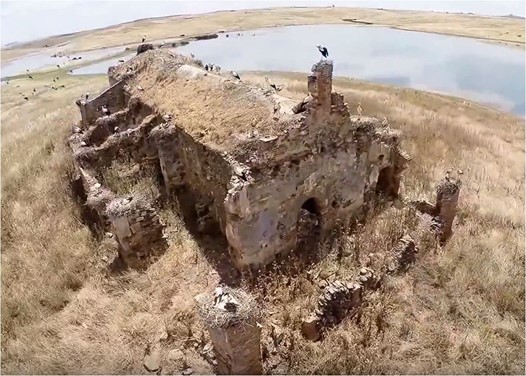
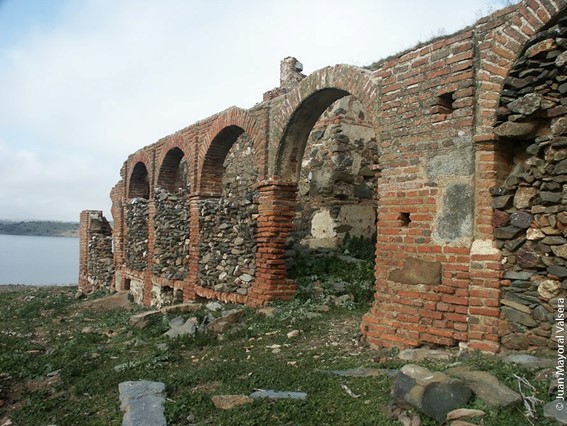
Hermitage in a state of ruin known as “El Templaero”, located in a natural enclave of great landscape value in the surroundings of the Orellana reservoir, representative of the historic religious heritage of the La Siberia region.
HISTORY
The Hermitage of La Magdalena, popularly known as “El Templaero”, has its origins in the medieval or early modern period, with a possible dating around the 16th century, a time when intense devotion to Saint Mary Magdalene is documented in rural areas.
The nickname “El Templaero” comes, in popular language, from the use traditionally given to summer bathing places. Its foundation is linked to a small settlement or hamlet located near an ancient livestock route and ford across the Guadiana River. For centuries, the hermitage maintained continuous religious activity, with celebrations continuing until the 19th century, when its gradual abandonment began.
In contemporary times, the building has suffered severe deterioration and has been included on the Red List of Heritage at Risk by Hispania Nostra due to its state of conservation and the urgent need for intervention to prevent its disappearance.
HISTORICAL-ARTISTIC DESCRIPTION
Among the constructive elements of the temple is the reuse of materials from earlier buildings of clear Roman origin, such as granite ashlar blocks, stone mills and an imposing altar with its inscription dedicated to the goddess Ceres, where the following can be read:
"CERERI / L(ucius) • IVLIVS / L(uci) • F(ilius) • AFER / VICANIS / D(onum) D(edit)", whose translation would be:" To Ceres. Lucius Julius, son of Lucius the African, donated and dedicated it to the village.”
In its surroundings there are also other elements, such as a cobbled threshing floor and remains of an oil mill, likewise of Roman origin.
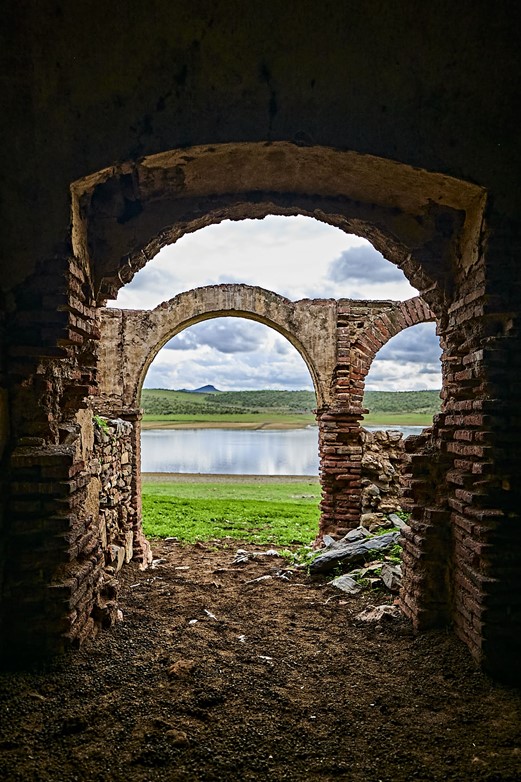
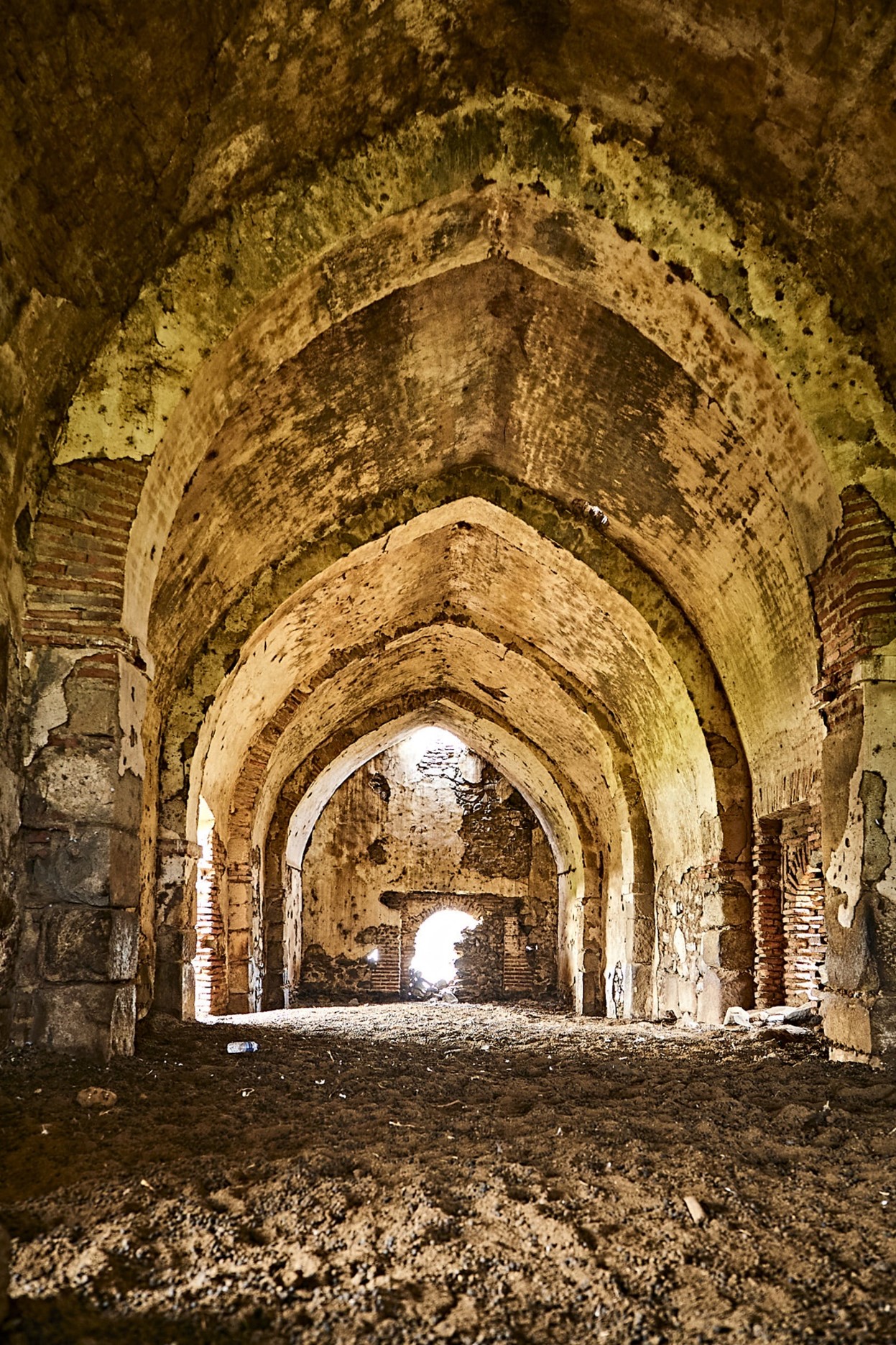
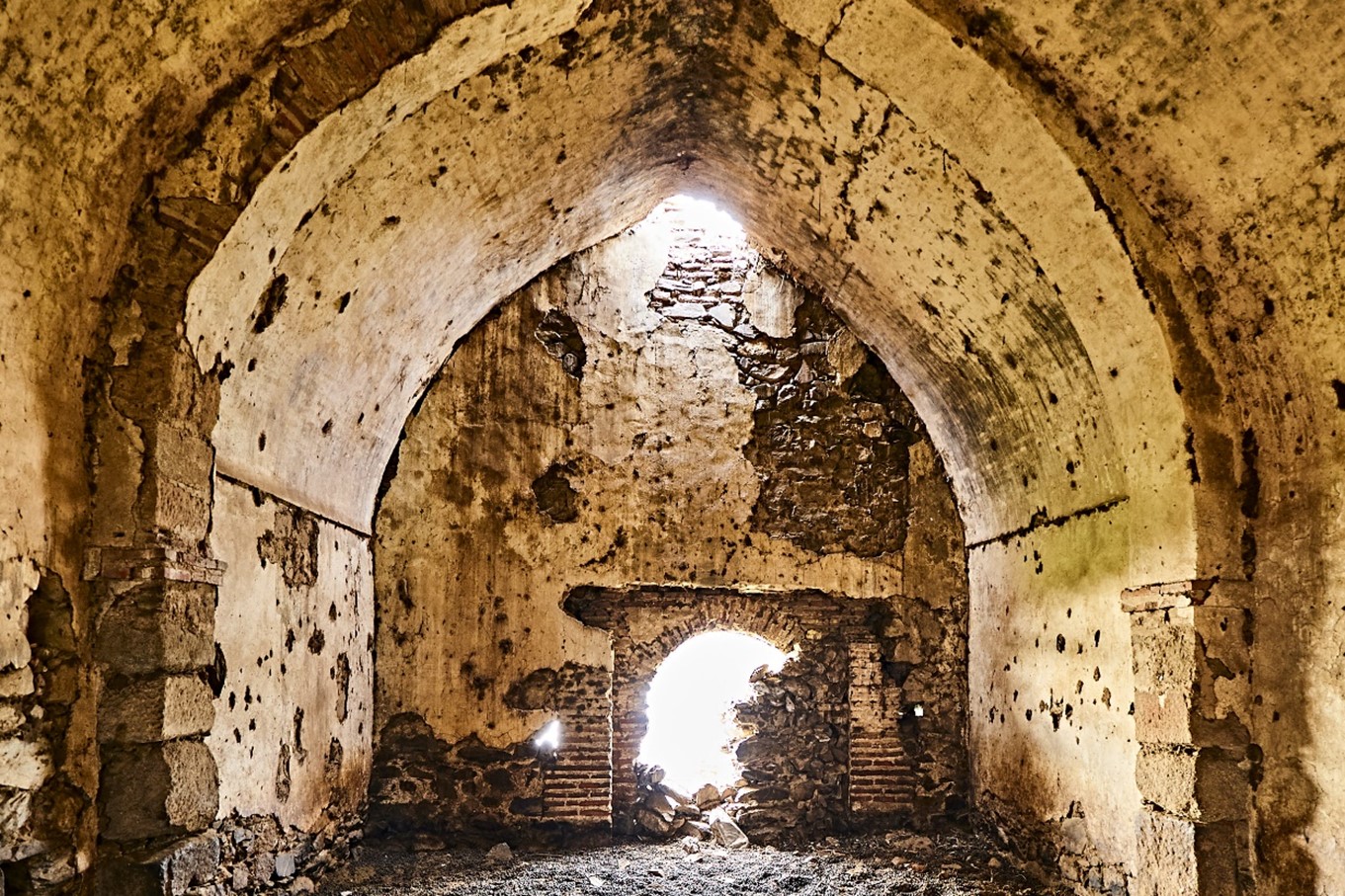
As for the building itself, the hermitage follows a single-nave typology, organised into several sections covered by vaults and separated by pointed transverse brick arches, creating a structure of notable constructive interest.
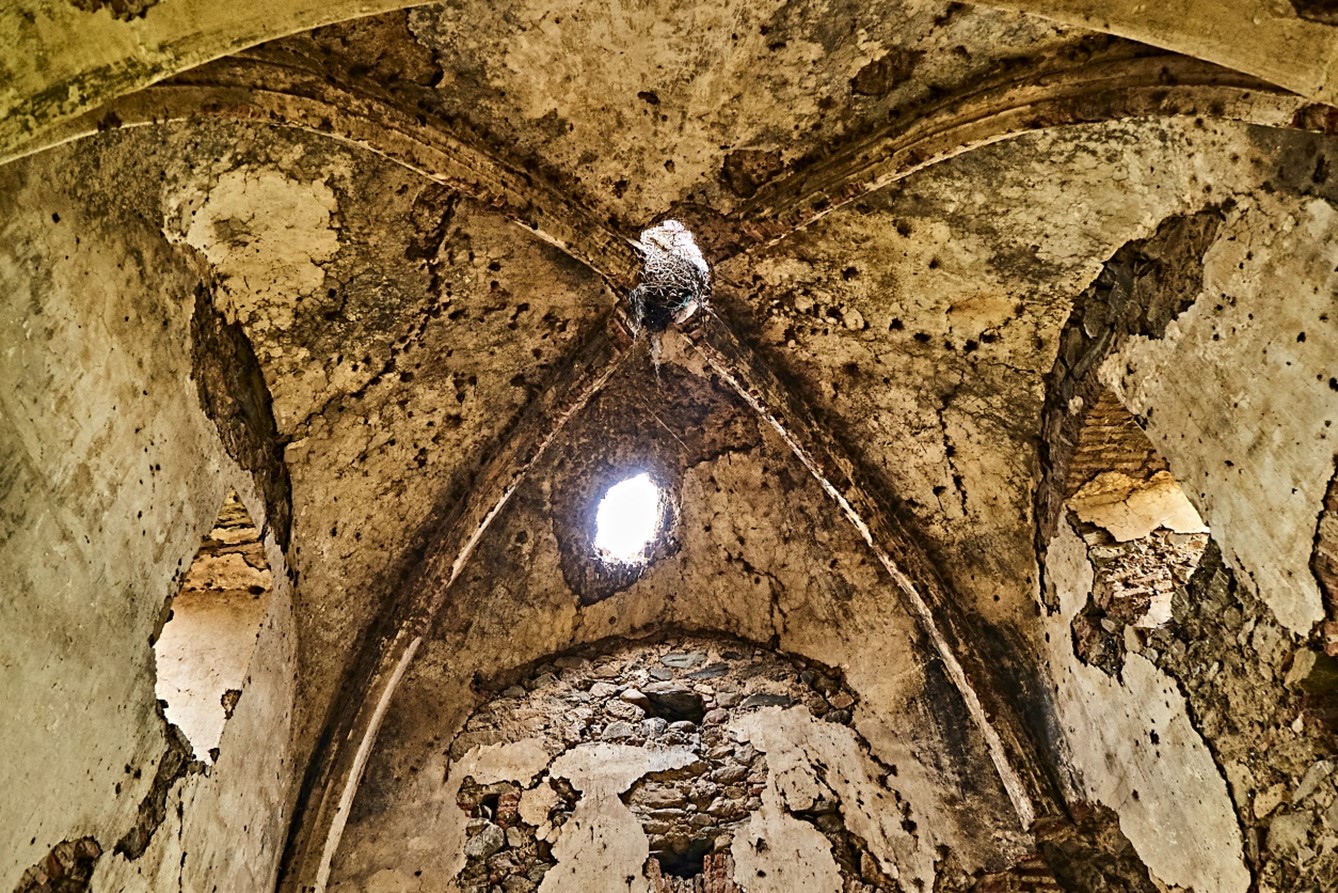
The chancel is covered by a brick ribbed vault whose elements spring from stone corbels, while the lateral thrusts are counteracted by buttresses. The structures combine masonry, brick and reused materials from earlier constructions, evidencing a complex building process adapted to the available resources.
The building stands on a hill currently surrounded by the waters of the reservoir, a circumstance that reinforces its landscape singularity but also affects its accessibility and conservation. Despite its ruined state, it preserves significant structural elements that allow recognition of its original configuration and heritage value.
Within the vaults there are medieval inscriptions made with red ochre earth pigment, commemorating some reconstruction of the hermitage, together with mysterious symbols representing the monograms of Viscount Gutierre de Sotomayor (1400–1453), lord of Puebla de Alcocer.
It is also known that during the Peninsular War the hermitage was looted and burned by French troops, and that during the Spanish Civil War it served as a small defensive barracks on the Guadiana front.
RELEVANT FIGURES RELATED TO THE POI
The hermitage is not associated with specifically documented historical figures, its importance deriving from religious tradition and the collective participation of the local community in its maintenance and use over time.
MOVABLE HERITAGE
The Roman altar described above, preserved in the facilities of the Convent of San Francisco in Puebla de Alcocer.
INTANGIBLE HERITAGE
The popular tradition linked to devotion to Saint Mary Magdalene and the collective memory of the place as a site of worship, as well as its presence in the local imagination as a singular enclave, especially because of its isolated location and ruined condition.