DESCRIPTION
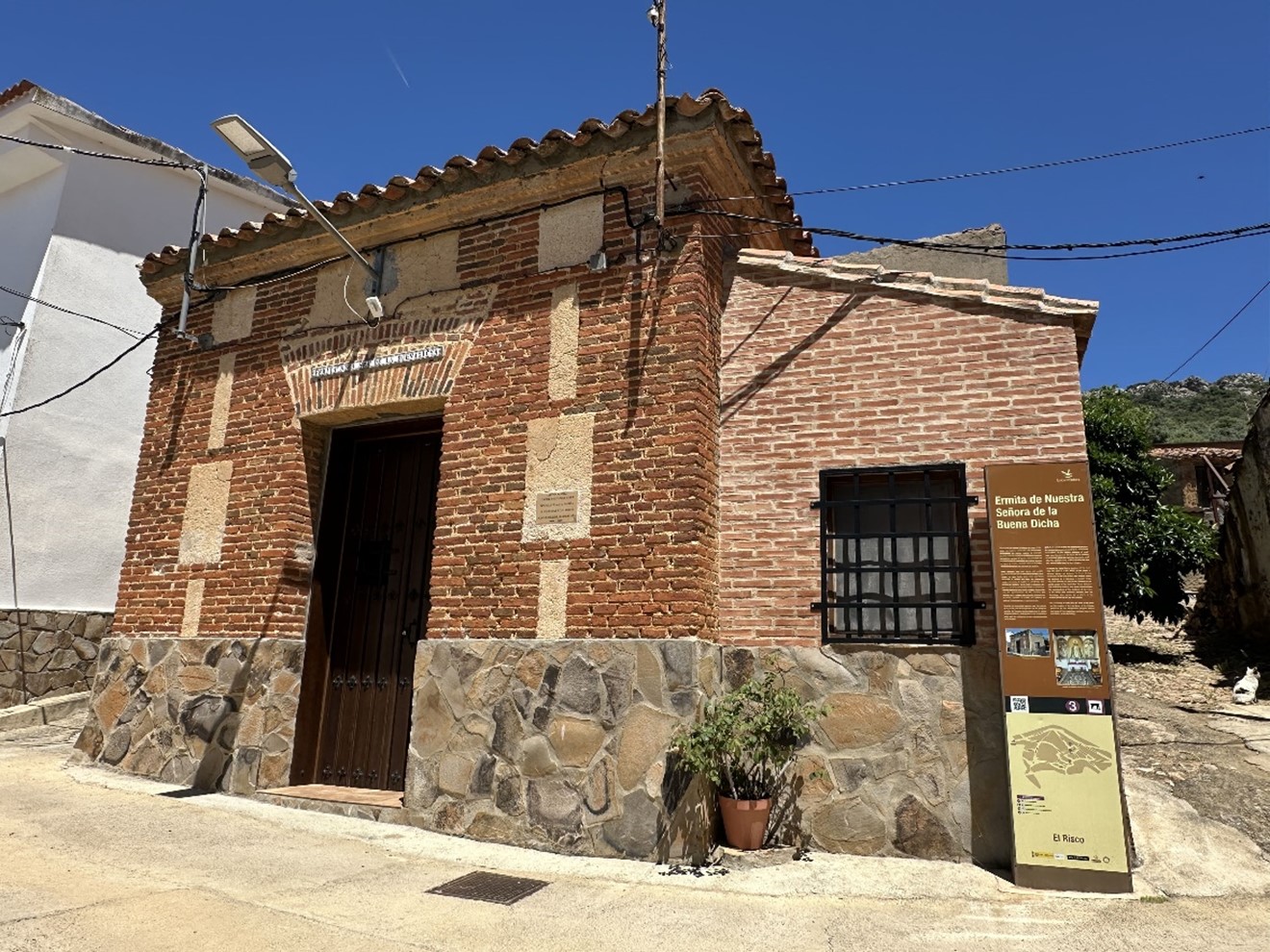
The Hermitage of the Nuestra Señora de la Buenadicha is one of the main religious landmarks of the town of Risco, located in the comarca of La Siberia. It is a small temple which, despite its simplicity, holds notable value within the municipality’s heritage complex.
Located within the urban environment, it forms part of the network of traditional architecture of the village, characterised by brick and adobe buildings adapted to the irregular topography of the terrain.
HISTORY
The current hermitage was built in the 18th century, specifically around the year 1772, on the remains of an earlier temple dedicated to the Immaculate Conception.
Some sources place the reconstruction at an earlier date, noting that the original hermitage was in a state of ruin and that the new building was inaugurated in 1712, coinciding with the feast of the Immaculate Conception.
In any case, all references agree that the current temple is the result of a rebuilding over a previous religious site, demonstrating the continuity of devotion in this enclave over time.
HISTORICAL-ARTISTIC DESCRIPTION
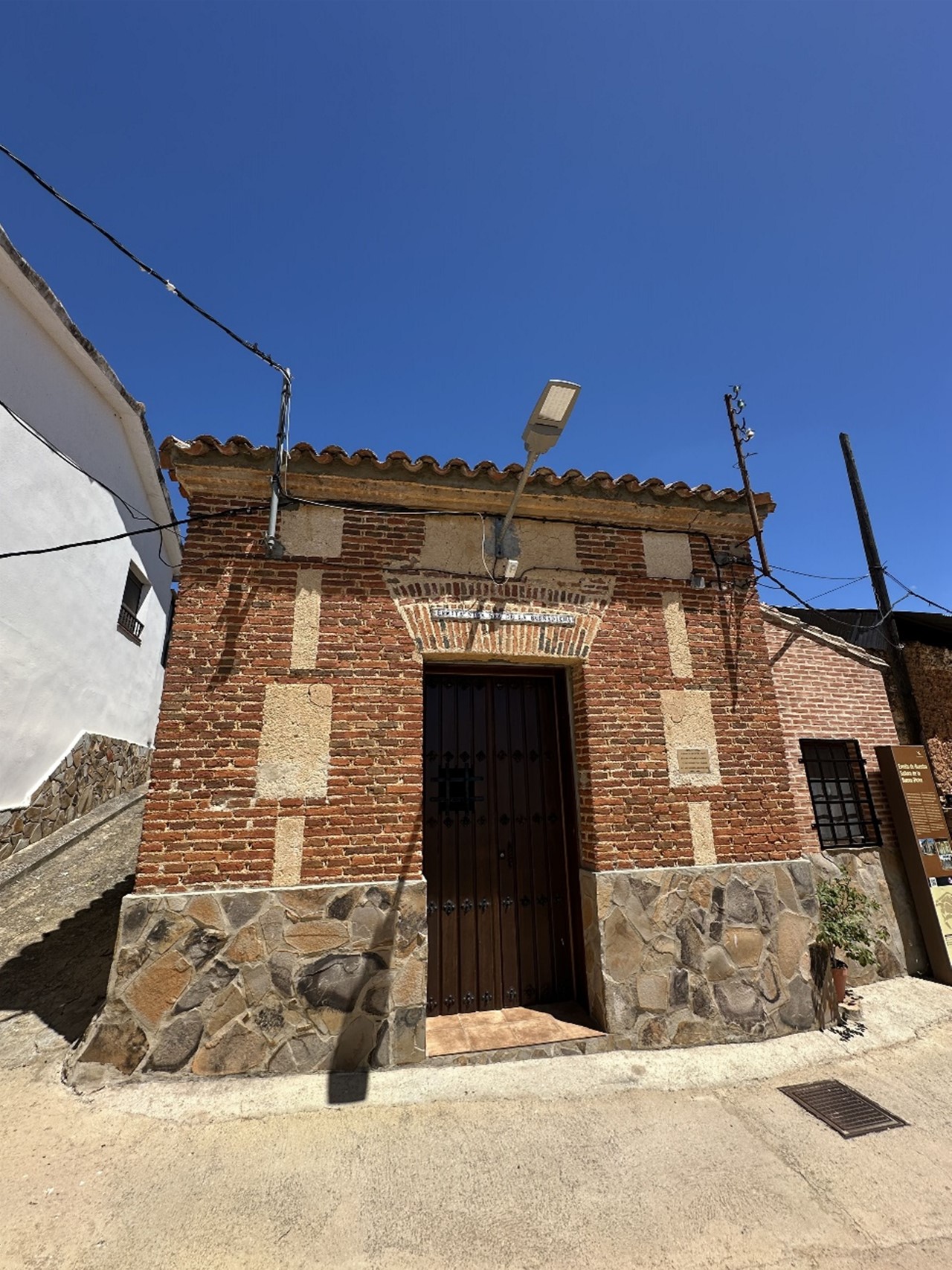
The building presents a simple construction, built entirely in brick, following the traditional models of rural religious architecture in the area.
Its reduced volume and lack of notable ornamental elements reflect a functional approach in which constructive sobriety prevails. This formal simplicity reinforces its integration into the urban landscape of Risco, maintaining coherence with the municipality’s other traditional buildings.
RELEVANT FIGURES RELATED TO THE POI
No specific figures directly linked to the foundation or historical development of the hermitage are documented, beyond its collective character as a place of popular devotion.
MOVABLE HERITAGE
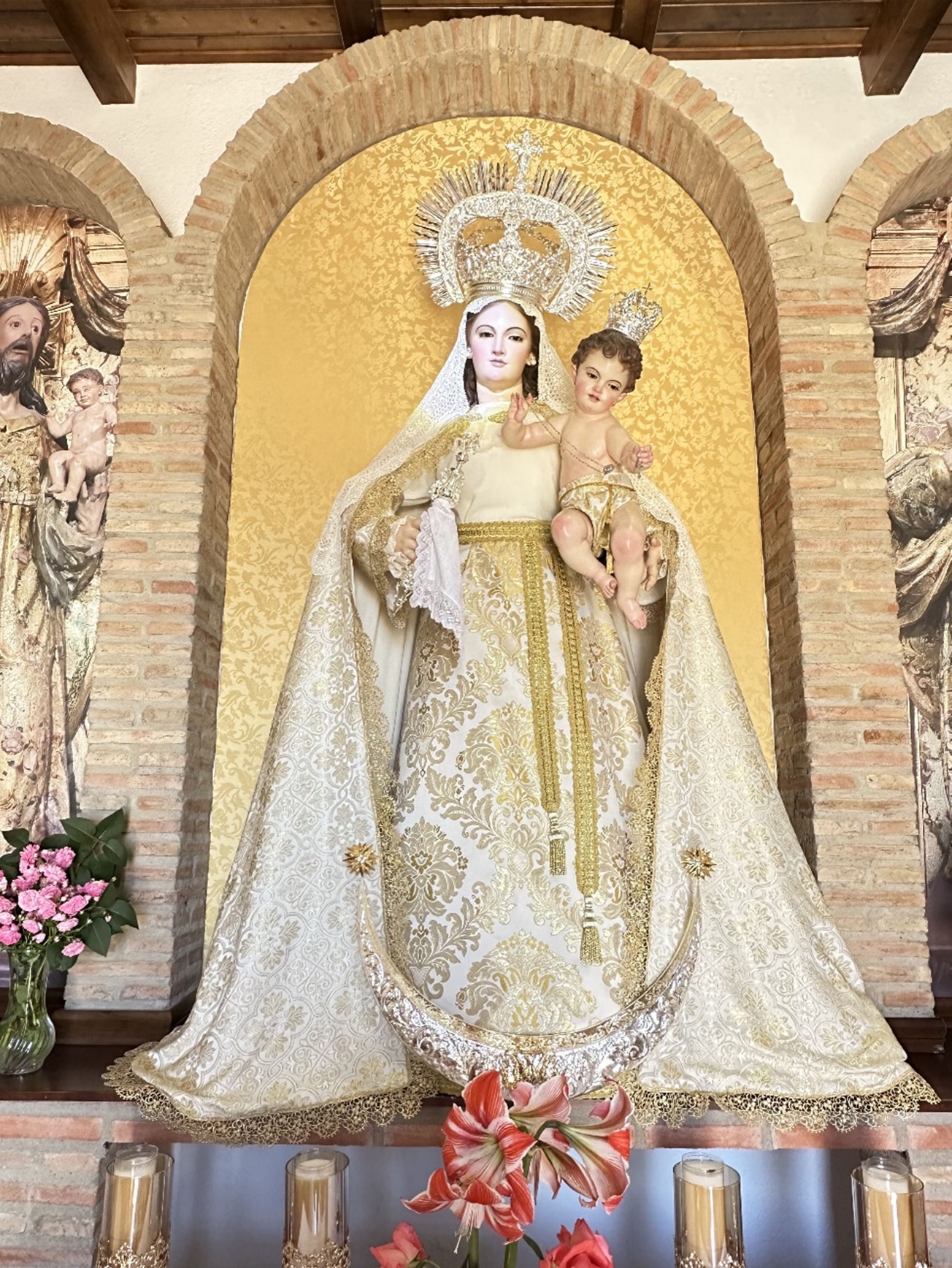
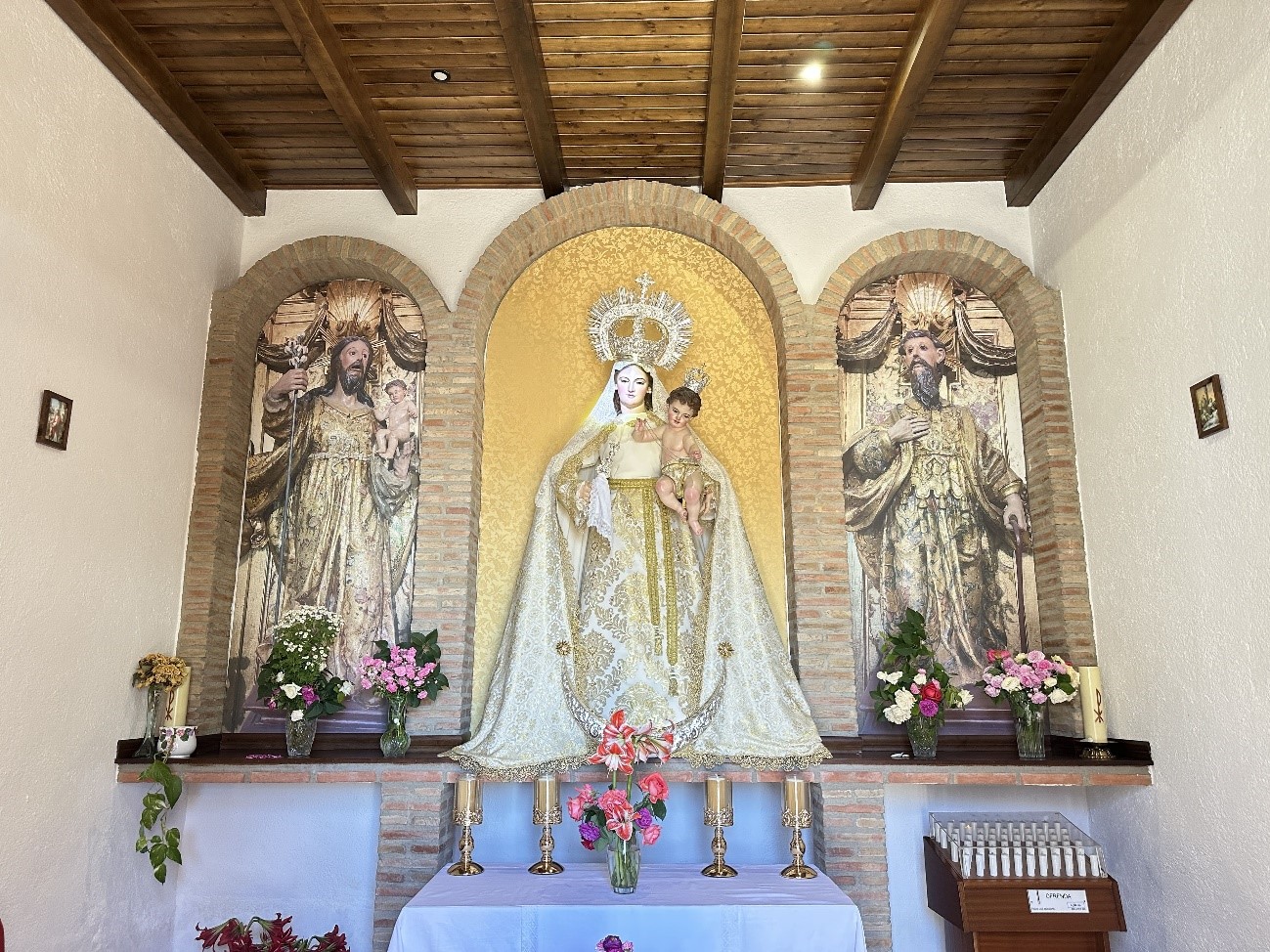
The hermitage houses the image of Nuestra Señora de la Buenadicha, an object of devotion in the town and the central element of worship linked to this religious space.
INTANGIBLE HERITAGE
The hermitage is closely linked to the religious celebrations of Risco, especially the festivities dedicated to the Virgen de la Buenadicha, which take place during the month of August.
These celebrations constitute one of the most important moments in the local festive calendar, reinforcing the role of the temple as a centre of collective identity and tradition.
The continuity of these devotional practices highlights the importance of the hermitage not only as an architectural element, but also as a living space within the municipality’s intangible cultural heritage.