HISTORY
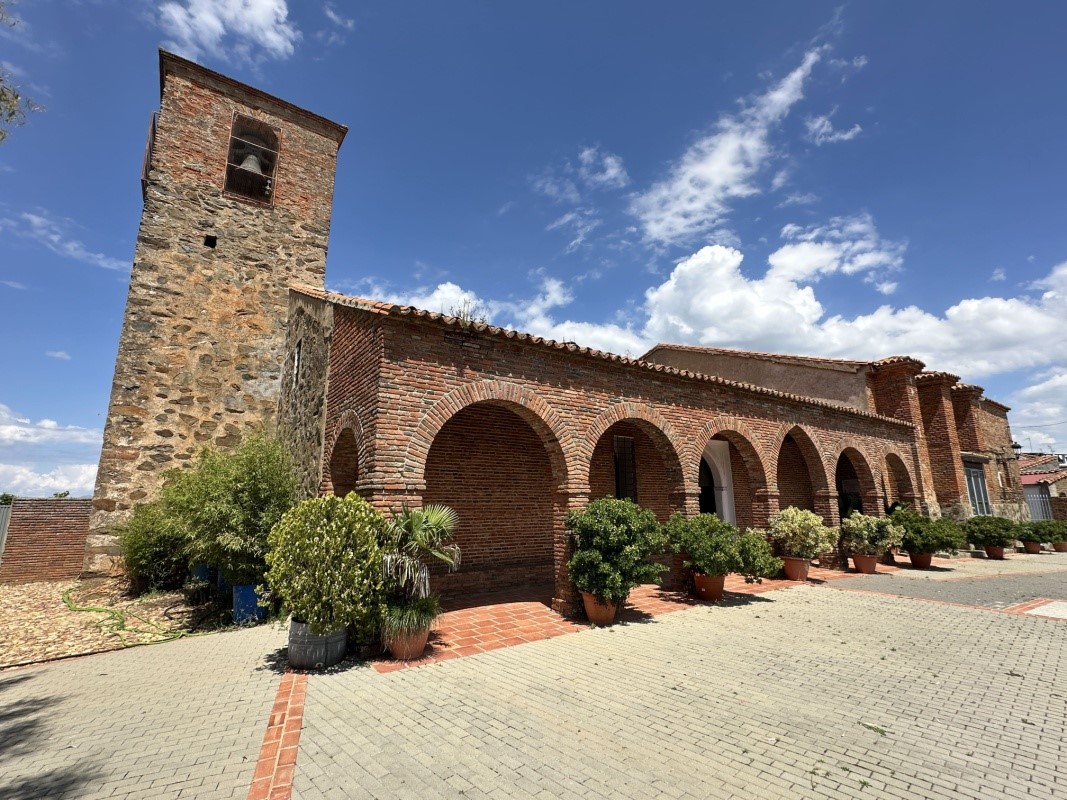
The Parish Church of San Cristóbal Mártir constitutes one of the most relevant historical and religious buildings in the La Siberia region, traditionally considered the oldest church in the archpriesthood of Herrera del Duque and its surrounding area. Its origin is linked to an ancient Templar fortress established on the site during the Middle Ages. Various construction evidence and historical traditions suggest that it was built partially taking advantage of previous defensive structures. This circumstance explains why the building is popularly known as “El Castillo”.
According to oral tradition preserved by the parish, the area closest to the presbytery would have been used for Templar burials, while other areas of the building would correspond to the former courtyard of the original fortress. Beneath the temple there is a large crypt linked to earlier historical phases of the complex.
During the first Carlist invasion of Castilblanco, on 29 September 1837, the soldiers looted the town and took the banner of the Brotherhood of the Virgen del Castillo to the Carlist Museum of Navarra. On 30 December 1838, during the second Carlist invasion, several defenders took refuge in the Church and fortified themselves in the tower to fight against the invaders. The Carlists failed to force their surrender and, in retaliation for the resistance, withdrew and set fire to 37 houses.
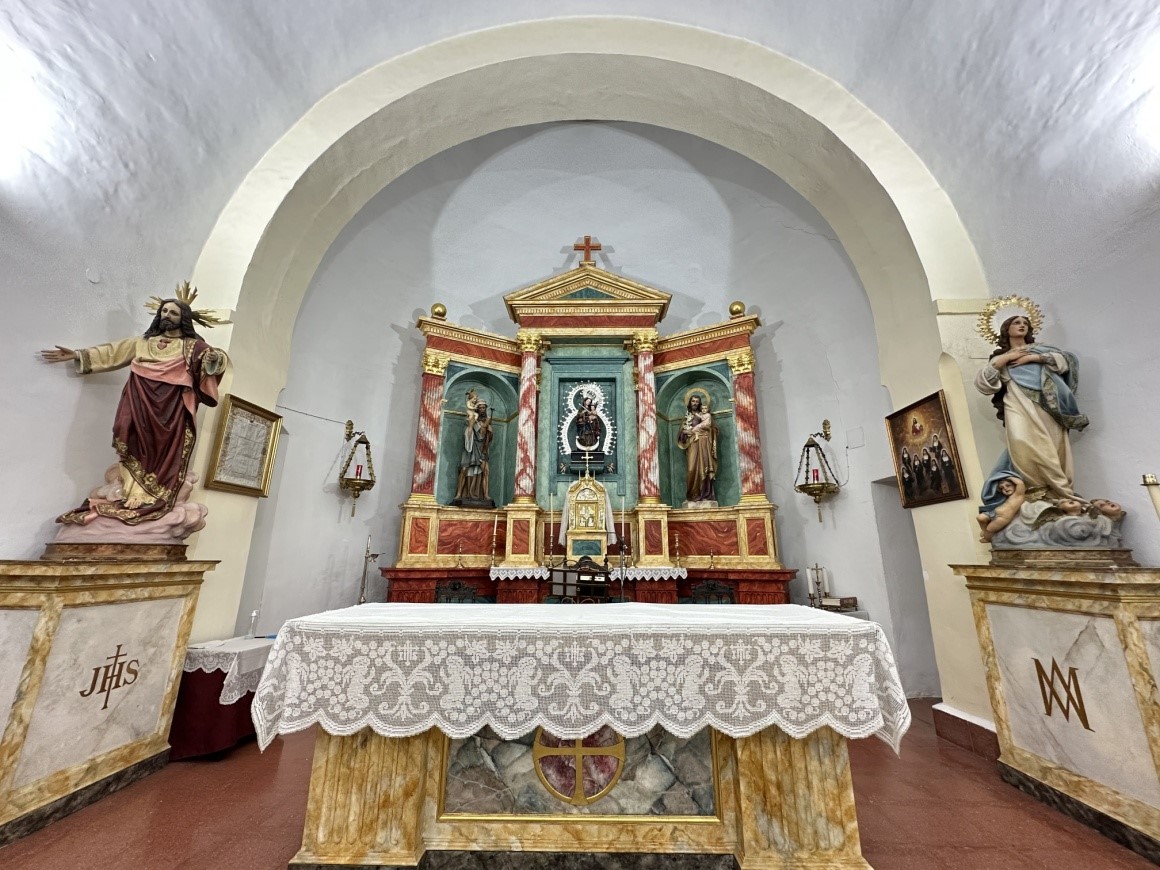
The current building, in Mudéjar style with significant later transformations, underwent successive renovations throughout the centuries. Some added rooms were even used as a school during certain historical periods. In 2009, a major renovation of the presbytery was carried out through the installation of a new altarpiece made by Sevillian religious sculptors. Until then, the altar only housed three pedestals dedicated to San Cristóbal, San José and the Tabernacle. With the renovation, the image of the Virgen del Castillo, patron saint of Castilblanco, was incorporated, definitively consolidating her devotional prominence within the parish church.
HISTORICAL AND ARTISTIC DESCRIPTION
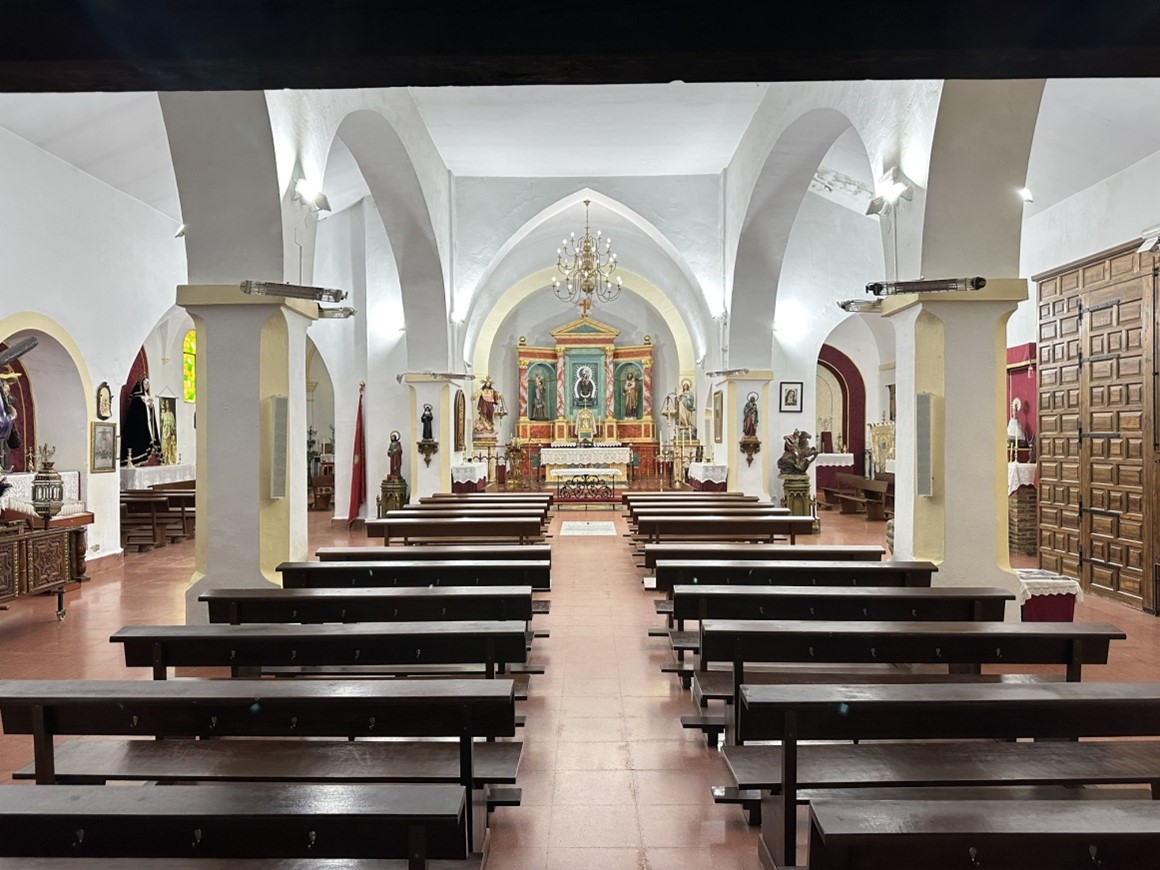
The Parish Church of San Cristóbal Mártir corresponds to a construction of Mudéjar origin deeply transformed by later renovations, although it still preserves numerous elements that allow recognition of its original historical configuration. The temple is structured around a large central nave with pointed arches and lateral spaces adapted as chapels. Inside, the octagonal columns and various brick elements stand out, characteristic of traditional Extremaduran Mudéjar architecture.
The bell tower, configured with four arched windows, constitutes one of the most representative elements of Castilblanco’s urban skyline. Various historical interpretations maintain that both this structure and some walls may have belonged to the ancient Templar fortress upon which the religious complex was later developed.
The interior spatial organisation of the building is of particular relevance, linked to former defensive and funerary uses. The proximity of the presbytery to possible Templar burials and the existence of a large underground crypt reinforce the historical uniqueness of the temple within the religious heritage of the region.
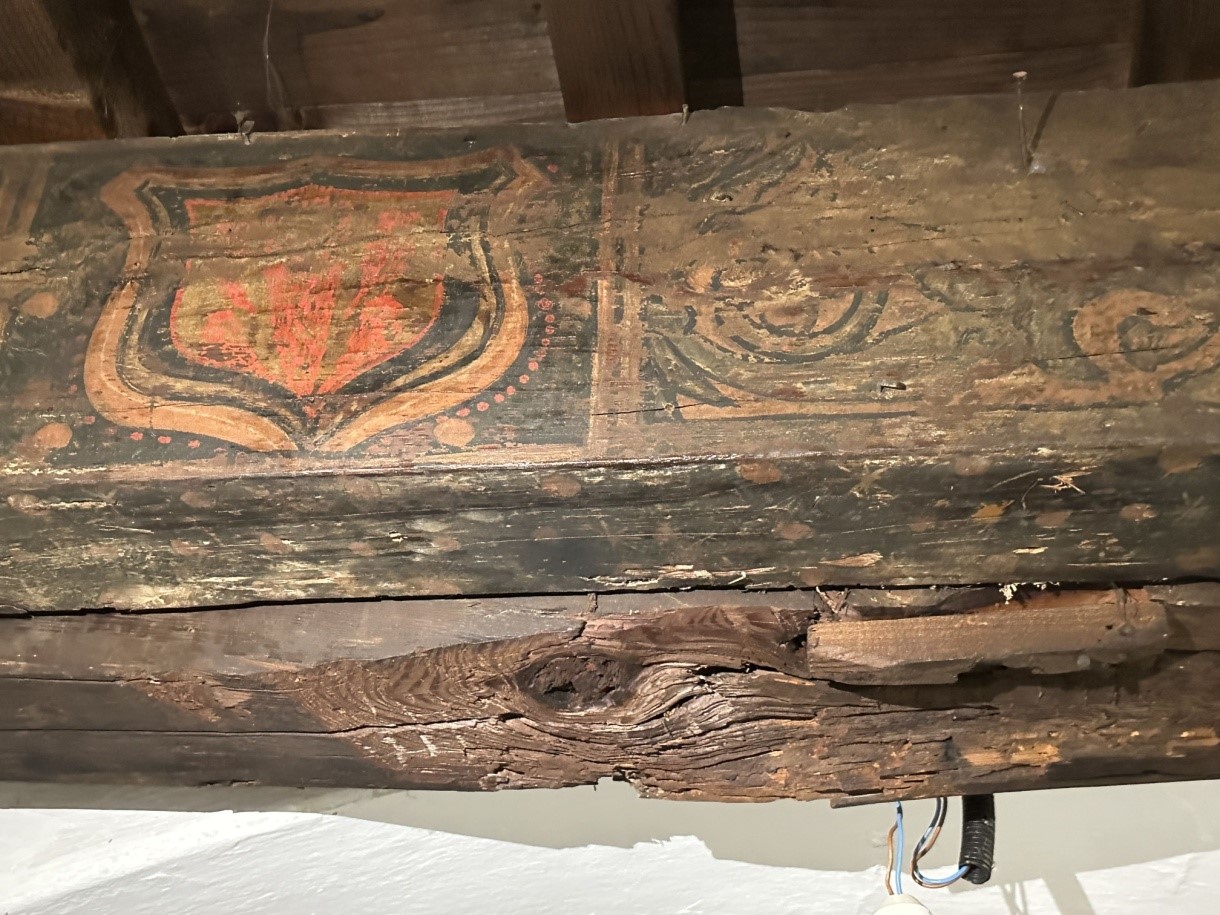
The presbytery is currently presided over by the altarpiece installed in 2009, a work created by Sevillian religious sculptors. At its centre is the Virgen del Castillo, patron saint of the town, accompanied by the images of San José and San Cristóbal, titular saint of the parish. Other notable elements include the polychrome beam located at the entrance of the temple, as well as various remains and construction solutions linked to different historical phases of the building.
RELEVANT FIGURES RELATED TO THE POI
The temple is dedicated to San Cristóbal, a figure of great relevance in Christian tradition as the protector of travellers, which takes on special meaning in a place historically linked to the control of roads and natural passes.
Likewise, the presence of the Virgen del Castillo stands out, a devotion deeply rooted in the town, whose importance lies in its connection with the historical origin of the settlement and with the fortified space on which the temple stands.
MOVABLE HERITAGE
Among the most notable movable assets preserved in the church is the main altarpiece installed in 2009, created by religious sculptors from Seville, which replaced the previous one that had been burned. This ensemble currently presides over the presbytery and represented a profound aesthetic and devotional transformation of the main altar.
The composition incorporates in the central position the Virgen del Castillo, patron saint of Castilblanco, flanked by San José and San Cristóbal, titular saint of the parish church. Before this intervention, the altar only featured three pedestals dedicated to these devotions alongside the Tabernacle.
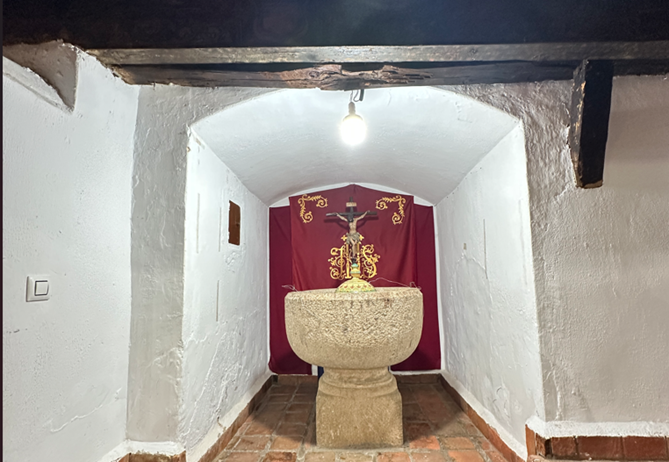
Also of special interest are the sculpture of Cristo de la Luz, linked to popular celebrations and agro-livestock pilgrimages, the original 17th-century wooden choir, and the Gothic granite baptismal font preserved inside the building. The presence of an ancient polychrome beam located at the entrance of the temple also stands out as a unique element within the parish’s historical-artistic heritage.
INTANGIBLE HERITAGE
The Church of San Cristóbal Mártir constitutes the main religious, symbolic and devotional centre of Castilblanco, maintaining a close relationship with the town’s historical and festive traditions.
The patron saint of the municipality is the Virgen del Castillo, whose devotion is deeply rooted among the population and whose liturgical prominence was reinforced following her incorporation into the temple’s new altarpiece in 2009. At the same time, San Cristóbal maintains his status as titular saint of the parish church.
Particularly relevant is also the devotion to Cristo de la Luz, around whom a pilgrimage with a strong agro-livestock character is celebrated in September, constituting one of the municipality’s most representative festive manifestations.
Popular memory also preserves the link between the temple and the ancient Templar fortress upon which it is believed to have been built, as well as the existence of historical burials and underground spaces associated with former defensive and religious functions of the building.