DESCRIPTION
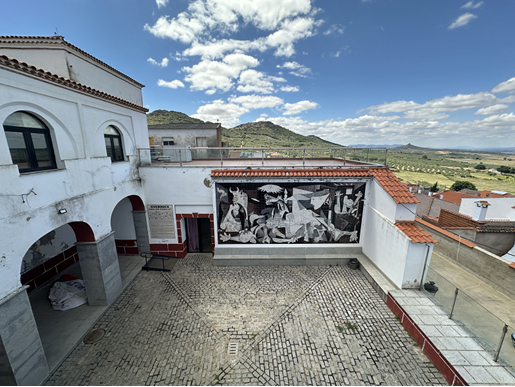
Historic civil building located in Plaza de España, linked to the family of the Dukes of Osuna and currently used as a cultural facility of the municipality and, especially, as the Museum of the Giant.
HISTORY
The building has a history that dates back to the Late Middle Ages. In 1449, the Crown granted the town to Gutiérrez de Sotomayor, Master of the Order of Alcántara. It was in this palace that Master Gutierre de Sotomayor and his descendants lived.
Fray Juan de la Puebla was born here in 1453, son of Alonso I de Sotomayor, who married Elvira de Zúñiga, daughter of Álvaro de Zúñiga, first Duke of Béjar. The palace passed to the Dukes of Béjar in 1531 through the marriage of Francisco de Sotomayor to the daughter of the Counts of Ayamonte, heiress to the Duchy of Béjar.
The building was rebuilt during the 17th century, consolidating itself as a representative residence within the urban structure of the town. When the Duke of Béjar died without succession in 1777, his vast territories were inherited by the Countess of Benavente, wife of the Duke of Osuna. At the end of the 19th century, the duke’s creditors auctioned the palace, which was purchased by local inhabitants.
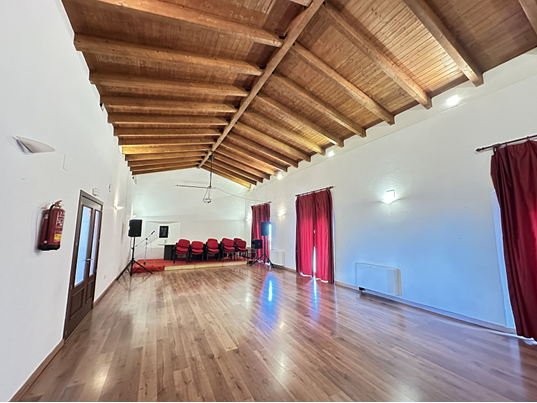
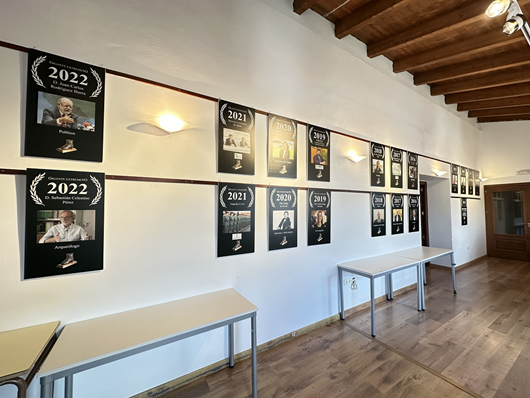
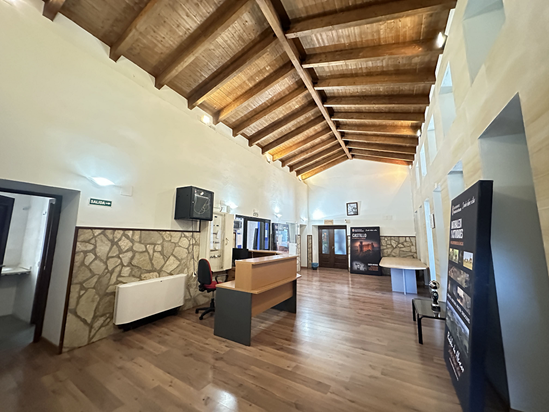
In contemporary times, the building has undergone a complete restoration that has enabled its recovery and adaptation, serving in recent years as a Post Office, Land Registry Office, UNED classroom and, more recently, as the House of Culture, Museum of the Extremaduran Giant, Municipal Historical Archive and Municipal Library, thus guaranteeing its preservation and public use.
MUSEUM OF THE GIANT
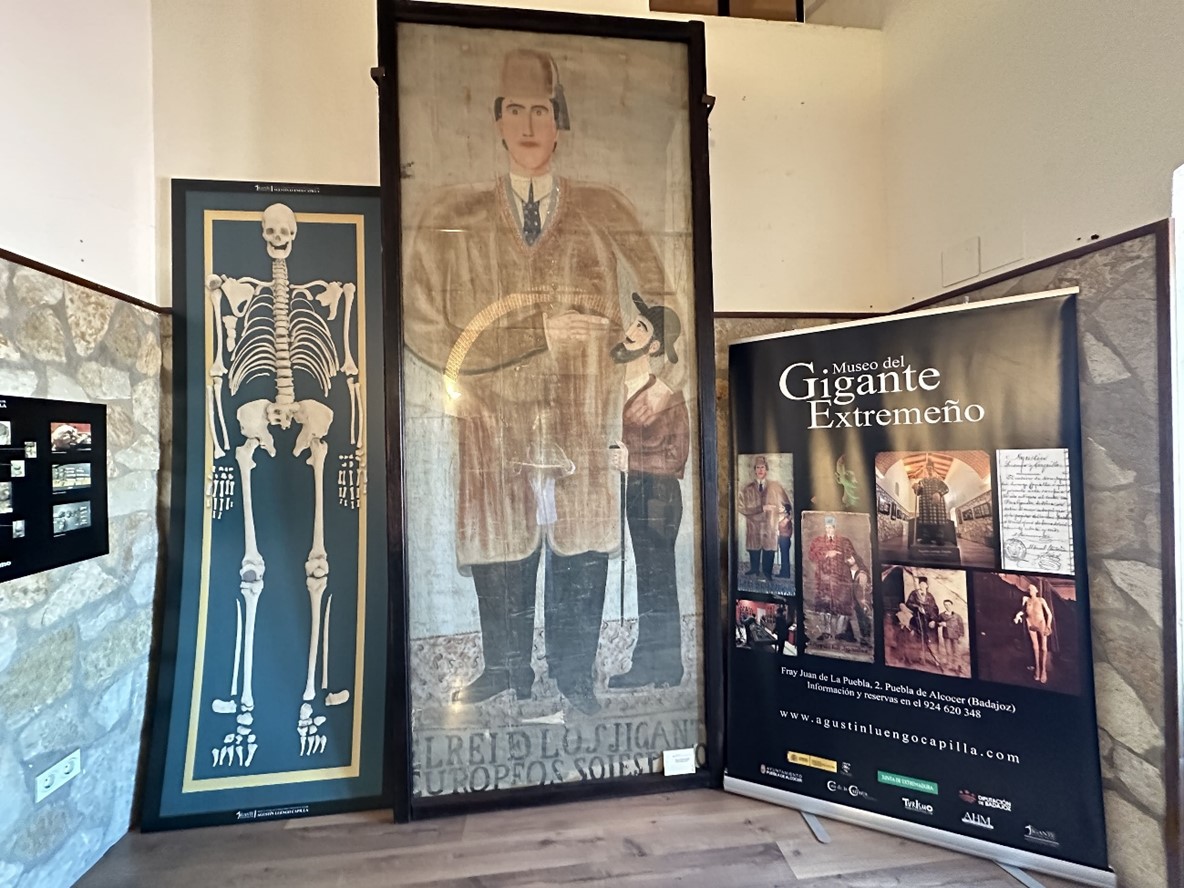
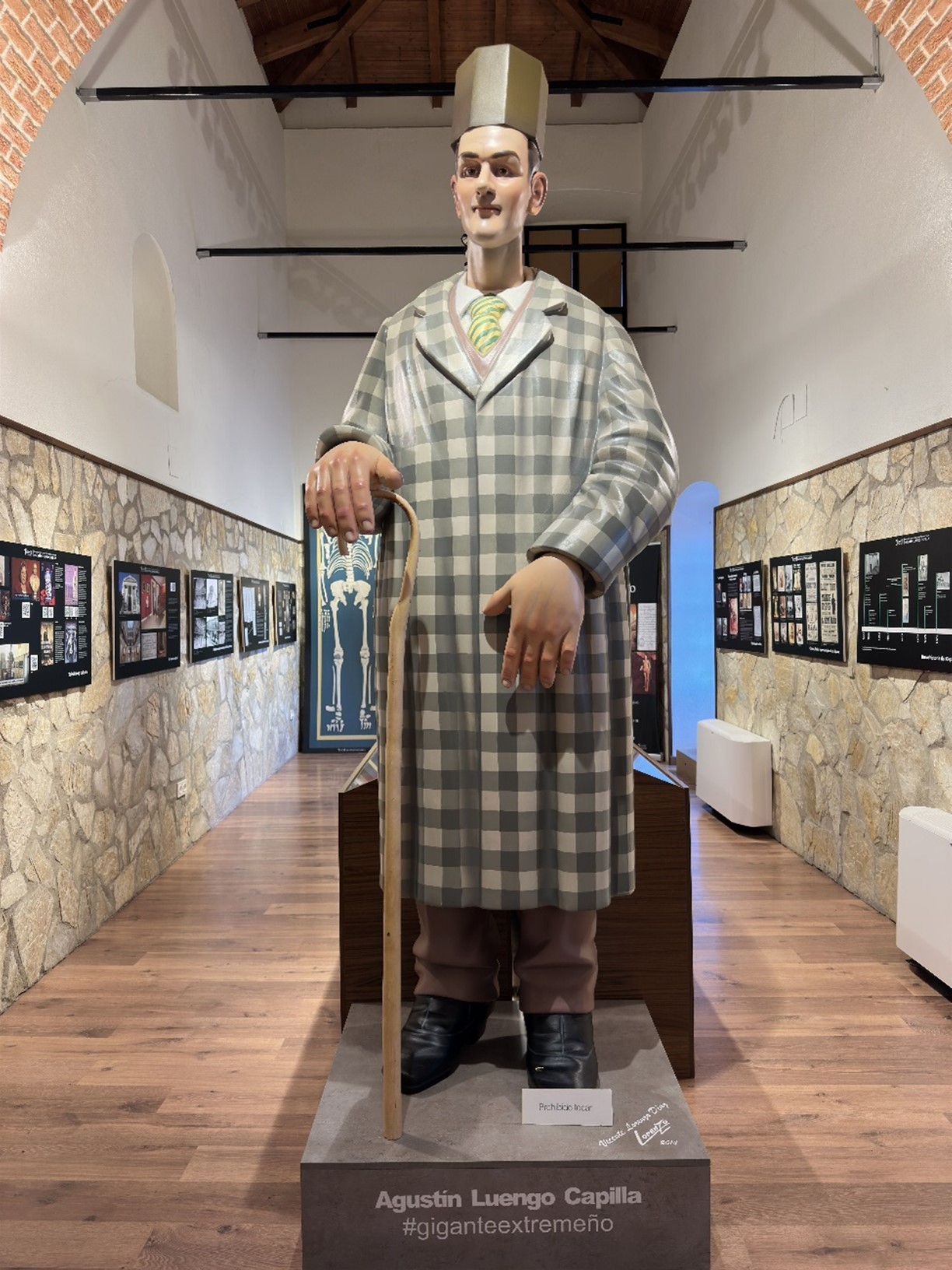
The Museum of the Giant emerged in contemporary times as part of local initiatives aimed at the conservation, interpretation and dissemination of the intangible heritage of Puebla de Alcocer. It is dedicated to Agustín Luengo Capilla, who reached a height of 2.35 metres, and exhibits personal objects such as a boot gifted to him by Alfonso XII and a life-size replica of his figure.
Agustín Luengo Capilla was born in Puebla de Alcocer on 15 August 1849 and spent his childhood in anonymity, marked by health problems and extraordinary physical growth that would soon turn him into an exceptional figure. Over time he reached a height of 2.35 metres, placing him among the tallest men in history. His extraordinary characteristics led him to travel throughout Spain as an advertising attraction in a circus, where he performed exhibitions that aroused public curiosity. His fame became such that he was presented before King Alfonso XII in 1875, at a time when his health was already deteriorating.
That same year, Doctor Pedro González de Velasco, founder of the Anthropological Museum of Madrid, agreed with him through a notarised document to take charge of his body after his death, in exchange for financial compensation during the last months of his life.
Agustín died in Madrid on 31 December 1875, at only 26 years of age, due to a bone disease. After his death, his body became the subject of scientific study, including the making of a plaster cast and the preparation of his skeleton, which were exhibited at the Universal Exposition of Paris in 1878. Today these remains are preserved in the National Museum of Anthropology, while Puebla de Alcocer retains some objects linked to his figure as testimony to his singular history.
The museum forms part of the strategy to promote the intangible heritage of the region, contributing to strengthening the cultural identity of the territory and diversifying the tourist offer of Puebla de Alcocer.
HISTORICAL-ARTISTIC DESCRIPTION
The building presents a typology characteristic of noble civil architecture, with a main façade facing Plaza de España that stands out for its representative character.
Among its most significant elements are the stone doorway with reliefs, the barred windows and the balcony, which reinforce the image of a noble residence. Of particular interest is a large medieval arch that gives access to an interior passageway communicating with rooms located in the upper part of the square, evidencing the functional complexity of the complex.
The structures combine traditional construction solutions with more elaborate elements, creating a building that preserves significant features of its historical evolution despite the interventions carried out for its adaptation to new uses.
IMPORTANT FIGURES RELATED TO THE POI
The building is directly linked to Gutierre de Sotomayor, a key figure in the history of the territory and in the consolidation of the lordship of Puebla de Alcocer, as well as to his descendants.
Later, its relationship with the House of Osuna places it within one of the most influential noble lineages in the history of Spain, reinforcing its historical relevance at regional level.
MOVABLE HERITAGE
Elements associated with its historical use as a noble residence and, currently, facilities linked to its function as the House of Culture.
INTANGIBLE HERITAGE
The historical memory linked to the feudal system and the presence of nobility in Puebla de Alcocer, as well as its current role as a cultural space integrated into the municipality’s social and cultural life.