DESCRIPTION
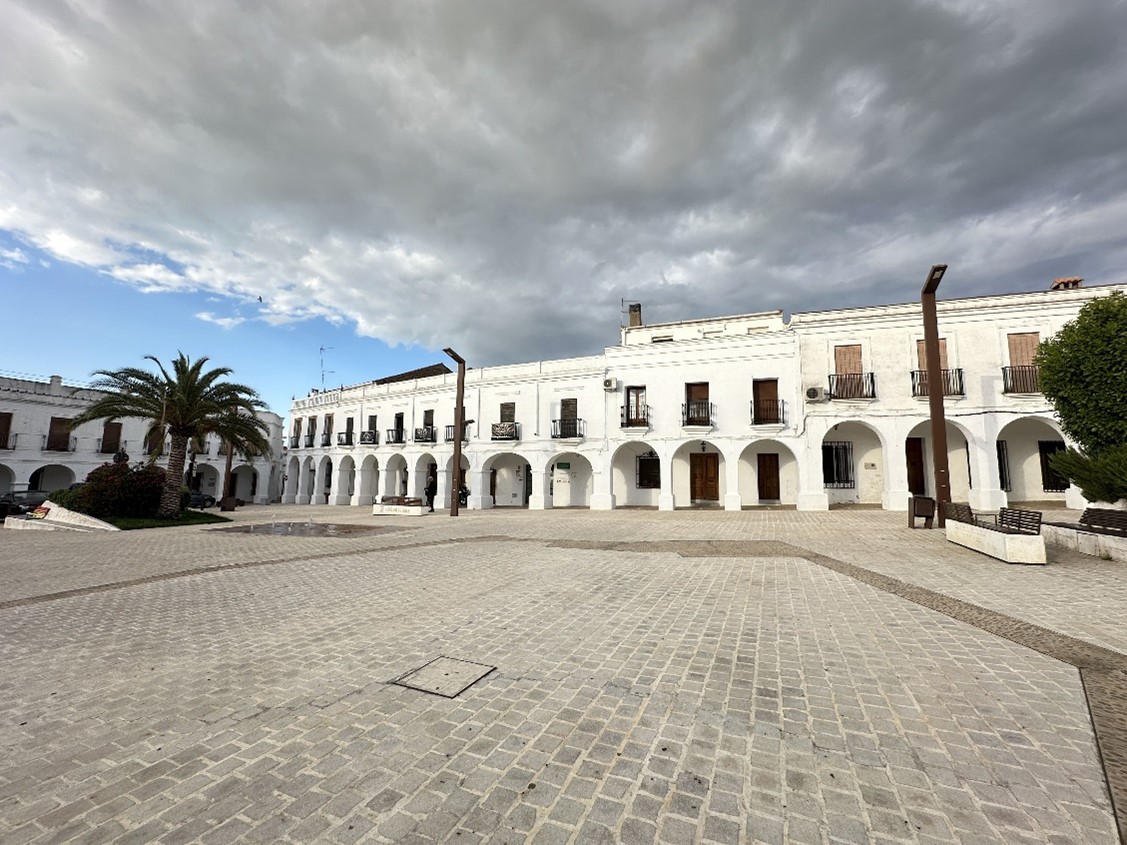
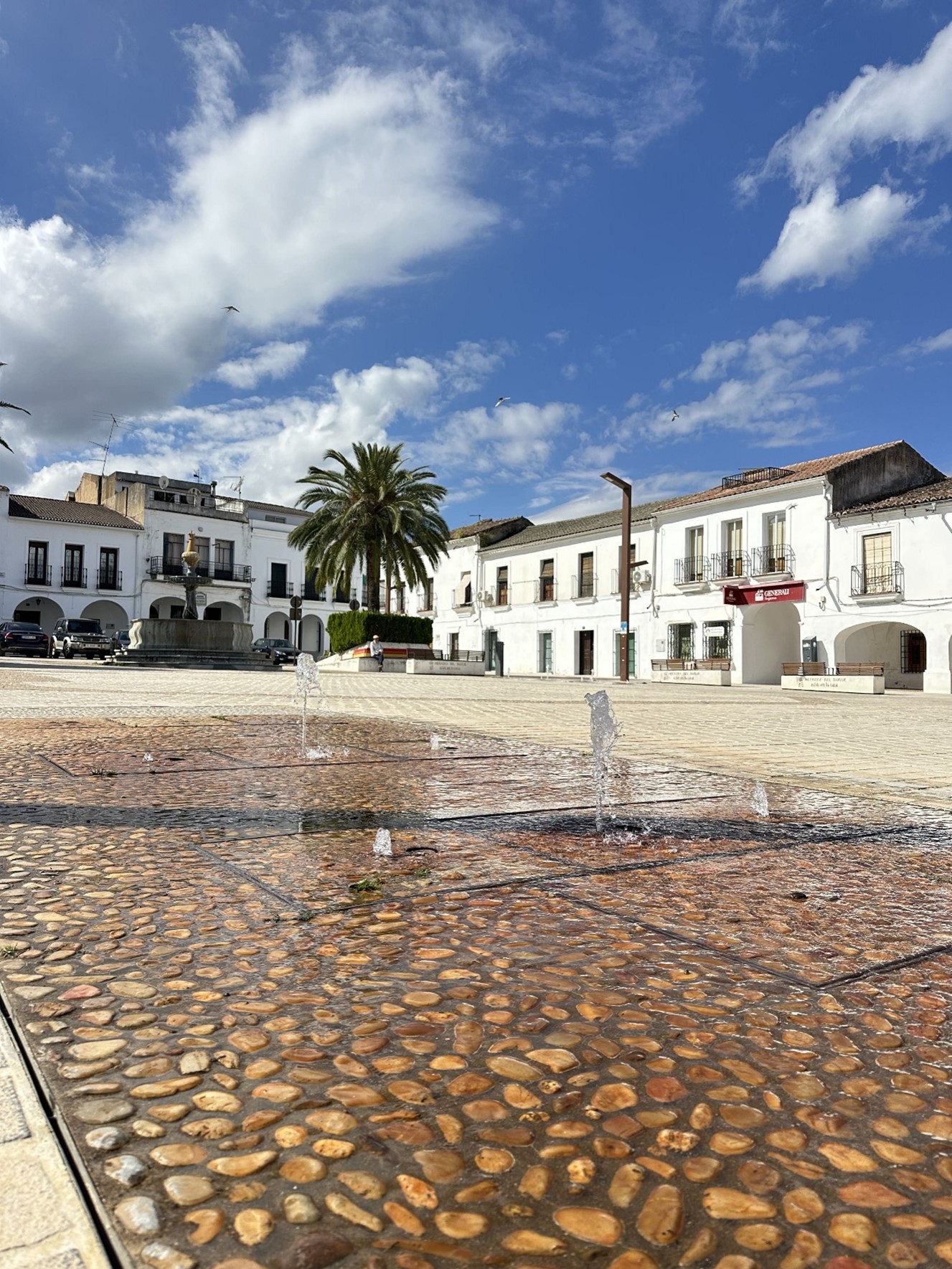
The Plaza Mayor of Herrera del Duque, also known as Plaza de España, constitutes the town’s main urban space and central organizing axis. The principal streets of the historic center converge around it, making it the center of the municipality’s social, administrative, and daily life.
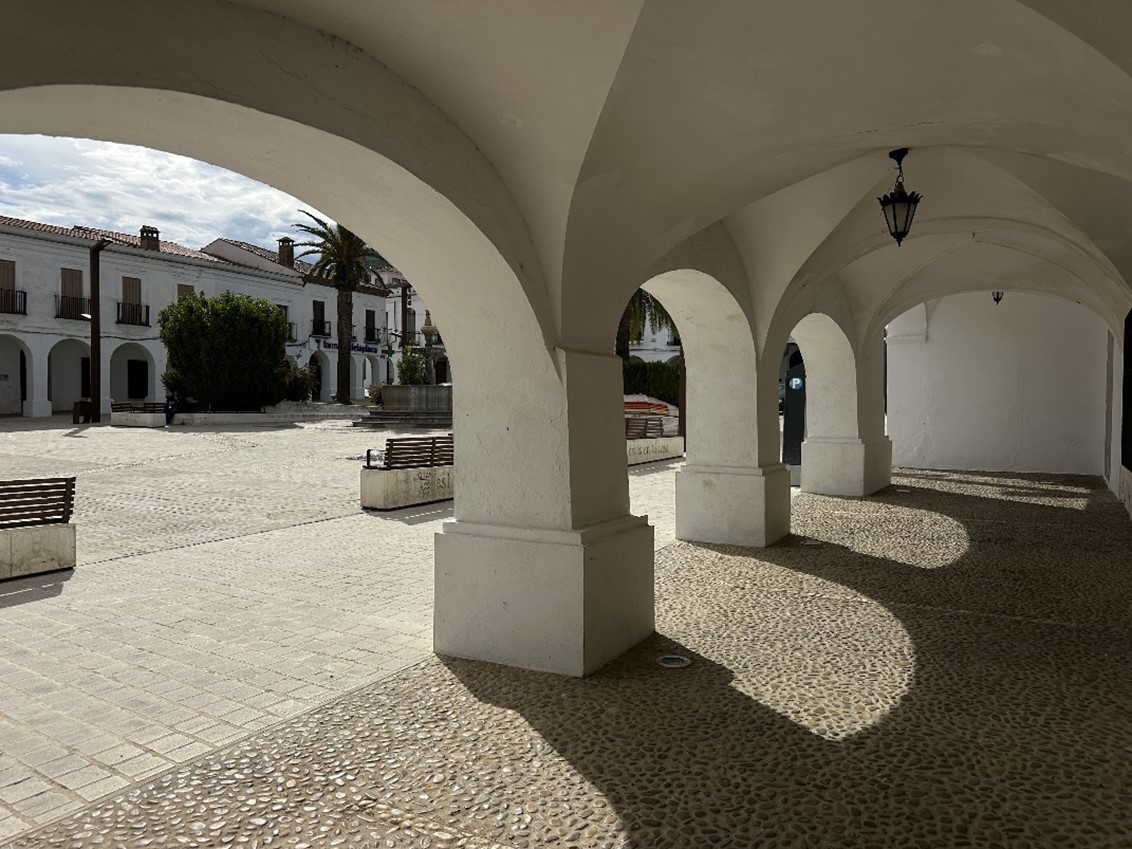
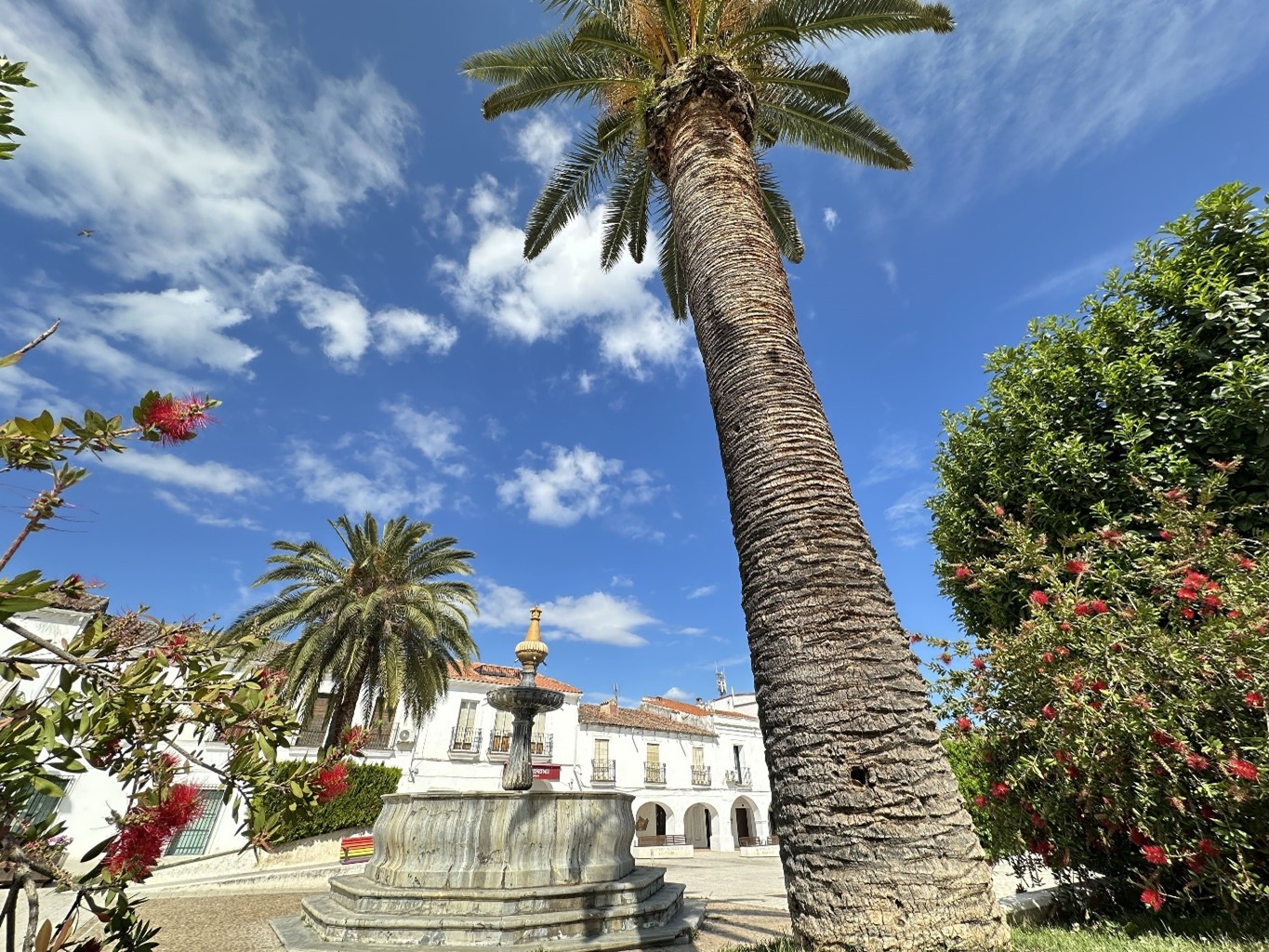
It is a square with a currently rectangular layout, arcaded along much of its perimeter through porticoes with semicircular arches beneath wrought-iron balconies. This ensemble gives it a characteristic appearance within the traditional architecture of the La Siberia region.
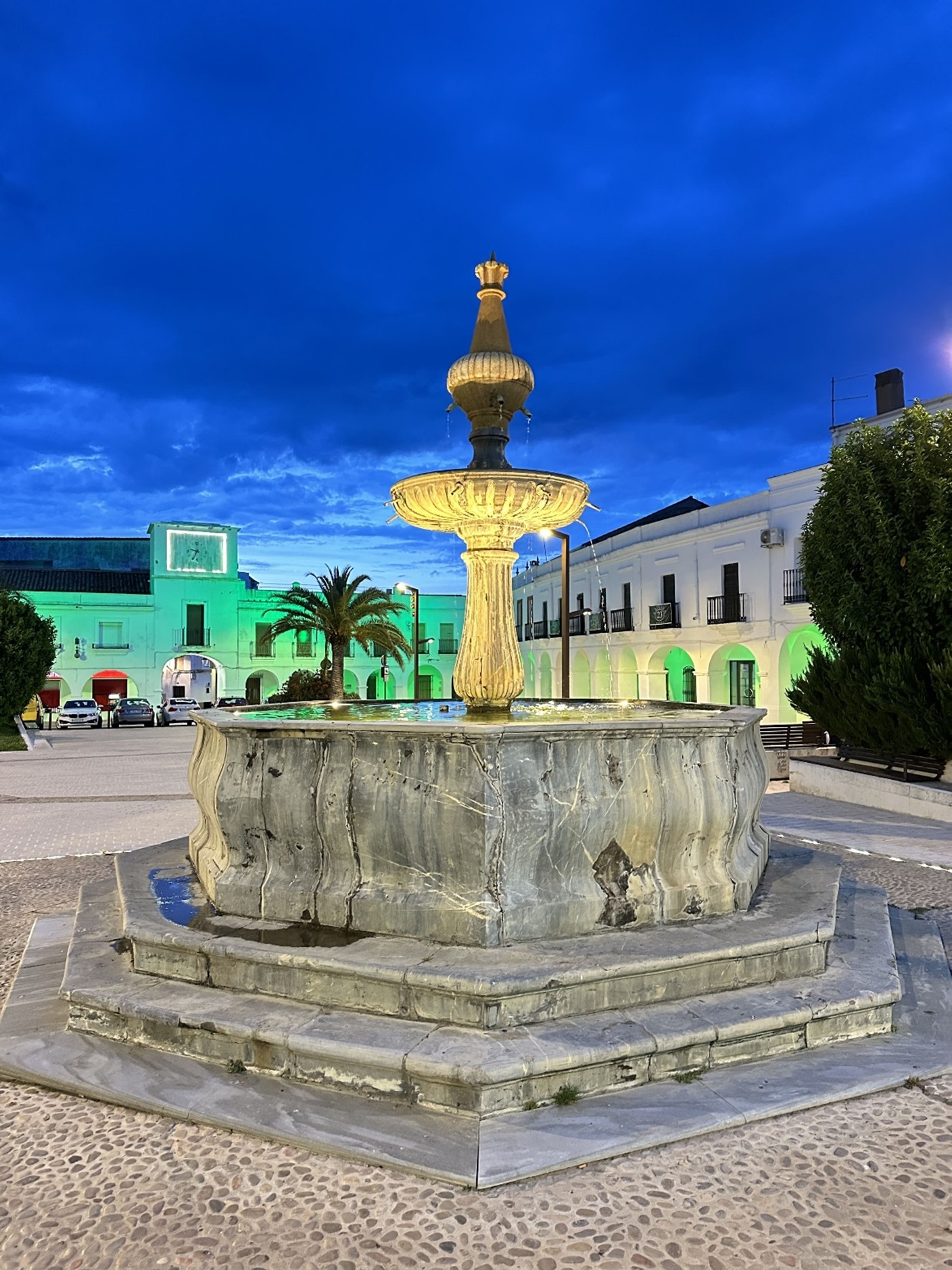
At its center stands the octagonal fountain, one of the most distinctive elements of the ensemble, notable both for its aesthetic value and for its historical function in the town’s daily life.
HISTORY
The square originally had a square layout, which over time and due to later urban transformations gradually evolved into its current rectangular form.
Throughout the 20th century, especially during its second half, the space underwent several interventions that altered its original appearance, although it has retained its character as the central nucleus of the town.
The octagonal fountain was built in 1787 and has since become one of the most representative elements of the urban ensemble. For centuries it played an essential role as a public water supply source for the population.
HISTORICAL-ARTISTIC DESCRIPTION
The square features an arcaded layout with galleries extending around much of its perimeter, whose arches are covered with different types of vaults. It has several access points, including one connecting to Calle Cantarranas through a vaulted arch, where the former Casa de la Audiencia or Council House once stood.
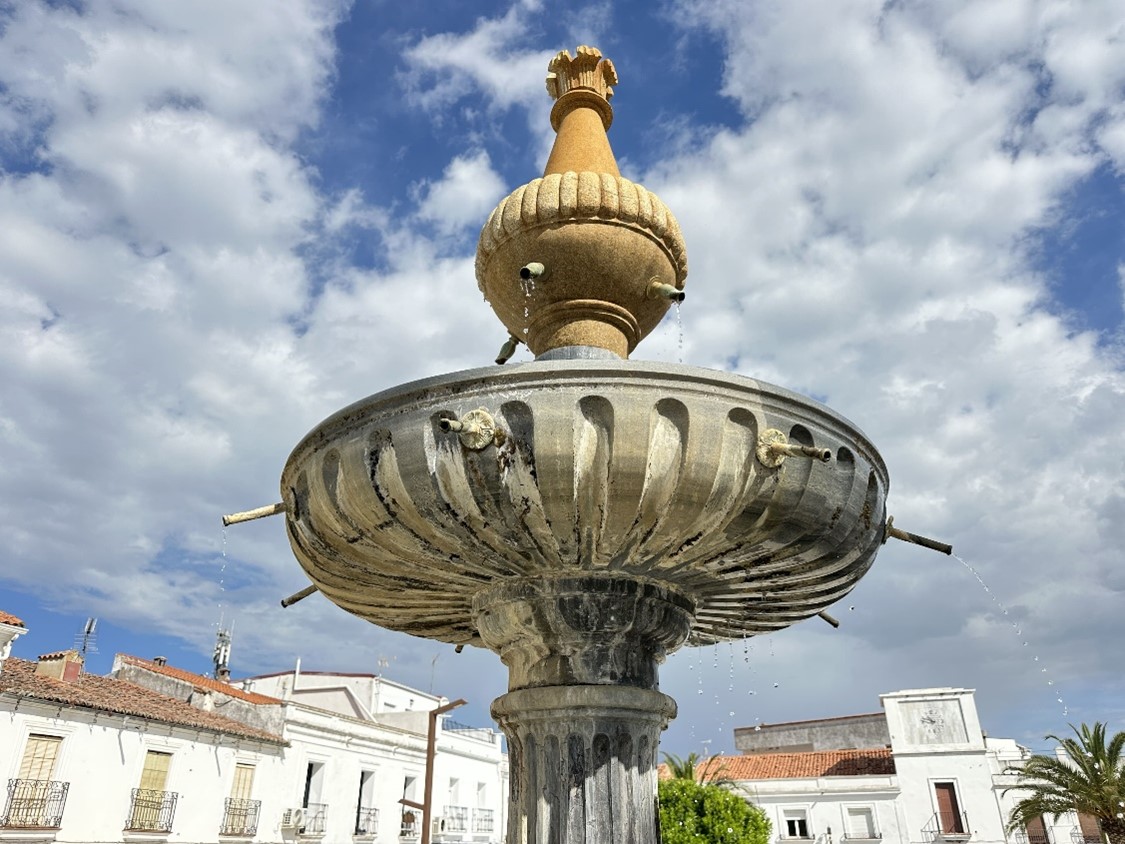
The most outstanding feature is the central fountain, made of polished black jasper with an octagonal plan, resting on an eight-sided base with three steps. It consists of a central column approximately four meters high, through whose interior the water rises to an upper bowl.
From this bowl the water is distributed through four main spouts and subsequently falls into a lower basin through eight additional outlets, creating a hydraulic ensemble of remarkable complexity for its time.
The fountain has undergone consolidation interventions, with metal elements incorporated to ensure the stability of its parts. Today its function is mainly ornamental, although for a long time it served as a water supply point, where metal tubes were used to collect water.
RELEVANT FIGURES RELATED TO THE POI
The Plaza Mayor has traditionally been the setting for public life in Herrera del Duque, linked to local institutions such as the former Council or Town Hall, as well as to the daily activity of its inhabitants.
MOVABLE HERITAGE
The octagonal fountain constitutes the principal movable heritage element integrated into the square, notable for its black jasper material and hydraulic design, representative of 18th-century engineering and aesthetics.
INTANGIBLE HERITAGE
The square has historically been a place for gatherings, celebrations, markets, and social activities, maintaining its status as a central space in the town’s collective life. Beyond its former practical function, the fountain forms part of the daily memory of generations who came there to collect water, reinforcing its symbolic value within the community.