DESCRIPTION
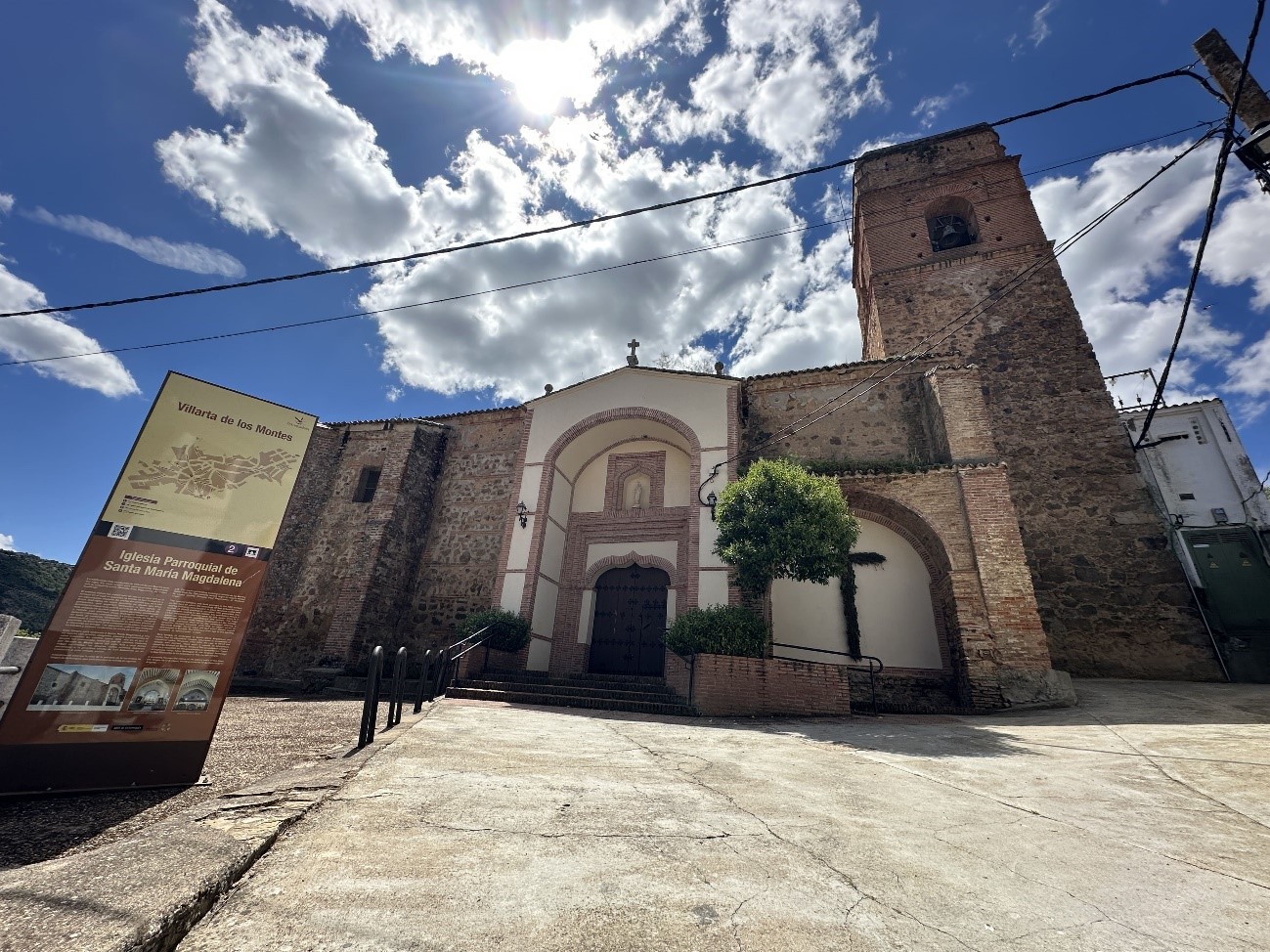
The Parish Church of Santa María Magdalena is the main heritage landmark of Villarta de los Montes, standing out as the most representative building of the urban center. Located at the lowest end of the town, transitioning toward the natural environment, its presence shapes one of the most singular and evocative spaces in the locality.
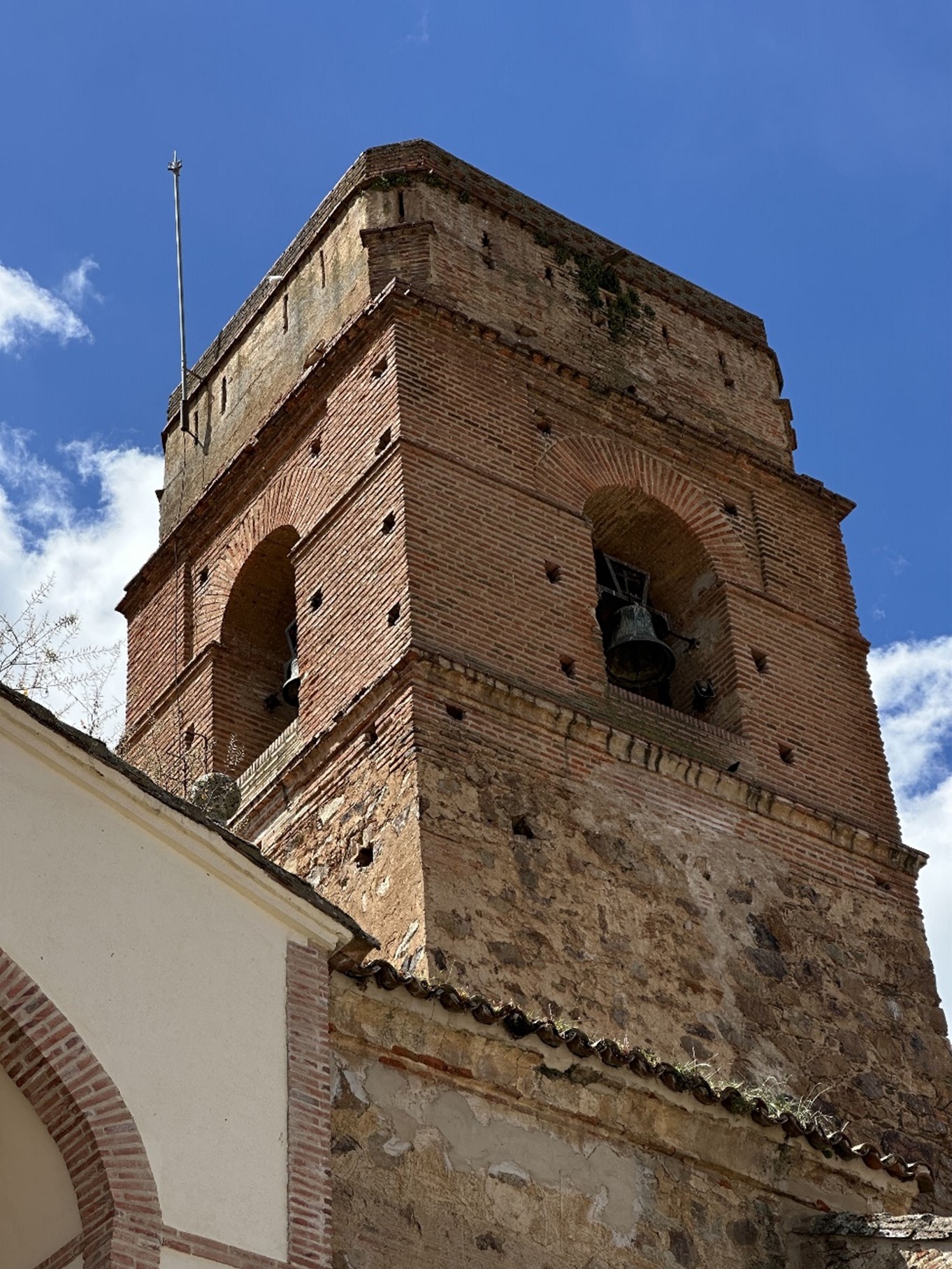
It is a rural temple that combines sober and functional architecture, typical of Extremaduran churches linked to the pastoral world, with elements of notable artistic value inside. Its simple volumetry, the prominence of the tower, and its relationship with the nearby fountain form a complex with strong personality, recognizable as a distinctive image of Villarta de los Montes.
HISTORY
The origin of the church dates back to the 15th century, in a context closely linked to livestock activity and, in particular, to the route of the Cañada Real Segoviana, a fundamental axis of medieval transhumance. This connection with the pastoral world explains both its territorial location and its historical function as the spiritual center of a community linked to livestock routes.
The current building was erected during the 19th century on the site previously occupied by the Ermita de San Sebastián and the old cemetery of the locality, becoming from then on the main parish church of Villarta de los Montes.
In 1936, the church suffered a fire that caused significant heritage losses. Among the lost items were a gilded Baroque altarpiece and two 17th-century altarpieces attributed to the circle of Juan Correa de Vivar.
HISTORICAL-ARTISTIC DESCRIPTION
The building follows the model of an Extremaduran rural church, with simple yet balanced architecture. Externally, it presents an austere appearance in which the portal and a quadrangular tower stand out, giving singularity to the complex.
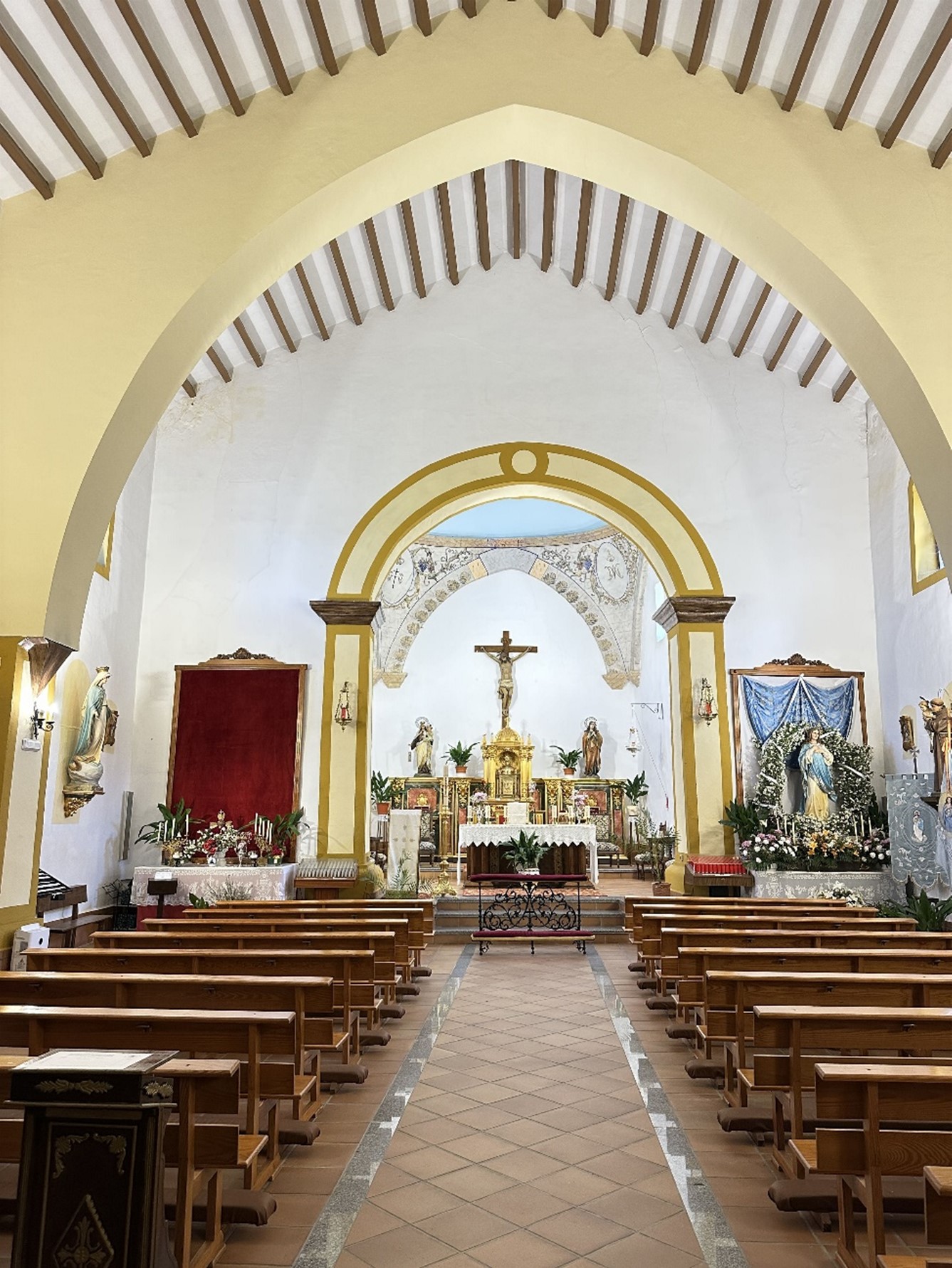
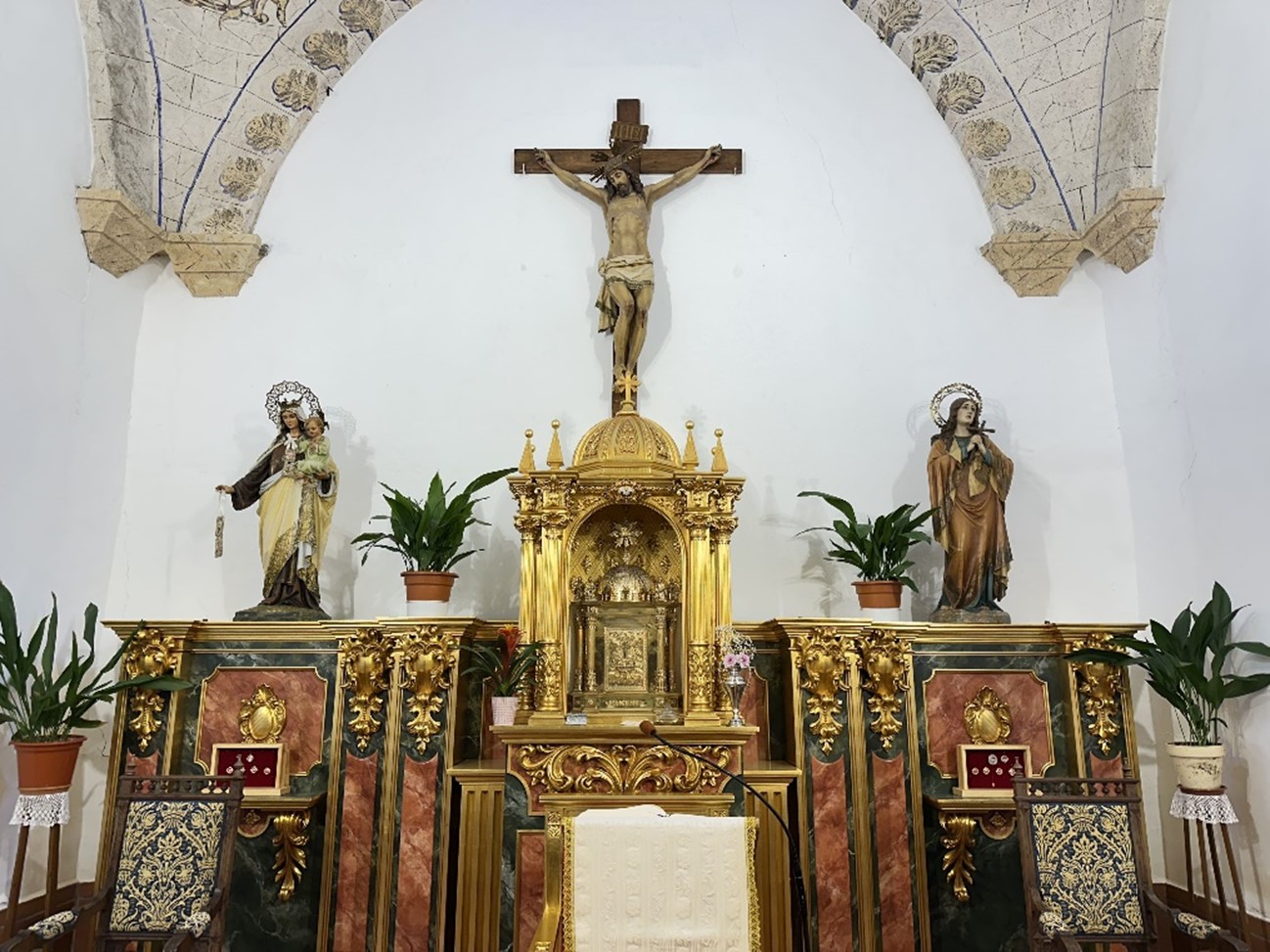
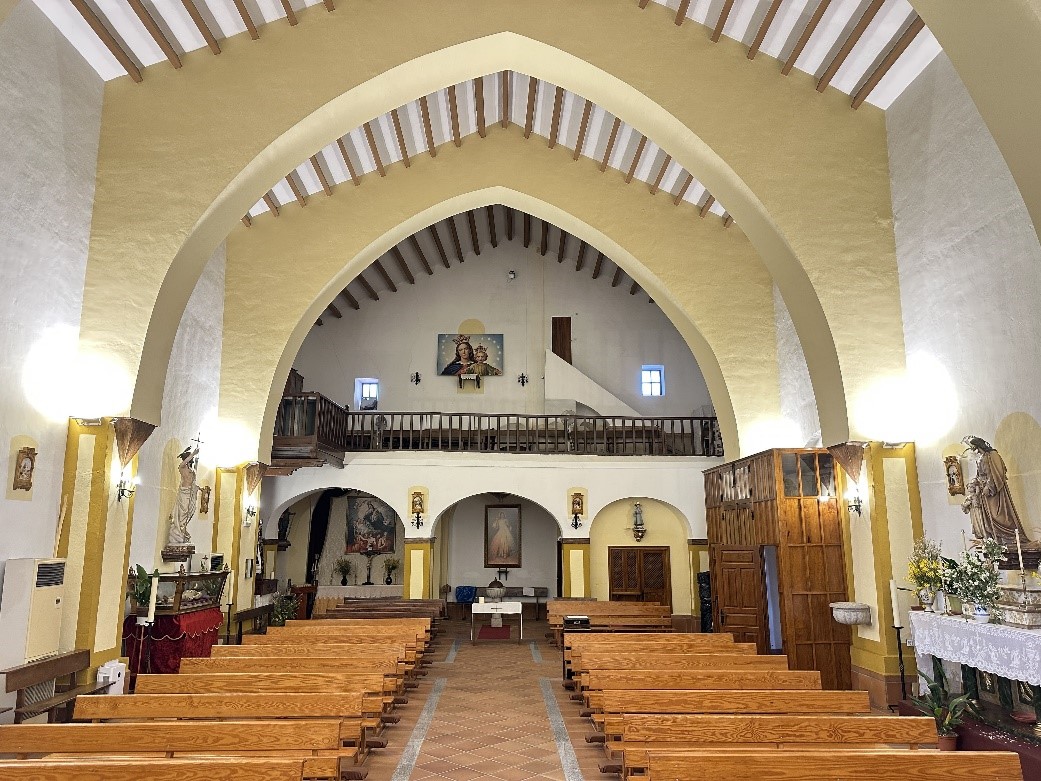
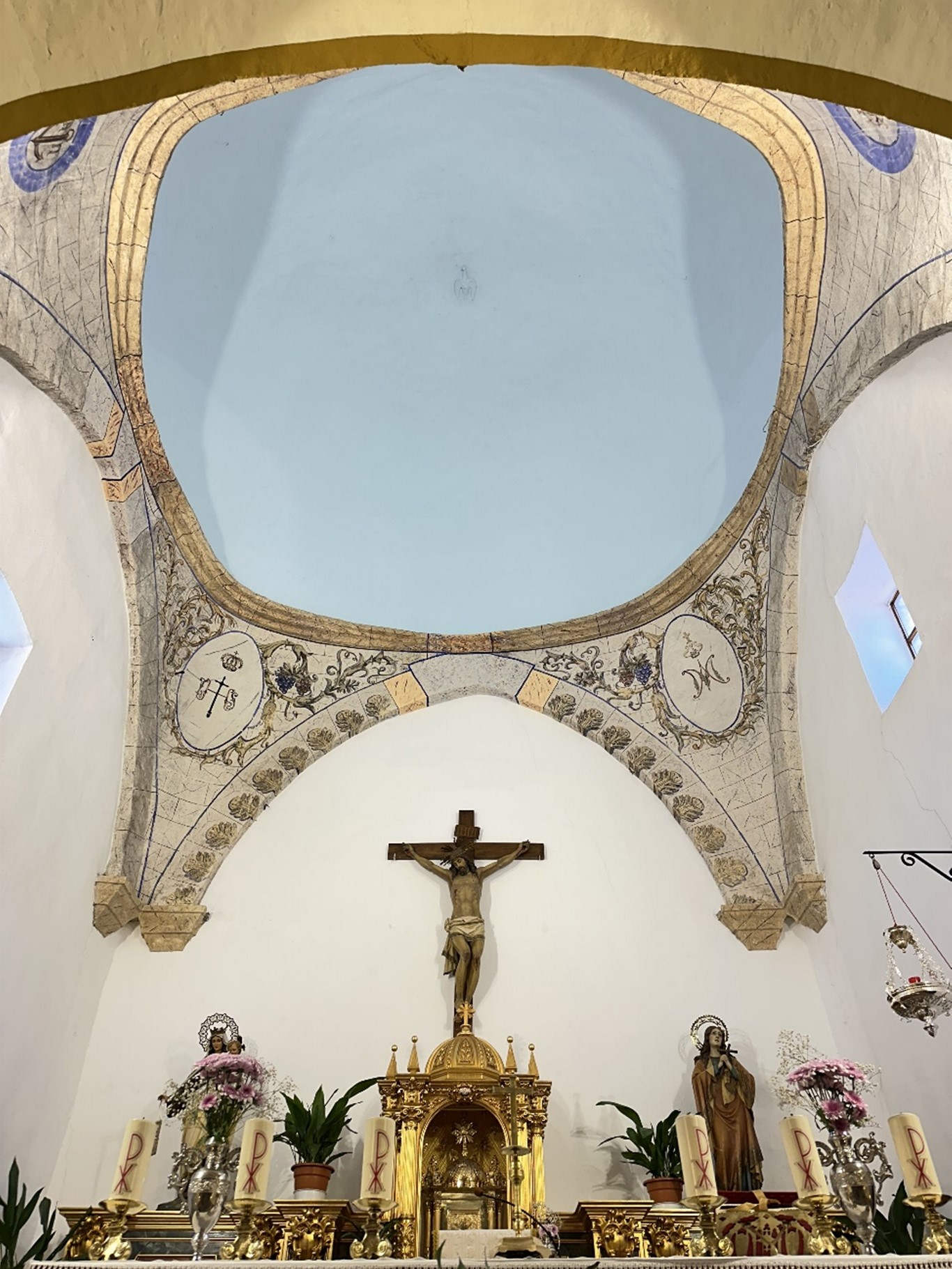
The church has a three-nave floor plan separated by diaphragm arches and gabled roofs. The presbytery features a semicircular triumphal arch, while the apse is covered with a ribbed dome. Externally, the robust buttresses reinforcing the structure of the temple also stand out.
Particularly relevant is the artistic heritage historically linked to the church. Various sources connect the temple with works attributed to the circle of Juan Correa de Vivar, one of the most outstanding names in Spanish Late Renaissance painting, although part of this heritage disappeared during the fire suffered by the building in 1936.
In front of the church stands a traditional fountain, forming together with the temple a site of great landscape and heritage appeal.
RELEVANT FIGURES RELATED TO THE POI
The figure of Juan Correa de Vivar stands out, a painter associated with works and altarpieces historically linked to the temple, part of which disappeared during the fire suffered by the church in 1936.
MOVABLE HERITAGE
The temple historically preserved various Baroque altarpieces and paintings attributed to the circle of Juan Correa de Vivar, considered among the most relevant artistic elements of the church. Part of this heritage disappeared during the fire of 1936.
INTANGIBLE HERITAGE
The church has historically been the center of the religious and social life of Villarta de los Montes. Its connection with the transhumant tradition and community practices makes it an identity symbol of the municipality.
The surroundings, together with the traditional fountain, reinforce its character as a place of gathering and collective memory, where history, landscape, and daily life intertwine.
It currently houses the image of the Virgen de la Antigua, patron saint of the locality, whose procession to her hermitage constitutes one of the municipality’s main religious celebrations during the month of August.