DESCRIPTION
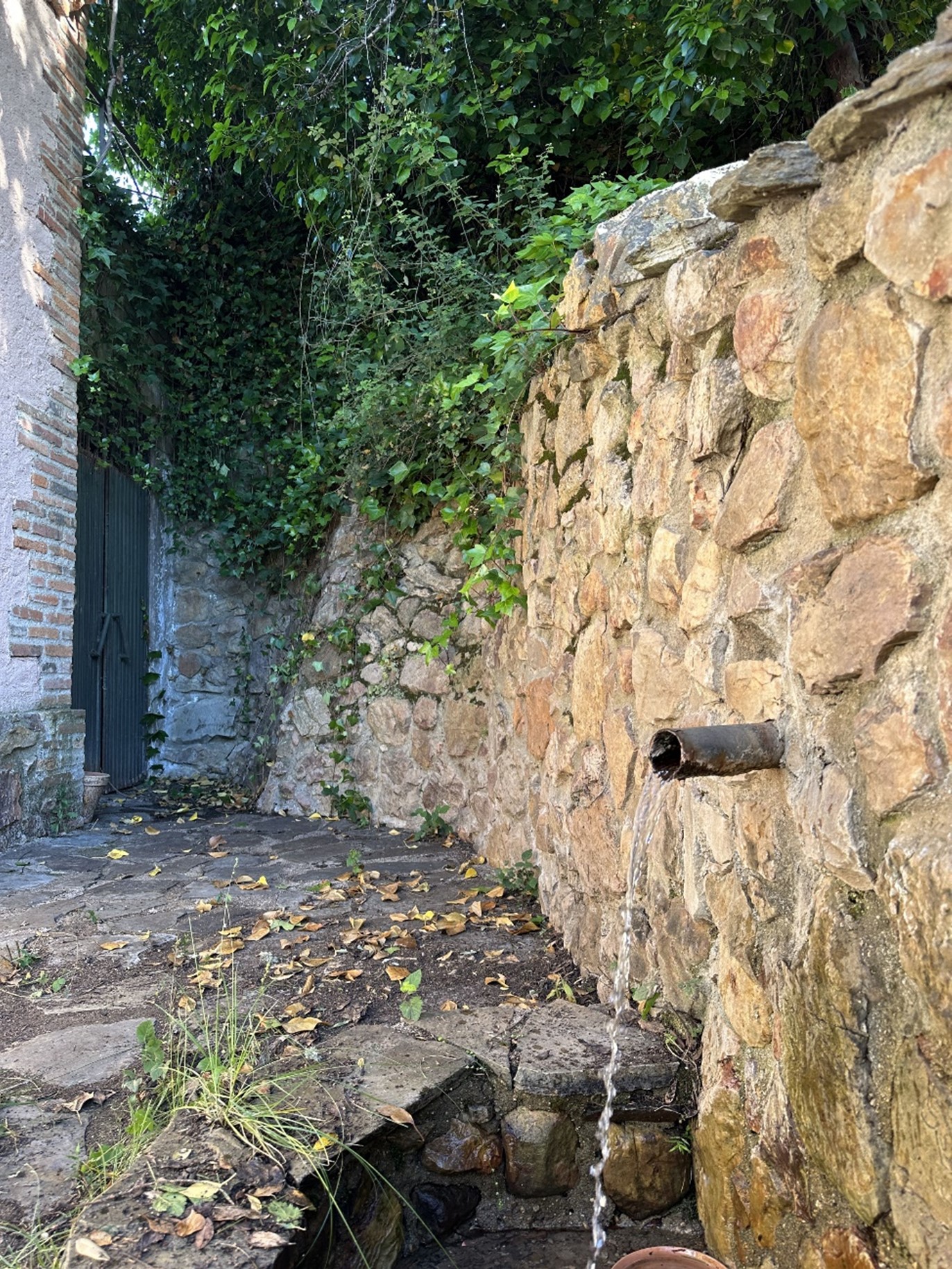
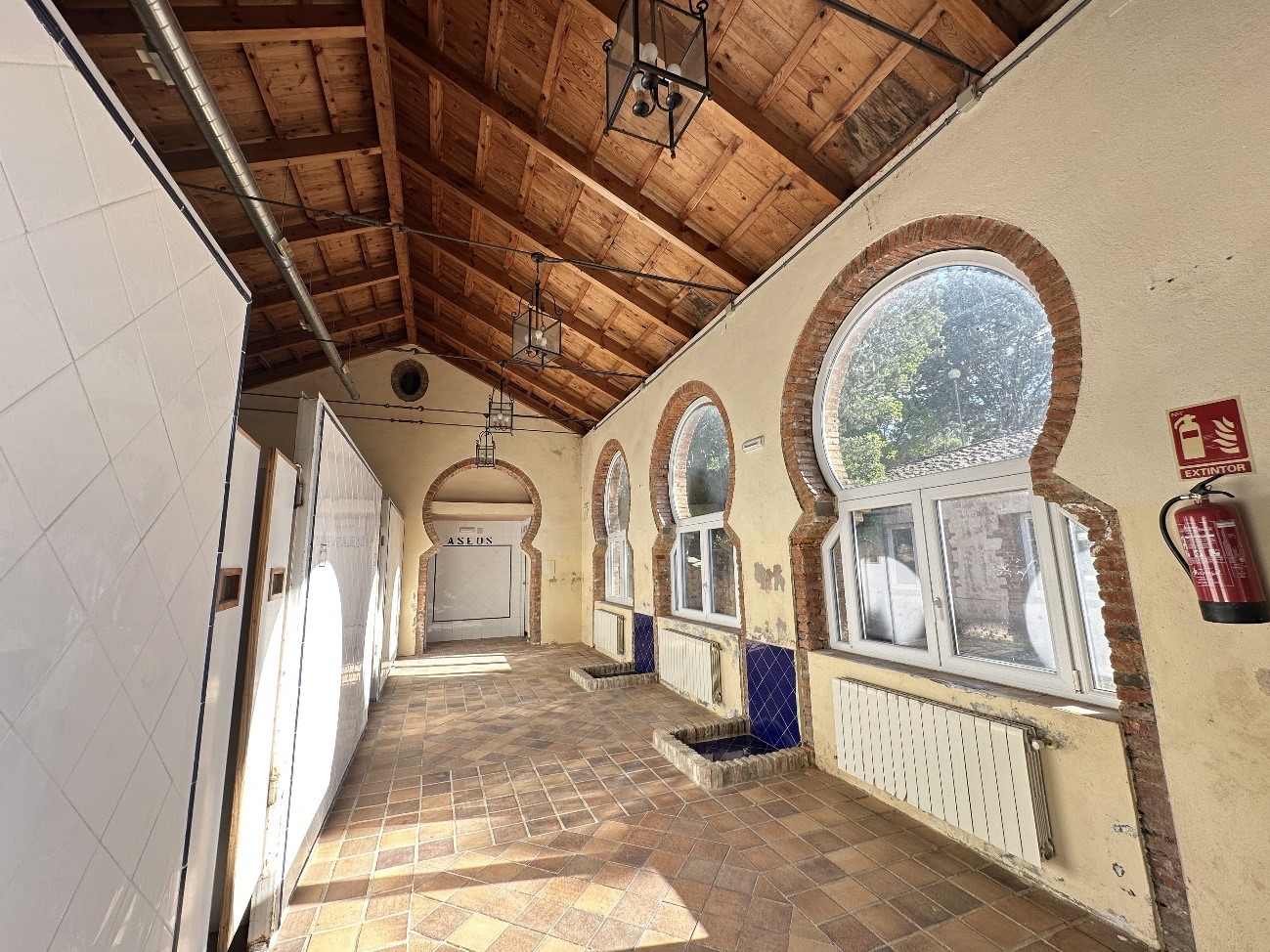
Civil construction located in the area of Valdefernando, about 2 kilometers from Valdecaballeros, next to the Ermita de los Baños and near the road connecting the town with Guadalupe. The spa draws water from a depth of 90 meters. These are oligometallic, ionized, slightly radioactive waters with weak mineralization, at an approximate temperature between 22ºC and 26ºC. Their components include chlorides, bicarbonates, calcium, sodium, and magnesium. The spring has a flow rate of 21 liters per second, and the waters emerge at an altitude of 460 meters above sea level. The spa is currently closed.
HISTORY
The best-known references to the Valdefernando springs date mainly from the 19th century, although there are earlier traditions related to the use of these waters by gardeners and local inhabitants. In the regions of La Serena, Villuercas, and La Siberia, the mineromedicinal properties of these waters for rheumatic problems, skin conditions, eye ailments, and nervous disorders had long been known.
A local tradition places around the year 1820 the episode involving the cattle rancher Miguel Jiménez, who is said to have observed the effects of the waters on the skin of a goat kept soaking in them. From that moment on, the properties attributed to the springs began to spread among the local population. The fame of the site gradually expanded, and Pascual Madoz recorded the healing virtues of the waters of Valdefernando in his Historical-Geographical Dictionary, noting their use for eye diseases, rheumatism, and other ailments. Decades later, Madoz himself indicated that the place continued to be highly frequented, although it still lacked adequate facilities to provide accommodation and comfort for those who came to take the baths.
In 1830, the healing virtues of the Valdefernando site were officially declared through proceedings promoted by the Chief Governor and Special Judge of the Reales Dehesas de los Guadalupes de San Lorenzo del Escorial, the jurisdiction to which Valdecaballeros then belonged. The proceedings also included testimonies from residents and patients from nearby towns who claimed to have experienced improvements after receiving the traditional nine baths in the waters of Valdefernando.
The historic spa building began to take shape during the 1930s. Its construction was promoted by Diego Caballero, a resident of Castuera, and to finance the works, the municipality established a special tax among the population for several years. During its period of operation, the spa continued to receive visitors from Extremadura, Castilla-La Mancha, and Andalusia.
During the construction of the Valdecaballeros Nuclear Power Plant, the large number of relocated workers encouraged the creation of residential and hotel infrastructures linked to the spa environment. The settlement built for workers of the multinational company Westinghouse was later transformed into second homes, while the former bachelor residence became a hotel intended to serve visitors to the Balneario de Valdefernando.
The summer of 1970 marked the last major bathing season of the spa’s historic period, and in 1971 there were no more bidders for the operation of the facilities. After years of deterioration and partial abandonment, the building was remodeled from 1989 onward, maintaining the original structure of the building, and in 1992 its electrification was completed. The spa reopened in 1994 and remained in operation until its definitive closure in 2006.
During the years in which the facilities remained closed, numerous residents and visitors continued traveling to the spring to collect water and carry out the traditional “nine baths” in their homes. In 2026, one of the buildings that had housed nuclear power plant workers was under rehabilitation with the aim of converting it once again into a hotel establishment, a circumstance that could favor a future reopening of the spa due to the need for accommodation infrastructure linked to thermal activity.
HISTORICAL-ARTISTIC DESCRIPTION
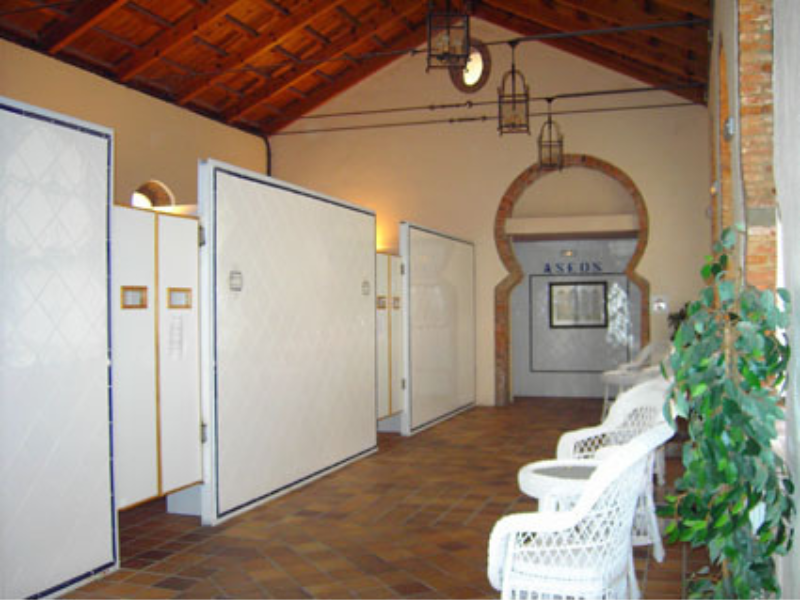
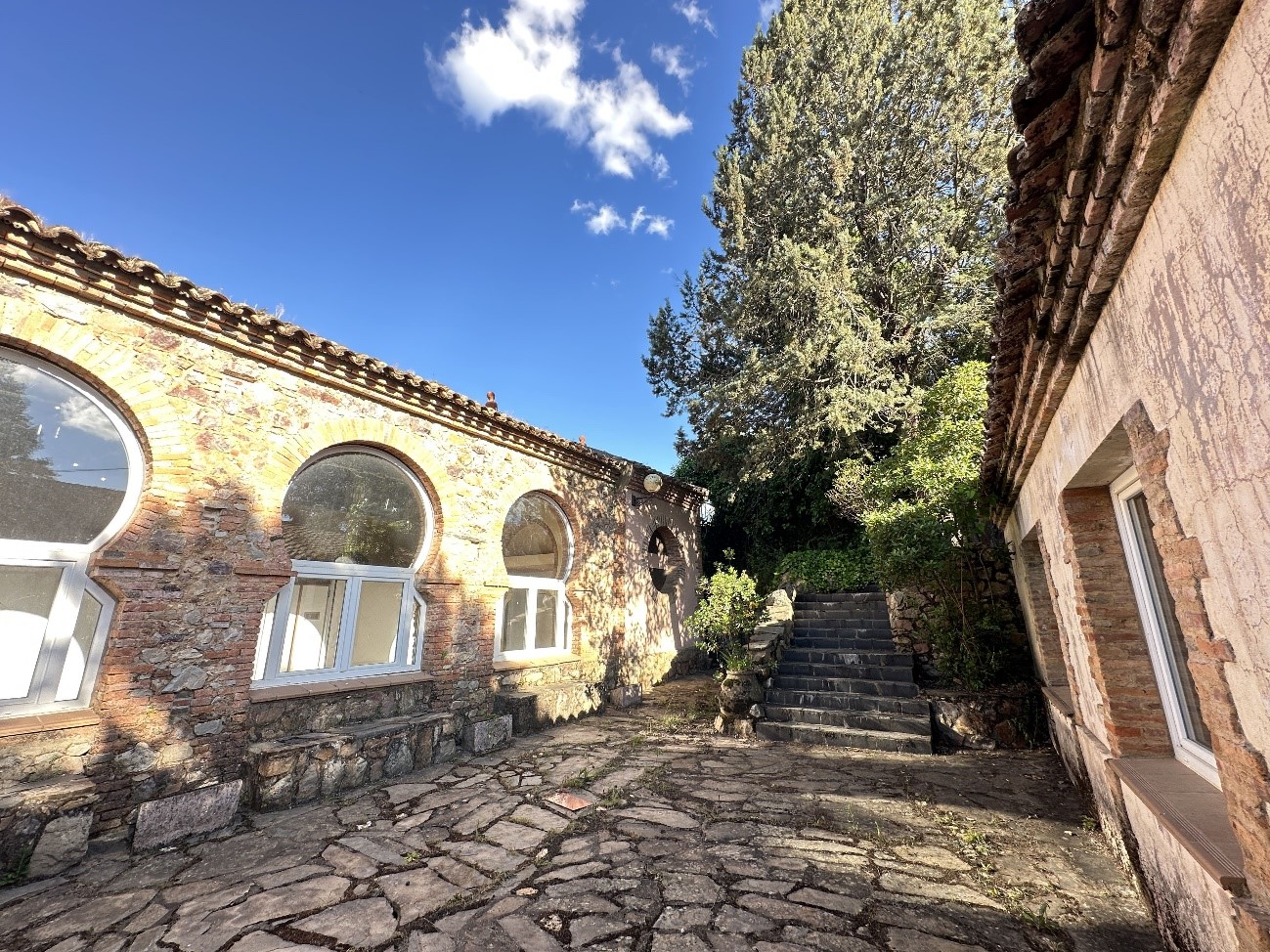
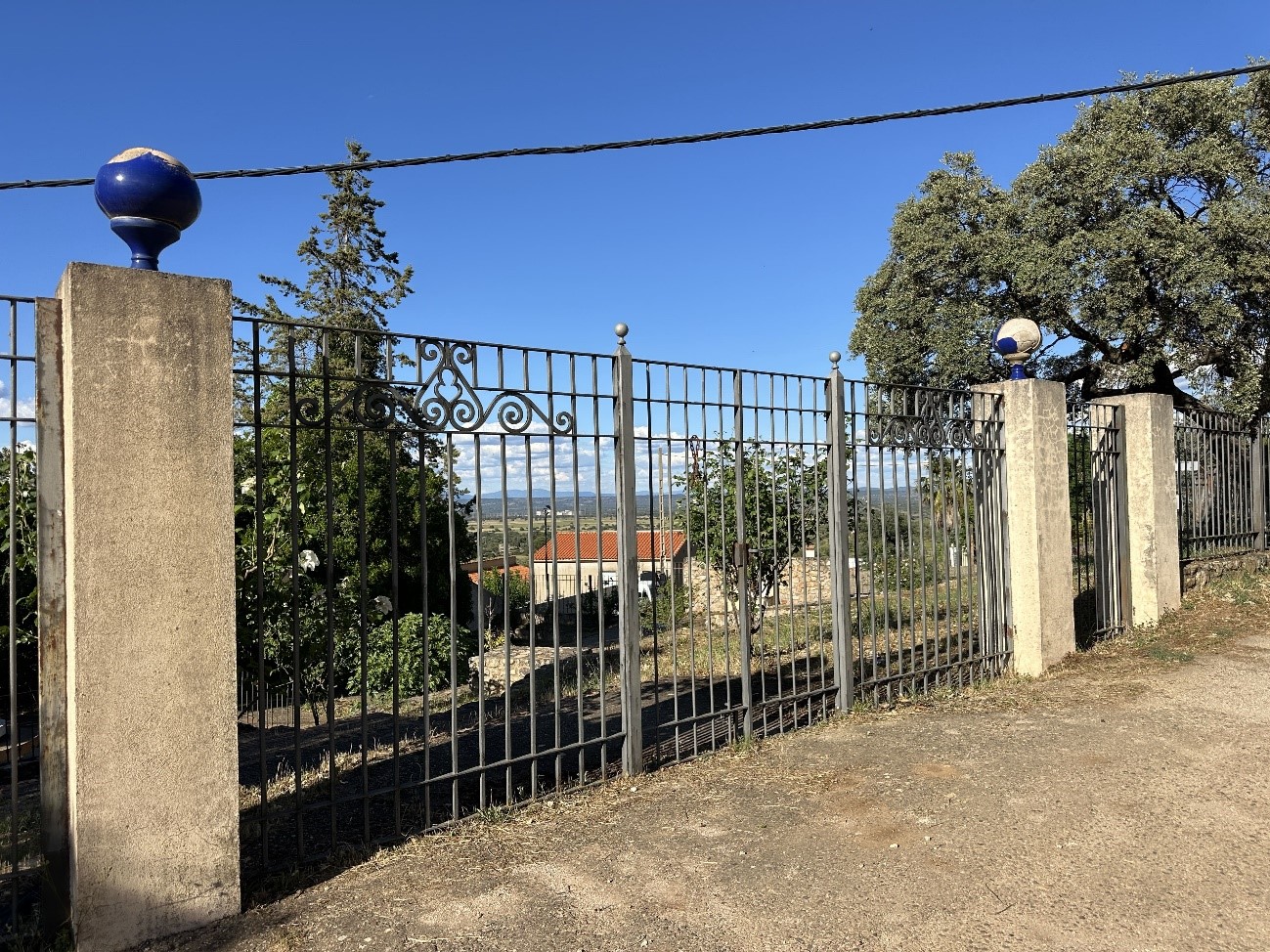
The current spa building is located on an estate of several hectares owned by the Valdecaballeros Town Council. The complex includes a main building and landscaped areas intended for leisure and walking. The construction presents formal references inspired by Arab and Visigothic architectural traditions. Its location is close to ancient historical sites linked to the surroundings of Puerto Peña and fortresses such as Sajra-abi-Hassam or Venazarre. The facilities included eight bath cabins, jacuzzi, hydromassage equipment, and pressure jets, as well as rest and waiting rooms, a medical office, changing rooms, toilets, and medical control facilities. The applied techniques included thermal baths, bubble baths, hydromassages, thermal jets, circular showers, Scottish showers, Vichy showers, inhalations, mud treatments, hand baths, foot baths, pressotherapy, and massages.
According to the Spanish Inventory of Geological Sites of Interest, the waters used in the Balneario de Valdefernando come from a fractured aquifer developed on quartzite rocks. The aquifer is located in the core of a synclinal fold of Armorican Quartzite, sealed by slate formations located both above and below it. It has an estimated thickness of between 100 and 200 meters, several kilometers in length, and a depth of several hundred meters.
The original flow rate of the spring was approximately 2 liters per second, although a later borehole drilled nearby exceeded 10 liters per second. From a physicochemical point of view, the waters present very weak mineralization, with a siliceous sodium chloride facies and a dry residue at 180ºC of 33 mg/l. These characteristics are considered typical of aquifers developed on quartzites. The emergence temperature reaches 22ºC at the spring and 26ºC in the borehole.
PEOPLE AND ENTITIES RELATED TO THE POI
The spa is historically associated with Pascual Madoz, who recorded references to the properties of the waters of Valdefernando in his Historical-Geographical Dictionary. It is also administratively linked to the former Reales Dehesas de los Guadalupes de San Lorenzo del Escorial, the jurisdiction to which Valdecaballeros historically belonged.
MOVABLE HERITAGE
The spa featured facilities intended for thermal and mineromedicinal treatments, including state-of-the-art bathtubs, jacuzzi, hydromassage equipment, pressure jets, and equipment associated with hydrotherapy and relaxation techniques. Existing services also included a medical office, rest rooms, changing rooms, and health control areas.
INTANGIBLE HERITAGE
The Balneario de Valdefernando preserves a long tradition linked to the popular use of mineromedicinal waters and to the healing properties historically attributed to its springs.
The waters have traditionally been used for treatments related to stress, nervous tension, musculoskeletal disorders, arthritis, gout, skin conditions, and circulatory problems.
The site also maintains a close relationship with the surroundings of the nearby Ermita de los Baños, a place of veneration for the Virgen de Fátima and San Isidro.