DESCRIPTION
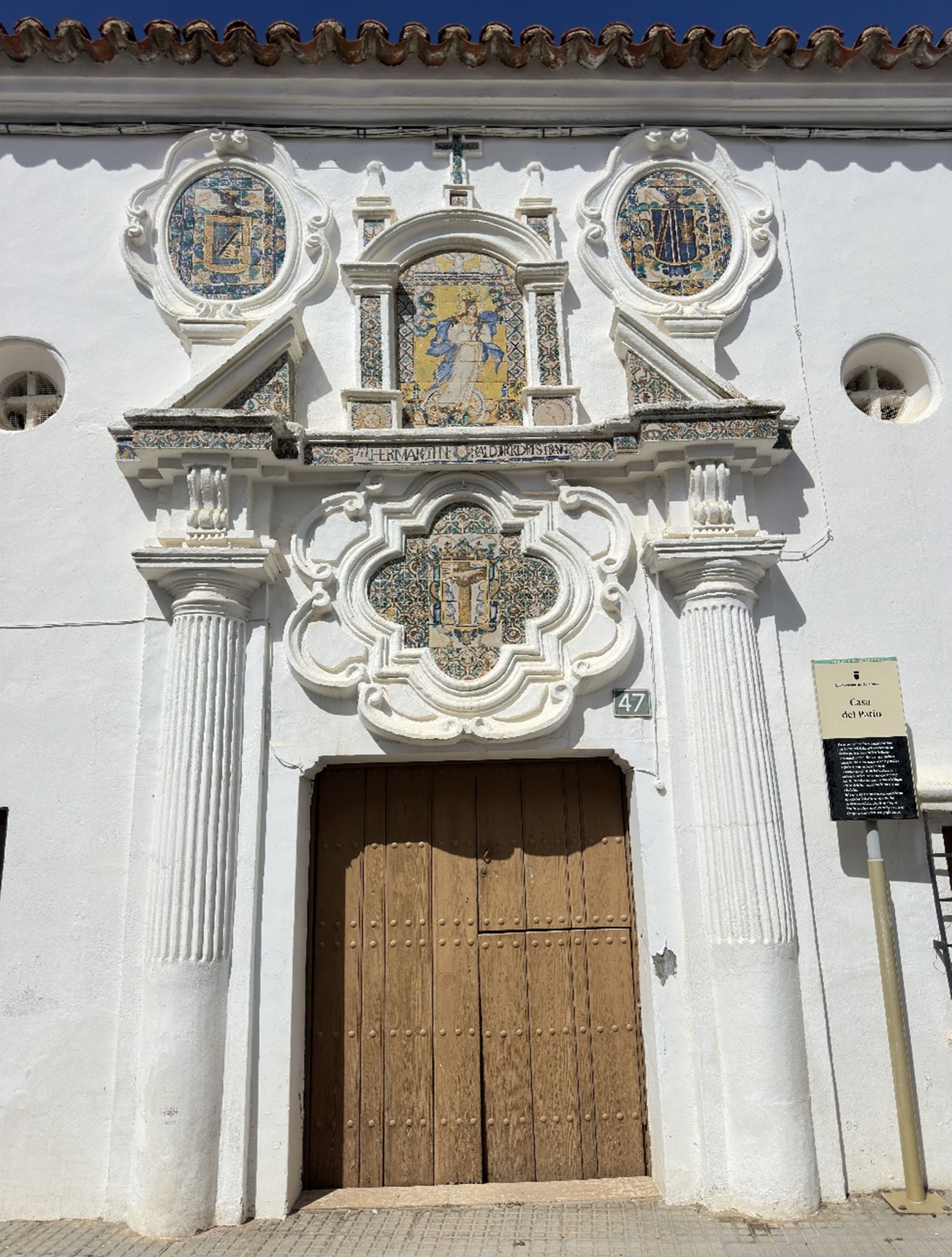
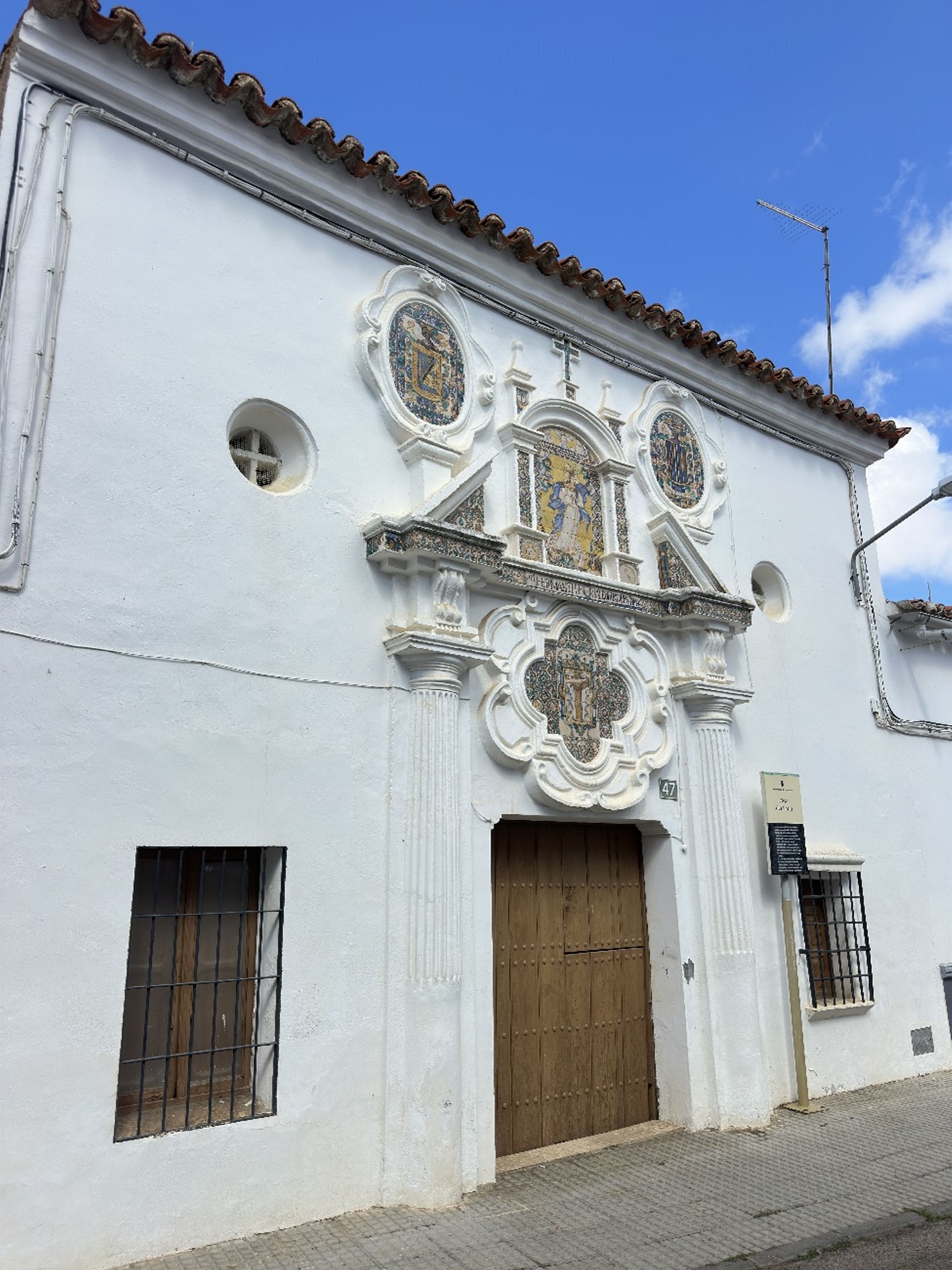
The building known as House Of The Courtyard is one of the most singular buildings in the historic centre of Talarrubias, standing out especially for the ornamental richness of its façade, which contrasts with the general sobriety of the town’s traditional architecture. It is a construction of great aesthetic and heritage value, becoming a landmark within the urban ensemble due to its exceptional character.
HISTORY
The building originally had a religious function, having been a convent of Franciscan friars before their transfer to the Real Monasterio de Guadalupe.
Over time, the building lost its conventual use, remaining as a civil construction that nevertheless preserves the symbolic and decorative elements characteristic of its origin.
HISTORICAL AND ARTISTIC DESCRIPTION
House Of The Courtyard constitutes an outstanding example of Baroque architecture, with an ornamental design clearly focused on the main façade, while the rest of the building presents a much more austere composition.
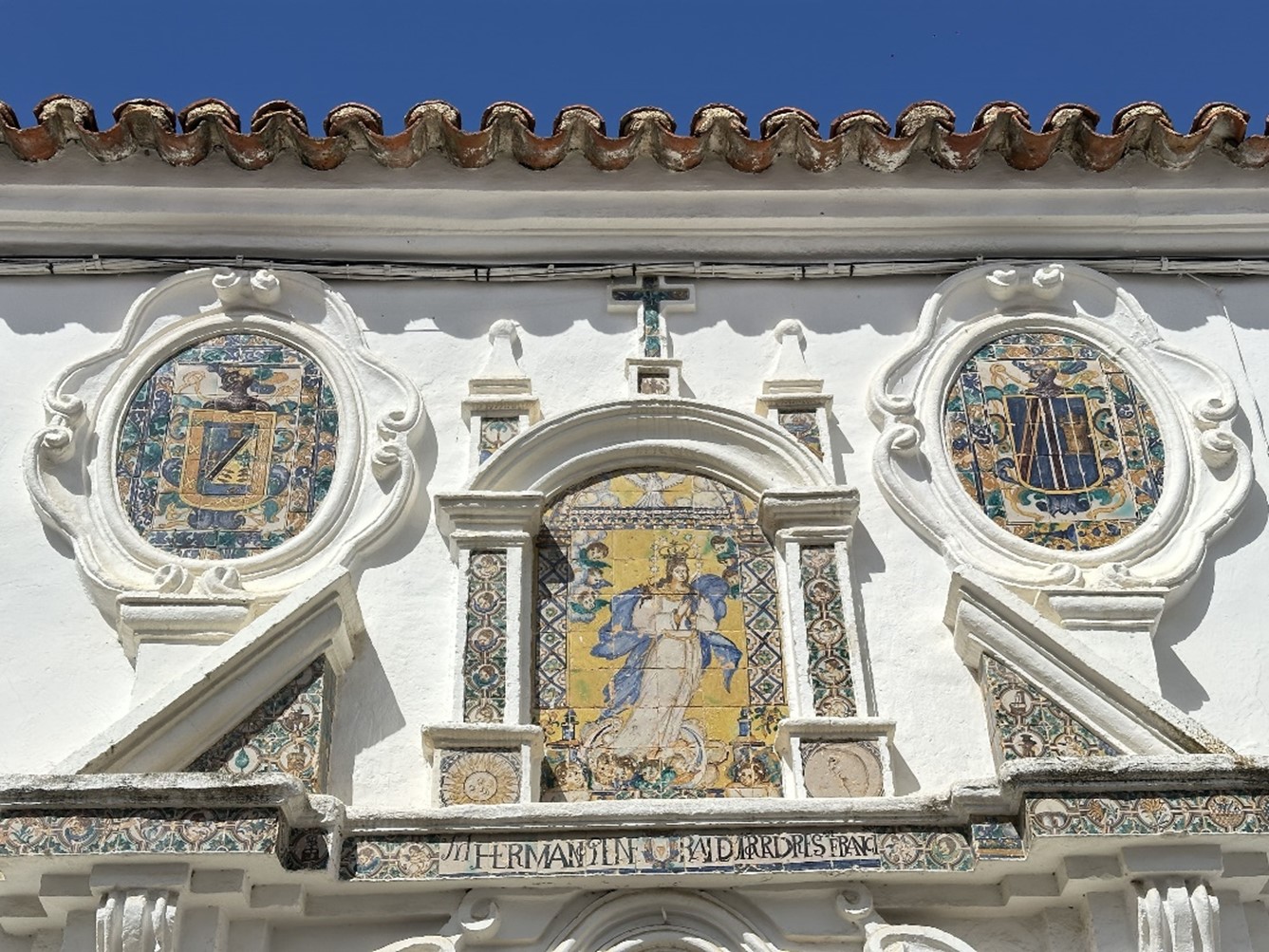
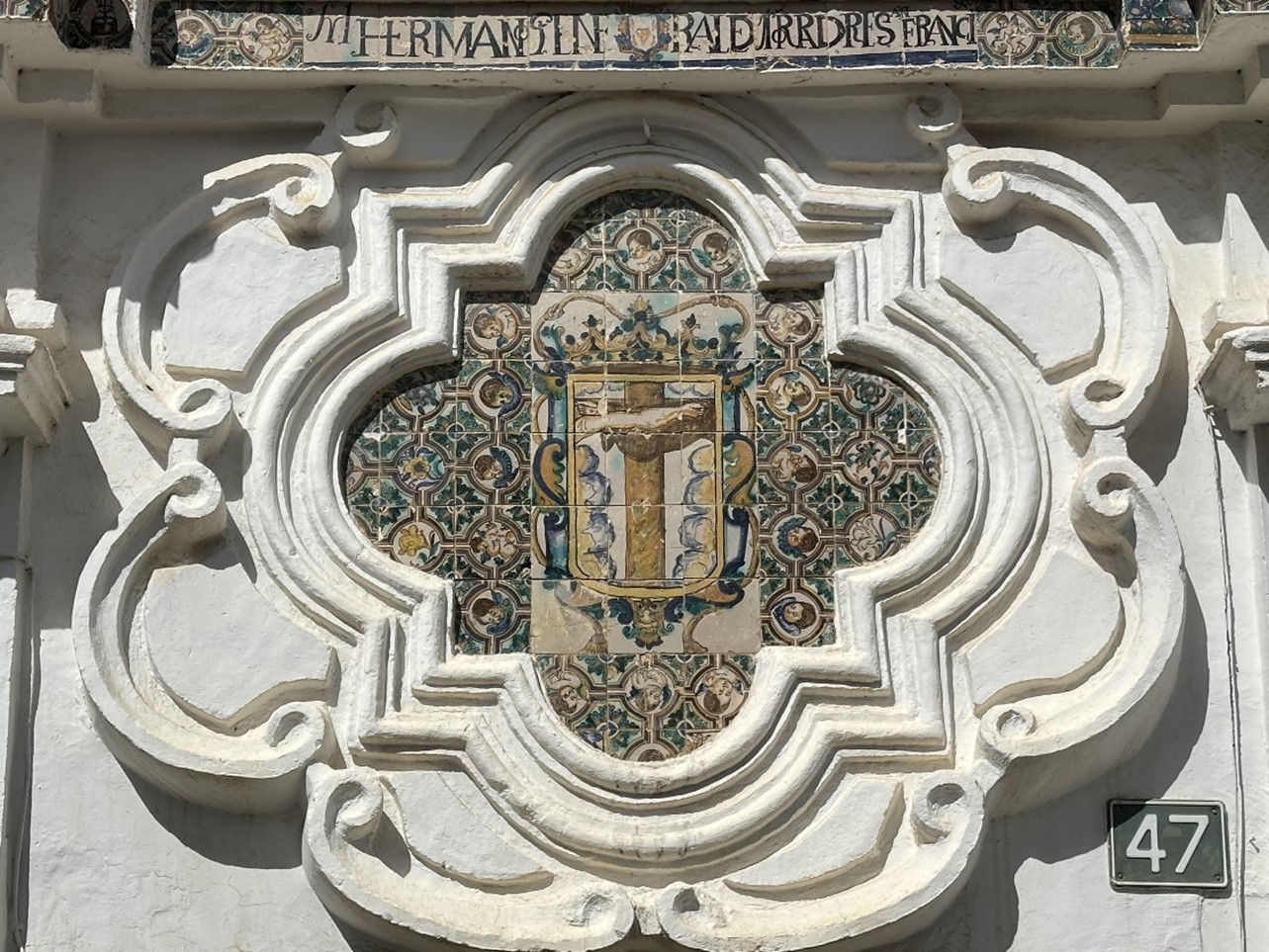
The entrance façade concentrates all the decorative richness through a carefully composed arrangement of mouldings, ceramic elements and Franciscan symbolic motifs, as well as the heraldic coats of arms of the Arias Ribadeneira family, benefactors of the convent. In its central section stands out a decorative tile panel with geometric and figurative forms, presided over by the image of the Virgin, flanked by the Franciscan symbols of the sun and moon.
This tilework was produced in the 18th century in the workshops of the master of Palma Gallarda, in Triana, identified as Juan de las Casas.
The ensemble is organised between fluted columns supporting a broken pediment, a typically Baroque feature that adds dynamism and theatricality to the design. Two coats of arms are placed in the upper section, reinforcing the representative character of the building.
NOTABLE FIGURES RELATED TO THE POI
The building is linked to the historical presence of the Franciscan order in the town, although no specific figures associated with its construction are documented.
MOVABLE HERITAGE
Particularly noteworthy are the decorative ceramic elements integrated into the façade, especially the central tile ensemble with religious iconography and Franciscan symbolism.
INTANGIBLE HERITAGE
House Of The Courtyard constitutes a testimony to the conventual past of Talarrubias and to the influence of religious orders on the historical configuration of the municipality.
Its presence reinforces the local architectural identity, contrasting with the traditional houses of whitewashed walls and scarce ornamentation, providing a distinctive element that has become part of the town’s collective imagination.