DESCRIPTION
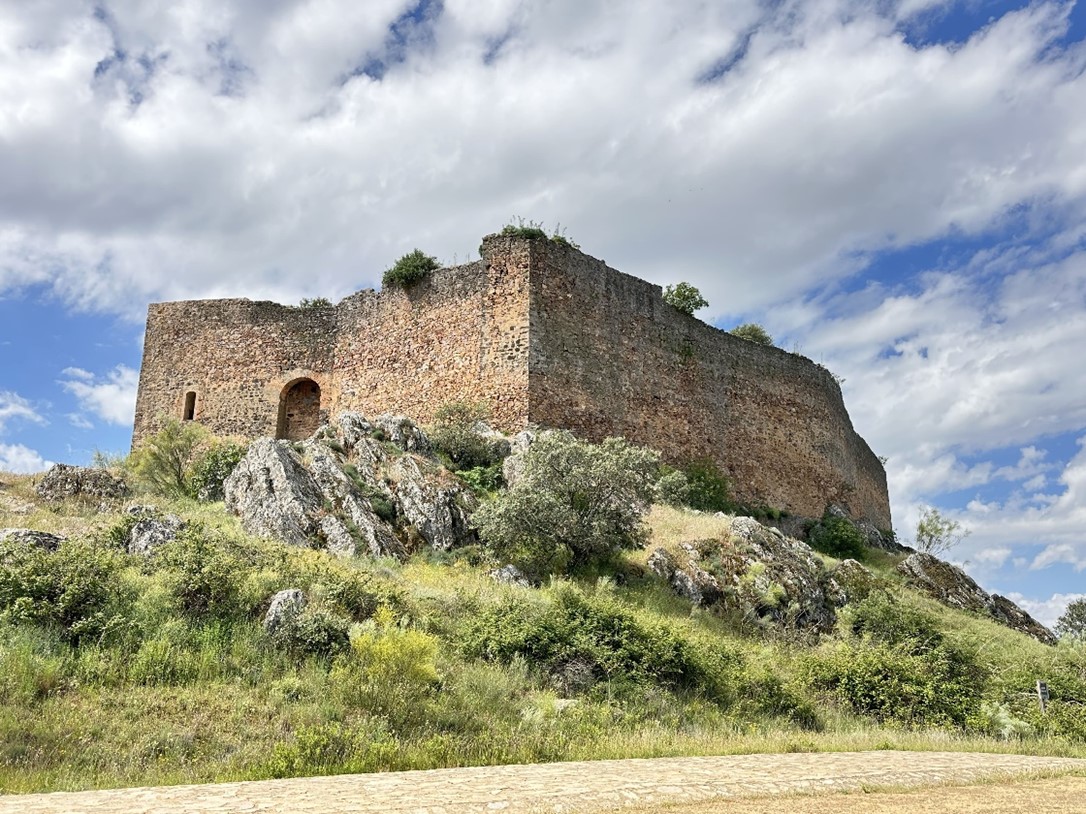
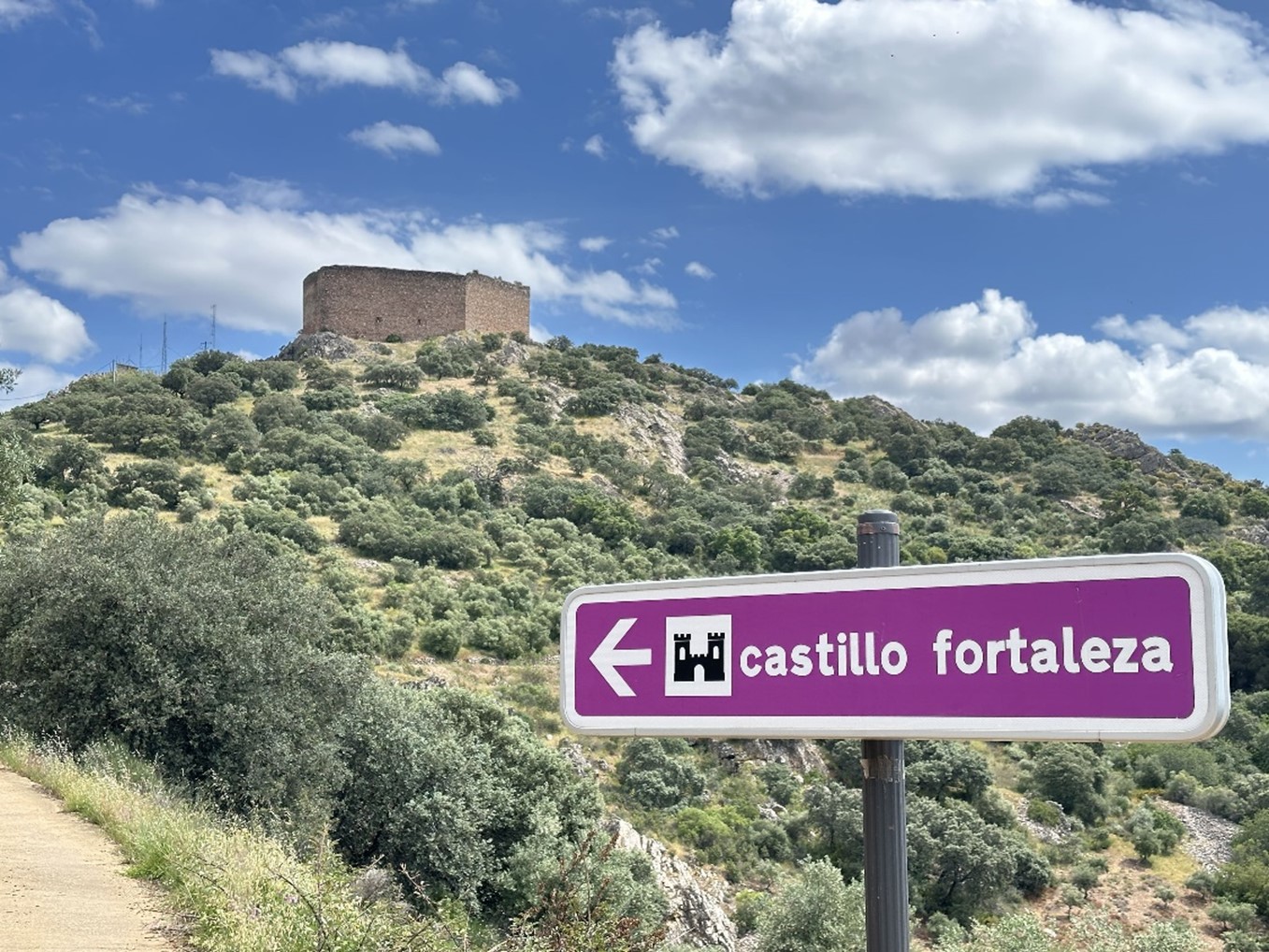
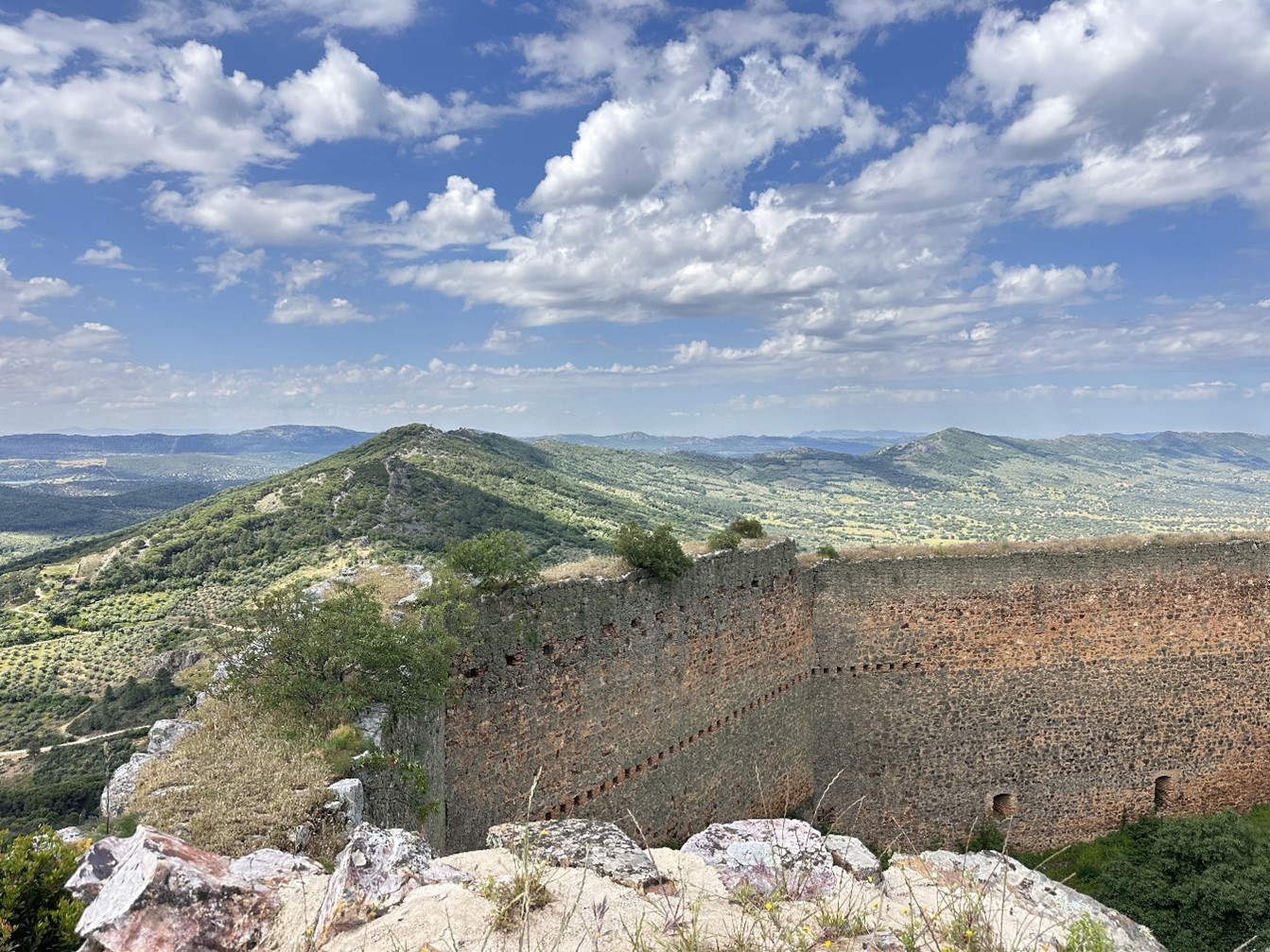
The Castillo de Herrera del Duque is the main monumental and defensive landmark of the town and one of the most representative historic fortresses in the La Siberia region of Extremadura. It stands on a high rocky outcrop south of the town, in the Sierra del Chamorro, visually dominating the town centre and wide areas of the Guadiana valley and the surrounding mountain ranges.
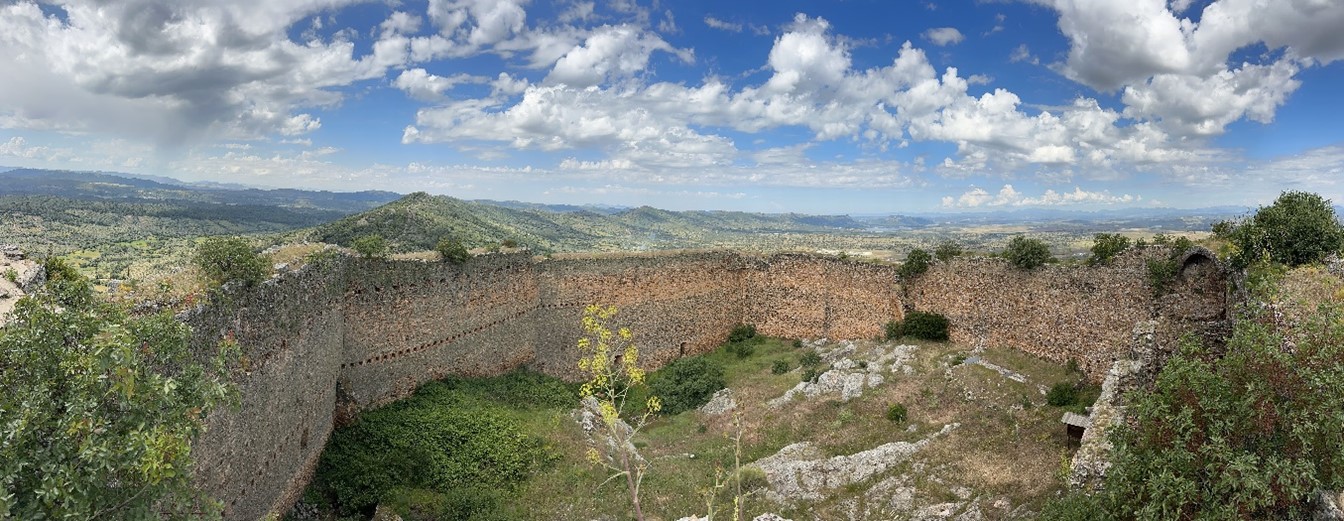
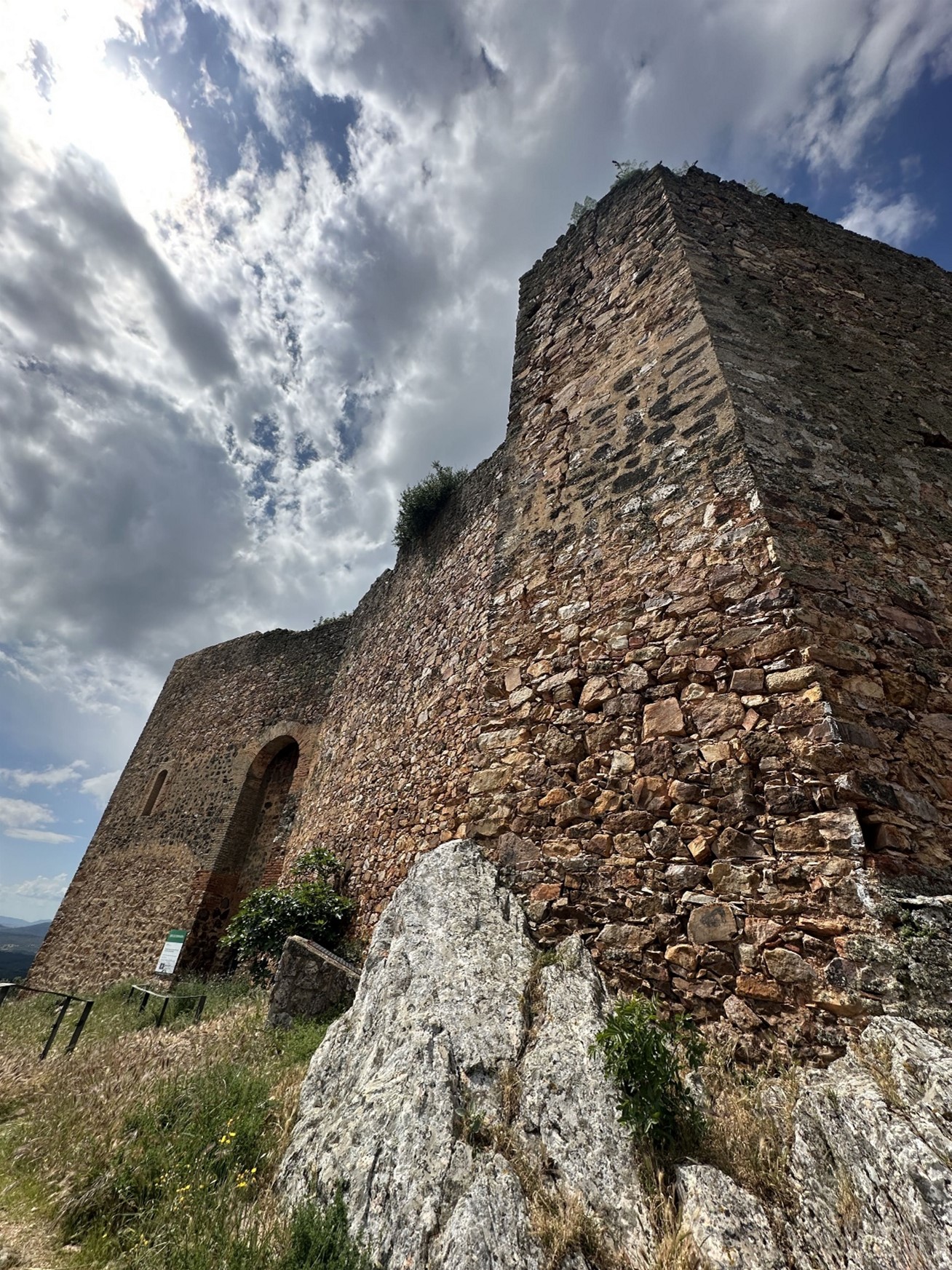
The fortress has a striking exterior appearance, characterised by high masonry and brick walls adapted to the rugged topography of the terrain. Its layout follows an irregular eight-sided polygon, with an approximate perimeter of 183 metres, walls around 12 metres high and thicknesses ranging between three and four metres. The castle is currently preserved in a partially ruined state, although it still retains numerous structural elements of great historical and architectural interest, including remains of walls, interior rooms, cisterns, dungeons and defensive structures linked to the wall-walk and the access system. The site is one of the main heritage, historical and tourist landmarks of Herrera del Duque.
HISTORY
There are different historiographical interpretations regarding the origin and evolution of the castle. Several researchers consider the fortress to have a clear Islamic or Almohad origin. Some sources identify the site as a Muslim construction intended for the strategic control of this area of the Guadiana and of important inland communication routes between Mérida, Ciudad Real, Sevilla and Toledo. According to researcher Delgado Valhondo, the castle of Herrera del Duque would be one of the most clearly Islamic examples among the preserved fortresses of the region, with numerous construction elements linked to the Almohad tradition and to the use of materials typical of this defensive architecture.
Other scholars maintain, however, that although an earlier Islamic fortification may have existed, most of the construction visible today would correspond to a major Christian rebuilding carried out during the 15th century. This theory considers that materials and earlier elements from the Muslim period were reused in that reconstruction.
For his part, Simón de Cáceres also links the origin of the castle to the Islamic occupation of the territory, while other authors, such as Rubial, describe an initially Muslim fortress that was later reinforced and adapted by the Sotomayor family in order to consolidate their power over the region. The strategic position of the castle was essential for controlling the natural passes and the internal communications of the territory, which is why the fortress had great military importance for centuries.
The origin of the castle dates back to the 15th century, under the impetus of Gutierre de Sotomayor, Master of the Order of Alcántara, who consolidated its character as a seigneurial fortress after receiving these lands in 1445 by grant of Juan II, who had taken them from the city of Toledo, which had purchased them from Fernando III in 1226. The master masons who built the castle were a family surnamed Pecos, originally from a now-disappeared settlement near Talarrubias. Later, during the 16th century, the castle underwent further transformations under the rule of Francisco de Zúñiga y Guzmán Sotomayor, Duke of Béjar, from whom the town took the name “del Duque”. Various sources consider that during this period the site acquired certain palatial features in addition to its defensive functions.
In 2009, after definitively becoming municipal property and undergoing restoration and consolidation works, the castle was reopened to the public. On the occasion of this reopening, medieval re-enactments, guided tours and cultural activities were organised to reinforce its heritage and tourist value.
HISTORICAL-ARTISTIC DESCRIPTION
The castle corresponds to a type of medieval military fortress adapted to a rugged and difficult-to-access location. The use of the natural relief is one of its main defensive resources.
Its irregular eight-sided polygonal layout is one of the most characteristic architectural features of the complex. The walls, built of masonry and brick, display a compact and austere appearance, almost entirely devoid of exterior decoration.
The fortress has a single entrance located on the eastern side, with particular emphasis on the horseshoe arch made of brick and stone, which forms the main access to the enclosure.
Inside the thick walls, numerous architectural and defensive remains are still preserved. These include remains of a second inner enclosure where some researchers identify elements of Gothic tradition corresponding to later Christian reforms.
Structures associated with interior rooms, dungeons, defensive platforms, stables and residential or palatial spaces also remain visible.
One of the most notable elements is the large quadrangular cistern covered by a vault, intended for water storage and essential for the defensive endurance of the fortress.
The enclosure also preserves remains of the wall-walk or patrol path, as well as a shortcut arch used to facilitate passage towards an advanced small tower.
The preserved plan of the castle makes it possible to identify different functional areas, such as:
• main entrance,
• distribution chamber,
• machicolation,
• defensive platforms,
• arrow-slit windows,
• stables,
• access staircase,
• palatial area,
• cistern,
• and interior structures related to a possible keep.
There are different interpretations regarding this last element. Some sources consider that the castle originally lacked a differentiated keep and exterior defensive towers, relying much of its protection on the natural difficulty of the site. Other researchers maintain that interior structures identifiable as a keep or seigneurial rooms did exist, later transformed or ruined.
The complex is an outstanding example of historical superimposition between Islamic military architecture and Christian seigneurial reforms developed between the 15th and 16th centuries.
STATE OF CONSERVATION
The castle is currently in a state of partial or progressive ruin, historically affected by abandonment and natural erosion.
Nevertheless, the consolidation and recovery interventions carried out in recent decades have made it possible to stabilise part of the structures and facilitate public visits.
The site is currently open to visitors and is one of the main cultural and tourist resources of Herrera del Duque and the La Siberia region.
RELEVANT FIGURES RELATED TO THE POI
The fortress is closely linked to Gutierre de Sotomayor, Master of the Order of Alcántara and a key figure in the territorial consolidation of the region during the 15th century.
It also maintains a close historical relationship with Francisco de Zúñiga y Guzmán Sotomayor, Duke of Béjar, under whose rule the castle underwent reforms and palatial transformations.
Likewise, the site is connected with Juan II de Castilla, the monarch who granted these lands to the Sotomayor family in 1411.
From the historiographical field, authors and researchers such as Simón de Céspedes, Delgado Valhondo, Rubial and Félix Hernández Giménez stand out, having studied different historical and construction aspects of the castle.
MOVABLE HERITAGE
Among the preserved elements are architectural and defensive remains such as the large vaulted cistern, dungeon structures, remains of the second inner enclosure, defensive platforms, arrow slits and various rooms associated with the different historical phases of the castle.
INTANGIBLE HERITAGE
The Castillo de Herrera del Duque is one of the great historical and identity symbols of the town and of the entire La Siberia region.
The fortress remains deeply linked to the collective memory of the municipality and to numerous cultural activities and historical re-enactments held around the site.
Since its reopening to the public in 2009, the castle has also become established as a venue for guided tours, medieval performances, cultural workshops and musical events held in one of the most emblematic landscape settings of the territory.