DESCRIPTION
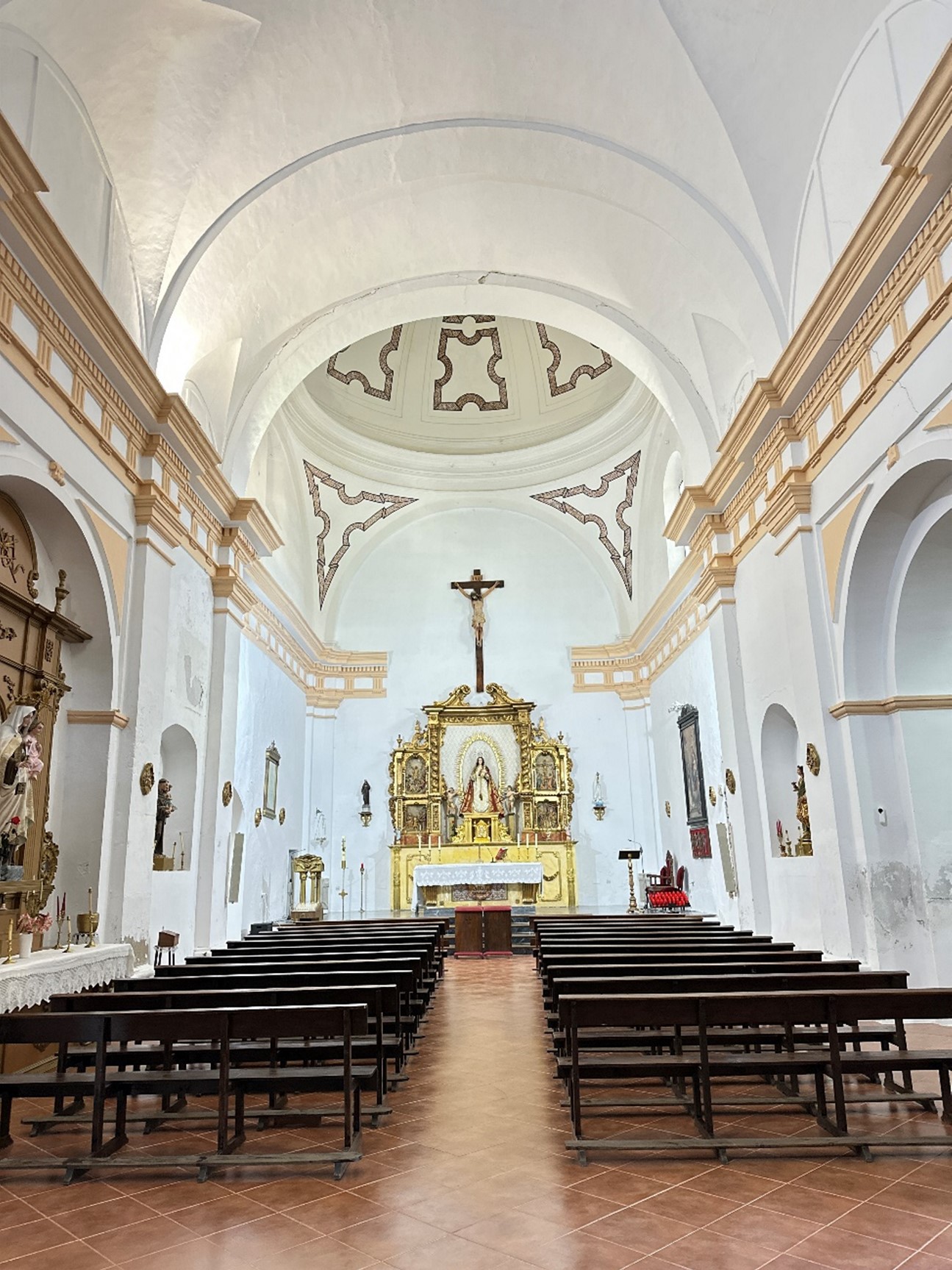
Former Franciscan convent currently restored. Part of its facilities are used as a youth hostel belonging to the network of tourist facilities of the Regional Government of Extremadura. Another section has been adapted as an ethnographic museum. The church belongs to the parish and religious services are held there.
HISTORY
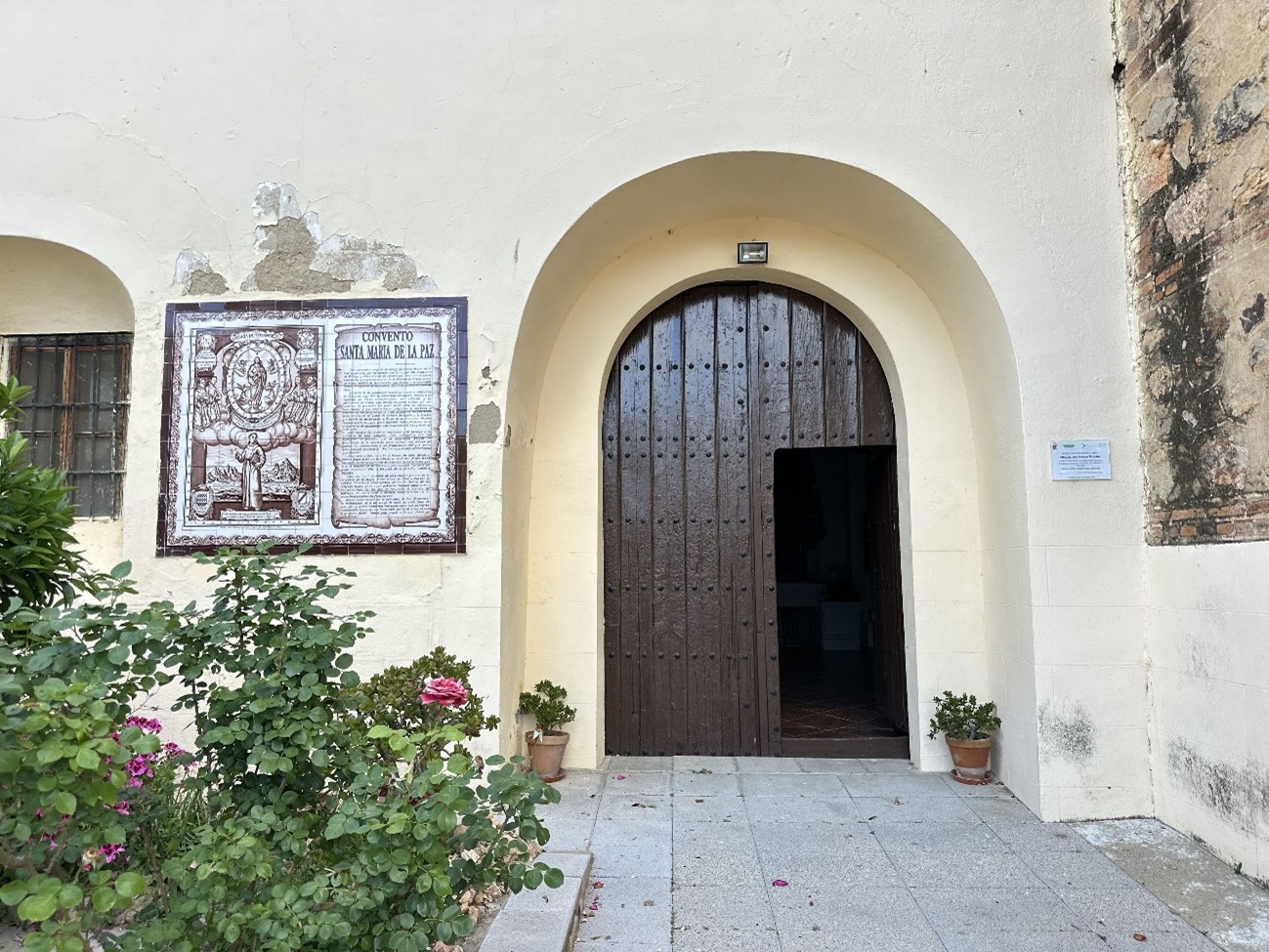
The current Convent of San Francisco in Puebla de Alcocer was completed in 1553, ten years after construction began. It was built under the spiritual inspiration of Fray Juan de La Puebla. The convent originally received the name Santa María de la Paz as its founding dedication, in honour of the reforming work of its illustrious fellow townsman. Over time it became known as San Francisco, in honour of the founder of the order. The foundation was financed by Don Francisco de Zúñiga y Sotomayor, IV Duke of Béjar, with economic assistance through alms collected by his uncle Don Luis de Sotomayor, an Angelino friar, and his aunt Doña Felipa de Sotomayor, a nun of Santa Clara de la Columna in Belalcázar.
For centuries it played a fundamental role as a religious, charitable and cultural centre, housing the Franciscan community and providing spiritual support to the local population. Its location, on the outskirts of the historic urban centre, follows the usual model of mendicant convents, which sought open and peaceful spaces for convent life.
With the disentailment process of the 19th century, the building lost its original function, beginning a period of abandonment and transformation that affected its structure and uses. The first disentailments of the 19th century (1809 and 1820) began before the First Carlist War (1833), but it was the Carlist conflicts that drove the great disentailment under Mendizábal in 1836. What is now the youth hostel served as a food warehouse during the Carlist War.
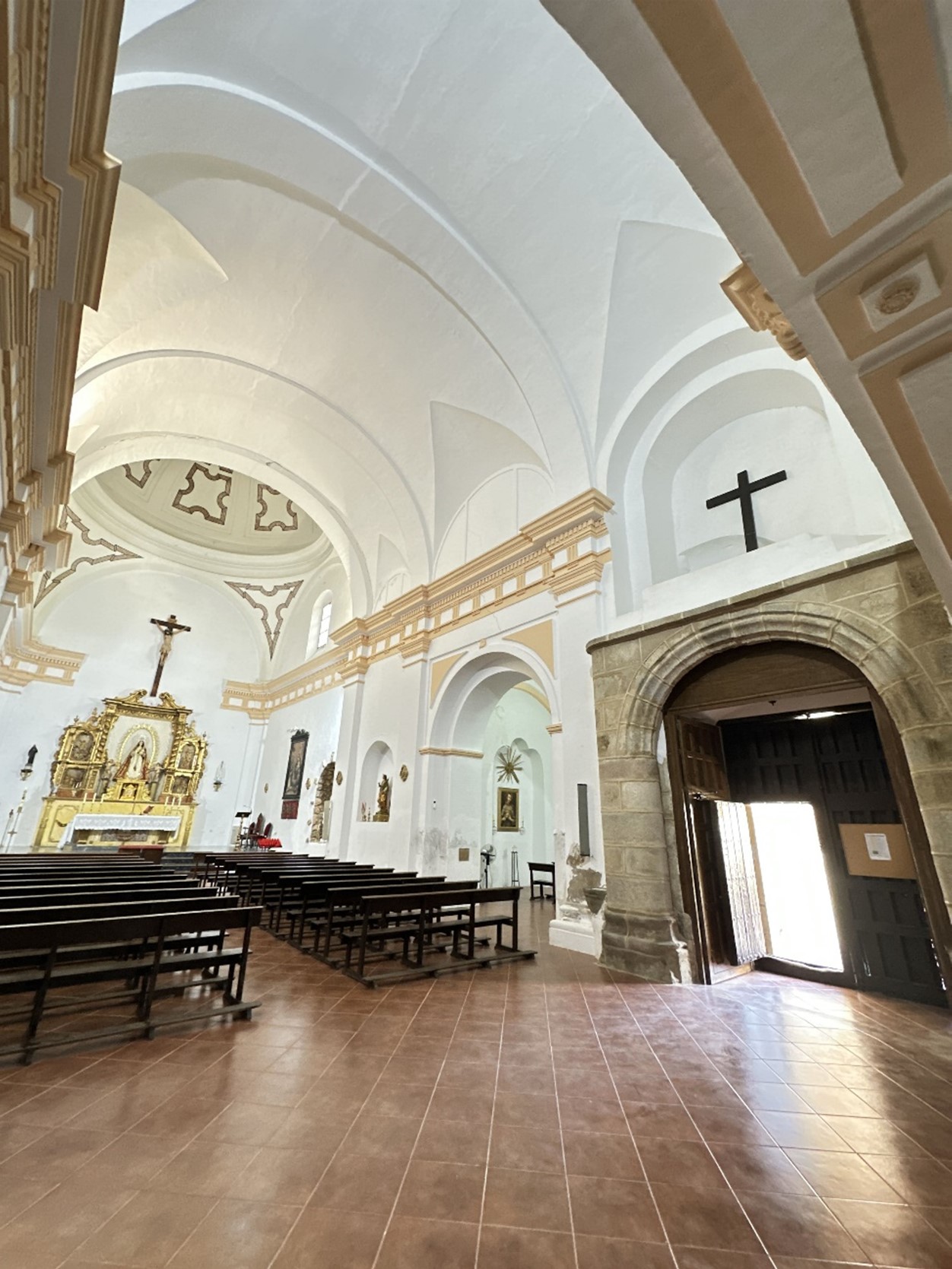
Following Mendizábal’s disentailment, most of the convent’s buildings passed into private hands, except for the church, and many sections were adapted for the construction of private dwellings. Today the church remains in perfect condition and continues to be used for liturgical celebrations. It houses the town’s patron saint, the Virgen del Rosario.
In contemporary times, the building has undergone several restoration interventions that have enabled its recovery and adaptation as a youth hostel, integrating it into the tourist and educational offer of the region.
HISTORICAL-ARTISTIC DESCRIPTION
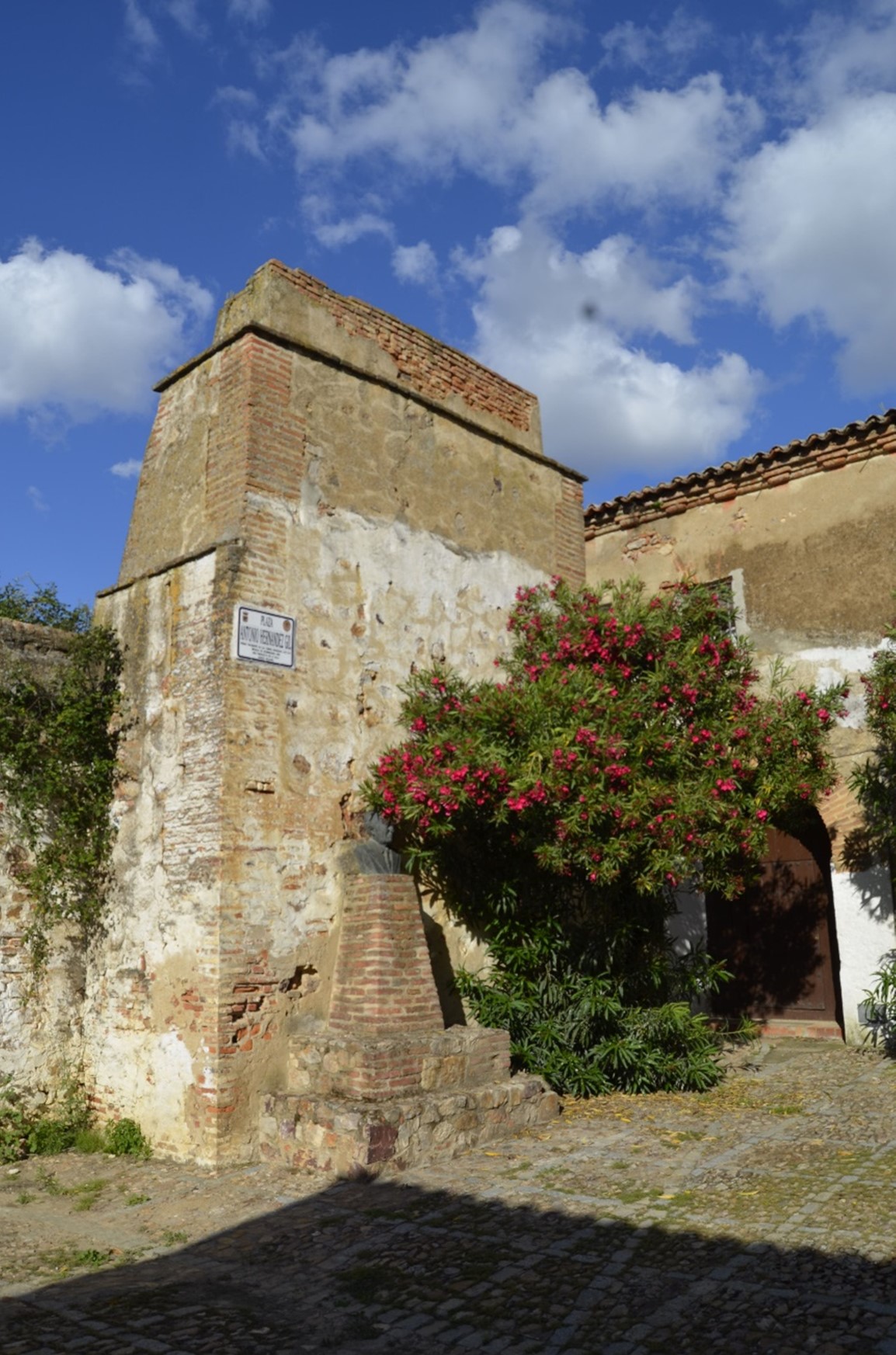
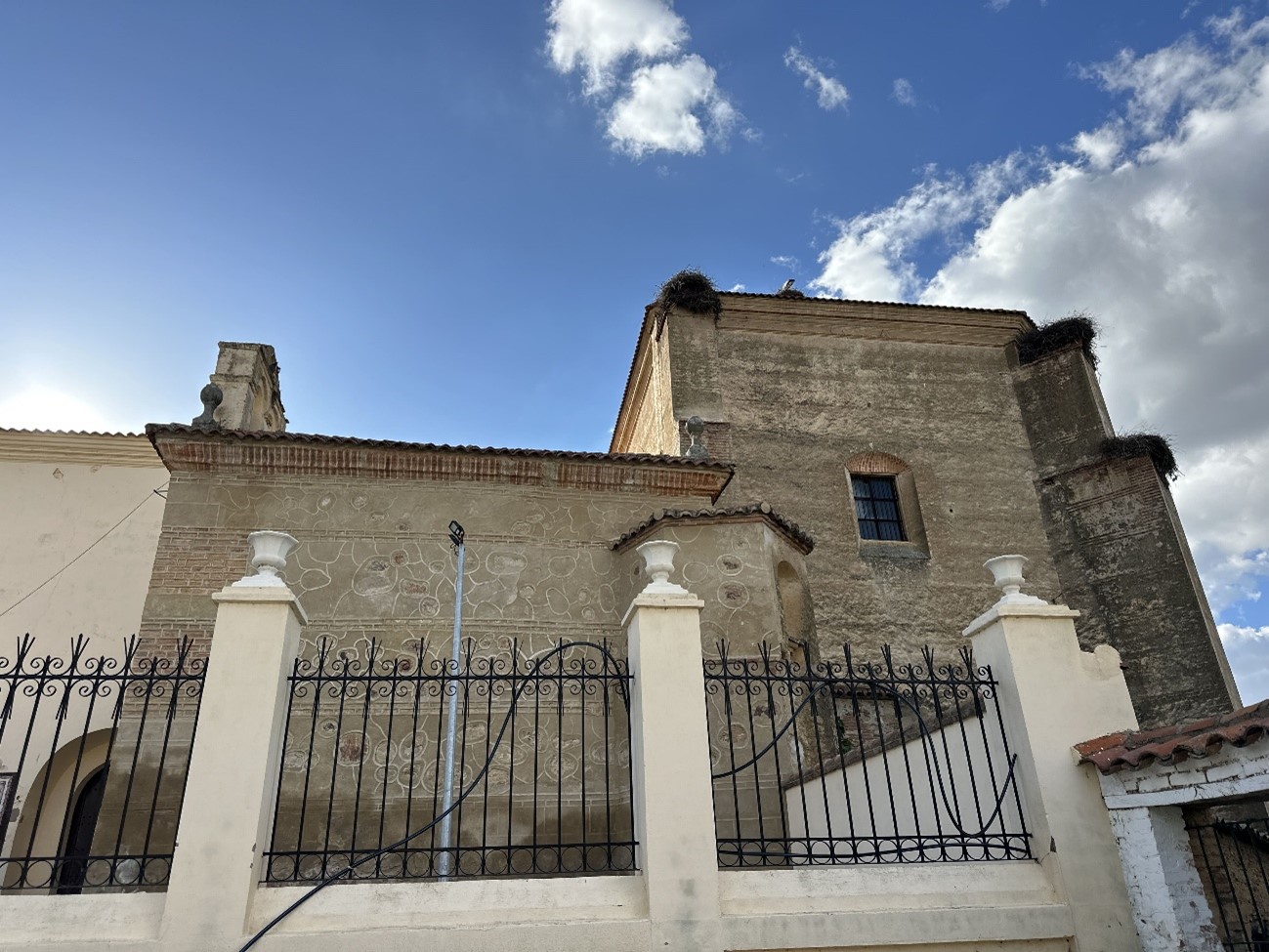
The architectural complex displays the characteristic features of Franciscan convent architecture, with a functional organisation around open spaces and austere rooms. It is built in the Herrerian style and features a beautiful courtyard in front of the entrance.
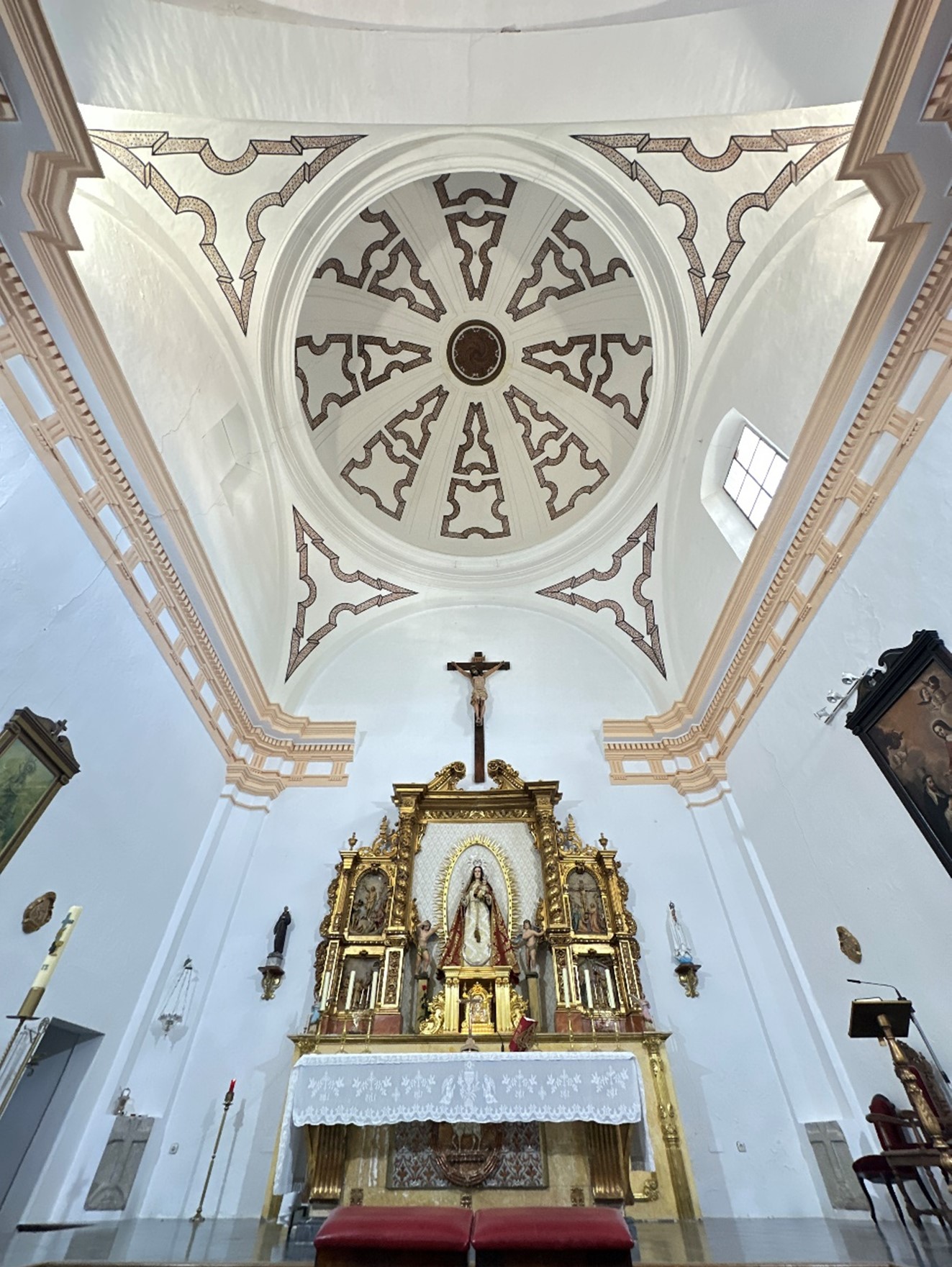
The church follows principles of decorative sobriety, with simple roofs and very limited ornamentation, in keeping with Franciscan ideals. It consists of a single nave, with a dome and a chapel on each side. The convent served as the novitiate house of the Franciscan Order of the Province of Santa María de los Ángeles until its later transfer to the Monastery of Guadalupe.
The former cloister, which organised the entire complex, connects the different rooms, including communal living quarters, cells and working spaces. The construction combines masonry and brick elements with traditional building solutions characteristic of popular architecture in Extremadura. Despite the transformations suffered over time, the complex still preserves the essence of its original configuration, standing out for its integration into the landscape and its value as a testimony to the religious and social architecture of the Modern Age.
The restoration works have largely respected the building’s original volume and structural elements, incorporating new functions compatible with its current use as a tourist facility.
IMPORTANT FIGURES RELATED TO THE POI
The convent was linked to the Franciscan community established in the town, whose members carried out religious, educational and charitable functions for centuries. Likewise, its history is connected to the local elites and to the context of the Viscounty of Puebla de Alcocer, in which the presence of religious orders played a key role in social and territorial organisation.
MOVABLE HERITAGE
Liturgical elements and remains of convent furniture, largely lost after the disentailment and changes in the building’s use.
INTANGIBLE HERITAGE
The memory of the Franciscan presence in the town and its influence on the religious and social life of Puebla de Alcocer, as well as the continuity of the site as a place of hospitality, now linked to youth and educational tourism.