DESCRIPTION
Religious temple located in the urban centre of Fuenlabrada de los Montes, in Plaza de España, which constitutes one of the main heritage, architectural and spiritual landmarks of the town.
HISTORY
The Church of the Assumption of Nuestra Señora was built between the 15th and 16th centuries, in a context of urban consolidation and development of religious life within the municipality. This period coincides with a stage of territorial organisation following the Middle Ages, during which numerous parish churches were erected throughout the comarca of La Siberia, linked to the growth of local communities. Since its origins, the church has played a central role in the social and religious life of Fuenlabrada de los Montes, hosting liturgical celebrations, festivities and community events.
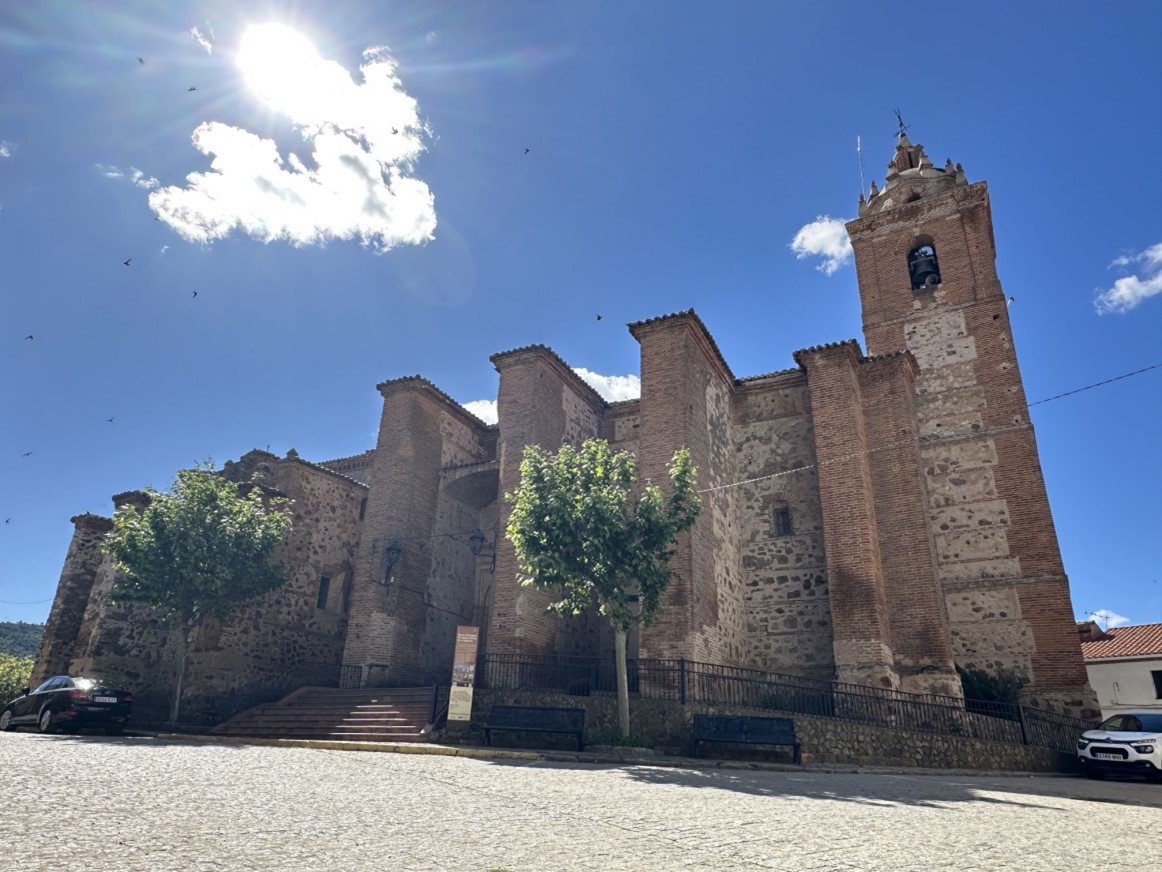
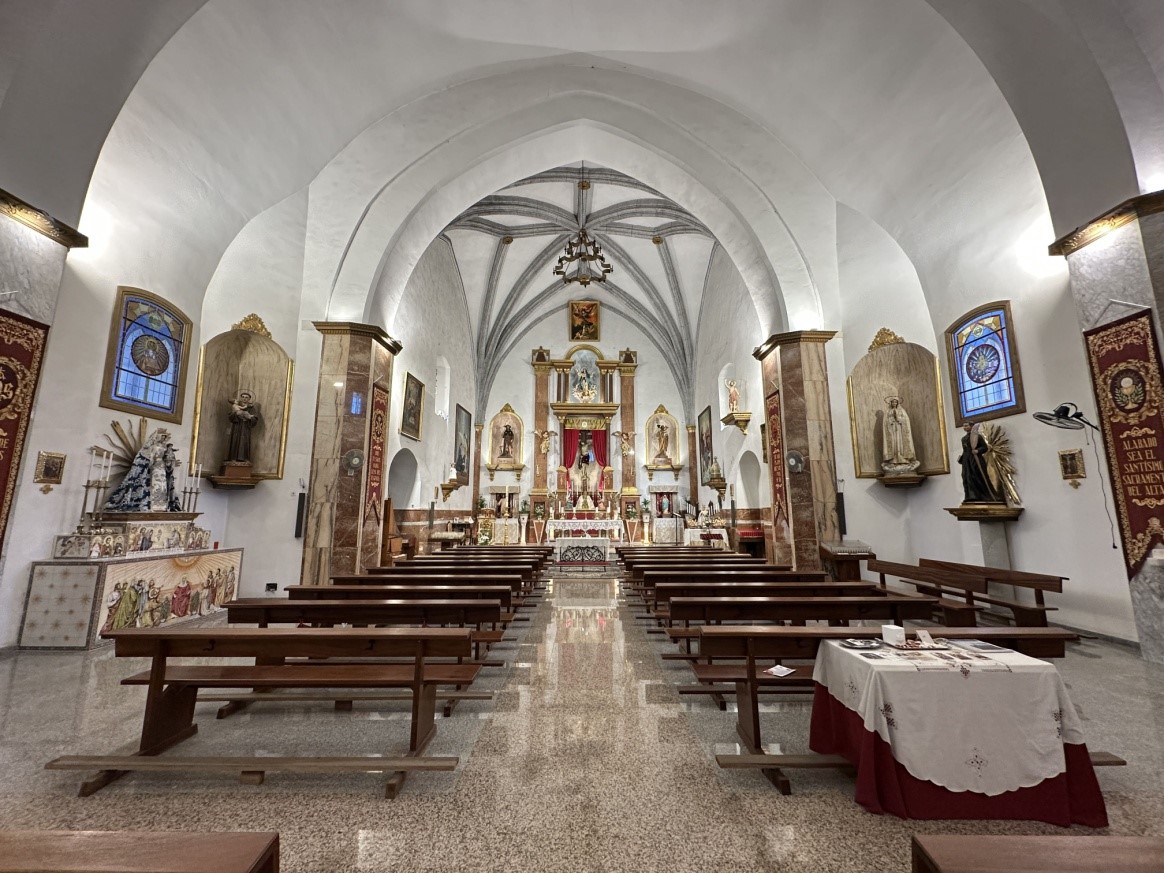
The Parish Church of Nuestra Señora de la Asunción is the main religious building in Fuenlabrada de los Montes. It is a structure built mainly throughout the 16th century, although its origins date back to the 15th century. The temple displays elements characteristic of Romanesque, Gothic and Mudéjar styles, and is constructed in stone and brick masonry following building techniques influenced by Toledo architecture. The building consists of a single nave, with an adjoining chapel located to the north of the presbytery and the sacristy on the southern side. At the foot of the church stands the elevated choir, beneath which is the access to the space housing the baptismal font.
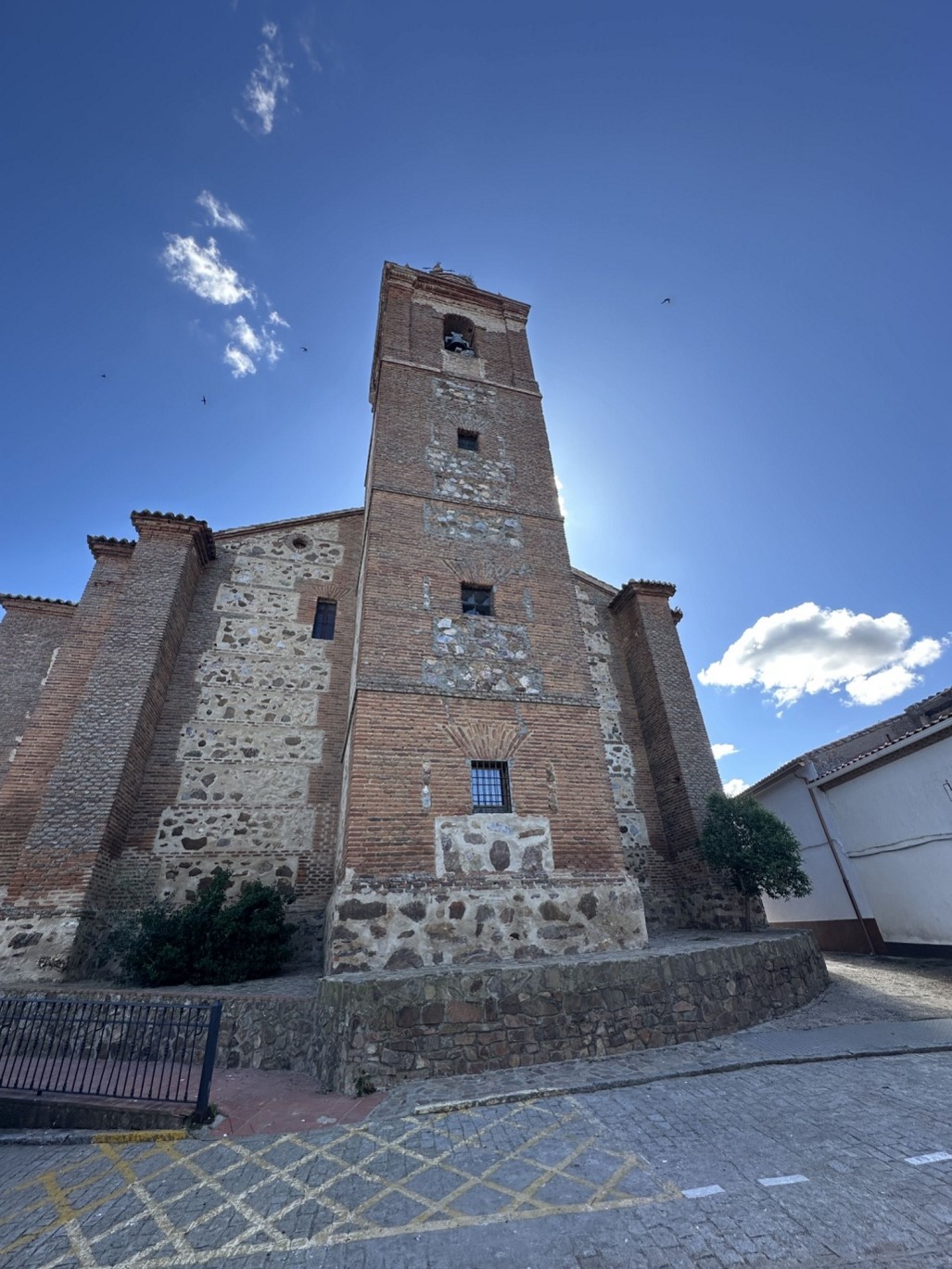
Externally, the massive buttresses and the quadrangular tower stand out, featuring a simple yet elegant composition organised into four sections separated by stringcourses. The tower has brick corners and semicircular openings framed by pilasters, while the ensemble is crowned by a Baroque upper section with pinnacles.
The main entrance, known as the Puerta del Evangelio, constitutes one of the temple’s most outstanding elements. It features a segmental arch framed by an alfiz, jambs and archivolts, and also incorporates a niche containing an image of the Virgin and Child together with various geometric decorative elements.
HISTORICAL AND ARTISTIC DESCRIPTION
The building features a solid stone construction, with a spacious nave structure that follows the traditional models of religious architecture from the late Middle Ages and the beginning of the Early Modern period.
On the exterior, the bell tower rises above the complex, forming one of the most recognisable elements of the town’s skyline. The temple combines construction features of Mudéjar tradition with elements characteristic of late Gothic style, resulting in functional, sober architecture adapted to the resources and techniques of the time.
The church constitutes one of the principal examples of traditional religious architecture in the comarca, integrating construction and ornamental solutions from different historical styles. The combination of Romanesque, Gothic and Mudéjar elements reflects the building’s prolonged architectural evolution and the various renovations carried out over time.
The interior of the temple is organised into three distinct spaces: a chapel covered by a barrel vault, the sacristy and the main chapel, which is covered by a star-shaped vault. The presence of these elements provides remarkable spatial richness to the architectural ensemble.
The main doorway displays a composition of clear Mudéjar and Gothic tradition, especially notable for the use of the segmental arch, the alfiz and geometric decorative elements. The niche housing the image of the Virgin and Child also constitutes one of the most representative ornamental features of the façade.
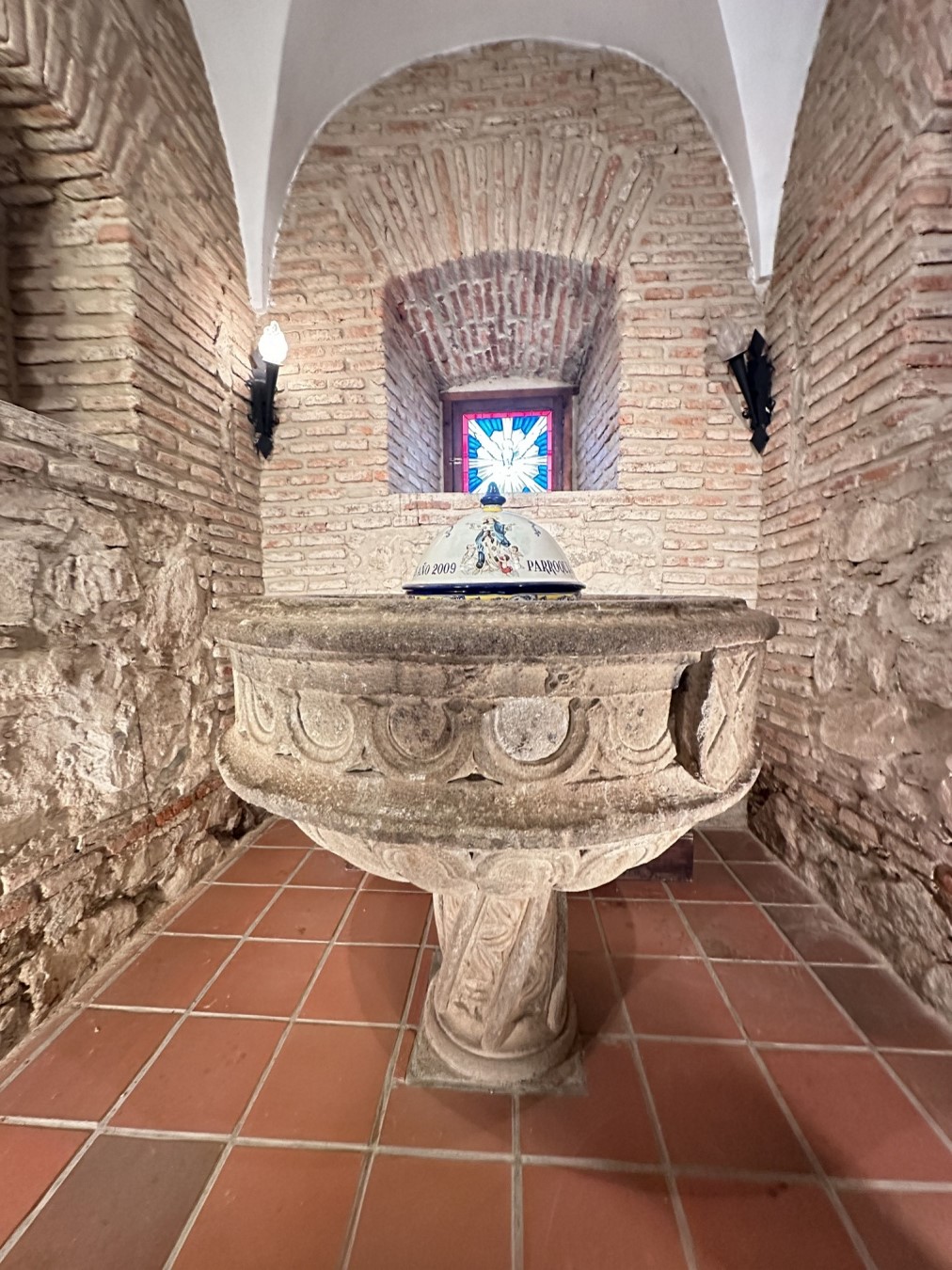
Inside, the richly decorated granite baptismal font, located in a room beneath the choir and dating from 1515, is also particularly noteworthy. This space additionally preserves heraldic coats of arms belonging to the Sotomayor, Zúñigas and Aspas families, historically linked to the municipality and the temple.
MOVABLE HERITAGE
Among the movable heritage preserved inside the temple, the decorated granite baptismal font located beneath the choir stands out as one of the church’s most significant historical elements.
Likewise, the temple preserves various liturgical and ornamental elements associated with the different historical phases of the building, in addition to the heraldic coats of arms of the Sotomayor, Zúñigas and Aspas families preserved in the baptismal area. Various religious images and objects used in liturgical celebrations and festivities linked to the parish also form part of the temple’s movable heritage.
RELEVANT FIGURES RELATED TO THE POI
The temple is linked to the parish community of Fuenlabrada de los Montes and has been the municipality’s principal place of worship since its construction. Over time, it has served as the setting for the religious activity carried out by the local clergy and for the active participation of the population in celebrations and traditions.
INTANGIBLE HERITAGE
The church constitutes the main centre of religious celebration in Fuenlabrada de los Montes, hosting festivities, ceremonies and expressions of popular religiosity that form part of the municipality’s cultural identity.