DESCRIPTION
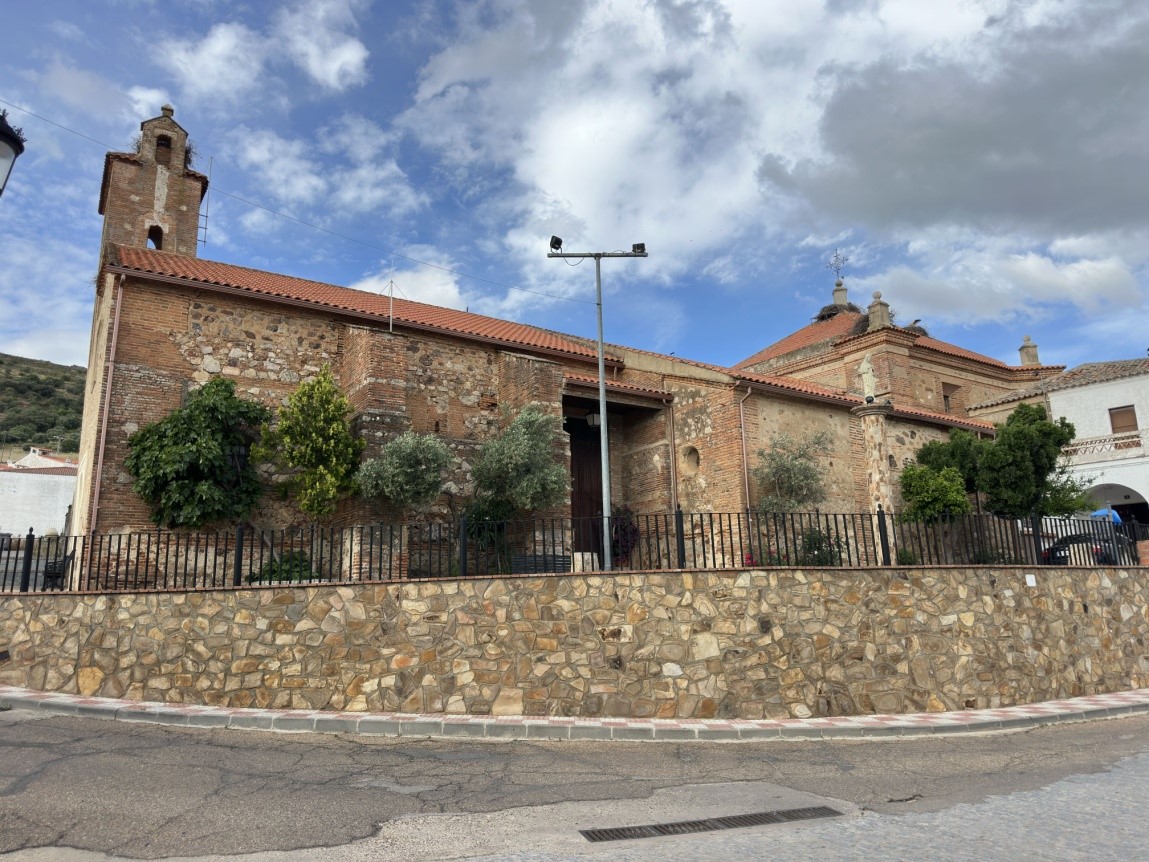
Religious building dedicated to Santa Catalina de Alejandría. It is a temple in the Extremaduran Mudéjar style, built between the late 15th and early 16th centuries, constructed in stone with brick bands and exterior buttresses.
The church presents a singular volume and reduced proportions, evoking more the typology of certain traditional hermitages than that of a large parish church. Among its most notable elements is the quadrangular tower, unusually located in the chancel area of the building.
The temple belongs to the Diocese of Mérida-Badajoz and houses during part of the months of May and August, coinciding with the local festivities, the image of the Virgen de la Cueva, patron saint of the town.
HISTORY
The Parish Church of Santa Catalina de Alejandría was built between the late 15th and early 16th centuries. Throughout its history it has undergone various renovations mainly due to deterioration over time and the consequences of the Civil War.
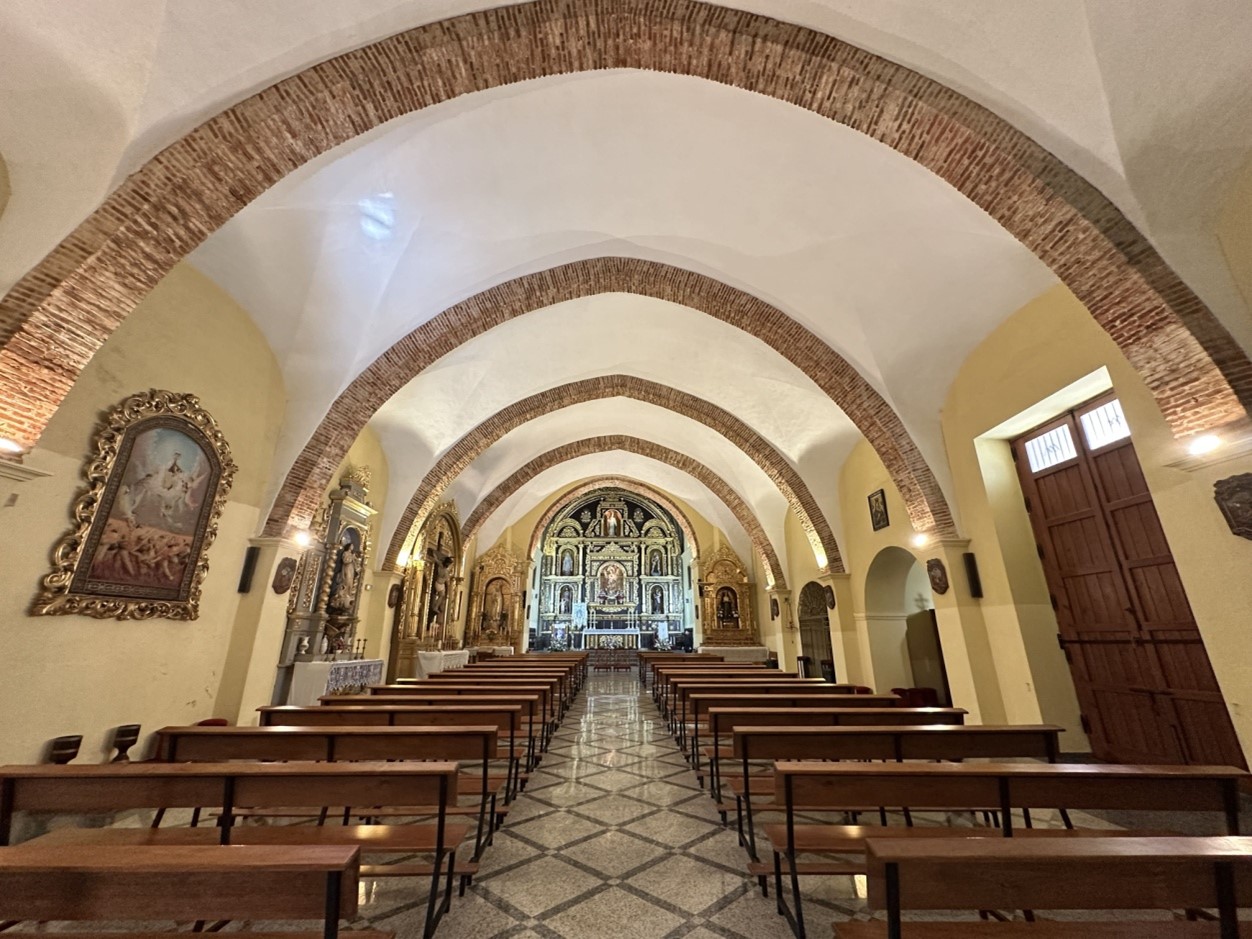
Originally, the building had wooden roofs, later replaced by brick vaults during the major renovation carried out in 1946. Consolidation and general improvement works were undertaken during this intervention.
In 1992, the Town Hall of Esparragosa de Lares renovated the church atrium, which was in poor condition for transit, installing stone and granite paving, as well as fences and seating.
In 1995, work was carried out on the roof, replacing the Arabic tiles with Portuguese tiles and renewing the old wooden ridge beams using tongue-and-groove boarding and concrete beams.
In 2001, the temple underwent a new comprehensive renovation, during which a new polished granite floor was installed, the interior lighting was renewed, painting works were carried out and the old exposed brick arches were restored.
HISTORICAL AND ARTISTIC DESCRIPTION
The church follows the characteristic models of Extremaduran Mudéjar architecture, combining stone and brick bands in its exterior walls. It features exterior buttresses and a single nave divided into three sections separated longitudinally by large arches.
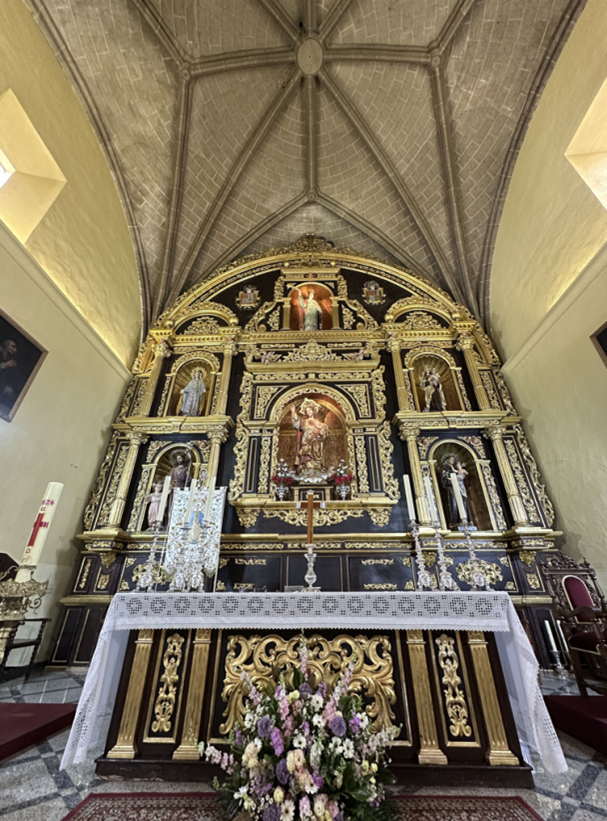
The presbytery is covered by a ribbed vault with intersecting ribs and stands out externally due to its greater height in comparison with the rest of the building. The nave was originally covered by a timber roof structure, which was later replaced by brick vaults during the renovation carried out in the mid-20th century.
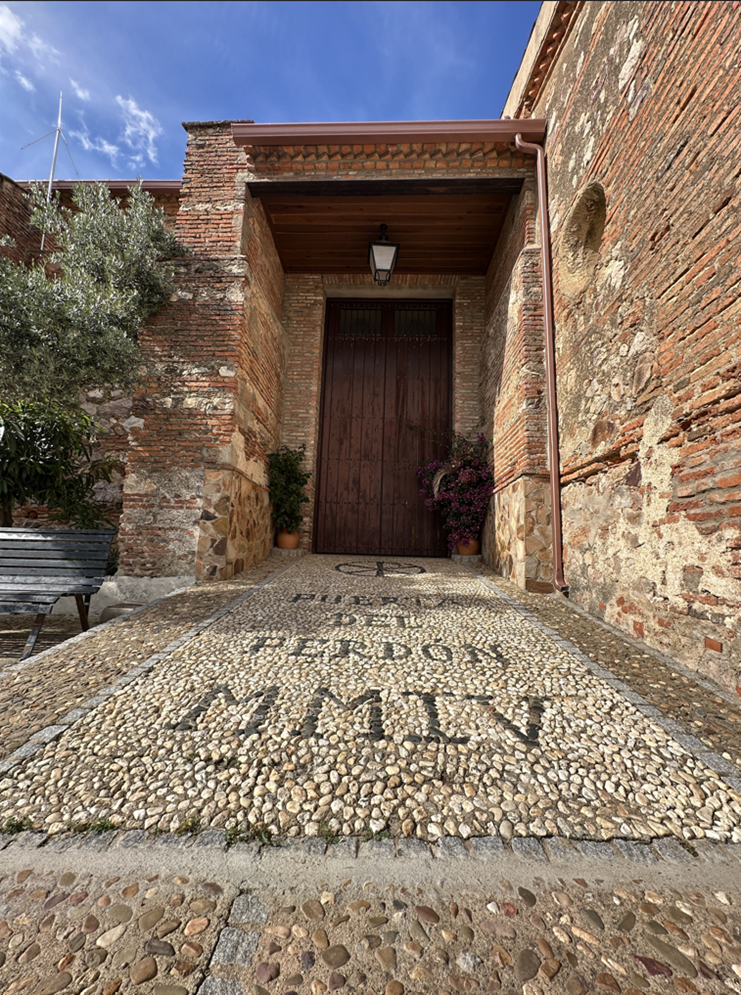
The church has two entrances. The main one is located to the south and is known as the “Puerta del Perdón”, recently reopened and enlarged to improve accessibility. This doorway combines old brick and stone and also incorporates a small wooden-roofed canopy.
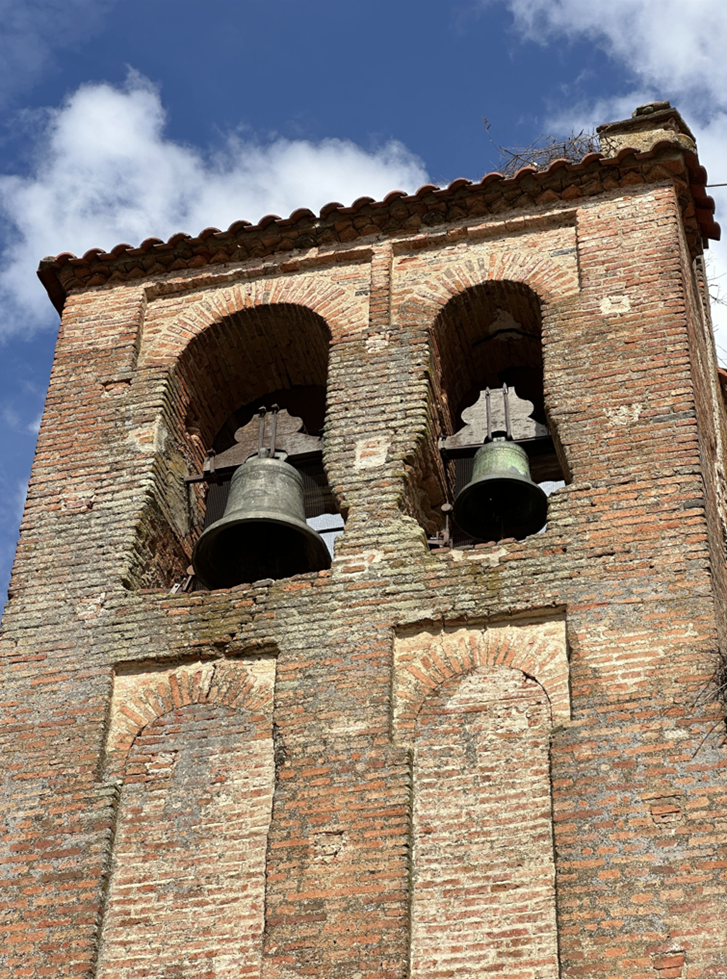
The second door is located at the foot of the temple and features a smaller semicircular arch. Next to it rises the quadrangular tower, built in brick, with semicircular openings framed in alfiz mouldings and equipped with two bells.
The interior of the temple was deeply transformed during contemporary renovations, currently highlighting the contrast between the whitewashed surfaces and the restored exposed brick arches.
FIGURES AND ENTITIES RELATED TO THE POI
The temple is dedicated to Santa Catalina de Alejandría, a figure traditionally venerated in the town and titular saint of the parish.
The church also maintains a close devotional connection with the Virgen de la Cueva, patron saint of Esparragosa de Lares and one of the municipality’s main religious devotions.
The Town Hall of Esparragosa de Lares directly participated in various restoration and improvement works carried out during the final decades of the 20th century.
MOVABLE HERITAGE
Inside the temple, the church’s main altarpiece is preserved, along with different religious images linked to parish worship and the town’s popular devotion. The church also houses the image of the Virgen de la Cueva, patron saint of Esparragosa de Lares, during the local festivities held in May and August, when she descends from her hermitage.
INTANGIBLE HERITAGE
The Church of Santa Catalina de Alejandría constitutes the main religious and ceremonial centre of Esparragosa de Lares, hosting the liturgical celebrations and traditional festivities of the municipality. The reopening of the so-called “Puerta del Perdón” keeps alive a traditional name linked to the town’s historical and religious memory.