DESCRIPTION
The Parish Church of San Blas is the main religious building in Risco and one of the town’s most representative heritage elements. It was built in the mid-19th century by the architect Juan Bautista Lázaro de Diego, who also designed a temple of similar characteristics in the municipality of Cedillo, Cáceres.
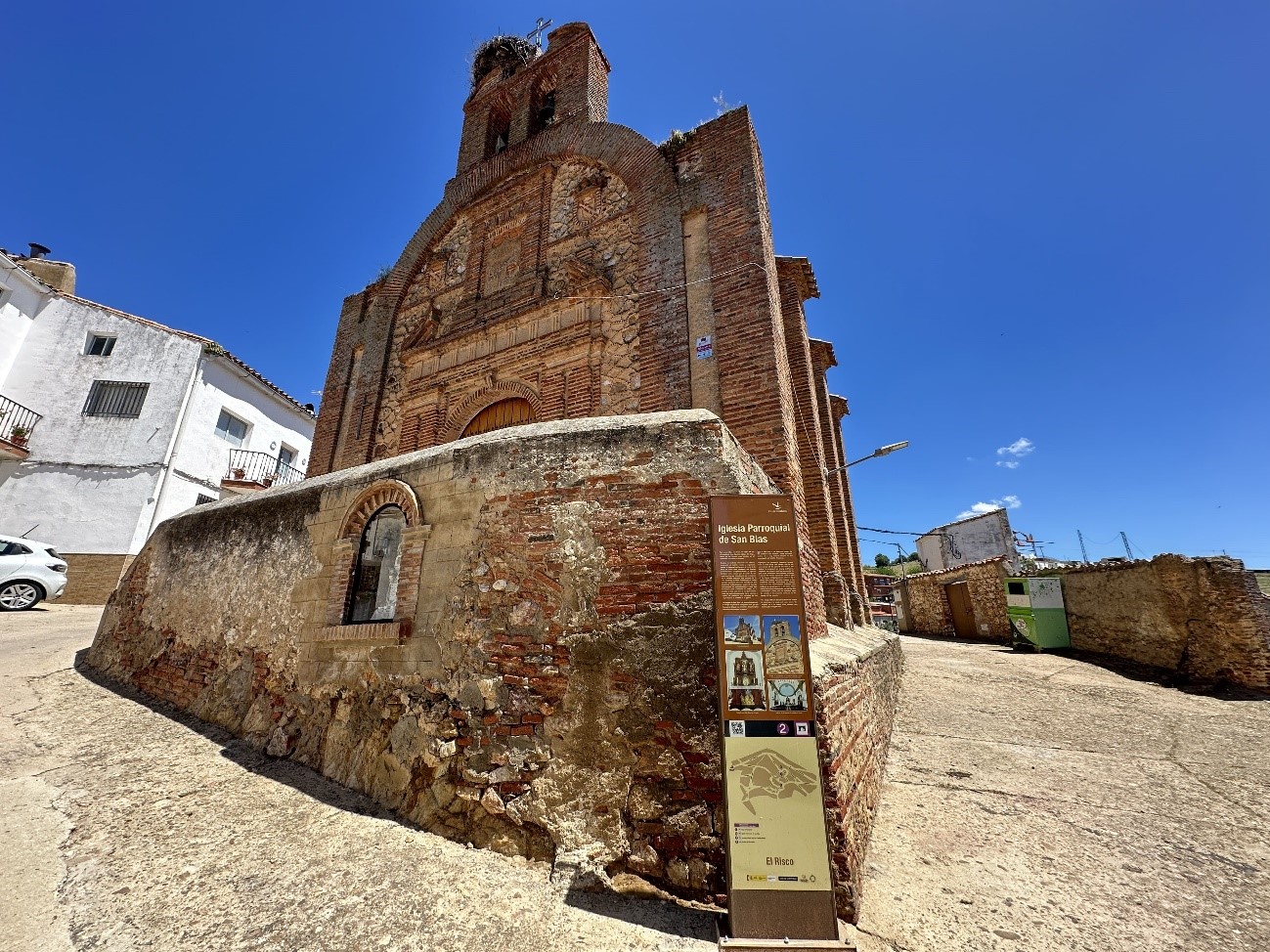
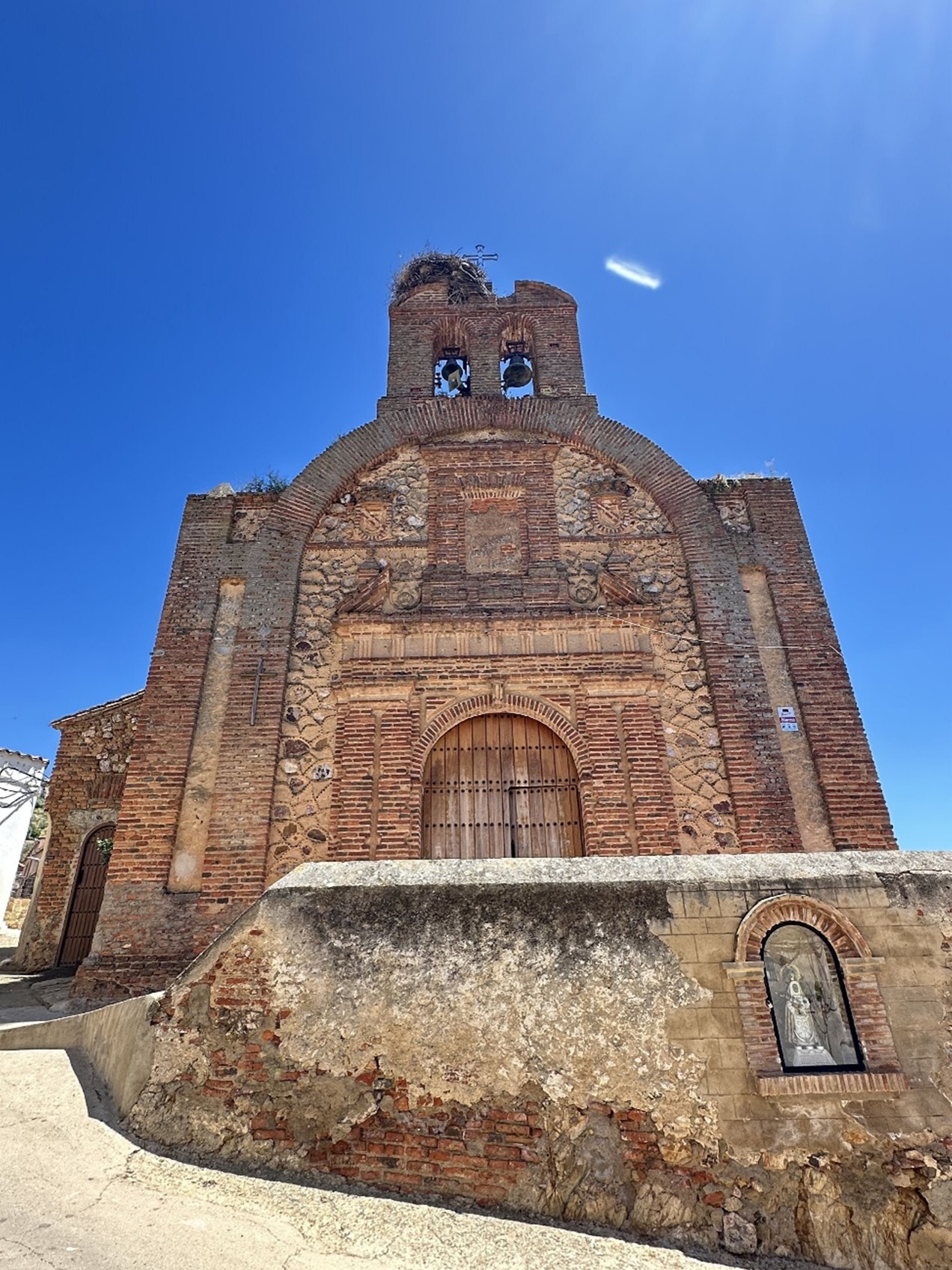
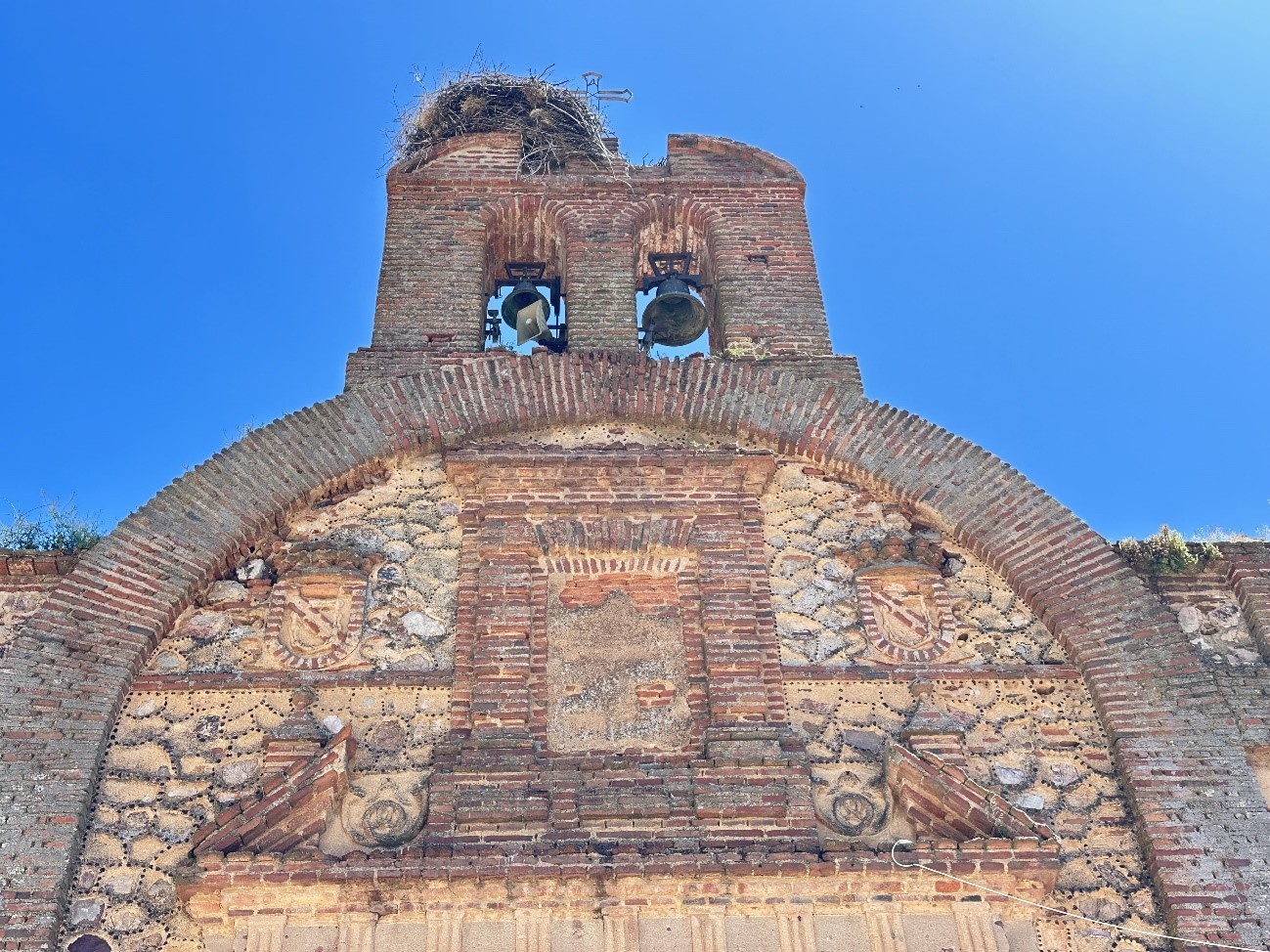
The building stands out for its classical façade, built in solid brick and mortar, and for the presence of large buttresses that respond to the uneven terrain on which it stands. Its imposing exterior volume and its position within the urban centre make the church one of the town’s visual landmarks.
HISTORY
The construction of the temple dates to the mid-19th century. The work is attributed to the architect Juan Bautista Lázaro de Diego, who built a religious building of similar characteristics in Cedillo.
The church was designed to adapt to a steeply sloping plot, which required reinforcement of the lower area. According to preserved information, the temple originally also had access through the buttress area, although this entrance no longer exists.
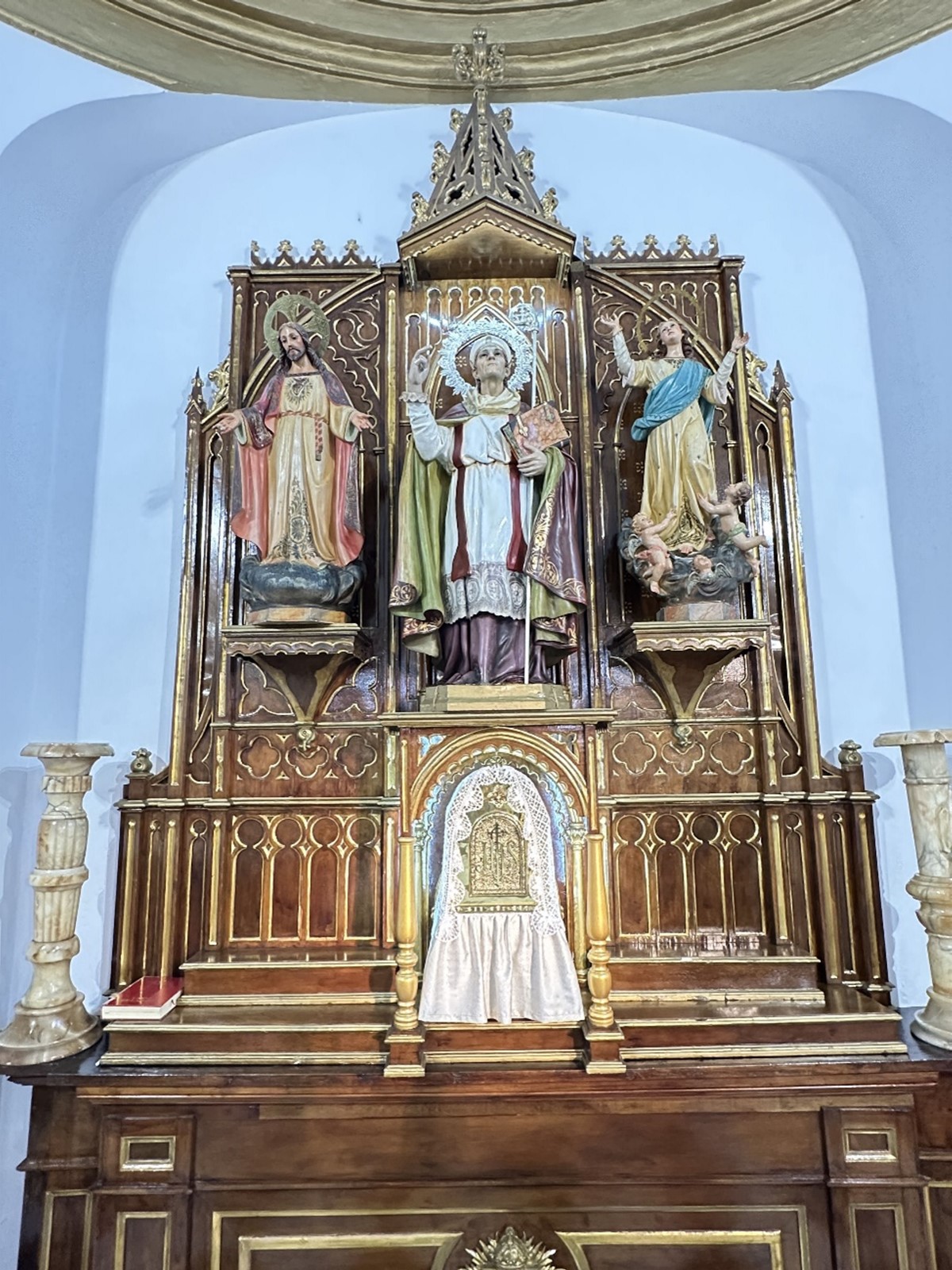
During the Civil War, the original image of San Blas, patron of the temple, disappeared. The image currently venerated dates from after the conflict.
HISTORICAL-ARTISTIC DESCRIPTION
The Iglesia Parroquial de San Blas is one of the main heritage landmarks of Risco. The temple was built in the mid-19th century. The architect Juan Bautista Lázaro de Diego was the author of numerous works, including the aforementioned church of similar characteristics in Cedillo.
The building presents a marked classical aesthetic and is mainly constructed in solid brick and mortar. Its architectural configuration was conditioned by the pronounced unevenness of the terrain on which it stands. Aware of this difficulty, the architect chose the most effective solution, which involved reinforcing its structure. According to some local references, buttresses originally also existed in other sections of the temple, although they are not fully preserved today.
The main façade features some of the building’s most distinctive elements. It displays the coat of arms of the House of Zúñiga, traditionally described as a chain crossed by a sabre, together with other reliefs depicting confronting snakes. These are linked to an ancient popular tradition according to which they symbolised the conflict between two brothers for control of the municipality, a dispute that, according to local legend, nearly caused the mutual destruction of both lineages. As a reminder of that conflict, the coats of arms were incorporated into the temple façade.
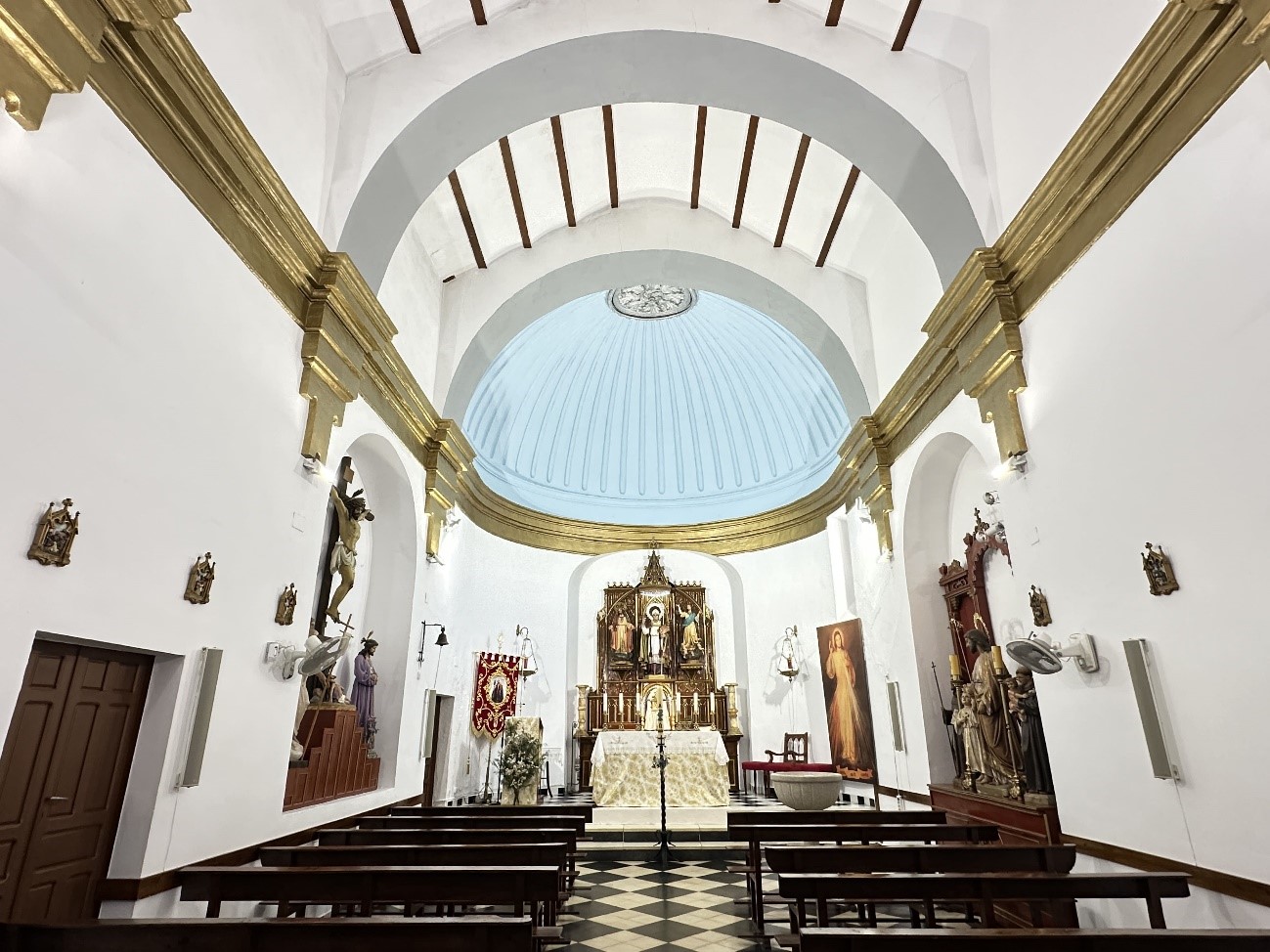
The interior follows a sober and balanced layout, in keeping with the region’s popular religious architecture. It preserves altarpieces and devotional images dating from after the Civil War, since the original carving of San Blas disappeared during the conflict, as happened in many churches across Extremadura.
The complex also stands out for the combined use of brick and masonry, materials very common in the traditional architecture of La Siberia, as well as for its integration into the urban profile of Risco, where the church occupies a dominant position over the townscape.
RELEVANT FIGURES RELATED TO THE POI
The temple is linked to the architect Juan Bautista Lázaro de Diego. It is also associated with the House of Zúñiga, whose coats of arms appear on the temple façade.
MOVABLE HERITAGE
The temple’s main devotional element is the current image of San Blas, which is not the original one. The interior also preserves other liturgical and ornamental elements linked to parish worship.
INTANGIBLE HERITAGE
The church maintains a close connection with devotion to San Blas, patron of the parish and a fundamental religious reference for the town. Also part of the intangible heritage is the popular tradition associated with the reliefs of confronting snakes on the façade, interpreted as a symbol of an ancient conflict between two brothers for control of the village and of the desire to prevent such confrontation from ever happening again.