DESCRIPTION
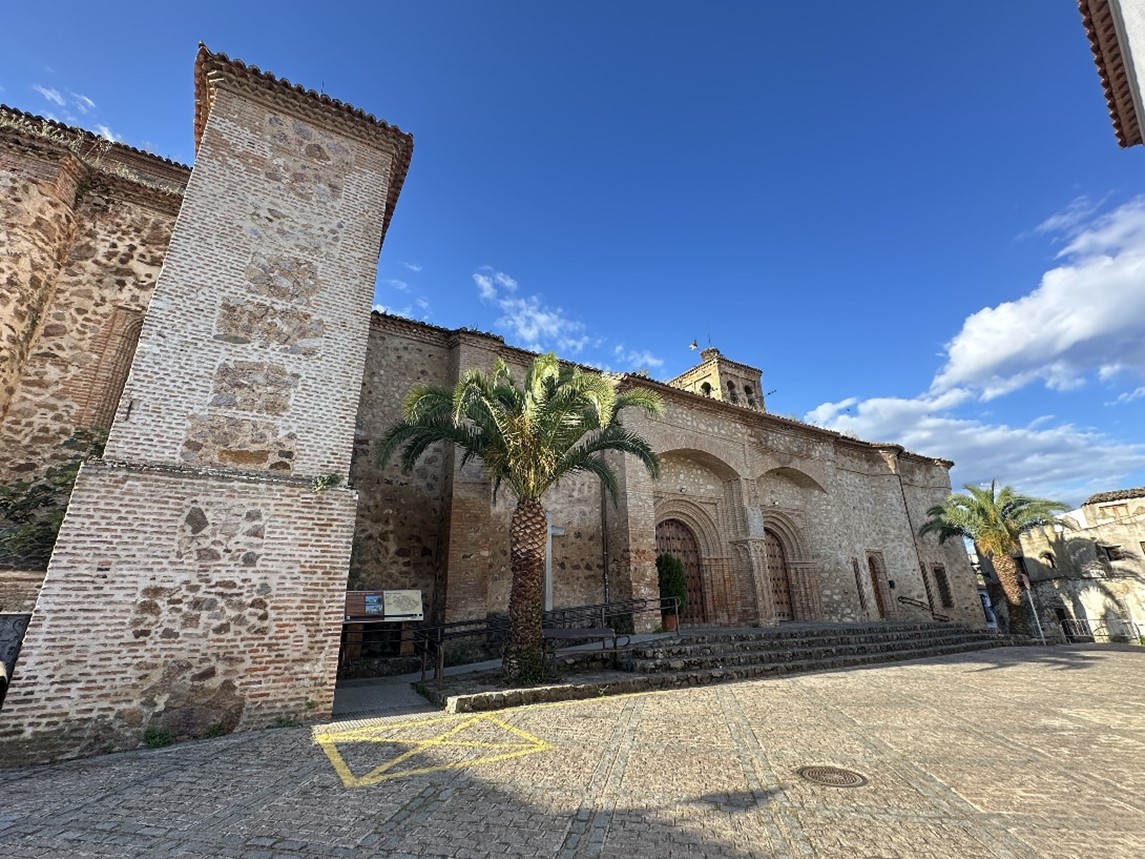
The Parish Church of San Juan Bautista is one of the most important historic buildings in Herrera del Duque and one of the religious ensembles of greatest artistic relevance in the whole region of La Siberia in Extremadura. Located in the heart of the town centre, its monumentality reflects the importance reached by the town during the Modern Age and the close relationship between lordly power, popular religiosity and the historical development of the locality.
The oldest known documentary references to the church date back to 1483, although various authors consider that part of the construction may have been built upon earlier structures. The building presents a complex superimposition of styles and construction phases in which late-medieval elements, Mudéjar solutions, Gothic features, important Renaissance contributions and later reforms coexist, resulting both from the passage of time and from different restoration processes.
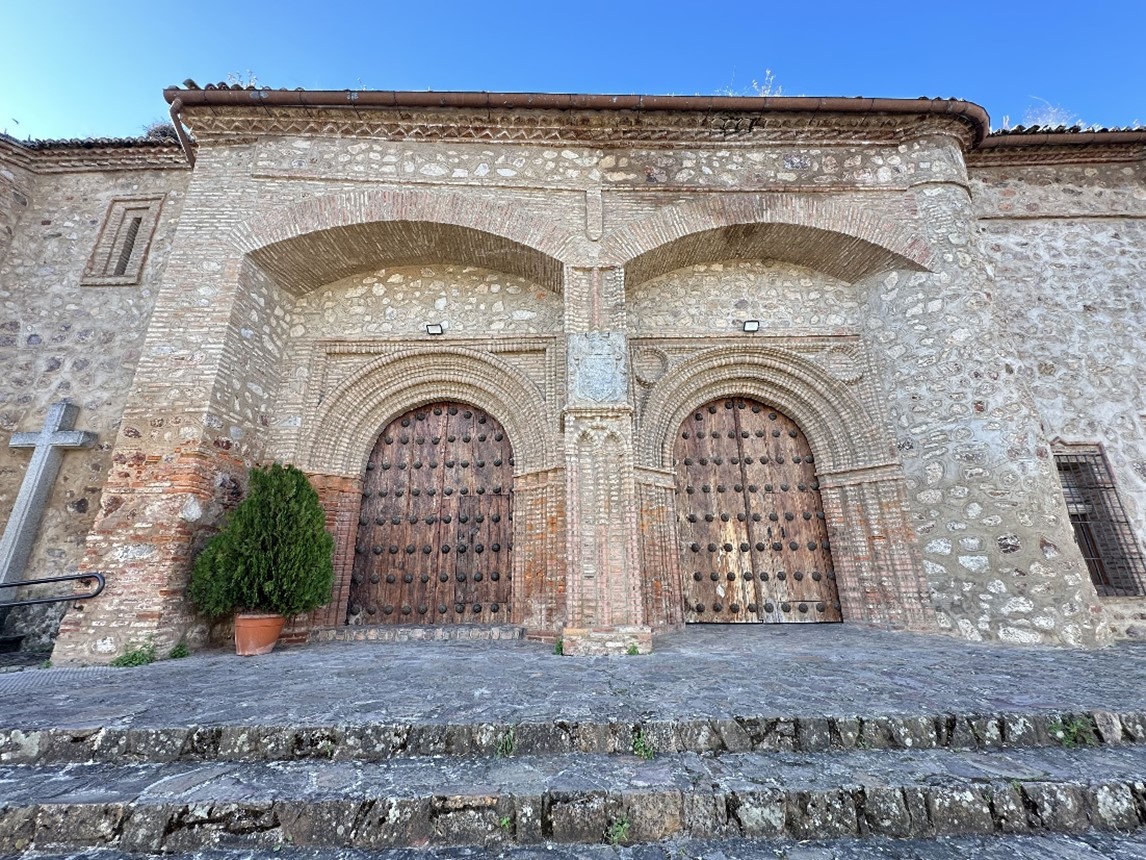
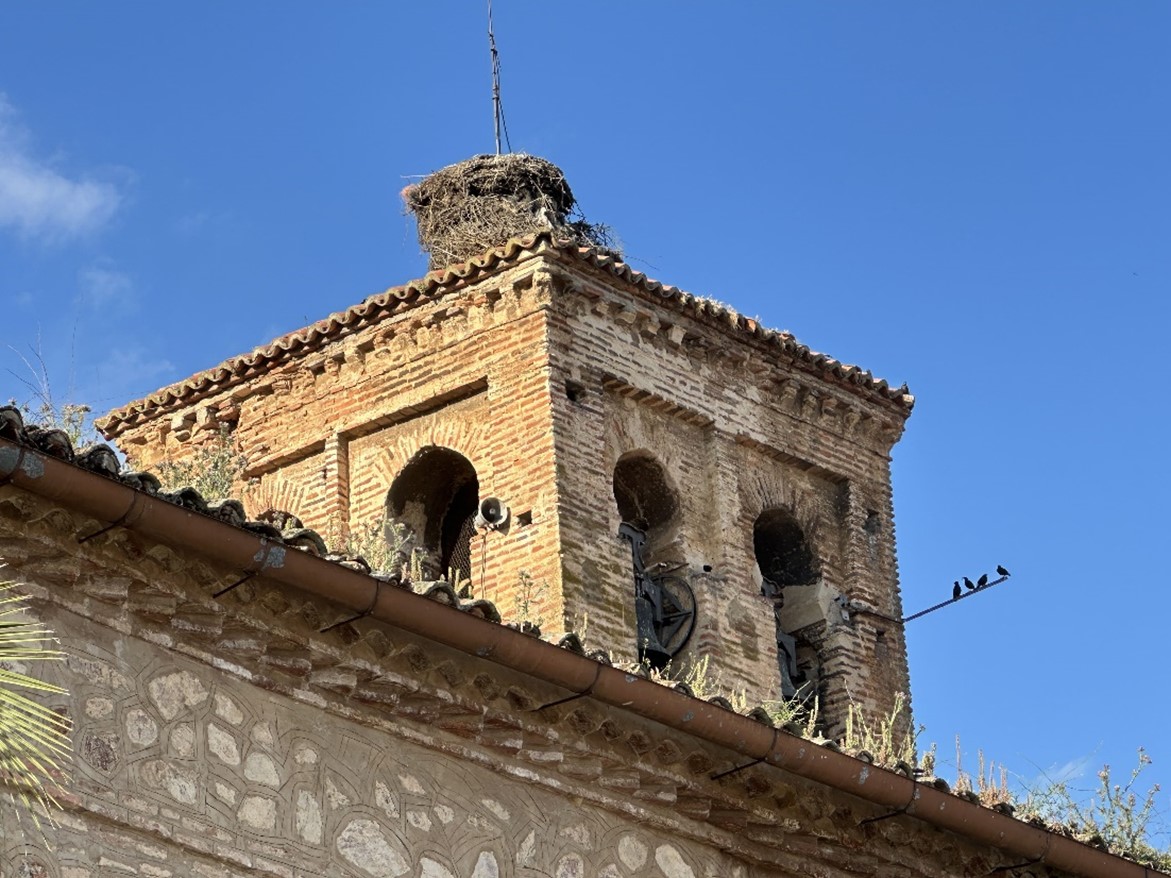
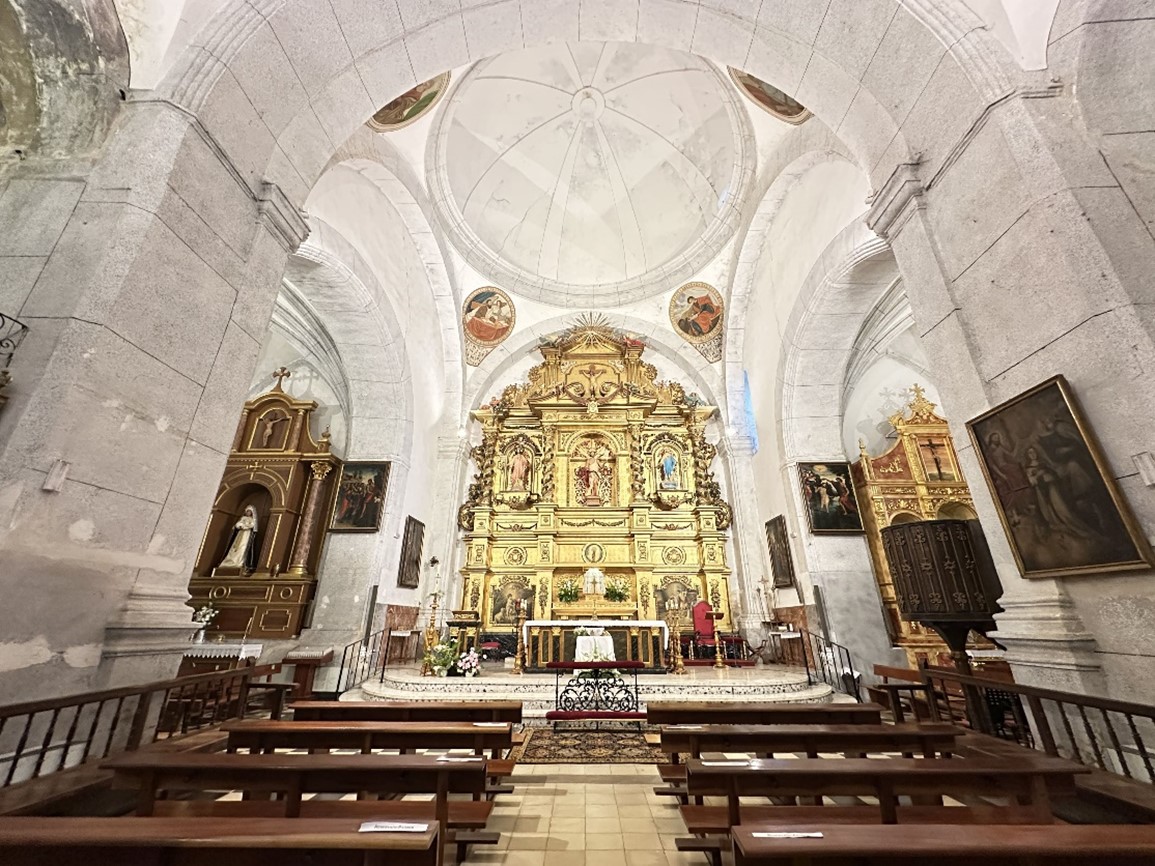
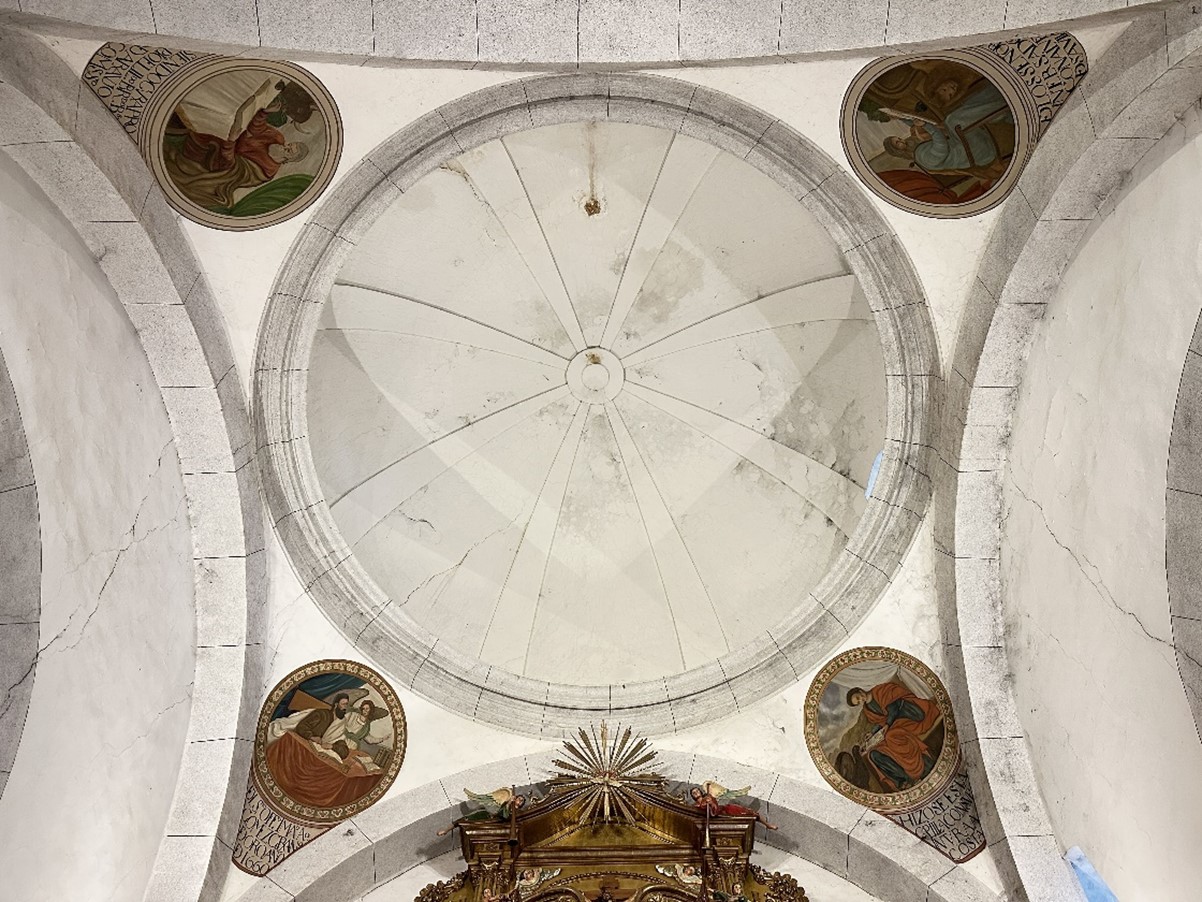
The church consists of three vaulted naves, a double-section main chapel and a transept crowned by a hemispherical dome. Externally, the powerful bell tower stands out and, especially, the presence of large cylindrical buttresses and flying buttresses, which give the ensemble a monumental and almost fortified appearance, an unusual circumstance in the religious architecture of the region. The church also preserves two traditional entrances popularly known as “Puerta del Sol” and “Puerta de los Pecos”, names deeply rooted in the collective memory of the local population.
HISTORY
The historical evolution of the Church of San Juan Bautista does not correspond to a single construction phase, but rather to a long process of extensions, reforms and artistic enrichment developed over several centuries.
Some researchers consider that the bulk of the present construction corresponds mainly to the major works carried out between the late 15th century and the 16th century, coinciding with a period of economic growth and consolidation of the lordly power of the Sotomayor family in Herrera del Duque. Other authors, however, maintain that certain parts of the building may preserve earlier structures or elements subsequently integrated into the Renaissance reforms.
The fact is that historical documentation describes a church in constant transformation, progressively enriched through architectural contributions, artistic commissions and religious foundations promoted both by the clergy and by families linked to the local lordship.
The 16th century was one of the moments of greatest splendour for the church. During this period, important works were undertaken in relation to the main altarpiece, the paintings, sculpture and liturgical silverwork. Various documents expressly mention the participation of highly prestigious artists, including Gregorio Prado and Juan Correa de Vivar.
The former Renaissance main altarpiece became one of the most important artistic ensembles in the entire region. According to the surviving documentation, it was made approximately between 1546 and 1550 and consisted of polychrome sculptures and twelve large Mannerist painted panels.
The later history of the church was marked by the fire of 1936, which caused significant damage to part of the church’s interior heritage. Nevertheless, various local sources and historical documents indicate that many of the altarpiece paintings were saved because they had previously been removed from the building, a circumstance that allowed their later restoration and return to the church.
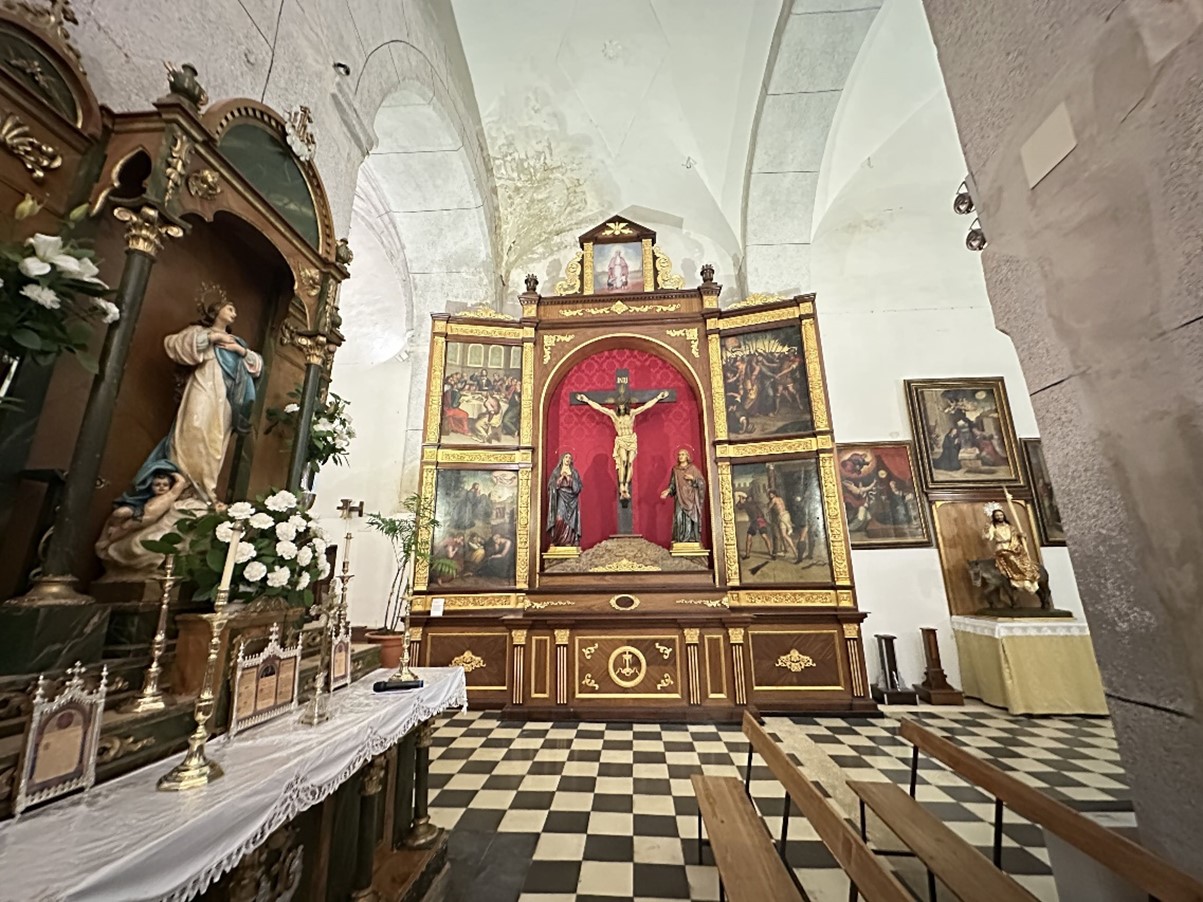
At present, eleven of the twelve original panels of the altarpiece are preserved. Four of them remain grouped in a small altarpiece located on one of the sides of the church, while the other seven are distributed on different interior walls of the building. The remaining panel is today in private hands.
This dispersal makes the former main altarpiece one of the most singular and important heritage elements of the church and of the whole region.
HISTORICAL-ARTISTIC DESCRIPTION
The Church of San Juan Bautista presents a complex architecture in which different construction phases and stylistic contributions can be clearly recognised.
Some historical descriptions define the ensemble as an essentially Renaissance church, especially because of the spatial configuration of its naves and certain interior decorative elements. However, other authors emphasise the important presence of Gothic and Mudéjar solutions, especially visible in primitive structures, original roofs and certain architectural elements that have been preserved or documented.
The interior is organised into three naves separated by pillars and arches, creating a broad and solemn space that was progressively transformed over the centuries. Several old documents mention the existence of former Mudéjar wooden ceilings, some of which were later replaced by vaults and reformed roofs.
The main chapel is one of the most outstanding spaces of the ensemble. Configured as a double space and crowned by a hemispherical dome over the transept, it concentrates much of the interior monumentality of the building. Some sources also mention the presence of rib-vaulting solutions and ornamentation associated with reforms developed between the late Gothic period and the Renaissance.
On the exterior, the large cylindrical buttresses and, above all, the flying buttresses stand out, elements of great singularity within the religious architecture of the region. One of these flying buttresses is still clearly visible and reinforces the fortress-like image conveyed by the ensemble.
The two historic doors of the church, popularly known as “Puerta del Sol” and “Puerta de los Pecos”, are also part of the church’s historical identity. Some old sources attribute Gothic features to their arches and mouldings.
However, the most outstanding artistic element of the church was its former Renaissance main altarpiece. Historical documentation attributes the polychrome carvings to Gregorio Prado and the Mannerist paintings to Juan Correa de Vivar, one of the most important painters of 16th-century Castilian Renaissance art.
The church also preserves an important 16th-century silver processional monstrance attributed to Gregorio Borja and Franco Morales, weighing around forty kilograms, considered one of the most outstanding pieces of silverwork historically linked to the church.
The present tabernacle also deserves special mention. It is the work of the craftsman Mariano Molagón and was installed on 8 June 1944 after the damage suffered during the Spanish Civil War.
Alongside these elements, there are historical references to pulpits, funerary chapels, liturgical pieces, sculptures, tombs and various rooms linked to former brotherhoods and religious foundations.
RELEVANT FIGURES RELATED TO THE POI
The artistic history of the Church of San Juan Bautista is closely linked to different artists, religious figures and patrons connected with the historical evolution of the church.
Among them, Gregorio Prado stands out in particular, associated with the polychrome carvings of the former main altarpiece, and Juan Correa de Vivar, author of the 16th-century Mannerist paintings that formed part of the original ensemble.
The church also preserves a processional monstrance linked to Gregorio Borja and Franco Morales, as well as the present tabernacle made by Mariano Molagón in 1944.
The church also maintains a deep historical relationship with the lordship of Herrera del Duque and with different benefactor families linked to chapels, burials and religious foundations developed inside the church.
MOVABLE HERITAGE
The movable heritage preserved in the Church of San Juan Bautista constitutes one of the most important artistic ensembles in Herrera del Duque.
The eleven preserved panels from the former Renaissance altarpiece are especially notable. They are currently distributed between a small side altarpiece and various points inside the church. Added to these are the polychrome sculptures, pieces of silverwork, liturgical objects and historical elements documented in different old sources.
Among the most relevant pieces, the 16th-century silver processional monstrance attributed to Gregorio Borja and Franco Morales stands out, together with the tabernacle made by Mariano Molagón after the Spanish Civil War.
INTANGIBLE HERITAGE
For centuries, the Church of San Juan Bautista has been the main religious, ceremonial and symbolic centre of Herrera del Duque.
The town’s principal liturgical celebrations, patron-saint festivities, processions, sacramental ceremonies and expressions of popular religiosity have historically taken place around the church.
The permanence of the historic panels from the former main altarpiece inside the church itself also maintains a strong link between artistic heritage and the collective memory of the residents, making the church one of the great cultural and identity landmarks of Herrera del Duque.