DESCRIPTION
The Parish Church of the Espíritu Santo constitutes the main heritage and religious landmark of the town of Sancti-Spíritus, located in the centre of the urban area.
It is a temple of Mudéjar origin built in whitewashed masonry, whose presence structures the municipality’s traditional townscape, composed of popular-style buildings. Its architectural uniqueness and its integration into the urban space make it the town’s most representative landmark.
HISTORY
The Parish Church of the Espíritu Santo is the main religious temple of Sancti-Spíritus and one of the town’s most representative historic buildings. According to preserved information, the temple depended for centuries on the parish of Peñalsordo, a situation that remained until before the Civil War. Its origin dates back to the 15th century and reflects a transitional architecture in which Mudéjar elements coexist with Romanesque and Gothic influences, something common in many rural temples of the Extremaduran environment built during the Late Middle Ages.
Over time, the church has maintained its role as the municipality’s religious and social centre, preserving much of its traditional structure. The presence of construction solutions typical of popular Mudéjar architecture, together with later functional and ornamental elements, reflects the different historical phases through which the building has passed.
HISTORICAL-ARTISTIC DESCRIPTION
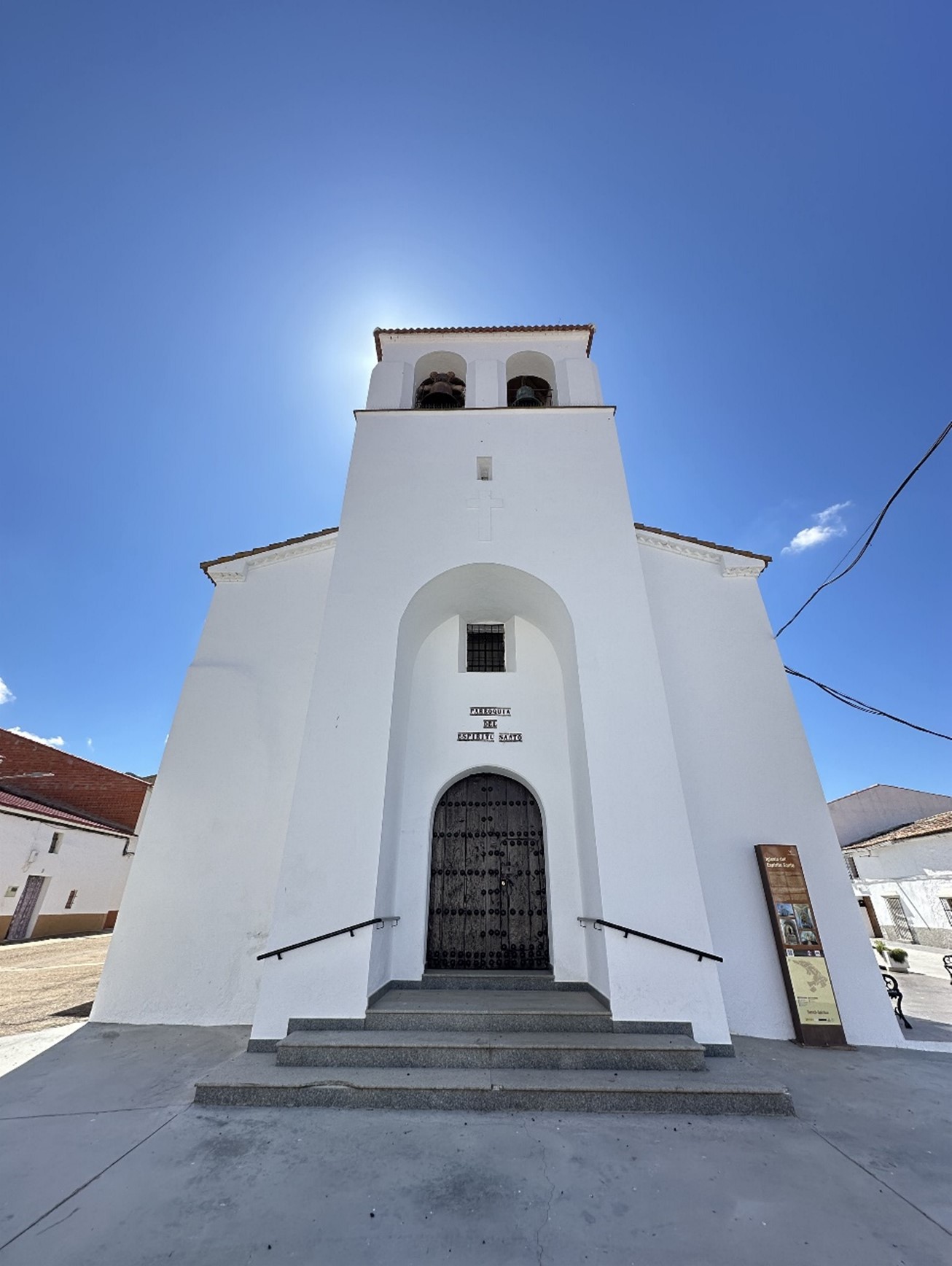
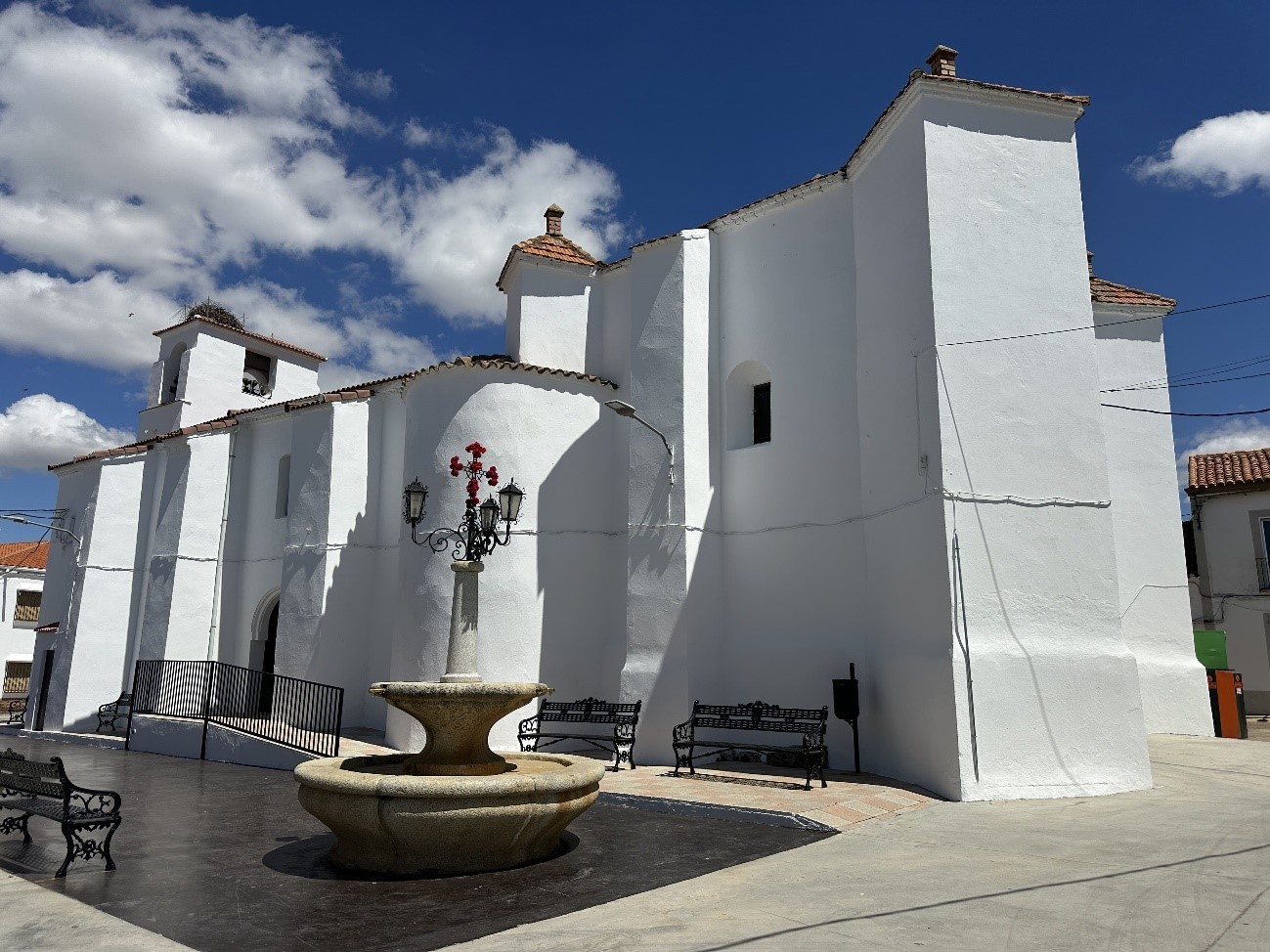
The exterior of the temple presents a masonry construction reinforced with brick courses and elements, offering a sober and robust appearance. Particularly noteworthy are the lateral buttresses of the nave, crowned with restored brick pinnacles, as well as the bell gable situated above the main façade, where five pinnacles are arranged: one at each end and another in the central section.
The architectural composition of the façade is especially unique due to the large porticoed arch opened at the base of the tower-façade, a feature uncommon in small-sized temples. The main portal is conceived as a projecting body with a recessed arch framing both the doorway and the upper window. From the choir, a small internal staircase provides access to the bell gable.
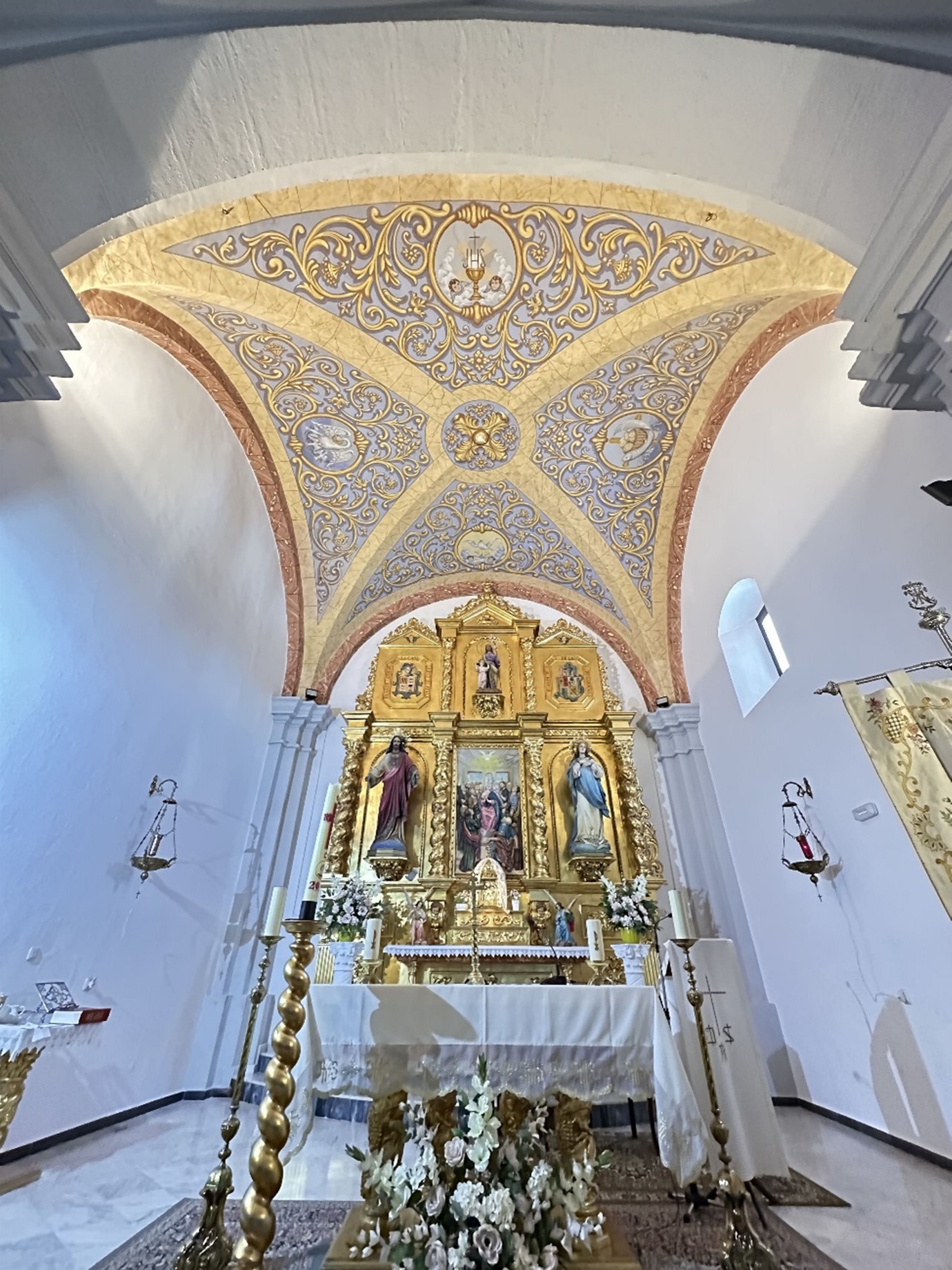
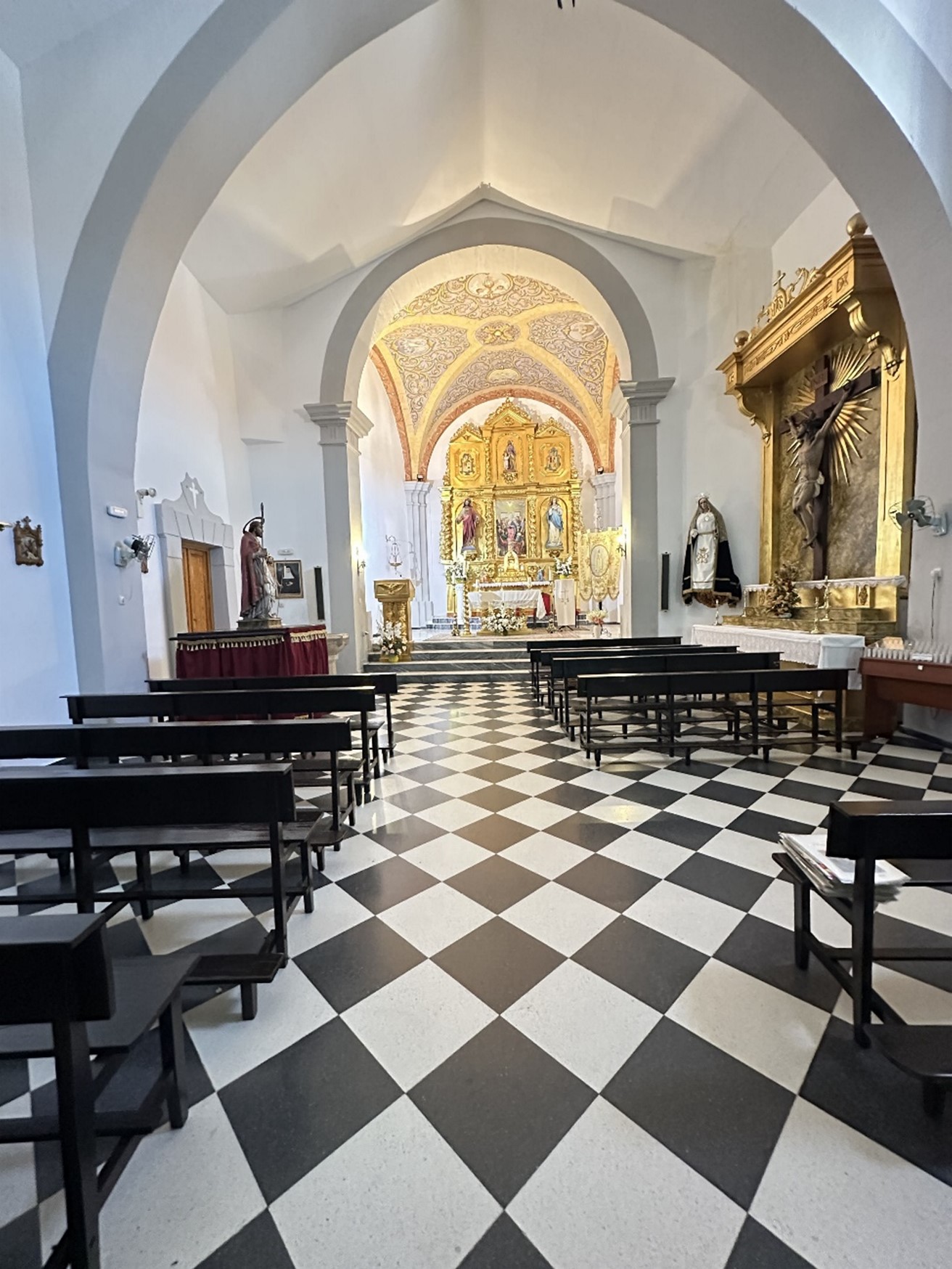
Inside, the temple is structured through pillars and different types of arches, including pointed, semicircular and segmental arches made of brick. It preserves ribbed vaults and double-pitched lintelled roofs, elements that reinforce the historic character of the complex. Brickwork is visible in various parts of the building, including the windows opened in the chancel, the sacristy and other annexed rooms.
The church has four access points: the lateral doors of the epistle side and the west façade, both semicircular, as well as other lintelled entrances corresponding to the sacristy and auxiliary rooms. The bell gable, cubic in plan and covered with a double-pitched roof, features two openings for bells and constitutes one of the most recognisable elements of the urban skyline of Sancti-Spíritus.
Inside, several pieces of religious imagery and popular devotion also stand out, including the main altarpiece, the image of Santo Cristo, the carving of the Nazareno and the Virgen de los Dolores, which form a significant part of the locality’s religious heritage.
STATE OF CONSERVATION
The church is preserved in good general condition and continues to fulfil parish and liturgical functions. The restorations carried out on various exterior elements, especially the pinnacles and parts of the façade, have made it possible to maintain structural stability and preserve the temple’s historic appearance.
HERITAGE VALUE
The Iglesia del Espíritu Santo is one of the main heritage landmarks of Sancti-Spíritus and an outstanding example of popular religious architecture of Mudéjar tradition in the comarca. Its combination of masonry and brick, together with the unique composition of its tower-façade and the preservation of Gothic and Mudéjar elements, make the building a piece of special interest within the local historical heritage.