DESCRIPTION
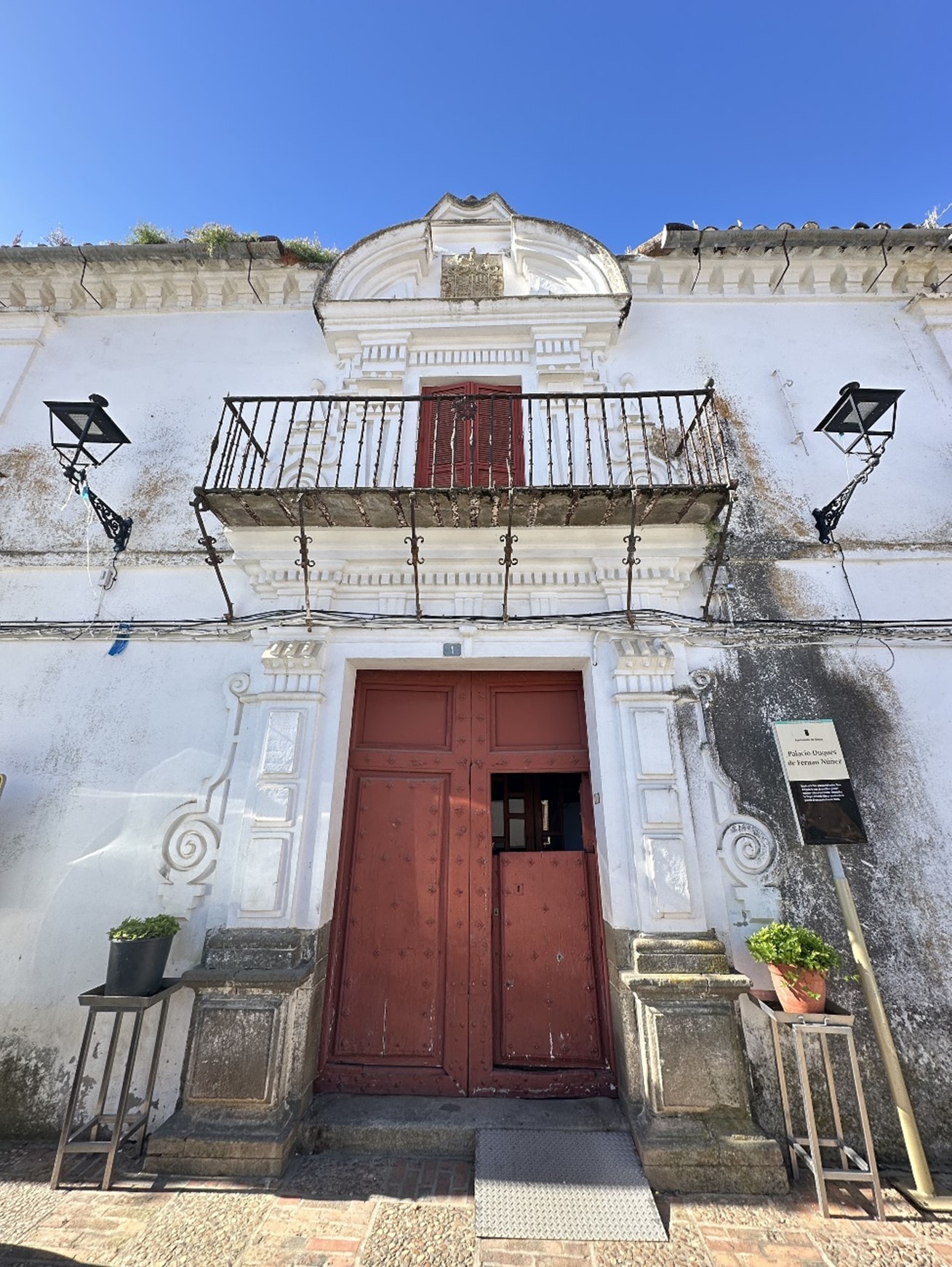
It is located in Plaza de España in Siruela, presiding over one of the locality’s most representative urban spaces alongside the parish church and the Convent of the Clarisas. It is a stately construction of great presence that visually articulates the monumental ensemble of the square and constitutes one of the main exponents of Siruela’s historical civil architecture. The building’s volumetry, the composition of its façade and the richness of its coat of arms make it an essential reference for understanding the town’s noble past.
HISTORY
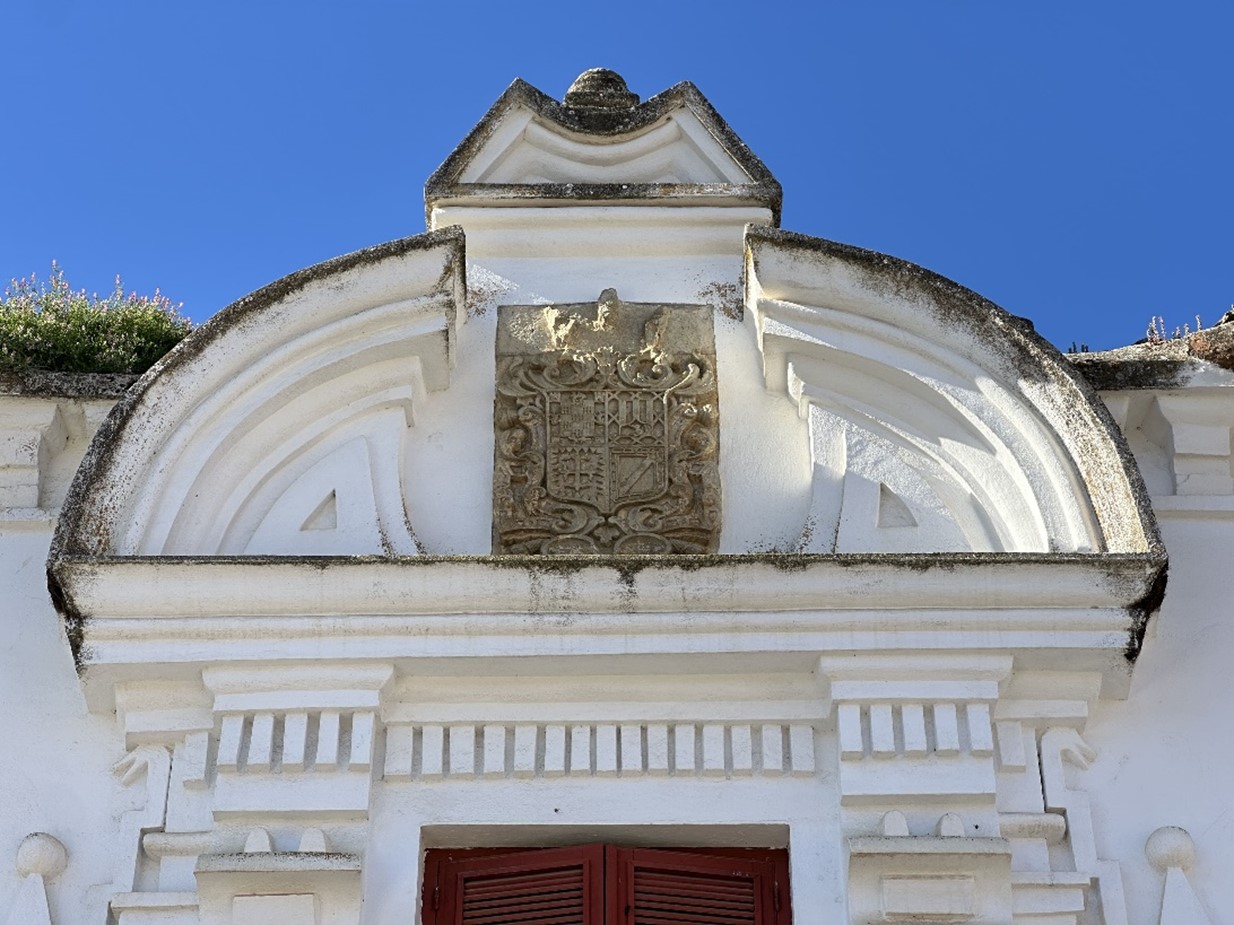
The building dates from the 17th century and is linked to the former lordship of Siruela, forming part of the noble legacy associated with the lineages that controlled these lands. Its heraldic coat of arms reflects the union of several noble houses, including the Velasco, la Cueva, Medrano and Zúñiga families, resulting from marriage alliances such as that of Count Gabriel de Velasco with Teresa Zúñiga in the 16th century, which explains the complexity and symbolic richness of the blazon. Throughout the 17th and 18th centuries, the building functioned as the management centre for the lordly estates and as a setting representing noble power within the town. With the disappearance of the feudal regime and the social changes of the 19th and 20th centuries, the palace gradually lost its original function, adapting progressively to other uses and going through phases of better and worse conservation, while always maintaining its value as a material testimony of the former lordly power in Siruela.
HISTORICAL-ARTISTIC DESCRIPTION
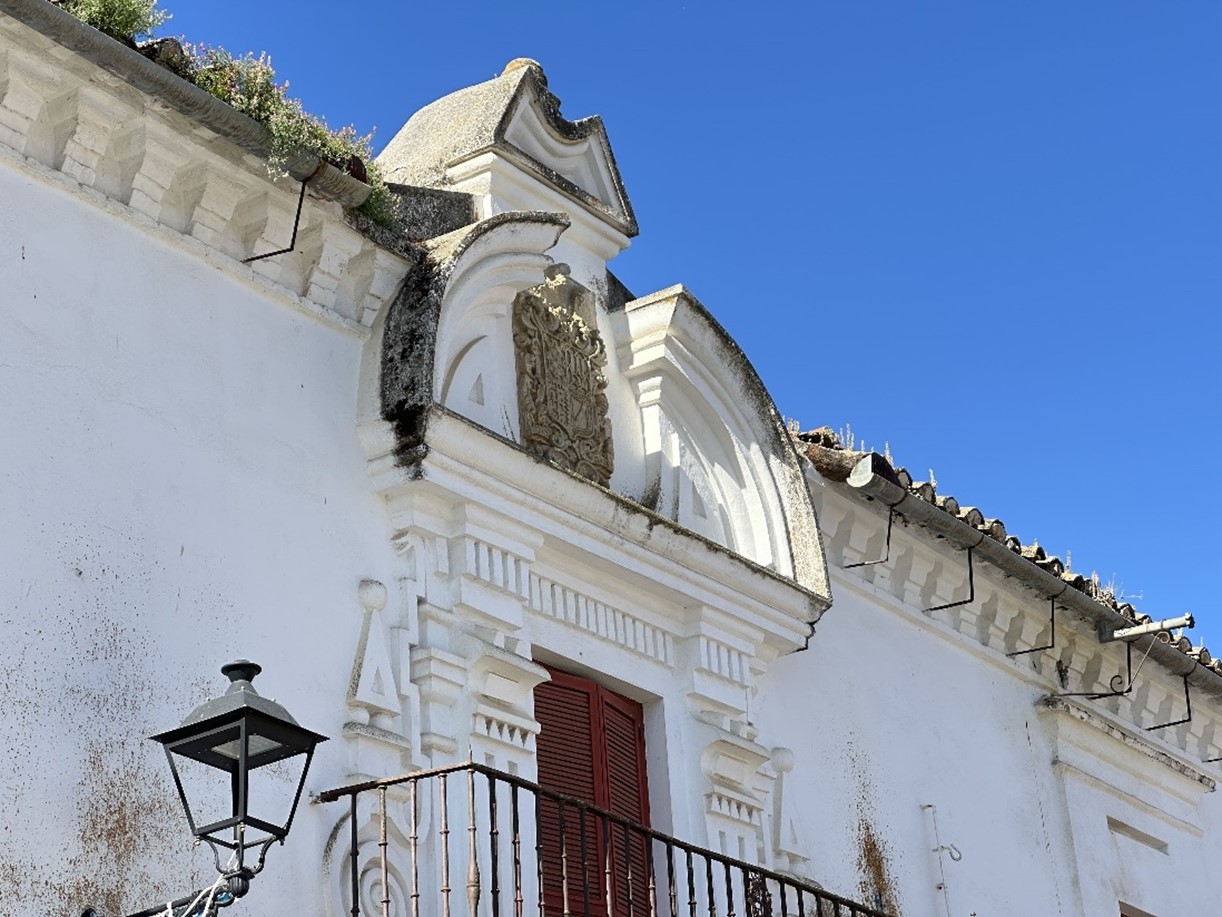
The building presents a two-storey structure and a façade with marked Baroque influence, featuring a main entrance dating from the 18th century. One of its most notable elements is the ornamental composition of the façade, where the entrance is framed by reliefs simulating columns, a feature repeated on the upper level, generating a sense of verticality and compositional order. The ensemble is crowned by a semicircular-profile cornice, at the centre of which stands the noble coat of arms, a key element both artistically and symbolically. The palace heraldry is especially complex, configured through a cross-quartered coat of arms with various motifs, including references to castles, chains, saltires and the Cross of Calatrava, as well as elements associated with the lineages integrated into the noble house. The abundant decoration with a crown and mantling reinforces its representative character.
RELEVANT FIGURES RELATED TO THE POI
The figure of Gabriel de Velasco y de la Cueva, VII Count of Siruela, stands out, his connection to the noble house being reflected in the building’s coat of arms. Teresa Zúñiga is also relevant, as her marriage to the count allowed the incorporation of the heraldic elements of this lineage into the palace blazon.
MOVABLE HERITAGE
The main element of interest associated with the building is its heraldic coat of arms, integrated into the façade, which constitutes a piece of great historical and symbolic value. No other movable assets of special relevance inside the building are documented in the sources provided.
INTANGIBLE HERITAGE
The palace forms an essential part of Siruela’s historical memory as a symbol of former feudal power and the municipality’s social organisation during the Early Modern Age. Its silhouette and coat of arms are deeply rooted elements within the local imagination. Its presence in Plaza de España reinforces its role as an identity landmark within the urban landscape and as a key element in the historical interpretation of the locality. For the inhabitants of Siruela, the Palacio de los Duques de Fernán Núñez is not merely a building, but a visible reminder of the town’s feudal past and the evolution of its power structures over time.