DESCRIPTION
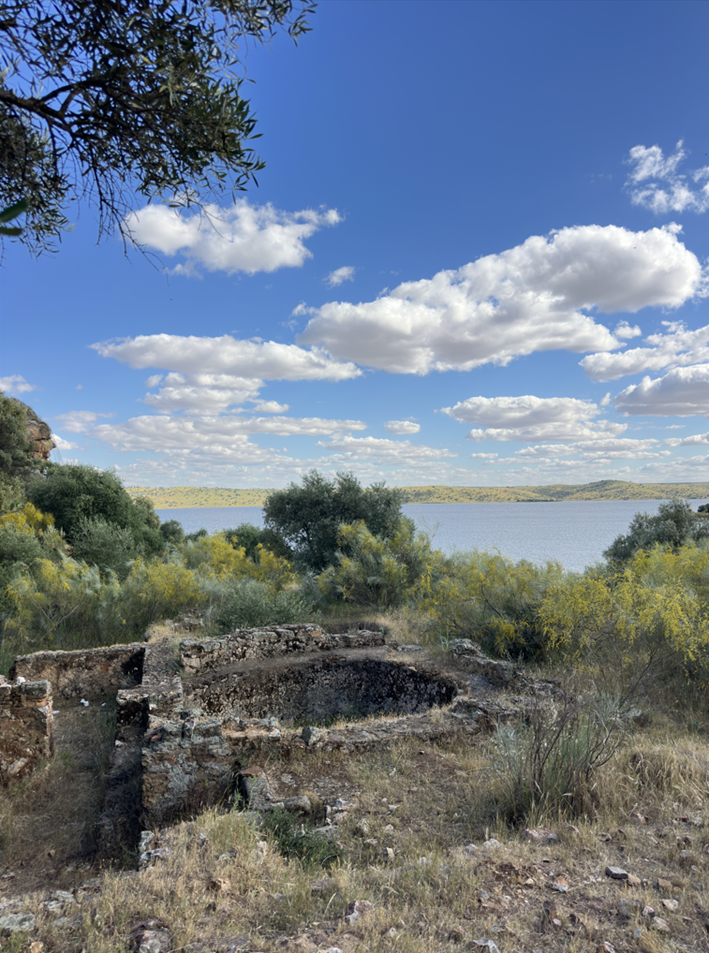
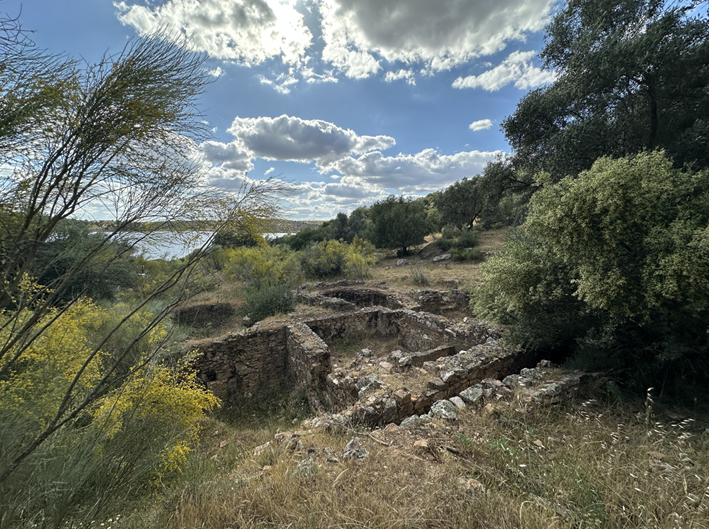
Lacimurga Constantia lulia - Antigua Lacimurga. The archaeological site of Lacimurga constitutes one of the most important Roman enclaves in the La Siberia region of Extremadura. Located near the Guadiana River, in an area of great strategic and landscape value, the settlement occupied a privileged position for controlling the territory, trade routes and the natural crossings of the river.
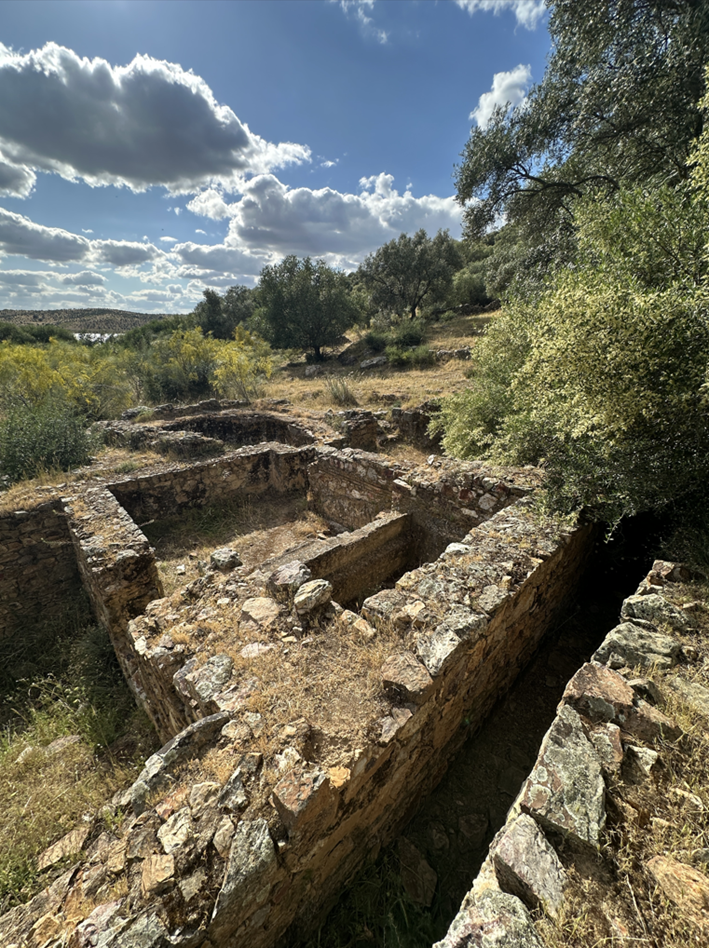
The enclave developed over an area previously occupied since Protohistoric times and eventually became an important Roman centre linked to the Romanisation process of the northeastern area of the present-day province of Badajoz. Its archaeological remains preserve evidence of urban structures, ceramic materials, thermal spaces and elements related to Roman territorial organisation.
The city was established in a fertile agricultural area irrigated by the Guadiana River, a circumstance that favoured both economic development and the articulation of communications between different territories of the Iberian interior.
HISTORY
The origin of the enclave appears to date back at least to the 5th century BC, when a pre-Roman oppidum existed on the site upon which the Roman city later developed. The location of Lacimurga responded to highly important strategic criteria, as it controlled a fertile territory crossed by trade routes and a nearby ford of the Guadiana River historically used as a natural crossing point.
With the Romanisation of the territory, the enclave experienced significant urban and economic development. Various researchers consider that Lacimurga may have attained the status of municipium between the Augustan period and the Flavian dynasty, although different historiographical interpretations exist regarding this process and the exact identification of the city mentioned by classical sources.
The city became integrated into the Roman road network of the western Iberian Peninsula, indirectly connecting with important communication routes such as those linking Emerita Augusta, Corduba and Caesaraugusta.
Throughout the excavations and studies carried out, remains of urban structures, construction materials, common and luxury ceramics, as well as abundant evidence of Roman occupation between the 1st century BC and the 1st century AD have been documented.
In the contemporary period, the site once again acquired strategic importance during the Spanish Civil War. The dominant position of the hill favored its use as a defensive fortification, preserving remains of trenches, shelters, rifle pits, and machine-gun nests partially built using materials reused from the ancient Roman structures.
HISTORICAL-ARTISTIC DESCRIPTION
The site preserves scattered archaeological remains corresponding to different historical phases, although the most significant elements belong to the Roman period. One of the most notable sectors is the thermal area documented during archaeological excavations, possibly interpreted as public baths or facilities linked to a private residence of certain importance.
Abundant archaeological materials can be found on the surface, including fragments of common Roman pottery, terra sigillata, tegulae and construction remains associated with urban buildings. Of particular importance is also the epigraphic documentation related to Lacimurga. Among the discoveries associated with the territory is a Flavian boundary marker located in the surroundings of Valdecaballeros, used to delimit ancient administrative territories linked to the city.
Also especially remarkable is the so-called “forma” of Lacimurga, a bronze fragment interpreted as part of a Roman cadastral map in which agricultural centuriations related to the territorial organisation of the Guadiana surroundings are represented. The site possesses notable archaeological and historical interest as it constitutes one of the principal testimonies of the Roman presence in the La Siberia region.
STATE OF CONSERVATION
Although the site was the subject of archaeological excavations and even had protective fencing, the passage of time and the lack of ongoing conservation measures have caused the progressive deterioration of the visible structures.
The site currently presents problems of degradation, loss of surface coverings, looting through small clandestine excavations, and a lack of sufficient protection measures. Due to this situation, Lacimurga is included on the Red List of Heritage.
RELEVANT FIGURES RELATED TO THE POI
The enclave is historically linked to various researchers and specialists in Roman archaeology and ancient history who have studied the identification, evolution and territorial organisation of Lacimurga.
Likewise, classical authors such as Pliny and Ptolemy mentioned in their works cities historically identified with the name of Lacimurga, a circumstance that has generated different historiographical debates regarding its location and territorial attribution.
MOVABLE HERITAGE
Among the archaeological materials documented at the site are fragments of common Roman pottery, terra sigillata, tegulae, construction remains and epigraphic elements.
Of particular importance is the bronze fragment known as the “forma” of Lacimurga, related to the Roman cadastral organisation of the territory, as well as the Flavian-period boundary marker linked to the administrative delimitation of the surrounding area.
INTANGIBLE HERITAGE
Lacimurga constitutes one of the principal historical and archaeological landmarks of Puebla de Alcocer and the La Siberia region of Extremadura.
The site maintains significant symbolic value as testimony to the Roman past of the territory and as a key element for understanding the historical evolution of settlement, communications and the economic organisation of this area of the Guadiana throughout Antiquity.
Likewise, the enclave forms part of the local historical memory and of the cultural heritage associated with the historical identity of the region.