DESCRIPTION
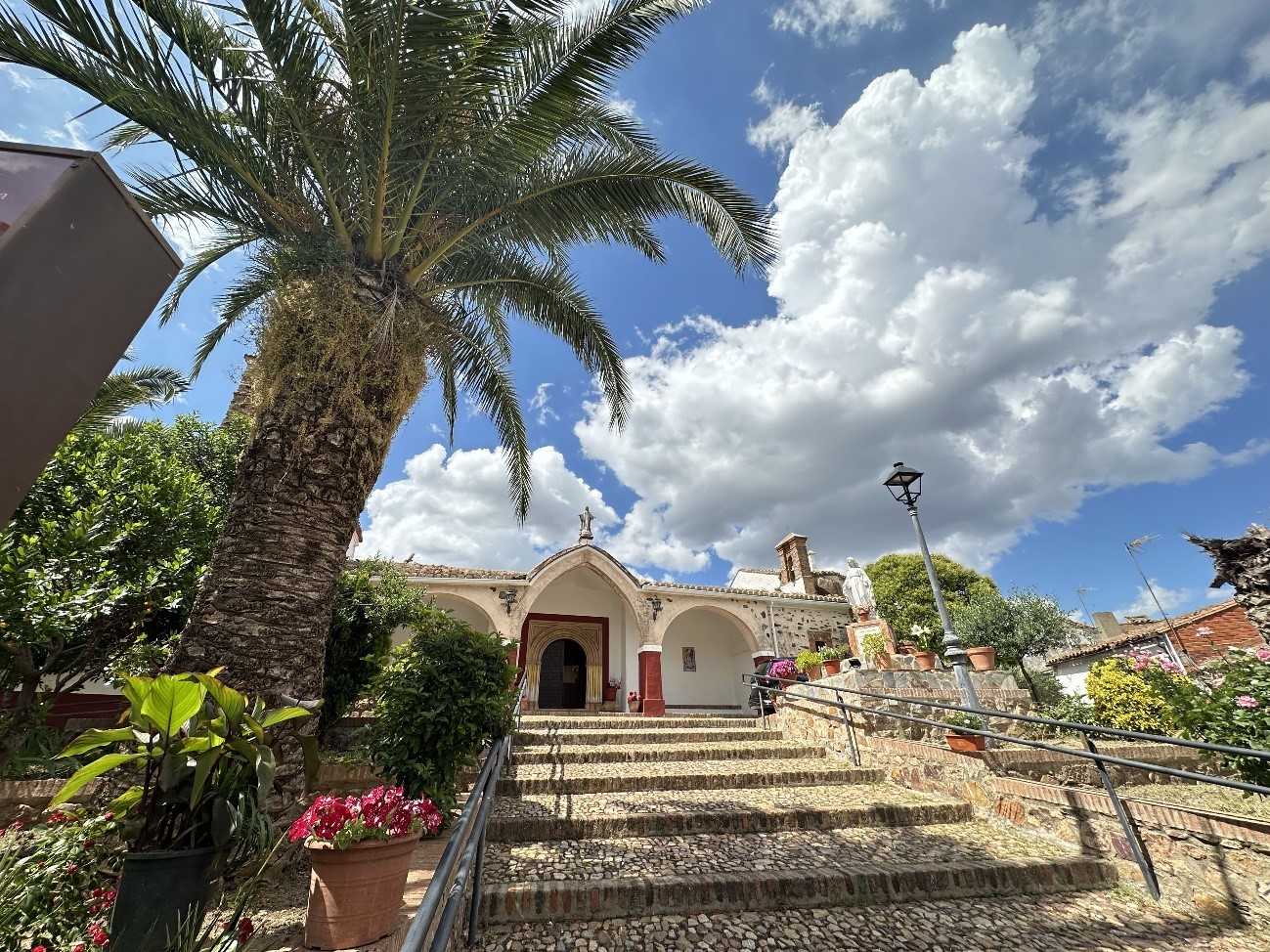
The Parish Church of San Miguel Arcángel is located in the highest part of the urban center of Valdecaballeros, making it one of the municipality’s main historical, religious, and heritage landmarks. Its dominant position reinforces its presence within the urban landscape and turns it into a visual reference point from different locations in the surrounding area.
The temple is an outstanding example of rural Extremaduran Mudéjar architecture, although the current building is the result of different construction phases and successive renovations carried out over the centuries. The church preserves medieval elements together with later interventions that have shaped its present appearance.
HISTORY
The origin of the temple may lie in an early medieval construction, possibly related to an ancient chapel of Mozarabic origin. The current church was mainly built during the 15th century, following the model of the rural Mudéjar temple characteristic of this area of Extremadura.
Throughout its history, the building has undergone numerous transformations and restorations. During the Spanish Civil War, it suffered a major fire that affected both part of the structure and the parish archives. From the 1940s onward, various reconstruction and restoration works on the temple began.
In more recent times, new interventions have been carried out to improve its conservation, including the restoration of the tower, the renovation of the roofs, the adaptation of the choir, and the incorporation of new liturgical and ornamental elements.
The interpretive panel installed next to the temple also notes that the church was built following the rural temple model typical of the region and highlights the numerous alterations made to its original appearance due to successive remodeling works.
HISTORICAL-ARTISTIC DESCRIPTION
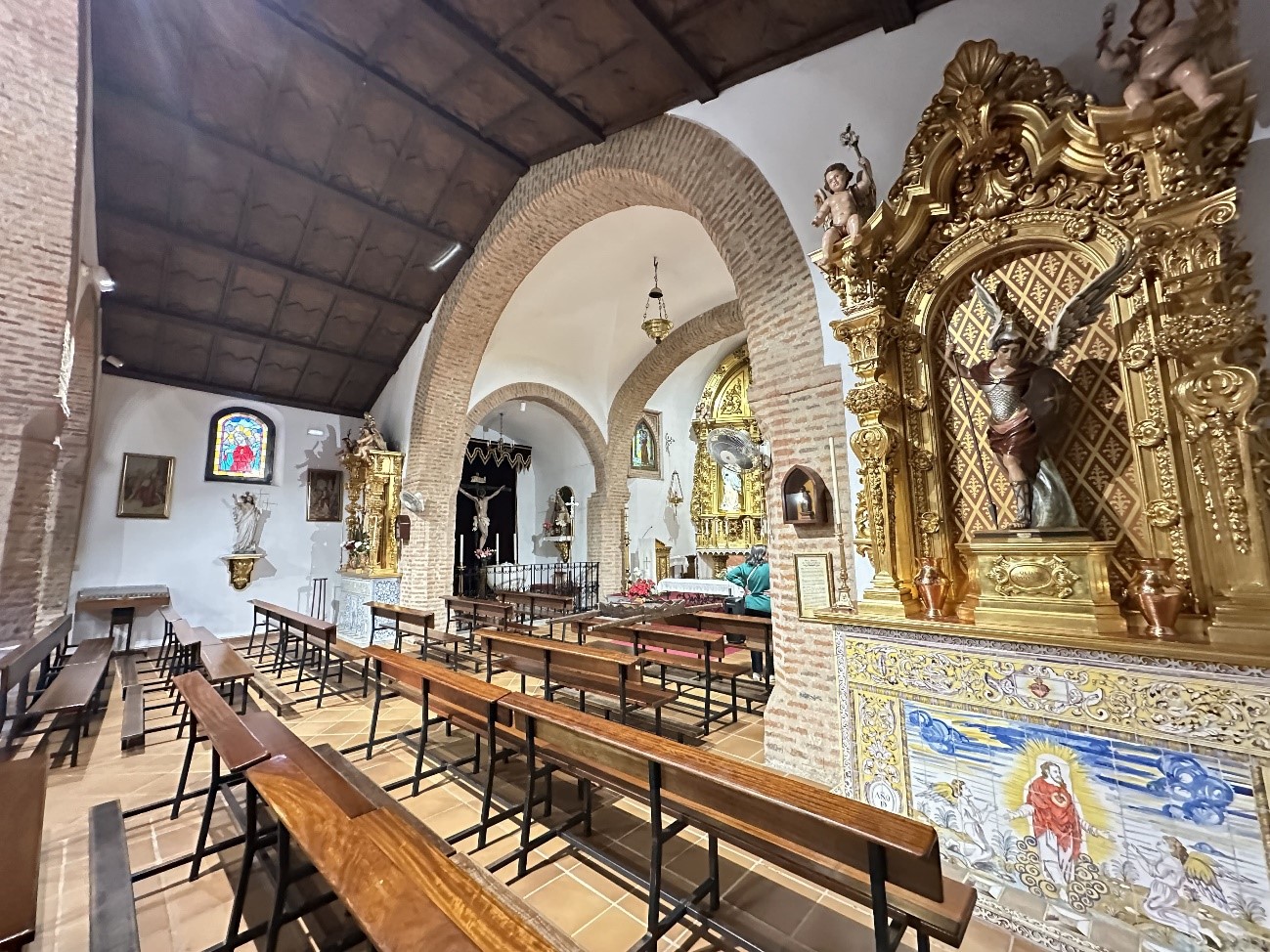
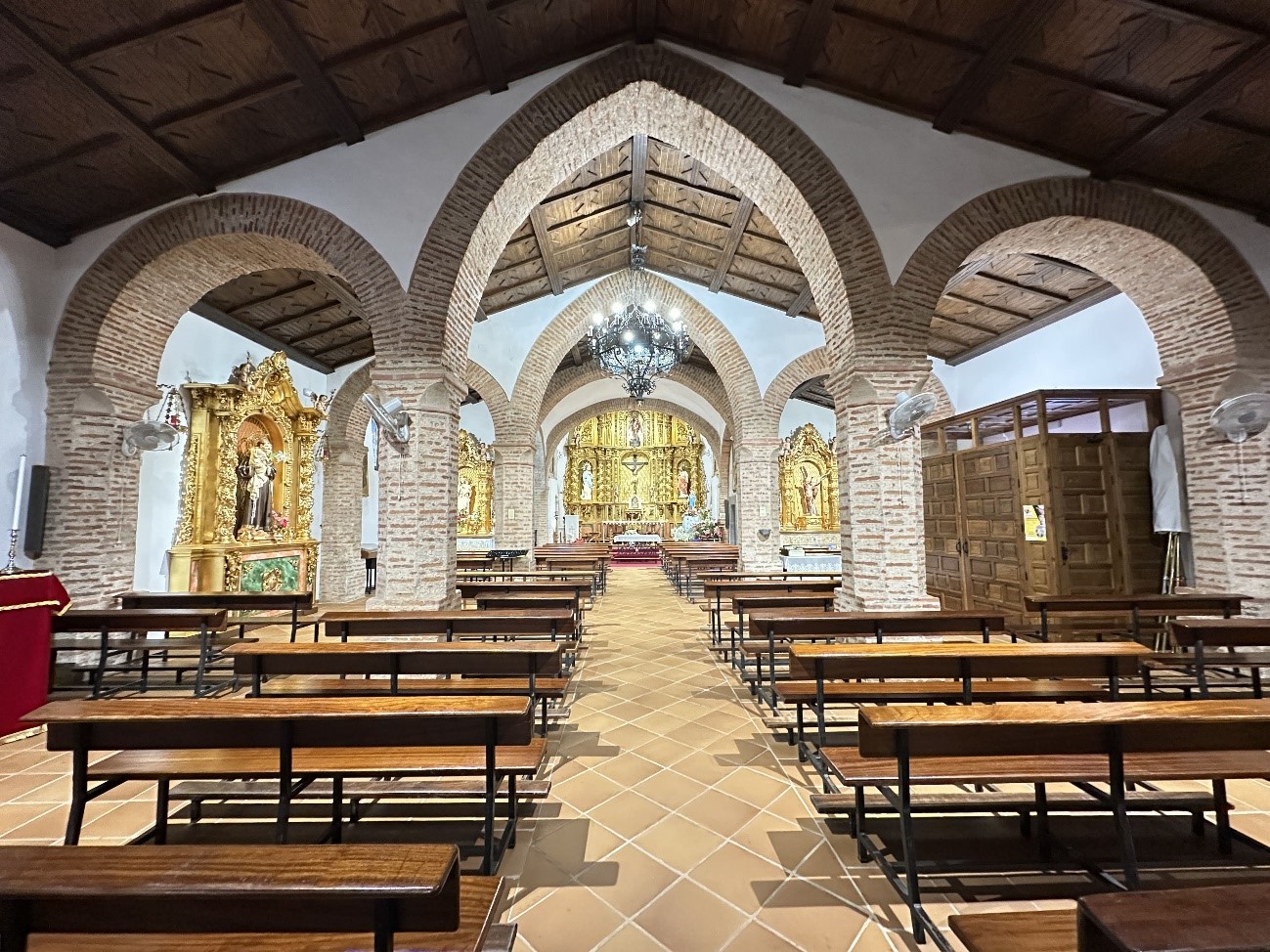
The church has a basilica floor plan with three naves separated by thick pillars and masonry walls. Brick is one of the main construction materials, shaping numerous decorative and structural elements characteristic of Extremaduran Mudéjar architecture.
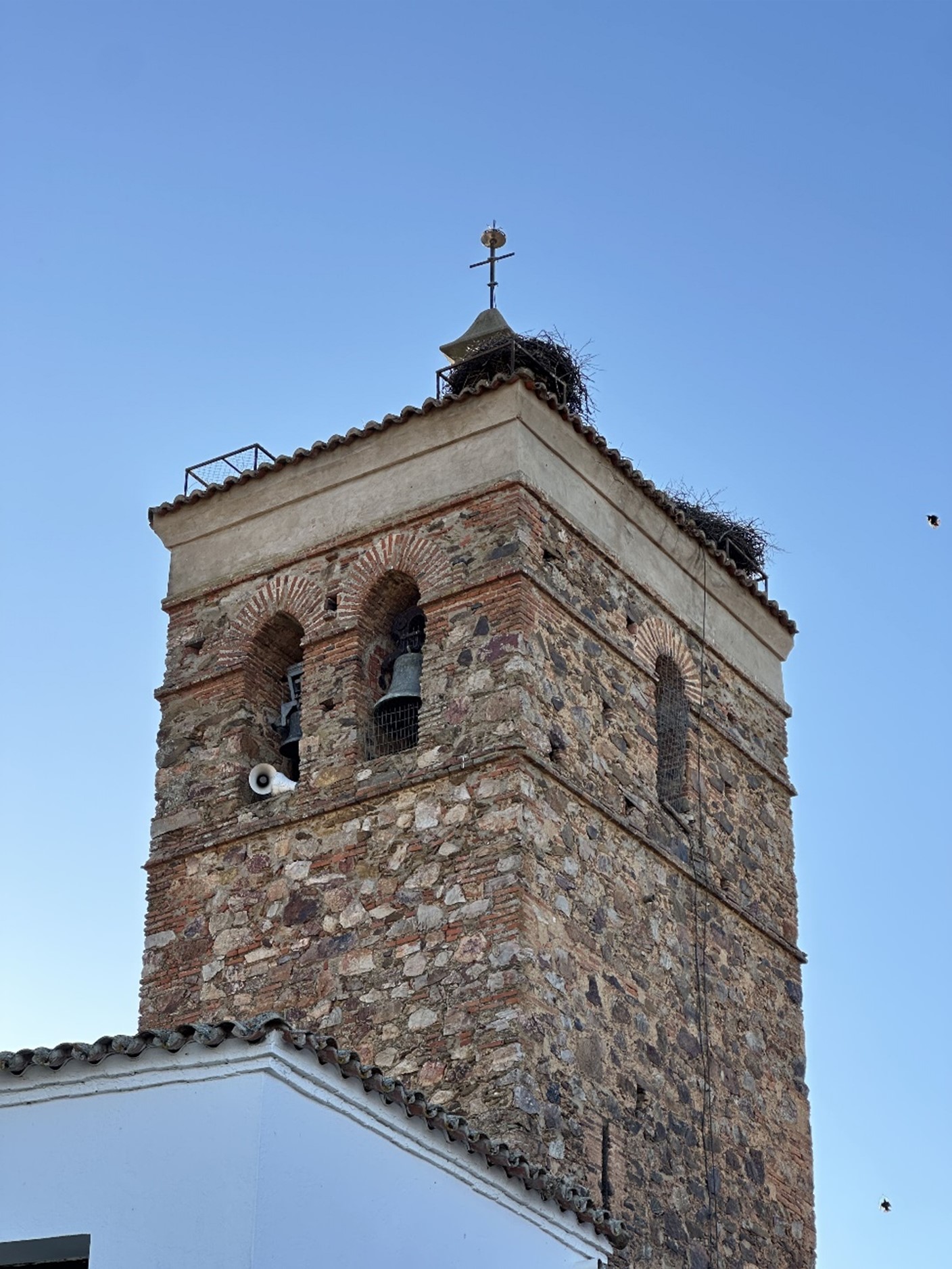
On the exterior, the triple-arched entrance porch stands out as one of the building’s most characteristic elements, originally designed with three doorways, two of which are currently blocked. The portal preserves Gothic features, with a semicircular arch and archivolts framed by an alfiz. The decoration on the rendered brick incorporates geometric motifs made with red ochre and iron oxide, following decorative models found on windows and doors of the Royal Monastery of Guadalupe. The square-plan tower stands at the foot of the temple and is another of the ensemble’s most recognizable features. During the 20th century, the parish house was attached to it.
The interior of the building is organized into three naves covered by vaulted structures and externally reinforced by semicircular buttresses. The ensemble combines Mudéjar and Gothic features, especially visible in the arches, roofs, and decorative elements.
Particularly noteworthy are the two Roman stelae or termini preserved in the temple. These epigraphic pieces, made of granite and dating from the 1st century AD, contain inscriptions dedicated to the emperors Vespasian and Domitian and formerly marked territorial boundaries linked to Augusta Emerita. They constitute one of the most important Roman testimonies preserved in the municipality.
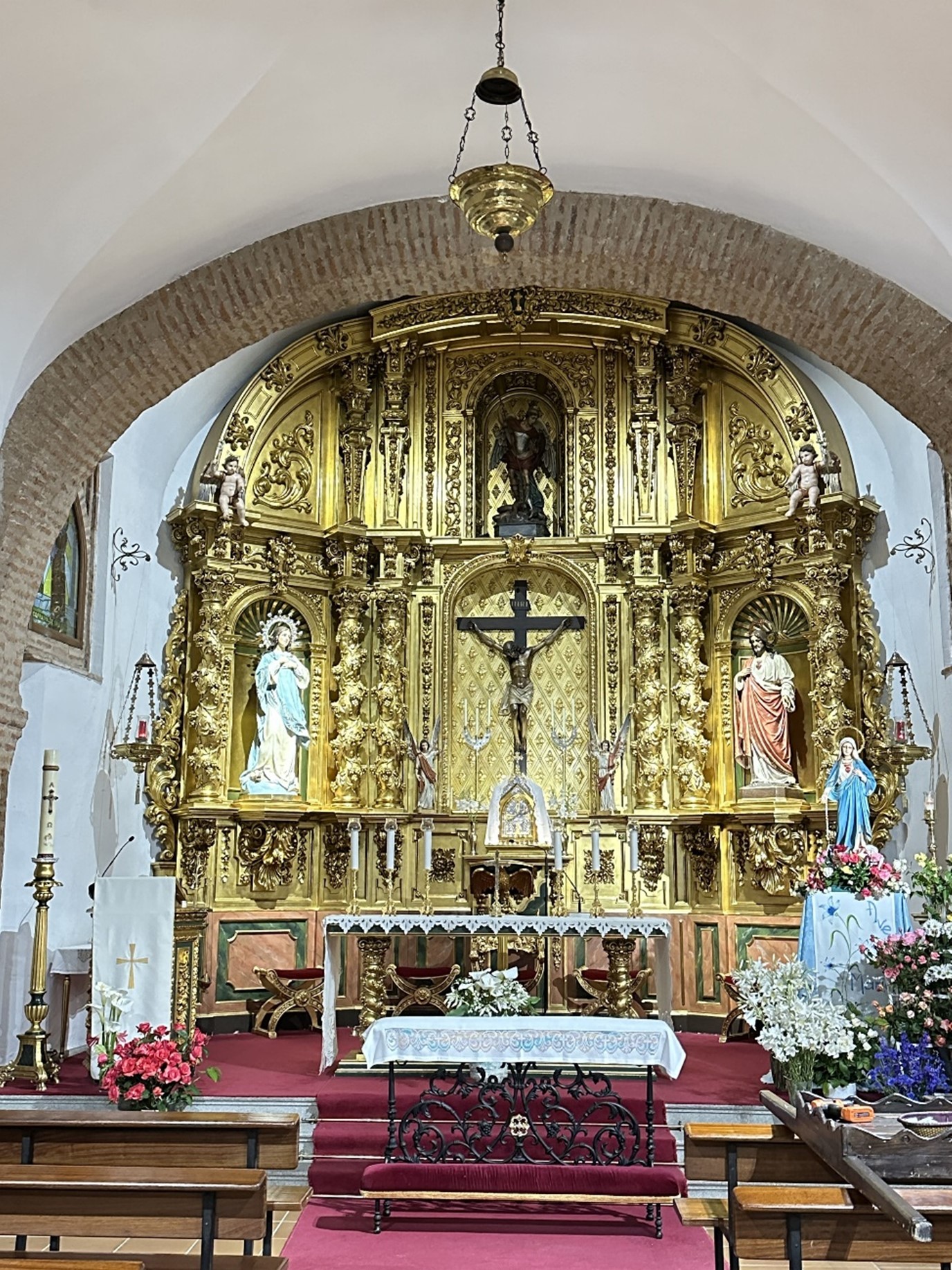
The current main altarpiece was created in 2004 in workshops in Horche (Guadalajara) by the master altarpiece maker José Antonio Martínez.
RELEVANT FIGURES RELATED TO THE POI
The church has historically been linked to the parish community of Valdecaballeros and to the various religious authorities responsible for its maintenance and conservation.
Likewise, the Roman inscriptions preserved in the temple refer to universally significant historical figures such as the Roman emperors Vespasian and Domitian.
MOVABLE HERITAGE
Inside the temple, various elements of heritage and devotional interest are preserved. Particularly noteworthy are the two Roman boundary stones (termini), of extraordinary historical and archaeological value. The temple also houses different religious images, liturgical pieces, and ornamental elements used in worship. Among them stand out the contemporary main altarpiece, a sculpture of Saint Anthony, various pieces of religious silverwork, and a medieval silver processional cross. A traditional baptismal font and various images linked to the municipality’s popular devotion are also preserved.
INTANGIBLE HERITAGE
The Church of San Miguel Arcángel constitutes the main center of religious and ceremonial life in Valdecaballeros. The municipality’s principal religious festivities, liturgical acts, and traditional celebrations are held there. The temple forms part of the town’s collective memory and represents an essential element of cultural, social, and heritage identity for several generations of residents.